Today
is a critical day in the history of Britain. It will decide the
nature of Britain’s relationship with the states of continental
Europe. It will also say a great deal about the British people’s
relationship with their own rulers and about the kind of country they
want Britain to be.
I
would add that if the British vote to leave the EU even by a small
majority then I expect this to be a once and forever decision.
However if the British vote to say within the EU by a small majority,
then I very much doubt this issue will go away. There will probably
be a pause lasting some years – perhaps a decade – before it
comes back.
In
that case both the EU authorities and Britain’s rulers will also
have to consider that a very significant proportion of the population
has rejected them, putting the British state’s legitimacy for the
first time in its modern history in serious doubt.
Only
if the vote to remain is a decisive one – over 60% as it was during
the previous referendum in 1975 – do I expect this question to be
settled for any significant length of time.
However
it is important to say that what is a critical issue for Britain and
its people is nowhere near so critical for the rest of the world.
Contrary to some people’s predictions, if Britain votes to leave I
fully expect the EU to continue in much the same way as it is doing
today. Flesh creeping talk of the EU’s collapse, of a global
economic crisis, of sweeping advances in Europe by the far right, of
the collapse of the Western alliance, of Russian “expansion” (a
particularly absurd claim) and of the outbreak of World War III
(ditto) are utter nonsense.
Even
if Britain votes to leave it will take several years before it
actually happens – if it even does – and arrangements will
certainly be put in place during that period to ensure that the
Western alliance remains intact, that US influence in Europe remains
undiminished and that the disruption to the rest of the EU is reduced
to a minimum. As it happens if Britain votes to leave I expect
Britain to draw closer still to the US (I give no credence to hopes
it would draw closer to Russia) in which case US influence in Europe
might actually grow. As for the EU, since Britain is not a member of
the Eurozone, the disruption caused by its departure will be small.
The
truth about Brexit which is never spoken but which everyone outside
Britain knows is that Britain no longer matters very much.
Though
Britain in terms of its international rankings remains a large
economy, it is an uncompetitive and declining one, running large
deficits with the rest of the world and desperately over-dependent on
a bloated housing market and an often corrupt financial services
industry to stay afloat.
The
British military, which just 70 years ago bestrode the world, is now
a shadow, looked upon with contempt by its US ally as it shows itself
incapable of even defending small villages against lightly armed
insurgents in places like Afghanistan and Iraq. Certainly the
British military today would be incapable of carrying out the kind of
operation the Russian military is currently carrying out in Syria, or
which Britain itself carried out 34 years during the 1982 war in the
Falklands. Though the British parliament pompously debated a
military intervention in Syria last autumn as if Britain’s military
involvement there actually mattered, barely anything has been heard
of it since. Apparently a couple of dozen bombs have been dropped to
practically no effect.
In
terms of world diplomacy, where as recently as the 1980s Margaret
Thatcher cut a commanding figure, Britain’s complete
marginalisation has recently become all too obvious.
When
the Russians talk about Ukraine – the biggest conflict in Europe
since World War II – they don’t talk to the British; they talk to
the US and the Germans and the French. When negotiations take place
over the future of Syria it is the Russians and the US who talk to
each other with the Chinese and the EU (meaning the Germans) quietly
involved in the background. When Europe needs to speak to President
Erdogan of Turkey it is Chancellor Merkel of Germany who calls him.
When Prime Minister Modi of India returns to his country from the US
it is President Putin of Russia not Prime Minister Cameron of Britain
– India’s former colonial master – that he calls to discuss his
visit. As for the burgeoning conflict between the US and China in
the South China Sea, the only role the British have in it is in a
James Bond film made way back in 1997.
The
extent of Britain’s weakness and irrelevance was brought home to
the British in the most painful way during the recent visit to
Britain of the Chinese President Xi Jinping. What the British
imagined would be a triumph for their diplomacy turned into a
humiliation, with the Chinese treating the visit as a sort of victory
lap over their former imperial tormentor and the British Queen
seething over Chinese “rudeness”.
It
is impossible to think of a single important issue in world affairs
where Britain’s view is any longer sought or where it seriously
counts. Britain retains a certain cultural influence and its
financial services industry remains sophisticated, though with
advances elsewhere it too is a rapidly diminishing asset. For the
US, Britain also remains useful as an intelligence and propaganda
platform and as a reliable echo chamber for US views – especially
in the UN Security Council where the US can always rely on its vote.
That however is just about it.
In
fact a strong case can be made that Italy is today a far more
important country than Britain. Not only does Italy still retain an
impressive manufacturing base but – unlike Britain – it engages
in active diplomacy as it did for example last year during the Greek
crisis and as it has just done – as I saw for myself – in
negotiations over the sanctions issue at SPIEF in St. Petersburg.
Moreover as a key member of the Eurozone Italy holds the bloc’s
future – which is the foundation of German power – in its hands
in a way that Britain, which is not a member of the Eurozone,
emphatically does not.
The
truth about the Brexit vote is that whatever way it goes, Britain
today can create a storm in the headlines for a few days but can do
little else. Should Britain vote for Brexit – which as of the time
of writing seems unlikely – after a brief stir things will quickly
settle back to normal and life around the world will go on much as
before.
The
truth about the modern world is that it revolves around the
relationships of four Great Powers: the US and China (the two
strongest) and India and Russia (both growing rapidly stronger though
in different ways). Beyond them there are a number of other powers
which possess or which may one day possess regional influence that
makes them important or potentially important: Germany, France and
Italy (when they are working together), Iran, Saudi Arabia, Japan and
one day perhaps South Korea and Brazil.
Britain
is not a member of either group and the days of its influence are
gone.
The
terrible truth, which the British cannot admit to themselves, is that
they are a noisy irrelevance and how they vote today for the rest of
the world no longer matters.
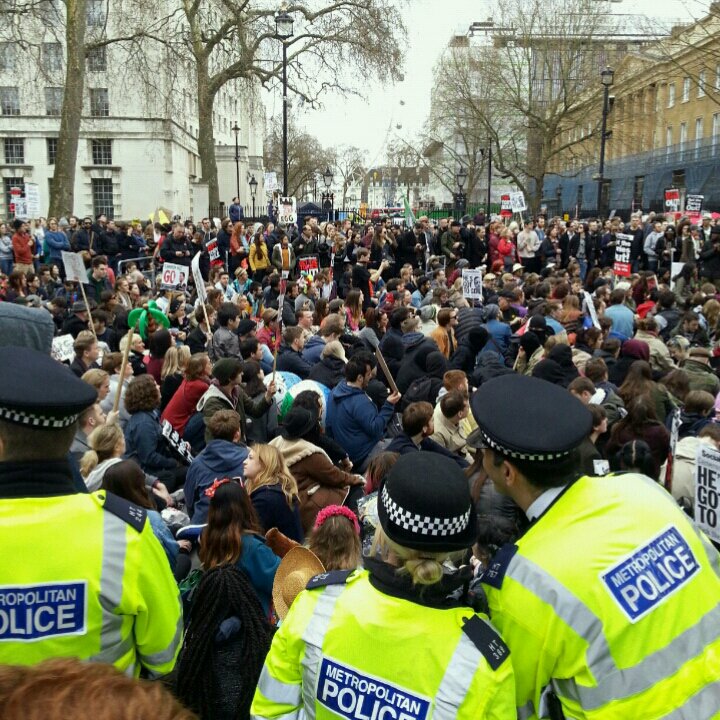
A
massive protest has gathered in front of PM David Cameron’s
residence at 10 Downing Street, calling for his resignation. The
rally follows the so-called Panama Papers leak, which among others
exposed the offshore dealings of Cameron’s late father.
The
massive and largely peaceful rally right in front of 10 Downing
Street saw hundreds of protesters gathering while shouting “Resign,
resign!”
“Cameron
must go!” and “Tories out!” read the placards held by the
demonstrators, RUPTLY’s live feed showed. A huge paper pig was
erected by the protesters, with Cameron’s image pinned to its face.
RT
UK’s Laura Smith talked to some of the people who had taken to the
streets to join the protest. “A lot of people feel they have lost
confidence in the government,” one man said, with another adding
that “this is a symptom of a much more important disease, our
economic system is broken … as it favors a huge tax avoidance.”
The
#ResignCameron rally then moved on to Trafalgar Square, where
thousands of people joined in the call for the prime minister to go.
Cameron
came clean about his tax affairs on Thursday evening, admitting that
between 1997 and 2010 he and his wife, Samantha Cameron, owned shares
in his father’s Blairmore Investment Trust – a multimillion-pound
offshore trust fund.
On
Saturday Cameron said that this week wasn’t great. “I know that I
should have handled this better, I could have handled this better. I
know there are lessons to learn and I will learn them.”
He
is under yet more pressure after an unearthed 2013 letter shows he
urged the EU to shield offshore trusts from a crackdown.
On
Friday NSA whistleblower Edward Snowden urged the British people to
demand Cameron’s resignation from government.
The
hashtag #ResignDavidCameron has been trending on Twitter.
Thousands
march on No10 calling for Cameron to quit over tax revelations as
Lily Allen brands him 'dishonest' - and under-fire PM admits 'I could
have handled it better'
Protesters
called for Mr Cameron to resign after he admitted profiting from
more than £30k in an offshore tax haven
Revelations
about Mr Cameron's financial affairs followed a leak of 11 million
documents held by Mossack Fonseca
PM's
ratings now lower than Jeremy Corbyn with 56% saying they did not
think he had been 'open and transparent'
Speaking
at the Tory Spring Conference, Mr Cameron admitted he botched the
handling of the row over his finances
Thousands
of protesters have marched on Downing Street calling for David
Cameron to quit in the wake of revelations about his tax affairs.
The
embattled Prime Minister was accused of 'hypocrisy' after he finally
admitted profiting from more than £30,000 in an offshore tax haven.After
days of pressure,
Mr Cameron acknowledged he had benefited from a
controversial fund set up by his late father Ian.
In
the wake of that extraordinary interview, thousands lined Whitehall
today urging Mr Cameron to 'go now'.
Thousands
of protesters have marched on Downing Street calling for David
Cameron to quit in the wake of revelations about his tax affairs
The
protesters stood on Whitehall calling on the Prime Minister to quit
after he admitted he profited from more than £30,000 in an offshore
tax haven
Protesters
stand on Whitehall chanting 'David Cameron must resign / Tax
evasion is a crime' following the bombshell revelations this week
Protesters
held up placards saying 'Cameron must go', 'Tories out', 'Defy Tory
Rule' and 'Time to go chum' outside Downing Street
Protesters
- many wearing Panama hats - arrived at Downing Street carrying
placards saying 'he's got to go', 'time to go chum' and 'Eton's
mess'.
A
huge pig with the Prime Minister's face emblazoned on the front was
hoisted into the air above the crowd who chanted 'David Cameron must
resign / Tax evasion is a crime'.
Events
started at 11am and around 2,000 people are expected at Downing
Street over the course of the day.
The
protests are being organised around the hashtags 'Resign Cameron' and
'Close tax loopholes', and have gained support from high-profile
figures Edward Snowden and Lily Allen.
Speaking
to Sun Online, the pop singer said: 'I think he's been dishonest and
the trust has gone.
'I
just think it's really important that young people take more of an
interest in politics so that's why I'm here really. I think lots of
people in my position don't because they're scared of the
repercussions.'
Protesters
drew inspiration from events in Iceland when huge pressure from
furious protesters forced Sigmundur Davíð Gunnlaugsson to resign
after it was revealed his family had sheltered money offshore as the
country was almost brought to its knees during the 2008 financial
crash.
They
also descended on the Tory Spring Conference at the Grand Connaught
rooms and four lines of police had to block the entrance to the
building.
The
organiser of the Downing Street protest, freelance writer Abi
Wilkinson, told BBC Radio 5 the bombshell revelations raised
questions about Mr Cameron's commitment to tackling tax avoidance.
She
said: 'The thing that really made us think we had to get out and
protest was the news that, in 2013 when the EU were trying to crack
down on offshoring and tax avoidance, he stepped in and actually
weakened what they were trying to do.'
But
Commons leader Chris Grayling said those accusing Mr Cameron of
misleading the public were making a 'mountain out of a mole hill'.
Speaking
today, Mr Cameron promised to 'learn the lessons' from the toxic row
over his ownership of shares in his late father's offshore investment
fund and insisted voters should 'blame me' over the affair.
The
Prime Minister admitted he could have handled questions about his tax
affairs better but said he had been 'angry' about accusations made
about his father.
Mr
Cameron announced today he would release six years of his personal
tax returns to persuade the public he was being transparent.
New
polls suggest 56 per cent of the public did not believe Mr Cameron
had been 'open and transparent' about his tax affairs after his
bombshell admission on Thursday night that he did in fact own £31,000
in shares in his father's firm until January 2010.
Mr
Cameron said today: 'It's not been a great week. I know that I should
have handled this better, I could have handled this better, I know
there are lessons to learn and I will learn them.
'Don't
blame No 10 Downing Street, or nameless advisors. Blame me. And I
will learn the lessons.'
Mr
Cameron said he was 'very angry' about the accusations levelled
against his late father, who died in 2010.
'I
love my dad,' he said. 'I miss him every day, he was a wonderful
father and I am very proud of everything he did.
'But
I must not let that cloud the picture. The facts are these: I bought
the shares in the unit trust, shares that are like any other sort of
shares.
'I
paid tax on them in exactly the same way. I sold those shares, in
fact I sold all the shares that I owned on becoming Prime Minister.
'And
later on, I will be publishing the information that goes into my tax
return - not just this year but for years gone past because I want to
be completely transparent and open about these things.'
The
collapse in trust in Mr Cameron threatens to wreck Tory efforts to
make progress in town hall elections across England and to hold onto
City Hall in London when voters go to the polls in a little more than
three weeks.
The
details of the new polling out reveals a grim picture for Mr Cameron.
Mr
Corbyn has warned the public had lost trust in the Premier after he
'misled' them.
Just
34 per cent of voters told YouGov they felt Mr Cameron was doing a
good job overall, compared to 58 per cent who disapprove of his work
in No 10.
Mr
Corbyn holds a narrow overall lead on job approval for the first time
- driven by a 40 point collapse in Mr Cameron's ratings and a modest
improvement in the Labour leader's scores.
Some
30 per cent of voters said Mr Corbyn was doing well as Leader of the
Opposition, compared to 52 per disapprove.
On
the specific issue of tax avoidance, Mr Cameron was distrusted by 68
per cent of people to deal with the issue.
Only
Chancellor George Osborne scored worse in the YouGov survey.
No
10 today indicated Mr Cameron would release tax returns dating back
to the 2009-10 tax year - the year in which he and wife Samantha sold
their £31,000 stake in Blairmore Holdings.
The
Camerons made a £19,000 profit on the 5,000 shares and the Prime
Minister has insisted all relevant UK taxes were properly paid.
He
also accepted that some of the £300,000 left to him by his father
may also have come from funds lodged offshore.
Mr
Cameron made the revelation on Thursday night after dodging questions
on his financial affairs.
Earlier
in the week, Mr Cameron had made an extensive statement on his
present arrangements - but omissions were swiftly picked up on for
raising more questions than answers.
Downing
Street spent all week dealing with questions on the Prime Minister's
tax affairs following revelations last Monday that Ian Cameron was
named in the so-called 'Panama Papers'.
His
father's investment fund, Blairmore, was named after the house in
Huntly, Aberdeenshire, where Ian Cameron was born in 1932.
The
company was incorporated in the secretive Panama jurisdiction in 1982
and operated out of the tax haven of the Bahamas. The firm hired
Bahamas residents, including a bishop, to sign off paperwork and held
meetings in the Caribbean.
The
arrangement, while legal, allowed the company to avoid paying UK tax
for decades.
The
fund also made use of 'bearer shares' which enable people to hide
their assets.
On
Monday No 10 said the Cameron family's dealings in Blairmore were a
'private matter'. The Prime Minister and Downing Street then issued
three further statements over the following 48 hours in a bid to
close down the growing controversy.
But
on each occasion, they avoided key questions about whether the PM's
family had benefited from offshore investments in the past.
As
the questions continued to mount, Mr Cameron finally decided to make
a full statement of his affairs in an interview on ITV News.
Following
that revelation, Mr Corbyn has led calls for Mr Cameron to explain
himself in Parliament on Monday while some Labour MPs have demanded
the PM resign over the row.
Bassetlaw
MP John Mann has referred the affair to Parliament's sleaze watchdog
with questions about whether Mr Cameron should have detailed his
ownership of the shares on his House of Commons register of
interests.
Labour's
deputy leader Tom Watson said the Prime Minister should repay at
least part of the profits he made from offshore investments – and
questioned why he had taken six years to reveal them.
Lib
Dem leader Tim Farron added: 'For ordinary taxpayers to have faith in
the system they have to be able to have faith in their leaders. They
deserve better than half-truths and qualified statements.'


 Posts
Posts


 Laura Smith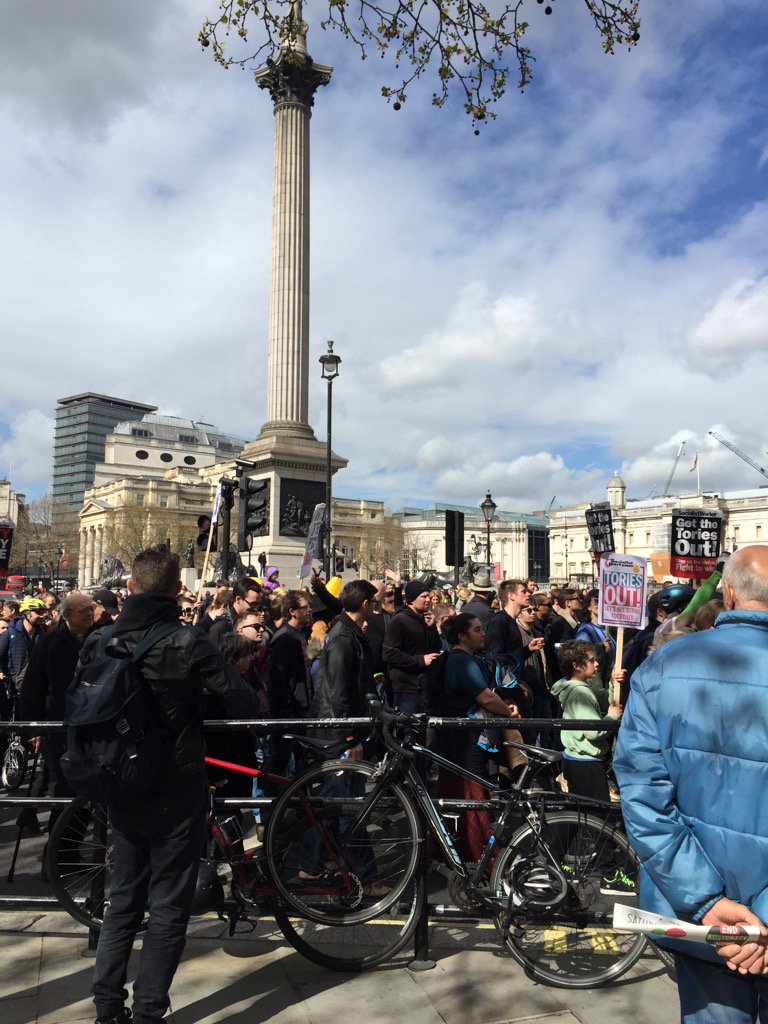


 Jon Scammell


 Edward Snowden


 Shehab Khan


 Bogdan Maran