Sunday, 1 April 2018

Russia Declares 'Unusual' Missile Drill, Just Miles From Sweden


"I've Never Seen Anything Like It" - Russia Declares 'Unusual' Missile Drill, Just Miles From Sweden

31 March, 2018


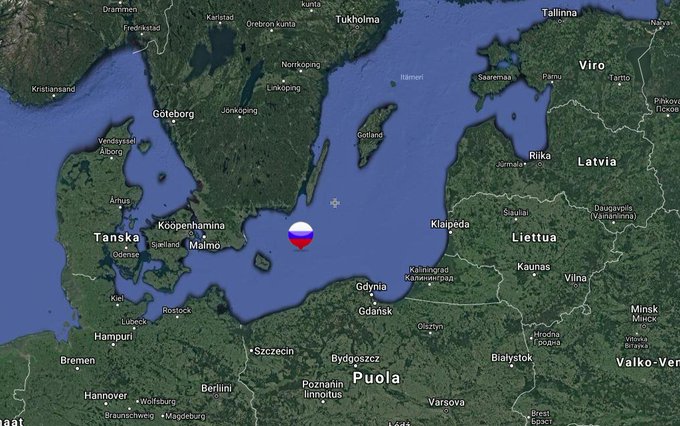
Rather than exercising caution after the nerve gas attack in the United Kingdom and a tidal wave of Russian diplomatic expulsions from Washington, Eurozone, and other countries, Moscow is upping the ante which has surprised the Eurozone and the West on Thursday. Besides the tit-for-tat expulsions of Russian and American diplomats, President Vladimir Putin has chosen to flex his war muscles next week with an unusual missile exercise in international waters, but close enough to Sweden and Latvia that it will shut down commercial airspace.


The Russian cruiser Marshal Ustinov, assigned to the 43rd Missile Ship Division of the Russian Northern Fleet, has been deployed to the Baltic Sea for a live firing exercise in international waters near Sweden and Latvia on April 06 through 08, TASS reported, citing the Russian Navy’s press release.

During the missile exercise, the Swedish Civil Aviation Administration will refer to the D-area, as “Dangerous Area,” and all air traffic and civilian aircraft will be rerouted during the exercise.

“The rocket launches mean that air traffic will be led around this area and it will mean delays for civil aviation,” says Sara Eriksson, Press Manager at Transportstyrelsen. 

Aftonbladet indicates that “Russia has not practiced this far west on the Baltic Sea in the past.”

“I have never before seen another nation carry out bouts in the Swedish FIR except during a coexercise with Sweden. Clearly outside the normal,” tweets Defense Commander Wiseman, Lieutenant Colonel Carl Bergqvist, on Twitter (Translated from Swedish by Microsoft via Bing).


“This is very rare,” a source within the Swedish Armed Forces told Expressen.


A curator for various social media channels monitoring Russian military exercises tweeted: “Bloody hell. Russian navy just reserved missile firings area for 4-6 April up to 18000m in intl waters real close to Sweden. How provocative you can go?”
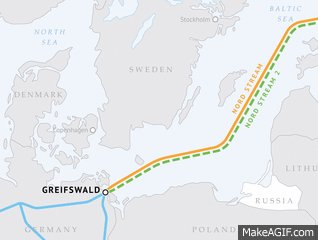
A political editor for BILD raised an interesting point, “Two days after Germany issued the final permit to realize NordStream2, the Russian Army flexes its muscles exactly above the planned course of the pipeline. Missile tests to take place from April 4 to April 6. A clear sign to Denmark and #Sweden.#PutinAtWar.”
Sweden’s public service radio broadcaster said, “Russian missiles will be tested in international waters unusually close to Sweden next week. Air traffic near Öland and Bornholm will have to be redirected.

"I’ve never seen anything like it” said flight traffic chief Jörgen Andersson to @MatsEriksson7.”

Relations between Washington and Moscow have plunged to lows not seen since the gloomy days of the Cold War — following the nerve gas attack in the United Kingdom. In response to the West’s anti-Russian campaign along with a barrage of Russian diplomat expulsions, President Vladimir Putin has ordered a new wave of war drills across the Russian Federation.

Western elites/media who have conditioned the American people with 24/7 anti-Russian propaganda could eventually get their wish of the Cold War 2.0 turning hot, as Moscow will be forced to deploy an even greater deterrence pushing the region toward a point of no return.
During the missile exercise, the Swedish Civil Aviation Administration will refer to the D-area, as “Dangerous Area,” and all air traffic and civilian aircraft will be rerouted during the exercise. 
“The rocket launches mean that air traffic will be led around this area and it will mean delays for civil aviation,” says Sara Eriksson, Press Manager at Transportstyrelsen. 


Aftonbladet indicates that “Russia has not practiced this far west on the Baltic Sea in the past.”

“I have never before seen another nation carry out bouts in the Swedish FIR except during a coexercise with Sweden. Clearly outside the normal,” tweets Defense Commander Wiseman, Lieutenant Colonel Carl Bergqvist, on Twitter (Translated from Swedish by Microsoft via Bing).
“This is very rare,” a source within the Swedish Armed Forces told Expressen.
A curator for various social media channels monitoring Russian military exercises tweeted: “Bloody hell. Russian navy just reserved missile firings area for 4-6 April up to 18000m in intl waters real close to Sweden. How provocative you can go?”
A political editor for BILD raised an interesting point, “Two days after Germany issued the final permit to realize NordStream2, the Russian Army flexes its muscles exactly above the planned course of the pipeline. Missile tests to take place from April 4 to April 6. A clear sign to Denmark and #Sweden.#PutinAtWar.”
Sweden’s public service radio broadcaster said, “Russian missiles will be tested in international waters unusually close to Sweden next week. Air traffic near Öland and Bornholm will have to be redirected.

"I’ve never seen anything like it” said flight traffic chief Jörgen Andersson to @MatsEriksson7.”
Relations between Washington and Moscow have plunged to lows not seen since the gloomy days of the Cold War — following the nerve gas attack in the United Kingdom. In response to the West’s anti-Russian campaign along with a barrage of Russian diplomat expulsions, President Vladimir Putin has ordered a new wave of war drills across the Russian Federation.

Western elites/media who have conditioned the American people with 24/7 anti-Russian propaganda could eventually get their wish of the Cold War 2.0 turning hot, as Moscow will be forced to deploy an even greater deterrence pushing the region toward a point of no return.

China Plans To Pay For Oil Imports With Yuan Instead Of Dollars

In Unprecedented Move, China Plans To Pay For Oil Imports With Yuan Instead Of Dollars

31 March, 2018

Just days after Beijing officially launched  Yuan-denominated crude oil futures (with a bang, as shown in the chart below, surpassing Brent trading volume) which are expected to quickly become the third global price benchmark along Brent and WTI, China took the next major step in the challenging the Dollar's supremacy as global reserve currency (and internationalizing the Yuan) when on Thursday Reuters reported that China took the first steps to paying for crude oil imports in its own currency instead of the US Dollars.

A pilot program for yuan payment could be launched as soon as the second half of the year and regulators have already asked some financial institutions to "prepare for pricing crude imports in the yuan", Reuters sources reveal.

According to the proposed plan, Beijing would start with purchases from Russia and Angola, two nations which, like China, are keen to break the dollar’s global dominance. They are also two of the top suppliers of crude oil to China, along with Saudi Arabia.

A change in the default crude oil transactional currency - which for decades has been the "Petrodollar", blessing the US with global reserve currency status - would have monumental consequences for capital allocations and trade flows, not to mention geopolitics: as Reuters notes, a shift in just a small part of global oil trade into the yuan is potentially huge. "Oil is the world’s most traded commodity, with an annual trade value of around $14 trillion, roughly equivalent to China’s gross domestic product last year." Currently, virtually all global crude oil trading is in dollars, barring an estimated 1 per cent in other currencies. This is the basis of US dominance in the world economy.

However, as shown in the chart below which follows the first few days of Chinese oil futures trading, this status quo may be changing fast.


Superficially, for China it would be a matter of nationalistic pride to see oil trade transact in Yuan: "Being the biggest buyer of oil, it’s only natural for China to push for the usage of yuan for payment settlement. This will also improve the yuan liquidity in the global market,” said one of the people briefed on the matter by Chinese authorities.

There are other considerations behind the launch of the Yuan-denominated oil contract as Goldman explains:
  • A commercial benchmark and hedging tool. Until now, Chinese oil imports were based on FOB benchmarks, with long-term procurement contracts settling off Platts Oman/Dubai or Dated Brent. The INE contract has therefore the potential to become the pricing reference for CIF China crude oil, enabling corporate financial hedging. Its warehouse structure is however likely to limit its use for physical crude delivery and may in fact at times reduce its hedge efficiency.

  • A new investment vehicle for onshore investors. The majority of China commodity futures trading volumes are from retail investors, yet these had until now little ability to trade oil futures. China’s capital control was the main bottleneck  to trading contracts like Brent as authorities only allow $50,000 outflow a year per person. While several petrochemical and bitumen contracts already trade in China, INE will be the first contract for crude oil, likely drawing significant interest.

  • Direct access to China’s commodity markets for offshore investors. China offers deep and liquid commodity markets to its onshore investors. Due to China’s tight capital controls, however, foreign investors have so far only been able to trade these through qualified onshore subsidiaries. The INE contract opens up the first channel for offshore investors to trade in its onshore commodity market, with both the USD deposit and capital gains transferable back to offshore accounts. The government further announced last week that it would waive income taxes for foreign investors trading these new contracts for the first three years. The obligation to trade in Yuan will also add a currency risk exposure to offshore investors. We illustrate in Exhibit 6 a likely template (amongst others) of how overseas investors will be able to access INE liquidity.

The danger, of course, is that such a shift would also boost the value of the Yuan, hardly what China needs considering it was just two a half years ago that Beijing launched a controversial Yuan devaluation to boost its exports and economy.
Still, in light of the relative global economic stability, Beijing may be willing to take the gamble on a stronger Yuan if it means greater geopolitical clout and further acceptance of the renminbi.
Which is why restructuring oil fund flows may be the best first step: as of this moment, China is the world’s second-largest oil consumer and in 2017 overtook the United States as the biggest importer of crude oil; its demand is a key determinant of global oil prices.
If China's plan to push the Petroyuan's acceptance proves successful, it will result in greater momentum across all commodities, and could trigger the shift of other product payments to the yuan, including metals and mining raw materials.
Besides the potential of giving China more power over global oil prices, "this will help the Chinese government in its efforts to internationalize yuan," said Sushant Gupta, research director at energy consultancy Wood Mackenzie. In a Wednesday note, Goldman Sachs said that the success of Shanghai’s crude futures was “indirectly promoting the use of the Chinese currency (which, however as noted above, has negative trade offs as it would also result in a stronger Yuan, something the PBOC may not be too excited about).
Meanwhile, China is wasting no time, and Unipec, the trading arm of Asia’s largest refiner Sinopec already signed a deal to import Middle East crude priced against the newly-launched Shanghai crude futures contract, which incidentally is traded in Yuan.

The bottom line here is whether Beijing is indeed prepared and ready to challenge the US Dollar for the title of global currency hegemon. As Rueters notes, China’s plan to use yuan to pay for oil comes amid a more than year-long gradual strengthening of the currency, which looks set to post a fifth straight quarterly gain, its longest winning streak since 2013.

In a sign that China's recent Draconian capital control crackdowns have sapped market confidence in a freely-traded Yuan, the currency retained its No.5 ranking as a domestic and global payment currency in January this year, unmoved from a year ago, but its share among other currencies fell to 1.7 percent from 2.5 percent, according to industry tracker SWIFT.
A slew of measures put in place in the last 1-1/2 years to rein in capital flowing out of the country amid a slide in yuan value has taken off some its shine as a global payment currency.
But the yuan has now appreciated 3.4 percent against the dollar so far this year, with solid gains in recent sessions.
“For PBOC and other regulators, internationalization of the yuan is clearly one of the priorities now, and if this plan goes off smoothly then they can start thinking about replicating this model for other commodities purchases,” said a Reuters source.

Still, it will be a long and difficult climb before the Yuan can challenge the dollar and for Beijing to shift the bulk of its commodity purchases to the yuan because of the currency’s illiquidity in forex markets. According to the latest BIS Triennial Survey, nearly 90% of all transactions in the $5 trillion-a-day FX markets involved the dollar on one side of a trade, while only 4% use the yuan.

* * *
Still, not everyone is convinced that the new Yuan-denominated contract will create a "petro-yuan" as the following take from Goldman highlights:
The launch of the INE contract is not just about oil, as it will also be the first Yuan denominated commodity contract tradable by offshore investors. Such a set-up meets the PBOC’s monetary policy committee goal to raise the profile of its currency in the pricing of commodities. It has raised however the question of whether the INE contract is an incremental step in achieving the currency reserve status for the Yuan. We do not believe so.
While the INE launch does represent an additional step in the CNY internationalization, the CNY denomination of the INE contract does not in itself imply CNY investments. The INE contract does not represent an opening of China’s capital accounts since foreign deposits operate in a closed circuit, deposited in designated accounts and not to be used to purchase other domestic assets. In practice, the collateral deposit and any capital gains can be transferred back to offshore accounts. The potential for greater foreign ownership of Chinese assets is therefore not impacted by CNY oil invoicing and would require instead oil exporters to recycle their proceeds in local assets, for example. The incentive to do this has not changed with the introduction of the INE contracts. In particular, most Middle East oil producers still have currencies pegged to the dollar and limited ability to hedge CNY exposure.
Whether or not Goldman is right remains to be seen, however it is undeniable that a monumental change is afoot in global capital flows, where the US - whether Beijing wants to or not - will soon be forced to defend its currency status as oil exporters (and investors in this highly financialized market) will now have a choice: go with US hegemony, or start accepting Yuan in exchange for the world's most important commodity

News from the United States


According to the online flight tracking site "Flightradar 24" two aircraft carrying expelled Russian diplomats and their families have taken off from Dulles Airport and are now heading toward Moscow. In total 171 people have left the US, a number that includes the diplomat's family members.

The Russian embassy in the United States announced earlier that two specially-chartered aircraft of the Russian 'Rossiya' federal air fleet had landed in Washington DC to pick up the diplomats and their families. The head of the Russian diplomatic mission to the US, Anatoly Antonov, reportedly accompanied the expelled diplomats to the airport. No incidents during the compulsory departure of his colleagues were reported.


The US diplomats expelled from Russia left the US Consulate General situated in St. Petersburg early on Sunday, a Sputnik correspondent reported.

According to the correspondent, a group of the US diplomats has left the building at 11:40 local time (20:40 GMT). They got into a Freightliner minibus and left the area. A commission that assessed the state of the building left the site following the diplomats.

A police officer, who patrolled the surrounding area, has confirmed to Sputnik that no vehicles belonging to the US diplomatic mission remained on the territory belonging to the Consulate General.


US expulsion of Russian diplomats from UN HQ violates all international deals – envoy

L
US expulsion of Russian diplomats from UN HQ violates all international deals – envoy

The US acted unlawfully when it expelled Russian diplomats from the UN headquarters in New York and has failed as the host country for the international body, Gennady Gatilov, Russia’s envoy to the UN Office in Geneva, said.

Washington’s decision to include 12 Russian UN mission employees to the list of diplomats expelled from the US over the Sergei Skripal case, is “absolutely illegal and contradicting all international agreements and conventions on diplomatic relations,” Gatilov told RIA Novosti.

“This is absolutely unlawful because… those diplomats are accredited at the United Nations and have a completely different status. They work as representatives of Russia at the UN, but not with the US government,” he explained.

The envoy said that the US used "unscrupulous methods” to put pressure on Russian diplomats at the UN long before announcing the expulsion on Monday. One of these means was through the “non-renewal of visas for our diplomats working in New York,” he said.

“By doing so, they create a situation, in which people are unable to travel outside the US for personal or official purposes and then return to their place of work because their visa expired and the entry to the US is closed for them,” Gatilov said.

The West is NOT Russia’s friend.


RT silenced in Washington DC, proving FARA crackdown not just formality

American Illusion? Homelessness continues to plague neighborhoods in Los Angeles


US Marines Testing Drone-Killing Future Weapons And Combat Exoskeletons


Nearly 200 US Marines gathered at Southern California's Camp Pendleton to test out an array of the military's most advanced new weaponry - including several devices to disable or destroy Unarmed Aerial Vehicles (UAVs), and combat exoskeleton designed by Lockheed Martin which allows soldiers to carry loads of up to 200 lbs. over long distances.


"HugeCaravan" Of Central American Refugees Is Headed For The U.S.Border


Over 1,500 Central Americans are on a crusade across Mexico in the hopes of being granted asylum at the U.S. border - a move which is set to pose an enormous challenge to the Trump administration's much campaigned about immigration policies, while reminding Trump's base that they still don't have the wall they elected him to build 14 months into his presidency. 


"We want to become one, supporting us shoulder to shoulder and show that together we can break down borders," say the caravan's organizers.


In Angry Tweetstorm, Trump Renews Attack On Amazon, Demands "Fake Washington Post" Register As Lobbyist


President Trump's obsession and escalating feud with Jeff Bezos, and bringing Amazon to heel before it destroys what's left of America's crumbling brick-and-mortar retail industry, was on display Saturday morning when he fired off a series of angry tweets claiming the Bezos-owned Washington Post should register as a lobbyist and that the Post Office should jack up its parcel rates to stick it to Amazon.

"While we are on the subject, it is reported that the U.S. Post Office will lose $1.50 on average for each package it delivers for Amazon," Trump tweeted.
"That amounts to Billions of Dollars. The Failing N.Y. Times reports that 'the size of the company’s lobbying staff has ballooned,' and that does not include the Fake Washington Post, which is used as a 'lobbyist' and should so REGISTER. If the P.O. 'increased its parcel rates, Amazon’s shipping costs would rise by $2.6 Billion.' This Post Office scam must stop. Amazon must pay real costs (and taxes) now!"

While we are on the subject, it is reported that the U.S. Post Office will lose $1.50 on average for each package it delivers for Amazon. That amounts to Billions of Dollars. The Failing N.Y. Times reports that “the size of the company’s lobbying staff has ballooned,” and that...
...does not include the Fake Washington Post, which is used as a “lobbyist” and should so REGISTER. If the P.O. “increased its parcel rates, Amazon’s shipping costs would rise by $2.6 Billion.” This Post Office scam must stop. Amazon must pay real costs (and taxes) now!


The Trump administration has quietly named Susan Combs — an outspoken foe of endangered species and a climate change denier — as acting assistant secretary for fish, wildlife and parks. She now oversees the U.S. Fish and Wildlife Service and the endangered species it protects.
“Putting Combs in charge of the Fish and Wildlife Service is like appointing an arsonist as the town fire marshal,” said Stephanie Kurose, endangered species specialist at the Center for Biological Diversity. “Combs will only work to strip away critical protections for our most vulnerable animals, not protect them. As long as her industry pals make a profit, she won’t think twice about letting a species go extinct.”
As a former Texas state comptroller, Combs wrested control of the state's endangered species program from the Department of Parks and Wildlife to her office, which managed state fiscal and tax matters, not biology. She used her authority to oppose any Endangered Species Act protections, often teaming with the oil and gas industry.
Combs was nominated in 2017 to be the U.S. Department of the Interior’s assistant secretary for policy, management and budget, where she would have controlled the purse strings over the entire department, including the Fish and Wildlife Service.
The Trump administration has quietly named Susan Combs — an outspoken foe of endangered species and a climate change denier — as acting assistant secretary for fish, wildlife and parks. She now oversees the U.S. Fish and Wildlife Service and the endangered species it protects.

“Putting Combs in charge of the Fish and Wildlife Service is like appointing an arsonist as the town fire marshal,” said Stephanie Kurose, endangered species specialist at the Center for Biological Diversity. “Combs will only work to strip away critical protections for our most vulnerable animals, not protect them. As long as her industry pals make a profit, she won’t think twice about letting a species go extinct.”

As a former Texas state comptroller, Combs wrested control of the state's endangered species program from the Department of Parks and Wildlife to her office, which managed state fiscal and tax matters, not biology. She used her authority to oppose any Endangered Species Act protections, often teaming with the oil and gas industry.


Combs was nominated in 2017 to be the U.S. Department of the Interior’s assistant secretary for policy, management and budget, where she would have controlled the purse strings over the entire department, including the Fish and Wildlife Service....