Showing posts with label mass extinction. Show all posts

Monday, 12 October 2020

The Edge of Darkness

 Edge of Darkness (BBC, 1985)

I have been rewatching one of the most compelling mini-series from British television.

It encompasses what are actually some very contemporary themes - the battle between Good and Evil; the determination of the Dark Mind to dominate and win over Nature; and the ultimate victory of Gaia over humanity.

This is the last episode of the series.

Have a look at episode 6 (from about the 20 minute point if you have little time) and see if any of the characters remind you of some contemporary characters.

Hopefully you will be tempted to go back to the beginning and watch the entire series from the beginning.

Part one

Part two

Part three

Part four

Part five

Part six


Tuesday, 19 November 2019

Koala bears are FUNCTIONALLY EXTINCT


Koalas Declared 
‘Functionally Extinct’ With 
Too Few Left To Support The 
Next Generation
Children born in the next few years may be the first to live in a world without koalas.

There are only about 80,000 of these tree-climbing marsupials left in the wild, too few to support a healthy new generation.
The rise of global temperatures, clear-cutting of the eucalyptus forests the koalas call home, and widespread degradation of the water and nutrients they need to thrive have contributed to the species’ disappearance.
According to the Australian Koala Foundation, Only 41 of 128 reported and protected koala habitats are populated at all. With so few left in such a concentrated area, it’s feasible that a single event could drive koalas into extinction.
“I know the Australian public are concerned for the safety of koalas and are tired of seeing dead koalas on our roads,” AKF chairman Deborah Tabart wrote in a letter to the Australian Prime Minister. “I am calling on the new prime minister after the May election to enact the Koala Protection Act (KPA) which has been written and ready to go since 2016.”

Source: YouTube/ABC News (Australia)
Koala habitats are diminishing because of global climate change and deforestation.
The AKF’s claim of the koala’s “functional extinction,” issued shortly before a major election, has been met with opposition. The term is defined in different ways. As New Scientist reports, the koalas current situation can be described as, “a species that has declined to a point where it can no longer play the role it once did in a ecosystem, with significant effects on that ecosystem.”
Another definition of functional extinction applies to species whose decline is too rapid to prevent it from going extinct, or causing the extinction of other species.

Source: YouTube/ABC News (Australia)
Some estimates predict koalas will be extinct by 2050.
“Australia is a big country, there are koalas all over the place and some of them are doing fine,” biologist Christine Adams-Hosking of the University of Queensland told New Scientist. “You can’t just make that statement broad-brush.”
More likely, “at the rate of habitat clearing that is going on, we are going to see increased local population extinctions,” she said.
Learn more about the pending extinction of koalas in the video below.

Sunday, 12 May 2019

The source of sulphur dioxide emissions in the Siberian Traps has been identified


MAJOR UNREPORTED GEOLOGICAL EVENT TAKING PLACE RIGHT NOW


Following on from his own video and from reports from both Margo and myself Dave (Nostrodoomus) has done some fantastic sleuthing and has been able to find coordinates as to where the huge emissions of sulphur dioxide (SO2) are coming from.
69.50° N, 88.40° E

Here is his video:

This shows the place of origin of the emissions relative to Noril'sk.
And zooming in to get a better look at the region in which it can be seen how it differes from the surrounding area with thermokast lakes.


This region is still under snow

This is from today. You can see that eruptions from other areas such as Hawaii or Popocatépetl in Mexico are insignificant compared from these Siberian emissions.


In addition to CAMS he has found that Nullschool is an excellent source for monitoring this.
This comes from today:

And focusing in you can see the position relative to Novaya Zemlya and the Yamal peninsula (site of the the huge craters that have been shown to be due to methane eruptions).
These eruptions are not a one-off. Dave goes right back and identifies other major eruptions, some of which I have caught on screenshots.

1 May, 2019
16 April, 2019
22 March, 2019

2 February, 2019

Having identified the co-ordinates Dave has been able to show on NASA Worldview where he thinks that the emissions may be coming from.
You will have to play through the video to see this more clearly. If you look carefully you can see signs of SO2 emissions on NASA Worldview.


Listen to Nostrodoomus' conclusion here

Wednesday, 8 May 2019

Sulphur dioxide emissions in Siberia: a sign of the coming extinction?


This is an illustration that CO2 may not be the ONLY player in abrupt heating on the planet and the rush to mass extinction.


Noril'sk, the most polluted city on the planet, large emissions of sulphur dioxide and the Permian mass extinction


I am most grateful to Dave (Nostrodoomus) and Margo who have done stellar work on picking up and researching something that has seemingly not been picked up by anyone else


Here is the video made yesterday by Dave that goes into this. It is also discussed by Margo in her May 4 video which I have posted at the bottom of the article.


What they picked up was very, very large emissions of sulphur dioxide in Western Siberia.

Sulphur dioxide is usually associated with earthquakes and volcanoes and is therefore usually associated with areas (such as currently, Mexico) where there is such activity.

It is highly irregular to have such levels of sulphur dioxide where there is no such activity.


According to my research sulphur dioxide (SO2) is an INDIRECT greenhouse gas "because it contributes to aerosol formation which can either warm (through absorption of solar radiation on dark particles) or cool (from forming cloud droplets and reflecting radiation) the atmosphere."
http://naei.beis.gov.uk/overview/ghg-overview


High SO2 emissions last week

The following demonstrates the high levels of emissions.

500 hPa (5,500 meters altitude)

Friday, 3 May - 7 May , 2019 Sulphur dioxide - total column


These emission levels are right at the top of the scale
Total column


Surface


Friday, 3 - 7 May, 2019 Sulphur dioxide - total column

Noril'sk, the most polluted city in the world

Davie and Margo managed to narrow down the source of the SO2 to the area shown in the map.  You can see Novaya Zemlya and the Yamal Peninsula, which we are familiar with to the west.

What is here is the city of Noril'sk, a mining center since the 1920's and site of one of Stalin's concentration camp centers.
The following confirms that sulphur dioxide emissions are associated with the mining of nickel in Noril'sk.


https://www.nornickel.com/news-and-media/press-releases-and-news/dangerous-sulfur-dioxide-levels-at-kola-nickel-plant-are-dropping-cheering-environmentalists/


This photo (from Google Earth) shows the city of Norilsk and its environs


And some very polluted ponds with a proliferation of thermokarst lakes, formed by melting permafrost

Zooming in....

Here is some articles which discusses the city:


The city’s origins lie in the end of 1920, when it was decided to build a metallurgic complex for extraction of the rich resources of the region. The city was built by Soviet Gulag prisoners and became the the center of a Gulag prisoner camp in 1935 which reached its highest peak of (mostly political) prisoners in 1951, having as many as 75.000 estimated prisoners. Later in the 1950s these same prisoners were abused in the plan of Joseph Stalin to connect the city to the South-East of the Soviet-Union and ultimately to Moscow itself with a railroad. The project was never finished, as the arctic climate proved to be a large burden, but at the cost of thousands of prisoners. For this reason the city is only accessible through air or the infamous Russian road system.

Norilsk is currently a so called ‘closed city’ since 2001, as it is for strategic reasons closed to foreigners. It is believed that these reasons are the huge mineral reserves and mining operations and the IBM-missile depots which are situated in the vicinity of the city. The closed city is a follow up of the ‘secret city’ concept which existed during Soviet times. These were cities which were not on any map, roadsign or listed as a destination for public transport. These cities were mainly cities which were regarded ‘Atomgrads’, cities with nuclear research activities or weapon depots. Currently access to these former closed cities is only possible with an invitation and a long application procedure.

Here is a documentary made by a team that managed to get into the area.


The Siberian Traps and the Permian extinction


(Many thanks to Rosemary Hill)

The Siberian Traps that geographically coincide with the area we are discussing have been associated with "the Great Dying" 252 million years ago.


Figure Caption: Western Siberia showing the location of the main outcrops of the Siberian Traps on the Siberian craton The approximate extent of the craton is indicated in blue. Extensive subcrops of basalt occur beneath the West Siberian Basin, but are not shown on this map.

According to one theory the extinction was associated with the release of sulphur dioxide (SO2), carbon dioxide (CO2) and presumably methane (CH4) 


About 252 million years ago, the world came very close to ending when the vast majority of species on the planet winked out of existence in an event known euphemistically as "The Great Dying." Somehow, very violently, the period known to scientists as the Permian ended and the Triassic began, ushered in by a bang.

Recently, scientists have argued that the bang in question was the violent release of lava over a huge stretch of Russian land known as the Siberian Traps during a flood basalt eruption—a class of eruption which pours out 200 billion gallons of molten rock, at a bare minimum.

"We're looking for something catastrophic," Michael Rampino, a geologist at New York University, told Newsweek, noting that whatever caused the extinction seems to have happened quickly. The Siberian Traps, which is the largest stretch of land on the planet that can host flood basalt eruptions, certainly fit that description. But although scientists had established that they erupted at just about the time of the Permian extinction, they hadn't found a fingerprint of the eruption in rock around the world.


https://www.le.ac.uk/gl/ads/SiberianTraps/PDF%20Files/The%20Siberian%20Traps%20and%20the%20End-Permian%20mass.pdf?fbclid=IwAR1trqcU4zIBWB6MPLHnwb7kyqt3vXQfOAEB1QACwwFK5MtvPp_faZBppZk

What is giving rise to such high emissions?

Whilst sulphur dioxide emissions are definitely associated with pollution from the mining of nickel these emissions that Dave and Margo have observed are far too extensive for this to be more than a partial explanation.

It is simply much too large.

Also of interest, the emissions are intermittent just as methane emissions are.
One very reasonable hypothesis is that there have been geological changes which is leading to magma coming to the surface much as it did in the Permian extinction.

Clearly, this is something that has to be watched. 

Here is Margo's report on this: 


Wednesday, 24 April 2019

The modern environmental movement is all about saving the industrial economy

I have not paid so much attention to Derrick Jensen in the last 2 years for my own, personal reasons but I am posting this because he expresses a key point so clearly

Derrick Jensen: We need to get back to the traditional environmental movement

That was about saving the Living Planet around us; the modern movement is around saving industrial civilisation

Friday, 22 March 2019

Guy McPhersonon rapid extinction


Edge of Extinction: Examples of Rapid Extinction

Sunday, 10 February 2019

Underground magma may have triggered the Earth's worst extinction

My friend Margo has been saying that she thinks the methane is coming, not just from melting permafrost but from magma.


There seemed to be no known scientific basis for such a contention – until I read this.

Underground magma triggered Earth’s worst mass extinction with greenhouse gases

There are parallels between today’s and past greenhouse gas-driven climate changes
Howard Lee
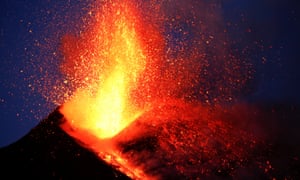
Italy̢۪s Mount Etna, Europe̢۪s tallest and most active volcano, spews lava as it erupts on the southern island of Sicily, Italy February 28, 2017.

1 August, 2017


Coincidence doesn’t prove causality, as they say, but when the same two things happen together over and over again through the vast span of geological time, there must be a causal link. Of some 18 major and minor mass extinctions since the dawn of complex life, most happened at the same time as a rare, epic volcanic phenomenon called a Large Igneous Province (LIP). Many of those extinctions were also accompanied by abrupt climate warming, expansion of ocean dead zones and acidification, like today.

Earth’s most severe mass extinction, the “Great Dying,” began 251.94 million years ago at the end of the Permian period, with the loss of more than 90% of marine species. Precise rock dates published in 2014 and 2015 proved that the extinction coincided with the Siberian Traps LIP, an epic outpouring of lava and intrusions of underground magma covering an area of northern Asia the size of Europe.

But those rock dates presented science with a new puzzle: why was the mass extinction event much shorter than the eruptions? And why did the extinction happen some 300,000 years after the lava began to flow?

Now in a new study published in Nature Communications, Seth Burgess of the US Geological Survey, along with James Muirhead of Syracuse University and Samuel Bowring of MIT, think they have the answer. As Burgess told me:
It’s clearly not the entirety of the LIP that’s guilty. There’s a subinterval that’s doing the work, and I set out to figure out which subinterval that was, and what makes it special.
Burgess noticed that the beginning of the mass extinction, as well as a jolt to the carbon cycle and abrupt climate warming, coincided exactly with a switch in the style of volcanic activity in the Siberian Traps. During the initial 300,000 years of the eruptions, basalt lava poured over a vast area of Siberia building to several kilometers thick. In this time there was some stress to life in the Northern Hemisphere, but no mass extinction. Life only began to disappear across the globe at exactly the same time that lava stopped erupting above ground, and instead began to inject as sheets of magma underground.
In Siberia you have got the Tunguska Basin which is a thick package of sediments that contain carbon-bearing rocks like limestone and coal. When you start intruding magma, [it] cooks those sediments and liberates the volatiles. So the deadly interval of magma in the entire Large Igneous Province is the first material to intrude and pond into the shallow crust
In other words, it wasn’t the lava, it was the underground magma that started the killing, by releasing greenhouse gases.

Norwegian scientist Henrik Svensen had earlier identified hundreds of unusual volcanic vents called “diatreme pipes” all over Siberia that connected underground intrusions of magma (“sills”) to the atmosphere, showing signs of violent gas explosions. This new work emphasizes the importance of Svensen’s 2009 conclusions:
The diatremes that have been mapped are the geologic representation of that gas escape on a catastrophic level. Our hypothesis is that the first sills to be intruded are the ones that really do the killing [by] large scale gas escape likely via these diatremes.
Svensen, who was not involved in Burgess’ study, commented:
The Burgess et al paper is a crucial step towards a new understanding of the role of volcanism in driving extinctions. It’s not the spectacular volcanic eruptions that we should pay attention too - it’s their quiet relative, the sub-volcanic network of intrusions, that did the job. The new study shows convincingly that we are on the right track.

Greenhouse gas as a killer


While other scientists have proposed that an array of killers may have been involved in the end-Permian mass extinction, from mercury poisoning to ultraviolet rays and ozone collapse to acid rain, Burgess argues that it was principally greenhouse gas emissions triggered by magma intrusions that caused the extinction through abrupt global warming and ocean acidification. I asked him to outline the evidence for that.
There are 3 primary lines of evidence that support that link. The first is: right before the onset of the mass extinction we have evidence for a massive input of isotopically light carbon into the marine system.
He went on to explain various lines of evidence that point to the source of that carbon being methane and carbon dioxide resulting from magma intruding and cooking organic-rich sediments. He continued:
Just prior to extinction and persisting after the mass extinction the sea surface temperature is thought to have gone up about 10°C. You get that increase by pumping greenhouse gas into the atmosphere. So that’s the second.
And then the third line of evidence is a physiologic selectivity to the marine mass extinction. Organisms that make their shells out of calcium carbonate suffer much higher mortality than organisms that make their shells out of silica, for example, which suggests that the ocean was acidified, and you get that by pumping gases like CO2 into the atmosphere.
That’s not to say that other factors had no role in ruining the environment:
There is a cacophony of kill mechanisms, and I think that this first pulse of sills is the trigger for quite a few of those, sitting at the top, and beneath it are a cascade of negative effects from ocean acidification to climate warming and on down the line.

A series of associated events


Coincidentally, Joshua Davies of the University of Geneva and colleagues have just narrowed down the trigger for the end-Triassic mass extinction, another of Earth’s biggest mass extinctions, to the underground phase of its associated Large Igneous Province. The Central Atlantic Magmatic Province (CAMP) is another enormous igneous province which stretches from Maine to South America, and includes the Palisade Sill visible from Manhattan. 

They too used high precision rock dates on a vast sill that intruded organic rich sediments in the Amazon Basin, and found that this underground magma intrusion also coincided with the extinction. Like Burgess, Davies also argues that greenhouse gas baked from sediments drove climate change, which drove the mass extinction in a smaller repeat of the end-Permian events, this time 201.5 million years ago.

I think CAMP is very similar to the Siberian Traps and that’s the reason why there’s an extinction at that time. I’m not surprised that they got similar results,” said Burgess.
Diatreme pipes from magma intrusions have also been identified as a likely cause for a more recent global warming and very minor extinction event – the Paleocene–Eocene Thermal Maximum (PETM) 56 million years ago. Again, prodigious quantities of greenhouse gases erupted from oil-rich deposits, although in that case it’s been hard to locate and date the “smoking gun” intrusions due to the fact that they are under the Atlantic Ocean.

A predictive model


Burgess’ insight makes a testable prediction:
Only Large Igneous Provinces characterized by sills intruded into a volatile-fertile basin are going to be lethal on a global scale.
This may explain why some Large Igneous Provinces are tied to mass extinctions, and some are not. Burgess thinks that the Deccan LIP, which happened at the time when the dinosaurs disappeared at the end of the Cretaceous, would not have triggered a major mass extinction on its own:
The Deccan Traps doesn’t satisfy those 2 criteria. It’s predominantly flood basalt lavas erupted onto old granitic rock. Acting alone there would likely have been negative effects on the biosphere because of the gases and the particulate matter released by those lavas, which are not insignificant, but I would argue that acting alone it would have been minor relative to the observed mass extinction. But with the Chicxulub impactor sharing the causal burden together they caused the mass extinction at the end of the Cretaceous.

Parallels today?


The more science learns of these past greenhouse gas-driven events, the more uncomfortable the parallels to today become. I asked Burgess if it was ridiculous to make the comparison.
No, I don’t think the comparison is ridiculous at all, and I think that the timescales over which the environment changes associated with mass extinctions are frighteningly similar to the timescales over which our current climate is changing. The cause might be different but the hallmarks are similar.
Geologically fast build-up of greenhouse gas linked to warming, rising sea-levels, widespread oxygen-starved ocean dead zones and ocean acidification are fairly consistent across the mass extinction events, and those same symptoms are happening today as a result of human-driven climate change. 
Even though the duration of those past events was longer, and the volume of emissions was larger than we will produce, we are emitting greenhouse gases around 10 times faster than the most recent, mildest example – the PETM. The rapidity of today’s emissions prompted scientists Richard Zeebe and James Zachos to observe in a 2013 paper:
The Anthropocene will more likely resemble the end-Permian and end-Cretaceous disasters, rather than the PETM.
When the promises made for the 2016 Paris Agreement on climate change are added up, they aim to limit peak warming this century to about 3.3ºCcompared to about 4.2ºC for the business-as-usual scenario, and the 2ºC limit the world is aiming to stay under. It’s sobering to compare those numbers to the majority of mass extinctions in the geological record which were characterized by abrupt warmings typically around 6-7ºC.

Howard Lee is a geologist and science writer who focuses on past climate changes.