Showing posts with label algal bloom. Show all posts

Friday, 11 January 2019

New Zealand - poisoned Paradise

All these articles, taken together, attests to a major problem with New Zealand’s rivers and clean drinking water, inexcusible in such as small country that is nevertheless surpassing its carrying capacity.
E-coli closes popular Taranaki swimming holes

Unless people know about the water quality in an area, they should not swim or should avoid putting their heads under the water.


Tests found high levels of the bacteria at Queenstown Bay on Sunday, and the Queenstown Lakes District Council (QLDC) were advising people to avoid contact with the water until the levels subsided on Monday morning.

Swimmers were also advised to stay out of the water at Frankton Bay on two occasions last summer due to high E coli levels, which can cause people to become sick.
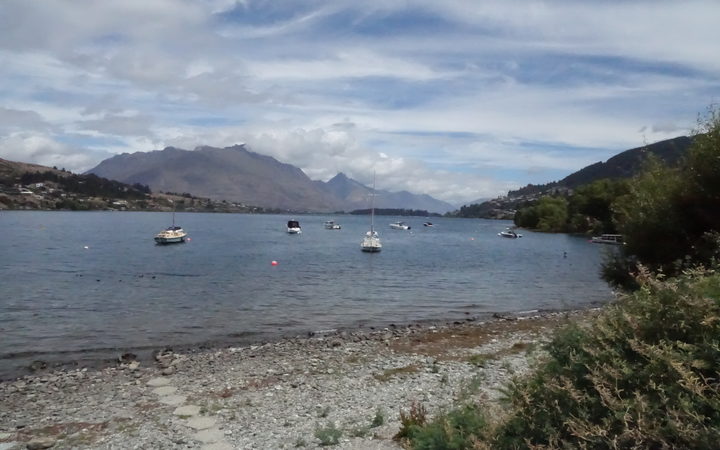
Tests found high levels of the bacteria at Queenstown Bay on Sunday, and the Queenstown Lakes District Council (QLDC) were advising people to avoid contact with the water until the levels subsided on Monday morning.


Swimmers were also advised to stay out of the water at Frankton Bay on two occasions last summer due to high E coli levels, which can cause people to become sick.
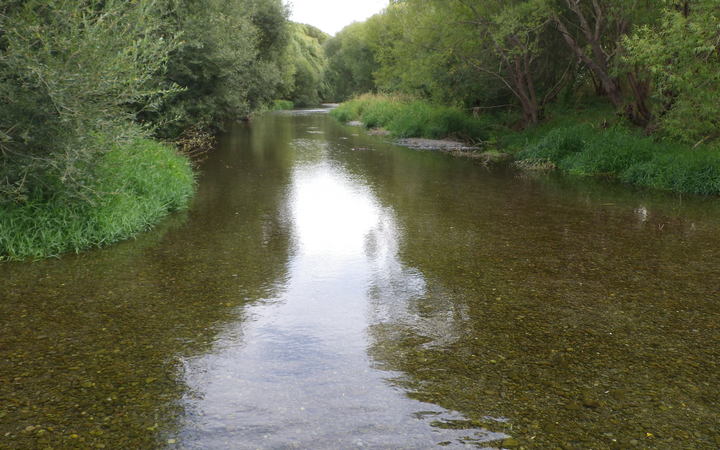

Lake Wakatipu from Frankton.


Fluctuating E coli levels in Queenstown's Lake Wakatipu are going largely unexplained, prompting calls for more scientific research.

Tests found high levels of the bacteria at Queenstown Bay on Sunday, and the Queenstown Lakes District Council (QLDC) were advising people to avoid contact with the water until the levels subsided on Monday morning.

Swimmers were also advised to stay out of the water at Frankton Bay on two occasions last summer due to high E coli levels, which can cause people to become sick.

Selwyn River

Scientific testing of three rivers in Canterbury has revealed strains of a severe pathogen which can cause kidney failure and, possibly for the first time, antibiotic resistant E. coli.

The Selwyn River was one of three tested in May and September. Photo: Green Ideas editor Greg Roughan

The independent testing commissioned by Fish and Game has raised red flags for public health officials who say that it needs more investigation.

Samples were collected from above and below the biggest farms - all dairy - on the Ashley, Selwyn and Rangitata rivers in May and September and independently tested by Massey University's Institute of Agriculture and Environment.

Fish and Game commissioned the testing after anglers started questioning whether they could get infected from the river pollution and large numbers of dairy cows in Canterbury.

The findings showed the presence of an antibiotic-resistant E. coli and another dangerous strain of the bacteria called Shiga toxin-producing E. coli (STEC).

The two most common E. coli found in the testing come only from ruminants such as cows.

Fish and Game chief executive Martin Taylor said the first tests were so alarming it commissioned a second round to confirm the findings.

It it showed the contamination of Canterbury waterways was primarily due to intensive dairy farming, he said.


"The results indicate swimming in these rivers could be like playing Russian roulette with the health of you and your family," he said......
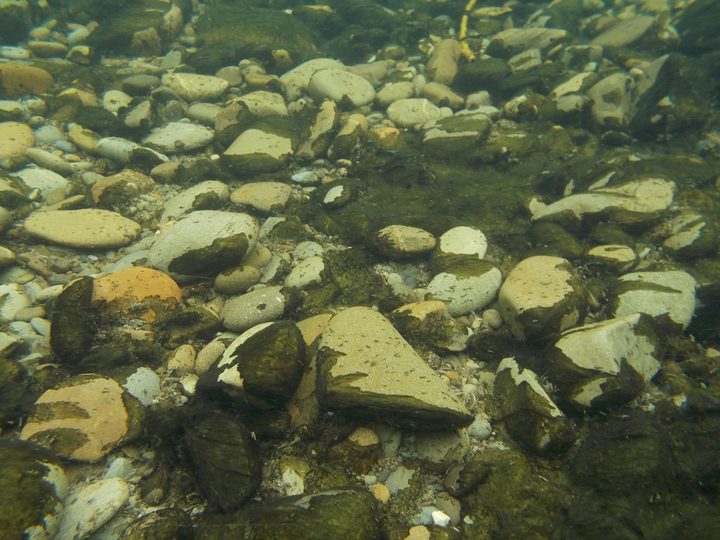


Close up of Phormidium in Opihi River.

A health warning has been issued for parts of two rivers in South Canterbury, where high levels of potentially toxic blue-green algae have been found
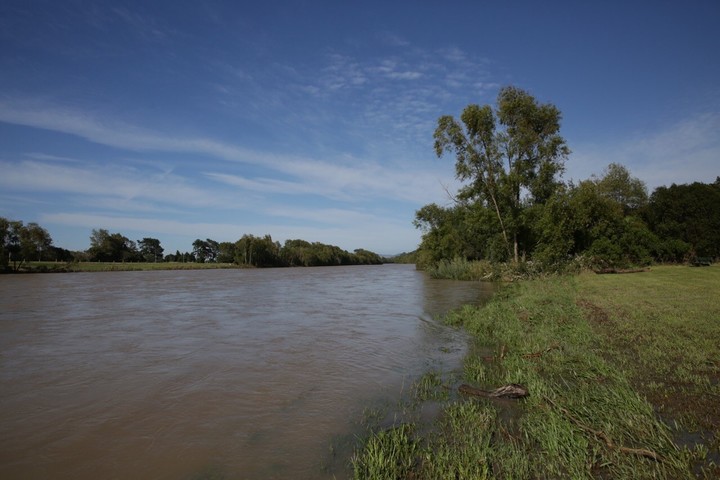

A man is missing after swimming in the Hutt River last night.

Two dogs have died this year after consuming toxic algae from the Hutt River


Lake Forsyth on the Banks Peninsula is green with toxic slime.

Poisonous water in a Canterbury lake has killed sheep and household pets, after recurring algal blooms made the water toxic.

Locals say that after several years of improvement, the water in Lake Forsyth on the Banks Peninsula has deteriorated after a run of dry weather.

For the last few months, large parts of the lake have been green, with toxic green slime seeping onto its shores.

Signs warn that the water is dangerous for humans and animals.

Several weeks ago, a farmer lost around 30 sheep after they died drinking water from the lake.

"It's in a very bad state this year, which is actually quite surprising. The quality of the lake has been improving for the last five years," said Banks Peninsula zone committee chair Steve Lowndes.

"This year, it's gone backwards."


Image result for e coli napier hawkes bay

Napier City Council has announced a second positive result for e-coli in the Enfield Road water reservoir.

On Thursday the Hawke's Bay District Health Board and Napier City Council agreed to chlorinate Napier's Enfield Rd reservoir after routine testing returned a positive test for e-coli.

Another positive result was returned today, however the council was reassuring residents it showed the very lowest e-coli reading detectable and the source had been isolated to one tank of the two housed at the reservoir.

Napier City Council's Manager Asset Strategy Chris Dolley said, "the reservoir is made up of two tanks - the largest of the two has returned consistently clear results however the smaller of the two has tested positive for e-coli".

No caption


About 120 households in rural Otago are being warned not to drink the water from their bores after testing found high levels of the faecal bacteria E. coli.

Otago Regional Council chief executive Sarah Gardner said the worst result in the Lower Waitaki plains area was from March.

"The levels have spiked at quite a high number - I understand at around 150 [colony forming units - or viable cells - per millilitre] above what the drinking water standard is.

"At other times, they have been relatively close to the standard - but not as close as they should be."

The safe level for drinking water is "less than one" colony forming unit per millilitre.....

Thursday, 18 October 2018

Florida's red tide


Paradise lost: More than 8,000 miles of Florida coast is now suffering from an unprecedented red tide algae bloom! Disaster for marine life

Above, red line showing the red tide algae bloom
16 October, 2017


Florida’s marine shoreline totals more than 8,400 miles but less than 200 miles of the Florida coast is free from an unprecedented red tide algae bloom.
The algae bloom now stretches from Pensacola on the Alabama border in the Gulf of Mexico all the way down the west coast around the southern tip and up the eastern coast to Sebastian.

The bloom has killed an astonishing amount of marine life as well as causing health issues to local residents and tourists.

Just a few hours after Sebastian Daily broke the news that Red Tide was seen in Vero Beach south of the Sebastian Inlet, Indian River County officials say they were working to "assess conditions." "There are indications that Red Tide has reached Indian River County and we are working closely with the Indian River County Department of Health to assess conditions," a statement reads from officials.

"There have been reports of sporadic dead fish and mild respiratory irritation.
There are no Indian River County beach closures at this time.

The Department of Health is collecting samples for both confirmation and the potential level of Red Tide based on the number of organisms present," the statement read.

While the Sebastian Inlet appeared to be fine early Monday, several people in Vero Beach contacted Sebastian Daily to report the existence of Red Tide on several beaches.

"We've been coughing all morning, and it's only been worse since we walked the beach this morning," a Vero Beach resident told Sebastian Daily.

Many people also questioned why the county never warned residents or didn't close the beaches. "Lifeguards at tracking station are wearing masks because it's so bad," Lifeguard Michael Flinn told Sebastian Daily.

The lifeguard tracking station is south of John's Island and 1 mile north of Jaycee Beach.

On Monday afternoon, Sebastian Daily investigated the beach south of John's Island, which appeared to show signs of red tide.

There were dead fish on the beach, the air made us cough, and we now have sore throats.

Sebastian Daily contacted the FWC Monday afternoon based on our observations along the beach just south of John's Island.

Local residents say it's Red Tide as they have experienced this in the past.
"It's definitely Red Tide, you can smell it, makes you cough," John Naft told Sebastian Daily.

"We've seen it before, I don't know, ten years ago, it was even worse than this," Naft added.

Towards late afternoon, there are indications that Red Tide is now in Sebastian.


Algae and bacteria in waters slowed the recovery of marine life in mass extinction


 As we contemplate why there are such high levels of algae in the waters of the Arctic ocean this article may provide some insight into where it might be leading
Algae and bacteria hogged oxygen after ancient mass extinction, slowing recovery of marine life, say Stanford researchers
After the biggest mass extinction in Earth's history – 250 million years ago – algae and bacteria in the ocean rebounded so fast that they consumed virtually all the oxygen in the sea, slowing the recovery of the rest of marine animals for several million years.


24 March, 2011

A mass extinction is hard enough for Earth's biosphere to handle, but when you chase it with prolonged oxygen deprivation, the biota ends up with a hangover that can last millions of years.

Such was the situation with the greatest mass extinction in Earth's history 250 million years ago, when 90 percent of all marine animal species were wiped out, along with a huge proportion of plant, animal and insect species on land.
A massive amount of volcanism in Siberia is widely credited with driving the disaster, but even after the immense outpourings of lava and toxic gases tapered off, oxygen levels in the oceans, which had been depleted, remained low for about 5 million years, slowing life's recovery there to an unusual degree.
The reason for the lingering low oxygen levels has puzzled scientists, but now Stanford researchers have figured out what probably happened. By analyzing the chemical composition of some then-underwater limestone beds deposited over the course of the recovery in what is now southern China, they have determined that while it took several million years for most ecosystems in the ocean to recover, tiny single-celled algae and bacteria bounced back much more quickly.
In fact, according to biogeochemist Katja Meyer, the tiny organisms rebounded to such an extent that the bigger life forms couldn't catch a break – much less their breath – because the little ones were enjoying a sustained population explosion.
As the vast hordes of tiny dead organisms rotted, dissolved oxygen in the seawater was consumed by aerobic microbes involved in the decay process, leaving scant oxygen for larger organisms in what became an oxygen-depleted, or anoxic, environment.
L.A. CiceroKatja Meyer
Biogeochemist Katja Meyer
The driver of the ongoing population boom appears to have been the massive amounts of carbon dioxide pumped into the atmosphere during the volcanism, Meyer said, which caused the world to warm.
"More warmth means an invigorated hydrological cycle, so you get more rain and this rain is also more acidic because there is more carbon dioxide dissolved in the rain," Meyer said.
The increased amounts of more acidic rain increased weathering of the land surface, which sent more nutrients into the ocean, which fueled explosions of life such as algae blooms.
"It is kind of counterintuitive that high productivity on the part of algae and bacteria would likely be generating these toxic geochemical conditions that prevent most of animal life from recovering from mass extinction," Meyer said.
But the process, she said, is basically the same as when excess runoff from fertilizers goes into a body of water, whether it's a pond on a golf course or the infamous dead zone in the Gulf of Mexico created by farm runoff carried down the Mississippi River.
"You get this giant bloom of algae and then it starts to smell bad as that algae decays, pulling oxygen out of the water and causing fish die-offs," Meyer said.
In spite of the almost inestimably high numbers of algae and bacteria living and dying during this time, there is little direct evidence of them in the fossil record because such tiny, soft-bodied creatures just don't preserve well.
So Meyer and her colleagues had to work with indirect evidence of the microorganisms to determine their abundance during the years after the mass extinction. The population proxy they used was the carbon present in the limestone.
Carbon – like all elements – comes in different varieties, called isotopes, distinguished by the number of neutrons each has in its nucleus. The researchers worked with two carbon isotopes, carbon 12, which has six neutrons, and carbon 13, which has seven.
Both isotopes are present in ocean water, but living things on Earth have always shown a preference for incorporating the lighter isotope, carbon 12, into their structures. Thus, where life is abundant, the ratio of carbon 13 to carbon 12 in seawater is higher than it is where there is no life.
Limestone records the composition of the seawater in which it was deposited, including the relative amounts of light and heavy carbon isotopes, so by analyzing the isotope ratio in the rocks, Meyer could infer the abundance of life in the water where the limestone formed.
Comparable modern environments, such as the Bahama Banks in the Caribbean Sea, where carbonate platforms similar to the limestones are forming, are typically teeming with life at the range of depths in which Meyer's limestones formed. In these environments, the ratio of carbon 13 to carbon 12 is generally constant from shallow to deep water.
But microorganisms are typically most abundant in shallow waters, so if marine life in the era after the mass extinction had been confined to algae and bacteria, then the shallower depths should show a markedly greater ratio of carbon 13 to carbon 12 than would be found at depth.
Meyer's analysis showed there was a difference of about 4 parts per thousand in carbon isotope ratios from the shallow waters to depths, roughly twice what it is today.
"We only see this gradient in the interval after the mass extinction prior to the recovery of animal life," said Meyer.
Meyer is the lead author of a research paper about the study published last month in Earth and Planetary Science Letters. The extinction 250 million years ago is known as the Permian-Triassic mass extinction, as it coincides with the end of the Permian period and the beginning of the Triassic period on the geologic time scale.
"It appears there was a huge amount of biological productivity in the shallow waters that was making the bottom waters uninhabitable for animals," said Jonathan Payne, assistant professor of geological and environmental sciences, who is a coauthor of the paper and in whose lab Meyer has been working.
"It looks like the whole recovery was slowed by having too much food available, rather than too little," Payne said. "Most of us think that if the biota isn't doing well, maybe we should feed it more. This is clearly an example where feeding it less would have been much better."
Funding for the research was provided by the National Science Foundation, Agouron Institute, American Chemical Society and National Geographic Society.

EDITOR'S NOTE

Research paper in Earth and Planetary Science Letters (DOI: 10.1016/j.epsl.2010.12.033)

MEDIA CONTACT

Louis Bergeron, Stanford News Service: (650) 725-1944, louisb3@stanford.edu

Wednesday, 17 October 2018

An Arctic sea ice update - 16 October, 2018


A report from the Arctic as the sun sets over the North Pole - 16 October, 2018


Until Margo is able to do another of her updates on the Arctic ice I am going share what I can see with my own eyes by looking at the same set of data I look at every time.

I have tried, this year to avoid reactions like "there is going to be a blue sea event", or "No there's not. We have bought ourselves another year".

The first thing that stands out is that the sea ice extent has not changed that very much since the official end of the melt season almost a month ago.


In this short video I pick up on some features that stand out for me from looking at today's images on NASA Worldview.


As can be seen clearly here temperatures are much, much warmer than the historical average.

Looking at the data from NASA Worldview we can see that temperatures at the Pole vary from 264K (-9C) to 254K (-20C)


Here is a generalised view from today. Most areas are covered in thick cloud as they have for several days.

"One of the first things that stands our are the strange cloud formations in the Bering Sea just south of the Aleutian Islands.


Once again we have these strange clouds which I do not find it difficult to imagine that some sort of microwave or weather modification has been used. I still cannot think of a simple and credible reason why it should be like this


Algal blooms in the Arctic?

Yesterday I posted the following article without comment which suggested that the Arctic sea ice decline is driving phytoplankton into the North.


 This true-color image, captured by the NOAA-20 satellite on July 30, 2018, shows a large phytoplankton bloom in the Barents Sea. Credit: NOAA Environmental Visualization Laboratory

A new study based on satellite imagery of ocean color reveals phytoplankton spring blooms in the Arctic Ocean, which were previously nonexistent, are expanding northward at a rate of 1 degree of latitude per decade. Although blooms, or large explosions of phytoplankton, did not previously occur in this area, phytoplankton were present in the Arctic’s central basin at low biomass. The study also found the primary productivity of the phytoplankton, or the rate at which phytoplankton are converting sunlight into chemical energy, is increasing during the spring blooms.....

I decided to consult Sam Carana of the Arctic News for his views on this. He came back quickly with an answer that accorded with what my own views were:


"Looks like algae to me. Phytoplankton includes algae, bacteria and more. Terminology can be confusing. Cyanobacteria are sometimes considered to be algae. I guess there will be ships taking samples reporting soon."

The various species of algae are vastly different from each other, not only in pigmentation, but in cellular structure, complexity, and chosen environment 4,5. As such, algal taxonomy is still under debate, with some organizations classifying algae under different kingdoms, including Plantae, Protozoa and Chromista 4,6,8,9. While the overarching kingdom classification is not always agreed upon, the species, genus, family, class and phylum of each alga generally are 6.

To further complicate this nomenclature, single-celled algae often fall under the broad category of phytoplankton.


Here are some of the photos of the region showing the phenomenon.

From the 14 October.....


And from a similar period from last year, 2017.

It is therefore not totally new but relates to precisely this time of the year.


 Other data


The official data confirms what we have been saying - and that there has been no or very little) refreeze.


Despite moving into the northern winter, part from a narrow strip north of Canada and Greenland there is nowhere in the Arctic where the thickness is greater than 1-1.5 meters.


 High methane emissions
 
First, the latest available figures at ground level from CAMS (Monday, 15 October)


Here are some other figures (from NOAA)...

"Here is the data for the year-to-date on methane from Mount Loa. In my time there has been a habit on the part of NOAA to scrub out readings that deviate from the norm as here."
 
And from Barrow, Alaska...

"Looks like NOAA has stopped erasing the Barrow Methane data. Let's face it, nobody believes the trimmed down Data that Boulder leaves us after they erase all of the high readings as they have been doing since 2015."
--- Joe Neubarth, via Facebook

 
Here are some data from 469 mb


Remember, this is the peak reading from a hot spot on the chart. It is not the average. NOAA screws around with the average and tries to eliminate the highest readings that are usually over the eastern Siberian area or Greenland. There is another hot spot that they avoid to make certain they lower the first two hot spots. 

They will on occasion use a White Out to make it appear that the satellite missed an orbit over Alaska or over other parts of Siberia or China if there is too much pink in the atmosphere.

---Joe Neubarth, via Facebook

This is from CAMS from approximately the same altitude - 500 hPa (approx. 19,000 feet (or 6,000 meters)


Monday, 8 October 2018

Florida's Toxic Red Tide


I’ve been here all my life and I’ve never seen anything like this.” Florida red tide bloom now stretches from the Gulf of Mexico to Fort Lauderdale


7 October, 2018

From the end of September.
It is astonishing, jaw-dropping! THOUSANDS OF TONS (MILLIONS MAYBE BILLIONS) of Marine species dead along the entire Florida west coast since May

It is astonishing, jaw-dropping even, it should be world news or at least national news but the fact is since May this year the entire west coast of Florida, from Navarre Beach in the north all the way down to Collier County in the south has witnessed the death of millions, maybe billions of marine species from birds to fish, manatees, dolphins and turtles due to a red tide algae bloom and it only made local news.

Below is a list of die-offs, (with links attached) along the entire west coast of Florida since May, the list is frightening.

It started off slowly...And then exploded.

Below is not a true figure as many more species will have died out at sea.

On May 4th A Navarre woman spotted nearly 100 dead birds within a one-mile radius on Navarre Beach Full story

On the 3rd of June, The Tampa Bay Times reported Freshwater turtles began turning up dead along the St. Johns River in January. Now about 100 dead or dying turtles have been found in water bodies in Orange, Seminole and Putnam counties. A few reports have come in from other locations, such as Trout Lake near Eustis in Lake County. Full story

On the 27th of June, a Florida beach was littered with 'hundreds' of dead fish, manatees and other marine life. Hundreds of dead fish, manatees, sea turtles, eels and other types of marine life were found washed ashore on Boca Grande beach. Full story

On the 1st of July, Fox4 reported, Red Tide caused large fish kills in Englewood. Manatees, turtles, and snook were popping up everywhere. The most recent Red Tide event to hit Southwest Florida has been devastating for the beaches and the people who make their living off of them. Full story

On July the 31st, Miami Herald reported dead fish, birds, manatees, even a whale shark washed up dead at Cape Coral as the toll from worst red tide in decades grows. Dead fish by the thousands have clogged inlets and canals. 10 dead Goliath grouper, the massive reef fish that can live four decades or more, have floated to the surface. At least 90 sea turtles have been found stranded as the tide stretches well into nesting season. Full story

On August the 1st News-Press announced Lee County had opened fish disposal sites as the Florida algae crisis continued. Dead sea turtle count at 400. A local fisherman claimed: "There’s lots of dead everything here," Wasno said. "I’m watching a sea trout die right at my feet. There’s mullet, snook, pinfish, sea snakes, small grouper, and there’s a lot of it." Full story

On August the 6th Fox13 announced tons of dead fish shovelled from beaches along Sarasota County. Dead fish are now washing ashore on Anna Maria Island after the red tide bloom drifted slightly north over the weekend. Meanwhile, crews in Sarasota County say they removed several tons of dead fish over the last two days alone. Full story

16th August - 3 MILLION lbs of dead fish washed up on beaches in Lee County, Florida: The latest numbers from Lee County officials on Thursday reveal that well over 3 million pounds of fish have been removed from local coastlines. The county reports that contractors removing fish from Lee County beaches have amassed more than 1,400 tons of fish, and that crews in Sanibel have collected an additional 309 tons. Among the dead fish found include one dead Whale Shark on Sanibel, and numerous large goliath grouper and tarpon. Full story

22nd August - 15 dead bottlenose dolphins wash up dead in Sarasota:  “I have never come across something like this ever,” Master Police Officer, Paul Joyce, with the Venice Police Marine Patrol Unit said. Full story

23rd August - Thousands of dead fish wash up again in Sarasota. A witnessed claimed she’s seen everything from pinfish to puffer fish to catfish float up in the marina. Red tide isn’t just stinking up Sarasota — over the last day or so most of Bradenton has been smelling like a pile of dead fish. The algae bloom sets off a distinguishable stench, one that readers told the Bradenton Herald they could smell from downtown. Full story

27th August-240 TONS of dead fish wash up, due to red tide in Manatee County, as of Monday, the county had already collected about 241 tons of red tide-related debris left on Manatee County beaches, parks and waterways, cleaning up the majority of fish kills, officials announced during a news conference. Full story

10th September - 33 TONS of dead fish wash up, due to red tide in Pinellas: Red tide is officially impacting Pinellas County. Crews have picked up a total of 33.48 tons of dead fish and hauled them off to the county dump. Tests conducted Monday show the highest levels of the toxic algae bloom near John's Pass and Madeira Beach. Low levels were also found near the Bellair Boat Ramp and Sand Key near Clearwater Pass.

17th September - Thousands of dead fish wash up due to red tide on Panama City:
 
Beachgoers in Panama City Beach were greeted by a grisly sight this weekend: Thousands of dead fish spanning the coastline. The killer? Red tide. Full story

Earth has crossed its own tipping point and is creaking under the strain: Two-thirds of animals extinct by 2020! 

Florida Declared ‘State Of Emergency’ After Toxic Red Tide: Still Spreading, Lifeguards are Getting Sick

 
7 October, 2018

Remember a couple months ago when a state of emergency was declared in Florida, as the “red tide” started causing people respiratory problems? It brought a lot of people to the question, is this really nothing but a red tide, and what else is influencing this?]

It’s still going on, and its still spreading. According to a recent article from the NY Post“Florida officials are warning residents that toxic red tide algae could be making its way toward several of the state’s beaches. Hundreds of fish were found washed ashore at Fort Lauderdale Beach in Broward County, prompting officials to test for red tide. Several beachgoers in the area also reported coughing and mild irritation due to possible red tide exposure.”

This photo captured an eerie moment when people glued to their phones respond sheepishly to the dead fish washing up on shore, choosing to capture it with their phones before anything else.
(Image credit: NY Post)

The problem is still here although public awareness of the situation seems to have died down, and now a lifeguard union boss is demanding that Palm Beach County close its beaches for the safety of everyone, from the lifeguards who work there every day to the general public and everyone at the peach.


If people going to the beach start to notice respiratory problems or other symptoms, they can just leave. However, lifeguards are there trying to earn a paycheck they need. When you need to get paid do you stop working even when conditions get rough?
(Image credit: nationalgeographic)

Conditions are still so rough that lifeguards cannot work or they will be putting themselves in danger. According to a local CBS 12 report:


Rick Poulette is their voice. He’s president of Communication Workers of America, a labor union for lifeguards. Poulette says dozens of lifeguards have reached out to him, scared to go to work. Poulette says dozens of lifeguards have reached out to him, scared to go to work.”

Rick said“They feel like the county is not interested in their safety.” Of course the county isn’t interested in their safety, no county government or authority anywhere is interested in anything but self-enrichment generally speaking, unless they are held accountable very persistently by the citizens, which even then is inferior to communities doing things for themselves.

They’re getting sick. They’re getting ill.”

This Friday was the first day these beaches have reopened, and he said just then, half a dozen lifeguards already left work to seek medical treatment.
A county notice apparently showed them some bleak new “protocol for lifeguards,” instructing them to go so far as to wear goggles, masks, and come to work wearing protective clothes. The lifeguards are only allowed on the beach in “one hour increments.”
(Image credit: hbucollegian)

Why are the beaches open if it’s that dangerous?” asks Poulette.

Even the mainstream little article admitted the county didn’t say anything helpful: “CBS12 News reached out to county for that answer, but they say signs and flags clearly indicate hazards. But Poulette says that’s not enough.”


A Palm Beach County lifeguard reached out to CBS12 News. He says a private doctor has advised both him and another lifeguard to stay away from the beach.”

The red tide in Florida is still a problem, and people wonder if it doesn’t have more to do with something secret than just the industrial farming and all that stuff that is said to feed the red, toxic algae to the extent that it causes such problems. 

After all, secret things have taken place in the past that led to similar symptoms.
It’s possible that unsustainable agricultural or farming practices contribute to a red tide, but it’s also possible that factors we don’t understand are at play. People would always be wise to question things.