
 Posts
Posts


What
has happened to Robert Marston Fanney (aka "Robertscribbler")?

Large,
Troubling Methane Pulse Coincides With Arctic Heatwave, Tundra Fires
He goes through what he considers the most salient features such as high readings in China and the Himalaya (which he ascribes to heavy rain).
Most importantly he points to high readings in northern Siberia but basically he tells us that this is coming from fires in northern Siberia as well as from thermokast lakes.
 The fires in the tundra (where the nearest tree might be a thousand kilometres away) was a new one on me until I checked.

Indeed there are fires in the tundra but the question arises as to whether the methane came first or is a consequence.I would imagine that if methane is bubbling up to the surface in sufficient quantities even lakes could ignite - and indeed videos show this happening.
Once again we are reminded by Robert that he is "not taking into account the unsubstantiated worst-case scenarios"
Is that the same Robertscribbler who wrote this back in 2014?

Tracking the Footprints of the Arctic Methane Monster: Black Craters in the Siberian Tundra, Methane Lacing 2,500 Mile Wide Smoke Plumes Over Gigantic Arctic Wildfires.
Somehow, in going through the most salient points from the CAMS data from last Monday, 27 August the following seems to elude him!
 This is the one feature that has been leaping out at me for several weeks now= huge concentrations of methane from Scandinavia. It is NOT just a one-off.
We all try to speculate as to the cause of these high methane readings but if I am honest I would have to admit I really don't know.
It is all in the realm of speculation.
But Robert Fanney seems to be very confident in using his authority to tell us what is going on.
I suspect not only that he does not know any more than we do but he is,in fact, making it all up as he goes along as he tries to dismiss the "alarmists".
His next video was on the Arctic ice (which has a title uncannily like Margo's latest video.

Arctic Sea Ice, Weather, and Climate Update for August
Unlike Margo who is untrained in climate change science but is able to use her detailed eye to look at the data and pick out what is actually there in front of her eyes, Robert Fanny uses his authority to give an unbelievably shallow report on the Arctic ice to underline his contention that this is the 5th or 6th lowest sea ice area on record and to avoid telling us just how damaged the ice is.
Some speculation
It is not usual for me to attack people, certainly not with ad hominems, unless they have crossed me (or more commonly friends such as Guy McPherson but because this blog has been so linked with Robert Fanney in the past I am going to make my feelings (and even my speculation) known.
As well as a significant decline in the quality of his writings and the quality of ideas I have noticed that he has outed himself as the worst sort of pro-Hillary cold war warrior.
In addition to toning down his climate message to a level where he often seems conservative in comparison with many mass media headlines he also devotes much energy into pushing "clean energy" as a solution and electric vehicles and Elon Musk in particular.
 Why not "do your bit for the planet" and drive a nice new car as well?
Whereas,in the past if I wrote some critical comments people would come back and say "he is doing great work" increasingly I have found comments such as the following on my blog:

Anyone who has been following this blog for a while will know that I have been posting articles from Robertscribbler since 2012. Much of his earlier work was very good and included items such as the following, which I regard as very good climate journalism:
Back at the end of 2013 Robertscribbler was able to say this, citing Guy McPherson:
"... And we should not
be comforted by this notion. Because Nature carries the biggest stick
of all. A consequence hanging over our heads that grows larger and
more dangerous with each passing year during which our insults to her
continue.
Among
the pessimists regarding the end consequences of human caused climate
change and related pollution, ecologists are the worst (sic) of the bunch.
This is likely due to the fact that ecologists are very intimately
involved in the study of how communities of organisms succeed or fail
in natural settings. Among all groups of scientists, they are perhaps
the ones most intimately familiar with the way in which all living
things are connected to both one another and to the natural world.
Ecologists know all too well that small shifts can mean huge changes
to biodiversity, the rate of death among living beings, and the
distribution of species in a given environment. But the changes
humans inflict are not small in the least. They roughly ripple
through the natural world in ways that ecologists know all too well
have never before been seen."
Dr.
McPherson is such an ecologist and one with such great conscience and
concern that he, years ago, abandoned most of the luxuries of modern
civilization to live in a fashion that produced the least harm
possible. Not that this action has resulted in more optimism on his
part. In fact, Guy is one of a growing group of people who believe
that no action is likely to save humankind. That our insults to the
natural world have already grown too great."
And he concluded:
"It
is a deadly transition for which we have growing evidence with almost
each passing day, one that McPherson and others fear could truly make
an end to us and to so many other living creatures on this world.
So
many scientists, so much valid reason to be dreadfully concerned, and
yet we continue on the path toward a great burning never before seen
in Earth’s history…"
Since then I have been banned from commenting on his blog.
I challenge you to find anything even vaguely objectionable on my part.
And yet these sentiments have never ever been repeated.
What
I in fact know is that Robertscribbler engages in almost the most
extensive censorship on the comments section that I know. Anyone citing
Guy McPherson was blocked from any comments on his blog.
In fact, I would go a step further and say that anyone citing Paul Beckwith or Sam Carana or Prof. Peter Wadhams attracted a similar response.
In fact, I would go a step further and say that anyone citing Paul Beckwith or Sam Carana or Prof. Peter Wadhams attracted a similar response.
For me it came to a head in April 2016 when I tried to point out to him information that came from a source other than him.
Since then I have been banned from commenting on his blog.
I challenge you to find anything even vaguely objectionable on my part.
Shortly
after that came the American elections of 2016. Since that time
Robertscribbler has become less of a climate journalist and more of a
hack who has at least as much to say about Hillary Clinton, Donald Trump
and most particularly, Elon Musk and his electric cars as he does about
climate change.
Much of what has come out on climate has been nothing less than disappointing.
I have my own personal reflections on this but I will talk about his most recent material first
A couple of days ago Robert Fanney posted a couple of videos (he seems to have stopped doing his blog.

Tracking Present Surface Methane Hot Spots
In this one on methane he goes out of his way to disavow what he calls "alarmist" views.
THE
LATEST FROM ROBERT FANNEY ON ARCTIC ICE AND METHANE
A couple of days ago Robert Fanney posted a couple of videos (he seems to have stopped doing his blog.

Tracking Present Surface Methane Hot Spots
In this one on methane he goes out of his way to disavow what he calls "alarmist" views.
He goes through what he considers the most salient features such as high readings in China and the Himalaya (which he ascribes to heavy rain).
Most importantly he points to high readings in northern Siberia but basically he tells us that this is coming from fires in northern Siberia as well as from thermokast lakes.


Not a tree within a thousand kilometres. Methane emissions are among the only credible explanations for fires in the tundra.
Indeed there are fires in the tundra but the question arises as to whether the methane came first or is a consequence.I would imagine that if methane is bubbling up to the surface in sufficient quantities even lakes could ignite - and indeed videos show this happening.
Once again we are reminded by Robert that he is "not taking into account the unsubstantiated worst-case scenarios"
Is that the same Robertscribbler who wrote this back in 2014?
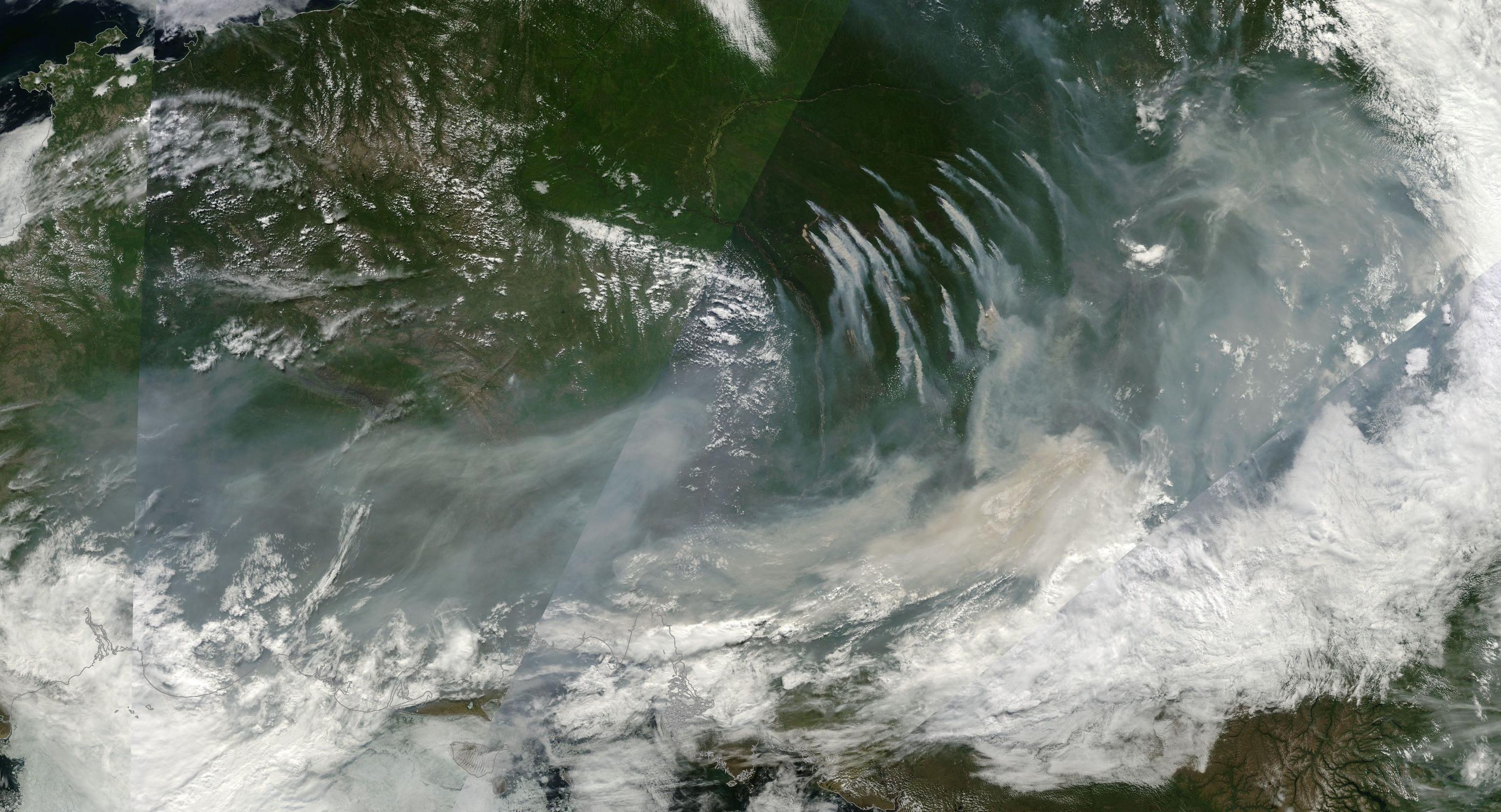
Tracking the Footprints of the Arctic Methane Monster: Black Craters in the Siberian Tundra, Methane Lacing 2,500 Mile Wide Smoke Plumes Over Gigantic Arctic Wildfires.
Somehow, in going through the most salient points from the CAMS data from last Monday, 27 August the following seems to elude him!

We all try to speculate as to the cause of these high methane readings but if I am honest I would have to admit I really don't know.
It is all in the realm of speculation.
But Robert Fanney seems to be very confident in using his authority to tell us what is going on.
I suspect not only that he does not know any more than we do but he is,in fact, making it all up as he goes along as he tries to dismiss the "alarmists".
His next video was on the Arctic ice (which has a title uncannily like Margo's latest video.

Arctic Sea Ice, Weather, and Climate Update for August
Unlike Margo who is untrained in climate change science but is able to use her detailed eye to look at the data and pick out what is actually there in front of her eyes, Robert Fanny uses his authority to give an unbelievably shallow report on the Arctic ice to underline his contention that this is the 5th or 6th lowest sea ice area on record and to avoid telling us just how damaged the ice is.
Here is what Robert Fanney chooses NOT to show you in his video in his effort to paint 2018 as an "unexceptional year
Some speculation
It is not usual for me to attack people, certainly not with ad hominems, unless they have crossed me (or more commonly friends such as Guy McPherson but because this blog has been so linked with Robert Fanney in the past I am going to make my feelings (and even my speculation) known.
As well as a significant decline in the quality of his writings and the quality of ideas I have noticed that he has outed himself as the worst sort of pro-Hillary cold war warrior.
In addition to toning down his climate message to a level where he often seems conservative in comparison with many mass media headlines he also devotes much energy into pushing "clean energy" as a solution and electric vehicles and Elon Musk in particular.
 Why not "do your bit for the planet" and drive a nice new car as well?
Whereas,in the past if I wrote some critical comments people would come back and say "he is doing great work" increasingly I have found comments such as the following on my blog:
"I
commented on his blog about his anti Putin rhetoric. Result
– blocked.
Scribbler
simply won't let his readers see anything he doesn't agree with. It's
a closed echo chamber."
Or -
"Hi
Seemorerocks. I visit your blog, Guy's blog, and scribbler's blog
almost everyday. I found yours to be most informative about global
tensions, guy's best on emotional commentary and scribbler on AGW
news.
"However, as a semi-regular at NBL, i have always been blocked
at Scribbler regardless of my topic or insight.
"He knows that i
believe the situation is beyond any rational capacity to fix and
therefore i am persona non grata."
Lesson is that he does not allow anyone other than his well-trained and sycophantic acolytes to comment.
His game seems to be to use his previously well-deserved authority to deflect people from reaching any conclusions that go beyond the most conservative Establishment views. He is telling people "don't look there, look here".
My thoughts have veered towards towards wondering if he has been 'bought' as happens so often these days.
There can't be much money in writing second-tier science fiction novels so unless they have an independent source of income how do you afford to spend so much time on this endeavour.
What if Robert Fanney was, for example, paid a retainer by Musk to push his line? You would tone down your message accordingly.
I have always assumed that his increasing conservatism is coming from being spooked by his own evidence or by developments under Trump.
He would not be the first person to do so.
However, in the past few days, after looking more carefully at what he is saying I have been reconsidering and speculating (and yes, that is what it is - speculation) that he might have been given some form of inducement to use his authority to pull the wool over people's eyes.
Such a thing no longer seems so outlandish in contemporary America.


