Showing posts with label Murray-Darling Basin. Show all posts

Monday, 23 December 2019

The deadly serious business of a continent on fire while its water resources are being ripped off


Is Australia being dried out 

by design?

Image may contain: sky and outdoor

Right now I am feeling for our Australian cousins and everything that is going on over there.  I wish to add to the article I posted yesterday on the Australian bushfires.

Reflections on clouds obscuring the sun and the Australian bushfires

We get fed articles which reports on the fires in a not entirely satisfactory way and are designed to create an impression.

There are, however, other aspects to this that appear in the media but as isolated items without any context.

It is my wish to provide a report which reflects the more complicated picture and may join some dots which badly need joining.


This is the latest coming out from Australia.  There is no doubt the seriousness of the situation.

Essentially it seems that all roads out of Sydney are closed except for two.
No photo description available.
Max Igan, in his last two videos, has presented a lot of material relating to this situation for which I am deeply grateful even if I am not quite in line with his conclusions and certitude.


Max is quite sure that the drought and the fires have nothing to do with anthropogenic climate change (which they do in my considered opinion).

I really like personal anecdote which in my opinion is worth as much as anything from people sitting in front of a computer.

He notes that the creeks on his Queensland property are all dried out. People assume they will fill up with the next rain but as he points out, they are fed by aquifers. 

But the aquifers are drying up.

But let me take a step back and take a look at the response to the fires. At a time when his country is on fire and the population needing someone to stand with them, PM Scott Morrison decides it is the right thing to take off on a holiday in Hawaii.


No photo description available. 
However, before he did so he rejected calls for more help for the overstretched fire fighters saying they "wanted to be there"

Did he mean these people?

Image may contain: one or more people and people sitting

Not before NSW premier, Gladys Berejiklian slashed fire service budget as the fires were raging - the rural one by 75%!

Image may contain: 2 people, people smiling, text


Max Igan makes a strong case that Australia is being dried out as its water is being squandered.

This does not really make it into the public discourse and certainly not discussed in relationship to the current fires.

Let's have a look, first, at the all-important Murray-Darling Basin.


THE MURRAY-DARLING BASIN


S-100 Criminal Governments, Stop Floodplain Harvesting

The $13 billion Murray-Darling Basin Plan-TREASON


https://www.acf.org.au/water_theft

From ABC Four Corners - 

Cash Splash: Taxpayer dollars, secretive deals and the lucrative business of water


Selling off the water


There are many examples of Australia selling off water rights as if they had all the water in the world.  Here are two examples.
https://www.dailymail.co.uk/news/article-7725675/How-China-owns-Australia-buying-infrastructure-land-water.html

PRIVATE DAMS THAT DO NOT BELONG TO THE AUSTRALIAN PEOPLE


This article is saying that at least 20 to 30 large private dams have been constructed in the Murray-Darling basin in recent years.

None of that is going to the farmers or the people of Australia who need it.


A report from The Australia Institute rejects government claims new dams are not being built, saying at least 20 to 30 large private dams have been constructed in the Murray-Darling basin in recent years…..

“Over $200 million was spent on dam-related projects [in the Murray-Darling Basin] according to official data, although not all of this will have been specifically on dams,” it says,

Maryanne Slattery, senior water researcher at the institute, said politicians don’t want to talk about these dams because “they do nothing for drought-stricken communities, the health of the river or struggling farmers”.


“These dams have been built on private land and are for the exclusive use of corporate agribusiness, such as Webster Limited,” she said..

STEALING THE WATER FOR FRACKING
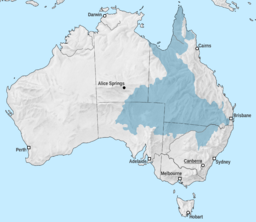

In his video Max Igan shows fracking wells in Great Artesian Basin where the water catchment areas are.
Great Artesian Basin.png

He demonstrates just how many fracking wells there are in this area which is the origin of much of the country's artesian water.

These are on the Nullabor Plain as well as in Western Australia.

Every single one of these fracking wells uses 1.5 – 16 million litres of water per well and there are up to 43,000 fracking wells in Australia.

Max Igan contends that this is what the private dams are being used for.


SO, WHAT DOES THIS MEAN FOR AUSTRALIANS?


So while water rights are being sold to other countries and overseas companies how does it look for Australians?

This report says Sydneysiders may be without drinking water in two years


While agricultural and mining operations have plenty of water it does not look so good for those living 'downstream'

https://www.thefifthestate.com.au/articles/day-zero-might-mean-tough-choices-for-90-towns-looking-at-new-locations/


And how much of this is truly about fighting climate change and how much about controlling the population?


Here is another report on water corruption:


WHAT ABOUT A DEPOPULATION AGENDA?

There is always that hoary chestnut over whether all this is by design or by cock-up or just the way things are as ecological, economic, energy collapse advances more and more quickly.

I am not inclined to accept arguments of  "climate change fraud" or Agenda 21 so easily.

However, this was interesting.  Igan cited what has been described as "a highly-regarded intelligence organisation" that predicts a reduction in population in the coming years.

According to this Australia ranks 13th with a population of 23 million. 


By 2025 Australia slips down the list from 13th to 23rd.


https://steemit.com/news/@rebelskum/deagel-a-real-intelligence-organization-for-the-u-s-government-predicts-massive-global-depopulation-50-80

CONCLUSION

There is more than enough evidence to demonstrate that Australia's valuable water resources that are already in short supply are being ripped off to supply mining and fracking companies with as much water as they want.  The Murray-Darling Basin that takes up the country's best agricultural and horticultural land is being deprived of water while agricultural concerns upstream steal the water for themselves.

Meanwhile, the response to all this, and to the fires, defies belief.

According to anecdote the authorities are coming through areas that have been devastated by fire and cutting down the surviving trees on the pretext they are "a fire hazard".

All the while reportedly there have been no burn-offs to get rid of further fuel for the fires in some years.

Speaking for myself, it is clear that Australia truly is ground zero for climate change.  Meanwhile, what could be described as "sparkler dust" (aluminium, strontium sprayed from aircraft) is providing fuel for the fires, allowing them to burn at temperatures far higher than anything that has been seen before.


So too, it is clear that there are other human factors at play that are making a catastrophic situation even worse (if that can be imagined).

it can be reasonably concluded that the government is selling off the water and quite possibly has a policy of forcing people from the country into the cities (imagine what that would be like!)

However, I am not going to jump to any conclusions other than to say that things are much more complicated, and much worse, than any of us are led to believe.

Finally, here is a video from GeogengineeringWatch.org:

Drought, Fires, Deluge: The New World Order


Sunday, 8 September 2019

Australia's food basket faces increasing drought


Shoppers warned to brace 
for higher food prices as 
Murray-Darling Basin faces 
increasing dry

The brown water of the Murray River as seen from a boat in the middle of the river, surrounded by gum trees.
ABC,
5 September, 2019

There are warnings for consumers and farmers that Australia's biggest food bowl, the Murray-Darling Basin, is bracing for a grim end to the year.


Key points:
  • Former AFP commissioner Mick Keelty is focusing on protecting water resources in the Murray Darling Basin as part of a crackdown on water theft and corruption
  • A drier-than-average spring forecast means some farmers will get little to no water allocations
  • Growers say the lack of water could increase the cost of produce for consumers
  • Space to play or pause, M to mute, left and right arrows to seek, up and down arrows for volume.

The weather bureau said the climatic outlook for the system for the next three months was bleak and the major dams that were already getting low, were unlikely to receive much-needed rain.

Both the Federal Water Minister and the Murray-Darling Basin's 'top cop' have warned of a crackdown on those who were tempted to steal water.

"This is the food bowl for Australia … it's really important that this area remains so viable to the economy of the nation," interim inspector-general Mick Keelty told the ABC.

The former Australian Federal Police commissioner has been asked to crack down on water thefts and corruption in the Basin.

He has been travelling through the southern part of the system with the Water Minister David Littleproud this week.

Mr Keelty said in the coming months, his focus will be on protecting the scarce resource of water.

The Bureau of Meteorology has issued a grim outlook, with a drier-than-average spring likely for most of Australia.

That forecast means no significant amount of new water will flow into the Murray-Darling Basin in the near future.

There will be less for farmers to use to irrigate their crops and some may get very small, or even no water allocations.

In addition, the system's two biggest dams, the Hume and Dartmouth, were at 40 and 60 per cent capacity.

The brown water of the Murray River as seen from a boat in the middle of the river, surrounded by gum trees.

Warning of higher fresh food prices

Those on the land are worried about what the climatic outlook will mean for consumers who buy their produce.


Dean Morpeth grows nectarines, peaches and plums at Woorinen in northern Victoria.


He said some farmers will not have a crop this coming season.

"It's scary … I'm a fourth-generation farmer and you look at your land and then you see potentially that you're not going to be able to farm it and make money," Mr Morpeth said.

"We'd like to be successful but without water it's impossible."


a drawing showing the river catchments in the Murray-Darling Basin Plan

INFOGRAPHIC: The Murray-Darling Basin is Australia's biggest food bowl. (Supplied: Murray-Darling Basin Authority)

Riverina rice grower Antony Vagg said consumers should expect to see supply suffer and prices spike.

"It might get to the point very soon where people can't buy Australian rice off the shelf," Mr Vagg said.

"They might not be able to buy Australian milk at a price that's reasonable in a few years and that's a change we're experiencing."


Mr Littleproud agreed people living in metropolitan areas would feel the pinch soon.


"This is their food bowl and obviously they scream when prices go up.

"Well, you're going to see prices go up if there's a lack of water," Mr Littleproud said.

Mr Keelty warned he would be keeping a close watch on anyone tempted to tamper with — and illegally take water from — the system.

"A long summer is going to mean less water obviously and it's going to raise the value of water," he said.

"When the water value rises that presents a temptation for people to access when they're not entitled to access."

Friday, 11 January 2019

'Bloody disgrace': '100-year-old' fish die in Darling River


Mysterious mass fish deaths spark alarm in Australia
‘This is bloody disgraceful, this is the most disgusting thing I've seen


10 January, 2019

More than a million fish are thought to have been killed, including huge cod up to 80 years old, in a river in Australia amid an unusual algal bloom following drought conditions.

The cause of the algal bloom, which is the second to hit the Darling River at Menindee in New South Wales in a month, is the subject of furious debate over weather patterns and the management of dams.

Ecologists fear the impact could be so severe whole populations of local native fish may have been wiped out.

According to the NSW Department of Primary Industries (DPI), toxic blue green algae is to blame.

A government spokesperson said on Tuesday only heavy rain in the area will flush the algae out of the river basin.

Native species including bony bream, Murray cod and perch are among those affected.

At the time of the first incident in late December 2018, in which 10,000 fish are estimated to have been killed, WaterNSW and the DPI blamed drought.

This time, the DPI admitted the events were “unprecedented” and said the drought conditions were then exacerbated by cool weather.

The DPI’s fisheries manager Iain Ellis said: “I’ve never seen two fish kills of this scale so close together in terms of time, especially in the same stretch of river.”

“In both cases it’s when the algal bloom has been disrupted.

“The first time due to a storm, and in this case, by the cold front that went through.”

The department said it believes the temperature drop would have killed the huge algal blooms, and the plants then decompose, siphoning off all the dissolved oxygen in the water and effectively suffocating the fish.

But anger remains over the management of the water system, with locals pointing out fish over 80 years old have survived droughts and cold spells in the past.

Senator for the state of South Australia Rex Patrick said: “The Darling River is going into cardiac arrest and both the governments are asleep at the wheel of the ambulance,” the senator said, according to ABC news.

He also urged the state and federal governments to allow water being held in nearby dams to flow down the river system to meet “basic needs” of humans and livestock.

Footage of distraught local men Rob McBride and Dick Arnold, holding the bodies of huge dead fish and blaming the government, have gained more than 2 million views.

“This is bloody disgraceful, this is the most disgusting thing I’ve seen in my life,” Mr McBride tells the camera.

Monday, 2 May 2016

Focus on Australia and the Murray-Darling Basin

The Murray-Darling - an Australian river system destroyed by civilisation

Seemorerocks


I woke up this morning to the  story from RT:

Australia to spend over $11mn to eradicate carps by releasing herpes virus into rivers


© David W Cerny
© David W Cerny / Reuters

Australia will spend more than US$11 million in a bid to exterminate European carp by releasing a virulent strain of herpes into the country’s largest waterway.

As much as 15 million Australian dollars will be spent on funding the clearing of the Murray-Darling Basin from the country’s worst freshwater feral pest. This will be included into Tuesday’s federal budget, Australian authorities said on Sunday.
Interestingly enough, the war on fish is to be waged by an unusual means – the water will be contaminated with a special type of herpes, known as koi herpes.

Commonwealth Scientific and Industrial Research Organisation (CSIRO) scientists have been carrying out various tests for nearly a decade on other animals including chickens, mice, frogs, turtles and water dragons “to determine the safety and suitability” of the virus in dealing with an excessive carp population.

The virus was proven to be harmless to humans and animals, but it causes kidney failure in carps, attacks their skin and kills the fish after sitting tight in its system for about seven days.

“It causes high death rates in common carp and in the ornamental koi carp. No other species of fish, including goldfish, are known to be affected by the virus,” CSIRO official website says.

“It affects the European carp by attacking their kidneys, their skin, their gills and stopping them breathing effectively,” Australian Science Minister Christopher Pyne said, according to ABC news.

“They have the virus for a week before they show any symptoms and it suddenly kills them within 24 hours,” he dded.

It’s been calculated that the carp-control program planned to be launched in 2018 will kill 95 percent of the targeted fish over the next 30 years.

The project can’t be brought to life right away since it is still to be determined how to deal with dead bodies most effectively. A significant part of the budgeting is to be spent specifically on a clean-up program.

“There’s obvious talk about whether the carp could be used for fertilizer, whether they could be used for pet food, whether they'll need to be buried in large graves and be allowed to dissipate back into the system,” Pyne noted.

Carps, that were described as the “rabbits of waterways” by Australia’s Agriculture and Water Resources Minister Barnaby Joyce for how quickly they breed and spread, have brought other populations of fish in the Murray River to the verge of extinction. Apart from that, every year Australia loses up to 500 million Australian dollars (more than US$ 380 million) due to the uncontrolled population of carps, he also said.

My response

My immediate response to the item was that it is a perfect response to the totally insanity of the human species in the midst of the predicament which is perfectly expressed by the expression "you can't have infinite growth on a finite planet"

In Australia's case it's a very finite planet.

It is an illustration of the usual response to problems caused by civilisation itself is to double down and to respond with more of the same.

I was aware of the Murray-Darling but only vaguely so.

This map was a revelation for me. 


The Murray-Darling Basin covers most to the most productive land in the country and is responsible for 50% of all crops


Take away the water of the Murray River and its tributaries and Australian "civilisation" is in deep trouble.

Add abrupt climate change to the mixture and you have disaster.

Most Australians (the ones that live in towns) will be blissfully (and often deliberately) ignorant of the extent to which their comfortable lifestyles are 100 percent dependant on the exploitation of this river system.

Most of the items they take for granted in the supermarket wouldn't be there were it not for the river.


The truth is that the Murray River hardly flows at all in parts and scarcely makes it to the sea.


If it wasn't for human intervention such as damming the river it would have completely dried up due to climate extremes and the rapacious exploitation by agriculture.

The dams have created colder water and the killing-off of native fish species has provided the perfect environment for introduced European species such as the carp. 

Hence the insanity of spending $11 million to introduce the herpes virus to kill off the car. 

I have to presume there are no native fish left to kill off because I doubt very much that the herpes virus will know the difference.

It is not difficult for those of us with our eyes open to join the dots about what this means for Australia.

A perfect storm of insane overexploitation of a resource in a country that cannot sustain more than a fraction of the actual population of Australia - combined with runaway climate change that will destroy the ability to grow food, especially in an already-dry continent.

I did find this documentary, More Than a River: the Murray-Darling Basin and its People which will be of particular interest to people like myself, living outside Australia.


And from the Wilderness Society of Australia

The Murray-Darling Basin is the largest river system in Australia and it is under threat. The science is telling us that we need to return a substantial amount of water to the system in order to ensure its long term health. Despite this, the Murray-Darling Basin Authority is gambling with the numbers, ignoring its own science and preparing to release a plan that will not only sell the river short, but the Australian people as well.

Finally...

I am sure that our friend Deejay Rebel,living in interior Victoria will have something to say about these official temperature averages - just as I do about figures I see here in New Zealand.


This March was the hottest on record for Australia, according to new data released by the Bureau of Meteorology (BoM).


The national mean temperature was 1.7°C above the historical March average, exceeding the previous record of 1.67°C set in 1986.