Showing posts with label interest rates. Show all posts

Wednesday, 17 August 2016

The Voice of Darkness speaks out and doesn't know what's going on

World seeing ‘greatest monetary policy experiment in history’ - Rothschild


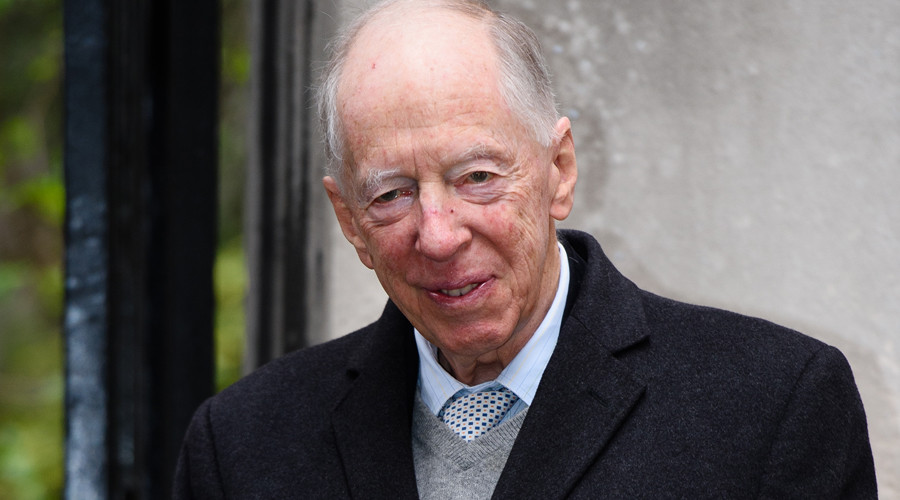
British banker Jacob Rothschild © Leon NEAL
British banker Jacob Rothschild © Leon NEAL / AFP


RT,
16 August, 2016


Low interest rates, negative yields on government debt and quantitative easing are part of the biggest financial experiment in world history, and the consequences are yet unknown, says RIT Capital Partners Chairman Lord Rothschild.

The six months under review have seen central bankers continuing what is surely the greatest experiment in monetary policy in the history of the world. We are therefore in uncharted waters and it is impossible to predict the unintended consequences of very low interest rates, with some 30 percent of global government debt at negative yields, combined with quantitative easing on a massive scale,” Rothschild writes in the company's semi-annual financial report.

The banker notes this policy has led to a rapid growth of stock markets - US stocks have grown threefold since 2008 - with investments growing and volatility remaining low.

However, the real sector of economy didn’t enjoy such a profit, as “growth remains anemic, with weak demand and deflation in many parts of the developed world,” according to Rothschild.


The billionaire underlined that many risks remain for the global economy with the deteriorating geopolitical situation. Among those risks Rothschild included Britain's vote to leave the European Union, the US presidential election, and China's slowing economic growth. Another risk is global terrorism, which Rothschild says is a consequence of the continuing conflict in the Middle East.

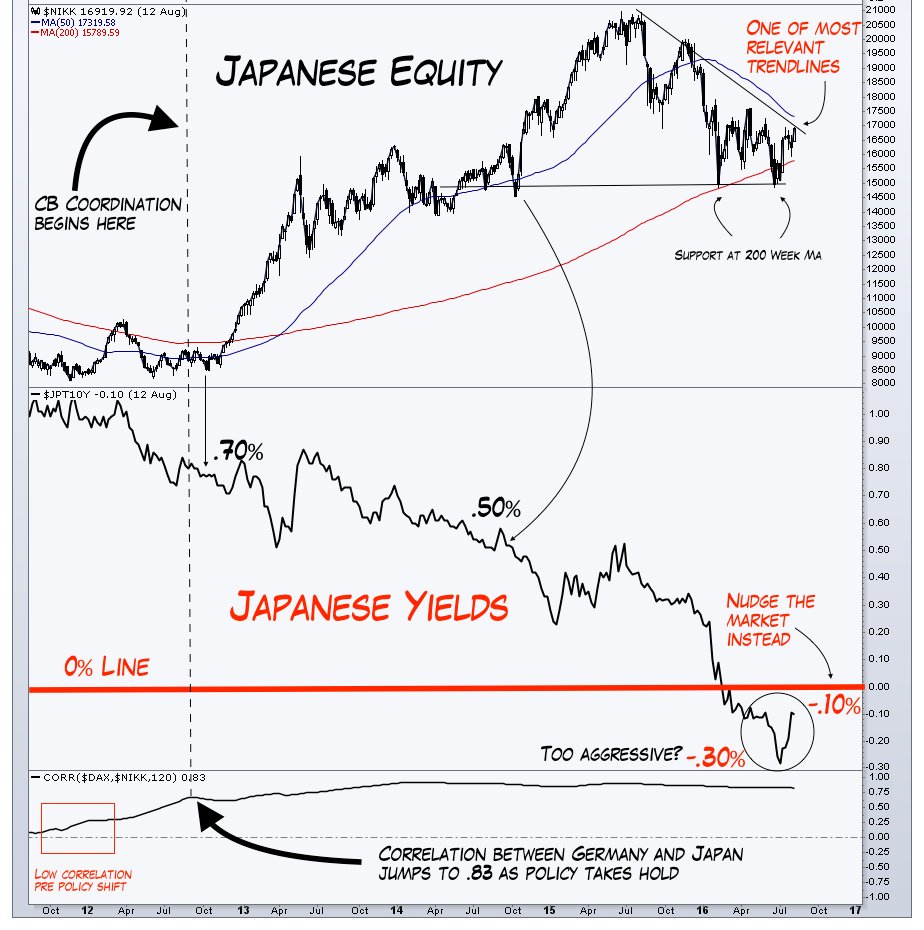
According to a Bank of America Merrill Lynch report in June, interest rates in developed countries, in particular America’s 0.5 percent, are now at the lowest level in 5,000 years. In their battle against deflation, countries such as Sweden, Switzerland or Japan have even turned to negative key lending rates.

Interest rates are the lowest in 5000 years! One strong reason to be a net net investor.

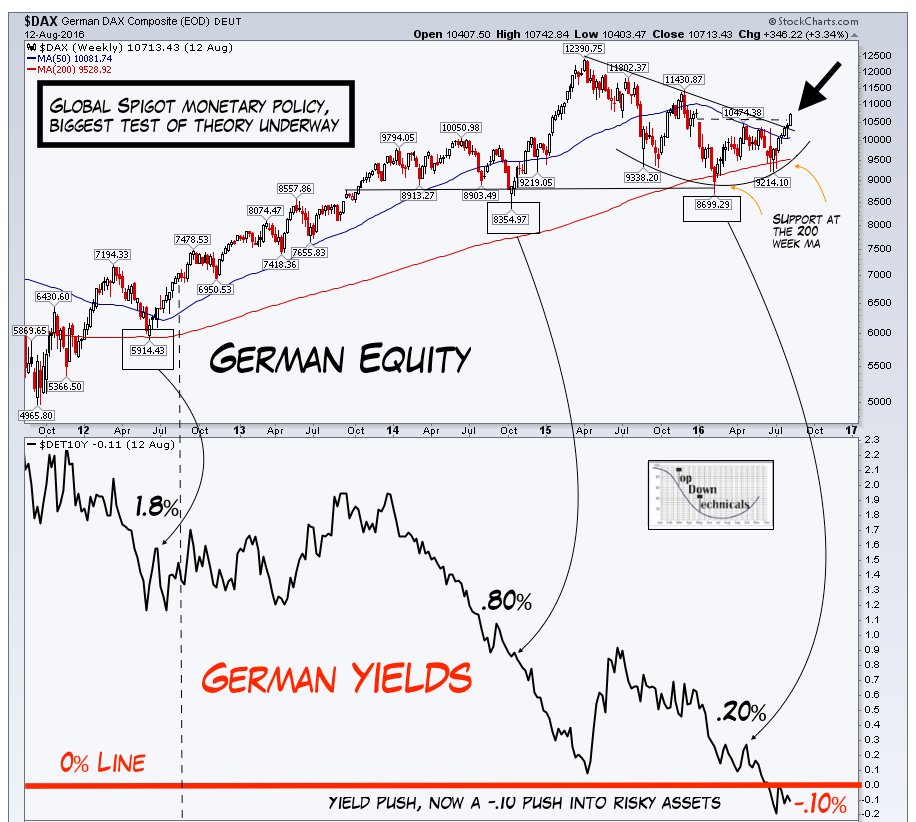
Another woe is negative yields on government bonds. In June, 10-year German government bonds dipped below 0 percent for the first time in history. Janus Capital has estimated that global yields are the lowest in 500 years, and the total amount of such bonds is $10 trillion. 

The investment group’s lead portfolio manager, Bill Gross, is calling it a “supernova that will explode one day.”


Gross: Global yields lowest in 500 years of recorded history. $10 trillion of neg. rate bonds. This is a supernova that will explode one day


Monday, 24 March 2014

The NZ economy

Is The NZ Reserve Bank Raising Rates To Bankrupt New Zealand?
Travellerev


Aotearoa, a Wider Perspective,
24 March, 2014


"All we’re waiting for is interest rates to go across the magic threshold of 3% and the entire budget of the country explodes.  There are also all types of other tendencies that point in the direction of collapse and systemic failure at all levels.” 
---  Dmitry Orlov.

I couldn’t put my finger on it. Why would the Reserve banks of NZ raise the rates? The inflation (through fraudulent GDP calculations) is below the 3%, house prices where going up but how I don’t know as wages are stagnant and the population is more or less stable and the economy was on the med but surely to raise interest rates would interfere with that as budding businesses would dearly love the interest rates to be lower rather than higher so why?


My husband the other day, clearly struggling with the same question asked: “What do you think, are they testing raising the interest rates here to see what would happen if they did it in the UK or the US?”

I couldn’t think of a real answer, it has happened before and NZ has sh0wn itself to be a fairly naive law abiding country and perhaps he was right but something didn’t sit right with that either because they are keeping the interest rates close to zero overseas (for the big boys close to the source that is) while they are already looting the poorest with unregulated payday companies.

Remember, John Key asserted that the local banks are just middlemen for foreign banks and Graeme Wheeler, the Reserve Bank governor is a US World bank puppet and around 2011 New Zealand had about $ 112 BILLION worth of fraudulent CDS on the books

And then I listened to Dmitry Orlow from ClubOrlov blog in an interview and I realized that National under the guidance of Wall street puppet John Key had been investing heavily into CDS and other derivatives and I am wondering if they are raising the rates to explode under Labor if they get elected making it impossible for Labour to redirect money to the poor and the small businesses who need money to build their businesses up.

Here is the interview with Dmitry Orlov. Also a great deal about the reality in Ukraine and the Crimea!


Wednesday, 27 February 2013

UK: Negative interest rates?


Bank of England mulls negative interest rates
Deputy Governor floats plan that could mean new charges for customers


26 February, 2013

People across Britain could see their savings hit or face new charges on their current accounts after a senior official at the Bank of England proposed the “extraordinary” measure of imposing negative interest rates on banks.

Deputy Governor Paul Tucker said the idea of charging high street banks to store money centrally, rather than paying them interest, should be explored as a way of easing the flow of credit to the stagnant economy.

I hope we will think about whether there are constraints to setting negative interest rates,” he told MPs on the Treasury Select Committee. Although such a move has been discussed by the Bank of England in the past, Mr Tucker’s comments are the strongest indication yet that it is under serious consideration.

It is hoped that the prospect of negative interest rates would encourage banks to lend more - but analysts warned that it would dent banks’ profitability and that the sector would probably respond by cutting interest rates on savings accounts, or even introducing current account charges.

It’s very clear this would be expected to bring downward pressure on the rates savers can expect, pushing them down towards zero,” said Malcolm Barr of JP Morgan.

It is thought that the banks would seek to make a profit by lending the funds out to companies and households. The Swedish central bank imposed negative interest rates in 2009 with this goal in mind.

But any move that further eroded the returns of savers, even indirectly, would face a backlash. Savings rates paid by high street banks have fallen to record lows since the Bank slashed its main policy rate to 0.5 per cent in March 2009 to support the freefalling economy. The average rate on an easy access savings account today stands at around 2 per cent - less than the annual inflation rate of 2.7 per cent.

Savers have also complained of being squeezed indirectly by the Bank’s Funding for Lending Scheme, which has provided high street banks with new sources of cheap funding, removing the pressure on them to compete for deposits by offering attractive rates.

Another concern is that the Bank’s £375bn Quantitative Easing scheme has pushed down the value of annuities - although the Bank has pointed out that the money printing programme has also bolstered the value of pension pots by boosting share prices, leaving people, ultimately, no worse off.

Despite floating the idea of negative interest rates, Mr Tucker was careful to stress that no decision had been made. “It would be an extraordinary thing to do and it needs to be thought through carefully,” he said. Mr Tucker, who was an unsuccessful candidate to succeed Sir Mervyn King as the next Governor in July, added: “[It’s] not something anyone should clutch on to as the answer to the universe.”

Mr Tucker’s idea was described as a “panic measure” by Ros Altmann, an expert on pensions. “Interest rates are already negative for savers,” she said. “It’s hard to see why this would make a hoot of difference to lending when rates at 0.5 per cent haven’t.”

Andrew Sentence, a former member of the Monetary Policy Committee, said the Bank was still looking for monetary policy to deliver things that it was simply unable to achieve. “When you look at these options – just as we’re discovering with the Funding for Lending Scheme – you run into other problems, particularly for savers.”.

Samuel Tombs of Capital Economics said there were better ways for the Bank to boost lending, such as enhancing the generosity of the Funding for Lending Scheme.

However, not all financial analysts were dismissive of Mr Tucker’s idea. “Negative interest rates will increase the pressure to lend and the mortgage market would be a major beneficiary of any such action,” said Ray Boulger of independent mortgage advisers John Charcol.

Last year the International Monetary Policy Committee proposed the Bank should look at taking its main policy rate below 0.5 per cent in order to boost the economy. But monetary policymakers rejected this idea, arguing that it would damage the profitability of building societies.

Wednesday, 14 November 2012

The UK


Shock jump in UK inflation to 2.7pc
UK inflation jumped to a surprise five-month high of 2.7pc in October as higher university tuition fees and food costs pushed up the cost of living for British households.


13 September, 2012


Annual CPI inflation +2.7pc in October (2.2pc in September)
Annual RPI inflation 3.2pc (2.6pc last month)
Highest annual rate of education inflation since records began
Highest year-on-year rate of CPI since May


The figures from the Office for National Statistics were higher than expected. Economists had forecast that the consumer price index (CPI) would rise from a 34-month low of 2.2pc in September to between 2.3pc and 2.5pc in October.


A near trebling of university tuition fees after the Government lifted the cap to £9,000 this year was the main contributor to the rise in inflation.


Education costs overall rose 19.1pc between September and October - more than twice the size of the next biggest monthly increase for education prices since CPI records began in 1996.


Food inflation was also behind the rise in CPI after the record wet weather earlier this year left the UK with its worst potato and carrot harvest in living memory, which pushed up vegetable prices, according to the ONS.


Fruit and confectionery prices also rose. The rise in sweet prices was due to confectionery companies reducing the size of products - the ONS treats that as a price increase as consumers get less for their money.


The figures also showed that the Retail Prices Index (RPI), which includes housing costs, rose to 3.2pc in October from 2.6pc in September as mortgage rates also increased. The RPI rise between September and October was the largest monthly increase for two and a half years.

The ONS said last month's SSE 9pc increase in energy prices for customers were not taken into account for the October figures. However, planned rises in gas and electricity prices later this year are likely to push up inflation in the coming months.

Alan Clarke of ScotiaBank said: "I'm a little surprised. We knew university tuition hikes were coming but the extent to which this is reflected in the data is dramatically bigger than when we've had increases in the past.

"Where do we go from here? Onwards and upwards. Utility bill increases are on their way. We've also got the effect of the US drought and increased food prices to factor in.

"I don't think we're going to get anything like the 2pc inflation target."

Economist Samuel Tombs, of Capital Economics, said the inflation data provides an "uncomfortable backdrop" to the Bank of England's inflation report on Wednesday.

The Treasury said the figures were "disappointing", but inflation remains far lower than its peak of 5.2pc last September. However there are fears the rate could reach 3.5pc by the middle of next year.

Rising inflation will likely also fuel speculation that the Bank of England will hold off from taking further action under its economy-boosting quantitative easing programme.

Separate figures published by the ONS on Tuesday showed that factory gate inflation held steady at 2.5pc, but input cost inflation was higher than expected, showing an annual rise of 0.1pc compared to an expected 0.5pc decline.

House price data released alongside these figures showed property prices were 1.7pc up on the year in September.


-->
50,000 zombie firms to fail if rates rise
TENS of thousands of firms are set to go bust when interest rates rise, taking hundreds of thousands of jobs down with them, business troubleshooting group the Institute for Turnaround (IfT) has warned.


13 September, 2012


There are almost 150,000 zombie firms in the UK – businesses that are fundamentally broken, and only still alive because ultra-low interest rates are holding down their debt repayments.


But while some firms may be able to restructure their debts and business processes to thrive in the long run, up to 50,000 are deemed “beyond hope” by the IfT, as they can barely pay interest on their debts, let alone repay the capital.


Firms of all sizes – from two or three-person operations to big businesses employing hundreds of staff – are zombies, meaning hundreds of thousands of jobs are going to be lost when rates rise at some point in the coming years.


Between 25 and 30 per cent of these firms are beyond hope, and will fail when interest rates rise,” IfT chief executive Christine Elliott told City A.M.


A lot of oversupply built up in industries like shipping and retail, and low interest rates have just postponed the inevitable – the recession still has to work its way through these sectors.”


However, Elliott did provide a glimmer hope to struggling companies. “If they restructure now, perhaps 10 per cent of these zombie firms could turn out to be stars,” she said.


She also warned that by stopping weak firms from failing, low rates also stop good firms expanding to help the recovery.


A LA WEIMAR: THE BANK OF ENGLAND HAS JUST CROSSED THE LINE INTO OUTRIGHT GOVERNMENT MONETIZING


12 November, 2012


Last week’s news that the Bankof England had stopped Quantitative Easing early because it was not needed was a load of rubbish.  The truth is that it was stopped early because MORE COUNTERFEITING WAS NEEDED, and the BOE figured out a way to directly monetize the debt, while out of public scrutiny. 

QE will continue 
TO INFINITY….AND BEYOND!!!  on both sides of the pond.


The MSM story actually compares the practice to Weimar Germany.


So now we know why the Bank of England’s Monetary Policy Committee called a halt to more Quantitative Easing this week – it’s because the Chancellor and the Governor of the Bank of England have concocted a backdoor way of doing the same thing.


The latest little (actually quite big at a tidy £35bn) money printing wheeze comes about as close to outright monetizing of government spending as it is possible for the Bank of England to go without simply creating the money and handing it by the lorry load to the Treasury, a la Weimar.


What the Treasury has decided to do is take the accumulated interest payments on the stock of government debt the Bank of England has bought under quantitative easing, and credit it to the Government’s books rather than the Bank of England’s. The total is £35bn, of which the government intends to take £11bn this financial year and £24bn next.
 
It is now full blow QE or instant collapse:

The Government excuses its actions by saying that it is only bringing itself into line with practice in Japan and the US, the other major economies to be practicing substantial QE right now. It might also be argued that to the extent the European Central Bank indulges in bond purchases, it practices something quite similar too.
In any case, you might reasonably think that it doesn’t really matter how the government accounts for the interest on the Bank’s stock of gilts. Since the Bank of England is 100pc owned by the Treasury, the government has in essence only been paying interest to itself, so why not just stop the charade and save the money?
Wrong, wrong, wrong.
 

Even the MSM now realizes that the BOE is in effect defaulting on gilts:

Never the less, a reasonable argument could be made for QE as a mere liquidity operation – the swapping of one asset, gilts, for another, cash – that could quickly be reversed when the economy picks up momentum again. But this is very different. A key part of the contract under which gilts are sold – the coupon – is now in effect being waived. Though the government vehemently denies the notion, the Treasury is in essence defaulting on the gilts held by the Bank of England. Not good, not good at all.
This is a slippery slope, and I regret to say that the Bank of England is now very much on it.


See the article from the Telegraph HERE