Showing posts with label climate chamge. Show all posts

Wednesday, 4 April 2018

Climate change threatens Fiji's existence


Why is it that the British press can give this good coverage but Radio NZ barely mentions it in an article worthy of Pravda?

Fiji's existence threatened by 'frightening new era' of deadly climate change
Thousands remain in evacuation centres following the latest cyclone to batter the tropical islands


26 November, 2014


The South Pacific islands that make up Fiji are in the grip of a “frightening new era” of extreme weather, the country’s prime minister has said, after flooding from a cyclone has killed at least four people.

Voreqe Bainimarama said the island nation now faces a “fight for survival” as climate change brings “almost constant” deadly tropical cyclones.

The islands avoided a direct hit by Cyclone Josie on Sunday, but the storm brought heavy rains, high winds and flooding, which caused extensive damage to homes, businesses and vehicles on the main island of Viti Levu.

More than 1,000 people remained in evacuation centres this week following the cyclone.

Mr Bainimarama said climate change was causing extreme weather events to become more severe and occur more often.

In 2016 Cyclone Winston, the most intense tropical storm in the southern hemisphere on record, left 44 people dead and 40,000 homes significantly damaged or destroyed after making landfall on Fiji.

The category 5 cyclone saw ten-minute sustained wind speeds of 175kmh (110mph), and a record wind gust of 306kmh (190mph) was measured.

In the past, major storms have been less frequent on the islands, with the strongest cyclone before Winston being the Category 4 cyclone Evan, in 2012, in which no one died. The deadliest cyclone before Winston was 1979’s Cyclone Meli, which claimed 53 lives.

"We are now at an almost constant level of threat from these extreme weather events," Mr Bainimarama said on Tuesday.

Climate change had made the danger “more severe”, he said, and called for global action on reducing carbon emissions. “We need to get the message out loud and clear to the entire world about the absolute need to confront this crisis head on.”

As a nation we are starting to build our resilience in response to the frightening new era that is upon us.” It is a “fight for our very survival”, he added. “We are now at an almost constant level of threat”.

He urged countries to act to limit the global temperature increase, as agreed under the Paris climate accord.

It is the only way to prevent catastrophe for the whole world and especially for vulnerable nations such as our own,” he said.

He also cited a recent report by the World Bank and Fiji officials which indicated the country’s annual losses from extreme weather events could total 6.5 per cent of the economy by 2050.


The coverage from Radio NZ of our Pacific neighbour is worthy of the Soviet Pravda.

Fiji floods a 'brutal reminder' of climate reality, says PM


The severe effects of Cyclone Josie are a brutal reminder of the reality of climate change, says Fiji's prime minister.

Frank Bainimarama's comment comes after the category one cyclone brought heavy rains and flooding to Fiji's Western Division at the weekend.

Five deaths have been reported as well as significant damage to businesses and the local agriculture sector.

Mr Bainimarama said like many other countries, Fiji was at "an almost constant level of threat from extreme weather events".

He said he would work to help Fiji recover from its latest natural disaster.

Mr Bainmarama added he would also work globally as president of the UN climate change conference, COP23, to address the root causes of the changing climate.

Tuesday, 3 October 2017

Lies, and more lies about greenhouse emissions

I am reposting this extremely important BBC article because it gives the lie to nonsense like the article here:

The new data is a welcome sign of progress in the battle against global warming but many challenges remain, including methane from cattle

Despite the reports to the contrary there are those who wish to pull the wool over people’s eyes by repeating these blatant lies.

It is a bit like repeating the lies about planting trees and driving Priuses when it has been demonstrated that the forests have been turned into sources of carbon rather than sinks.


Forests globally are so degraded that instead of absorbing emissions they now release more carbon annually than all the traffic in the US, say researchers

'Dodgy' greenhouse gas data threatens Paris accord

By Matt McGrath - Environment correspondent

mountain

BBC,
7 August, 2017


Potent, climate warming gases are being emitted into the atmosphere but are not being recorded in official inventories, a BBC investigation has found.


Air monitors in Switzerland have detected large quantities of one gas coming from a location in Italy.

However, the Italian submission to the UN records just a tiny amount of the substance being emitted.

Levels of some emissions from India and China are so uncertain that experts say their records are plus or minus 100%.

These flaws posed a bigger threat to the Paris climate agreement than US President Donald Trump's intention to withdraw, researchers told BBC Radio 4's Counting Carbon programme.

Bottom-up records

Among the key provisions of the Paris climate deal, signed by 195 countries in December 2015, is the requirement that every country, rich or poor, has to submit an inventory of its greenhouse-gas emissions every two years.

Under UN rules, most countries produce "bottom-up" records, based on how many car journeys are made or how much energy is used for heating homes and offices.

But air-sampling programmes that record actual levels of gases, such as those run by the UK and Switzerland, sometimes reveal errors and omissions.

In 2011, Swiss scientists first published their data on levels of a gas called HFC-23 coming from a location in northern Italy.

Between 2008 and 2010, they had recorded samples of the chemical, produced in the refrigeration and air conditioning industries, which is 14,800 times more warming to the atmosphere than CO2.

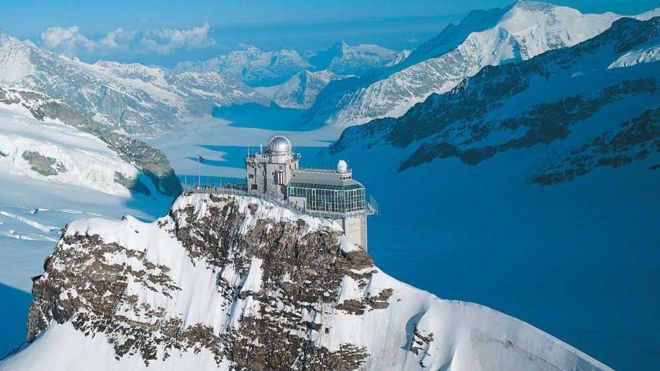
Now the scientists, at the Jungfraujoch Swiss air monitoring station, have told the BBC the gas is still going into the atmosphere.

"Our estimate for this location in Italy is about 60-80 tonnes of this substance being emitted every year, then we can compare this with the Italian emission inventory, and that is quite interesting because the official inventory says below 10 tonnes or in the region of two to three tonnes," said Dr Stefan Reimann, from the Swiss Federal Laboratories for Materials Science and Technology.

"They actually say it is happening, but they don't think it is happening as much as we see.

"Just to put it into perspective, this greenhouse gas is thousands of times stronger than CO2.

"So, that would be like an Italian town of 80,000 inhabitants not emitting any CO2."

The Italian environment agency told the BBC its inventory was correct and complied with UN regulations and it did not accept the Swiss figures.

Another rare warming gas, carbon tetrachloride, once popular as a refrigerant and a solvent but very damaging to the ozone layer, has been banned in Europe since 2002
.
Coal use in China has been subject to major revisions in the country's statistics
But Dr Reimann told Counting Carbon: "We still see 10,000-20,000 tonnes coming out of China every year."

"That is something that shouldn't be there.

"There is actually no Chinese inventory for these gases, as they are banned and industry shouldn't be releasing them anymore."

China's approach to reporting its overall output of warming gases to the UN is also subject to constant and significant revisions.

Its last submission ran to about 30 pages - the UK's, by contrast, runs to several hundred.

Back in 2007, China simply refused to accept, in official documents, that it had become the largest emitter of CO2.

"I was working in China in 2007," said Dr Angel Hsu, from Yale University.

"I would include a citation and statistics that made this claim of China's position as the number one emitter - these were just stricken out, and I was told the Chinese government doesn't yet recognise this particular statistic so we are not going to include it."

A report in 2015 suggested one error in China's statistics amounted to 10% of global emissions in 2013.

The BBC investigation also discovered vast uncertainties in carbon emissions inventories, particularly in developing countries.

Methane, the second most abundant greenhouse gas after CO2, is produced by microbe activity in marshlands, in rice cultivation, from landfill, from agriculture and in the production of fossil fuels.

Global levels have been rising in recent years, and scientists are unsure why.
For a country such as India, home to 15% of the world's livestock, methane is a very important gas in their inventory - but the amount produced is subject to a high degree of uncertainty.

There are huge uncertainties over methane emissions from India and other countries

"What they note is that methane emissions are about 50% uncertain for categories like ruminants, so what this means is that the emissions they submit could be plus or minus 50% of what's been submitted," said Dr Anita Ganesan, from the University of Bristol, who has overseen air monitoring research in the country.

"For nitrous oxide, that's 100%."

There are similar uncertainties with methane emissions in Russia, of between 30-40%, according to scientists who work there.

"What we're worried about is what the planet experiences, never mind what the statistics are," said Prof Euan Nisbet, from Royal Holloway, University of London.

"In the air, we see methane going up. The warming impact from that methane is enough to derail Paris."

The rules covering how countries report their emissions are currently being negotiated.

But Prof Glen Peters, from the Centre for International Climate Research, in Oslo, said: "The core part of Paris [is] the global stock-takes which are going to happen every five years, and after the stock-takes countries are meant to raise their ambition, but if you can't track progress sufficiently, which is the whole point of these stock-takes, you basically can't do anything.

"So, without good data as a basis, Paris essentially collapses. It just becomes a talkfest without much progress."

Saturday, 1 July 2017

Weather conditons at the North Pole

3.2 metre waves in Nares Strait

Yesterday I posted a photograph which shows the fragmentation of sea ice close to the North Pole.


This shows that there are 3.2 metre waves in Nares Strait, between Greenland and the Canadian Arctic


windy.com/?waves%2C72.236%2C-58.008%2C5


Nullschool shows the same phenomenon as well as up to 30 km/hr winds in the area near the North Pole


Also see this - 


Climate Reanalyzer shows sea temperature anomalies of up to 4C


If you are as unclear as I am about some of the geography you will need a map.


Until I saw yesterday’s photo I was under the impression that we might be headed for a near-record. However seeing how the ice in the vicinity of the Pole is breaking up and the winds and warmth that are striking the region I would find it hard to believe that any ice, other than the small amount of thick, multi-year ice that has been pushed by currents to just north of Greenland, is going to survive the melt season.

Unless, that is, there is going to be a massive out-of-season re-freeze.

From what I remember last year the melt was less than expected partially because of lots of cloud cover over the area (unusual in and of itself).

However the melt is happening from underneath and a lot depends on weather conditions in the area (storms etc.)

There are people watching this very closely, especially at Neven’s sea ice blog.

I shall endeavour to keep you up to date as the planet's thermostat is destroyed in real- time.

Saturday, 28 January 2017

A new Arctic feedback

A new Arctic feedback (?)

Arctic Sea Ice Blog

19 January, 2017


Quote from the latest PIOMAS update (10 days ago):
There's just no end to this run we have had with anomalously warm temperatures, and storms blowing in from the Atlantic.
As we speak, a very powerful winter storm is battering the ice pack on the Atlantic side of the Arctic, as shown on this SLP map (source):


Lowest pressure was probably reached yesterday at 957 hPa, but it's still raging at 958 hPa right now. Remember, the GAC-2012 clocked in at 962 hPa, and the series of powerful storms we saw last August bottomed out at 968 hPa. Storms tend to be stronger during winter.
In the short term this might actually increase sea ice extent, as strong winds will be pushing out the ice towards the Atlantic, but in the longer term it will probably be detrimental to the ice pack, as a lot of the ice being pushed out is older and thicker. The storm and the moisture it brings with it, will also cause more snowfall, insulating parts of the ice pack so that the ice grows thicker at a slower pace, and thus be thinner than it could have been when the melting season starts.
The ECMWF forecast is showing another strong storm forming 9-10 days from now, but that's very far out, and so the forecast can change. But the storm we're seeing right now (I briefly mentioned it in this previous blog post), was also forecast 10 days ago and then came about. We'll have to wait and see what happens.
Now, what is causing all these storms and all that moisture to be transported all the way to the Arctic? We saw the same thing during last year's winter, but this time it's even worse. It might have to do with all the heat that the recent El Niño brought with it, but previous El Niños didn't seem to have such a marked effect. Perhaps it's something else, another reaction to Arctic sea ice loss, some sort of vicious cycle.
Yesterday this video was posted on Peter Sinclair's ClimateCrocks blog, showing an interview with Dr Jennifer Francis (Rutgers University)
at the AGU 2016 Fall Meeting this past December:


Another effect of this possible feedback is more clouds during summer, shielding the ice from the Sun's rays. But as we saw during last year's melting season, this didn't help much (except for preventing new sea ice extent/area records). That's probably because heat doesn't just enter the Arctic via the atmosphere, but via ocean currents as well.


Sunday, 22 January 2017

Crop failure in Spain and Portugal

Why is there a vegetable shortage?


BBC,
19 January, 2017

Anyone trying to stick to a healthy new year diet may have noticed a shortage of their favourite greens or salad items.
Some supermarkets are struggling to stock courgettes and spinach in particular, blaming empty shelves on bad weather in Spain and Italy.
The issue has even inspired its own hashtag on Twitter, with many shoppers taking to social media to vent their frustrations over the #courgettecrisis.
Empty courgette shelf
Image copyright


Why are we facing a shortage?


A combination of flooding, cold weather and poor light levels in southern Europe is said to have created the "perfect storm" of poor growing conditions.
During the winter months, Spain's south-eastern Murcia region supplies 80% of Europe's fresh produce. But after suffering its heaviest rainfall in 30 years, only 30% of Murcia's growing fields are useable.

Snow covered crops in Murcia, Spain
Image copyright

Snow covers crops in a field in the countryside in Murcia

This has coincided with a cold snap in Italy, which normally exports vegetables at this time of the year but is now having to import them.
The effects of shortages are particularly pronounced in Britain, which imports an estimated 50% of its vegetables and 90% of its fruit.
The Grocer magazine's fresh and chilled foods editor, Kevin White, told the BBC he could not recall the weather affecting supplies so severely.

Which vegetables are worst affected?

Courgettes and spinach supplies have been severely affected by the cold weather.
Jordi Vorderman, UK sales manager at Dutch vegetable supplier Valstar Holland, said courgette prices were the worst affected, but that "the cost of everything imported from Spain and Italy is sky-high at the moment".

Philippe Binard, of Freshfel Europe which represents the fresh produce industry, said the problems afflicting vegetable production were unprecedented and had left the yield of courgettes, aubergines, tomatoes, broccoli and peppers from Spain down by about 25%.
Iceberg lettuces and cabbages have also been affected, with experts unsure where the shortages could fall next.
Fruit and vegetable wholesaler Nick Padley told BBC News that more than 90% of Europe's iceberg lettuce came from one small region in south-east Spain.
He said: "There's a gap of about six weeks on iceberg lettuce, nothing is coming from Spain for six to eight weeks. Our supplier is now going to be bringing in iceberg from America which is obviously costing more. It's a tough time."
BBC News spoke to traders at New Covent Garden fruit and vegetable market, who said they were struggling to meet demand and were planning to import produce from the US.
Michael Goodwin said: "I've been in this trade for 40-odd years and I've never known it so bad, where everything is so dear. I've got plenty of English parsnips, potatoes and carrots but foreign produce is like gold."

What is the impact on prices?

At New Covent Garden market, vegetable seller Mark Gregory said: "Whereas normally courgettes are £6 or £7 [a crate], they're now 20-22 quid and we're struggling to get them.
"We usually have a couple of pallets full of them, this morning we've got just 80 boxes."
He is awaiting delivery of a lorry load of courgettes which should have arrived on Wednesday but will not be in the UK until Friday.

Mr Vorderman said some supermarkets were not prepared to buy courgettes at such high prices and would rather leave their shelves empty.
Tessa Knowles, who goes to Italy each week buying fruit and vegetables for a wholesaler, said: "Prices have rocketed. The cold weather has devastated their crops out there. It's also affected the upcoming fruit on trees so we may still feel the longer-term effects."
Another trader, Tom Craig, said: "Because there's so little produce coming over, the prices have escalated out of control.
"It normally is a little bit more expensive in January because of the bad weather but this year is exceptionally bad. Aubergines are £20 [a crate], peppers are two or three pounds dearer than they are normally at this time of year so it's very hard."
Courgette crisis tweet

is man's quest for courgettes ended in failure

Supermarkets can chase the sun to get seasonal produce all year round, but the rest of Europe will also be looking for new sources for their produce - all of which could push up prices even further.

What are the supermarkets saying?

Wholesalers have told the BBC they know of customers who have cleared supermarket shelves to try to supply restaurants and caterers.
Though customers have noticed some empty shelves, not all the supermarkets are reporting shortages.
Co-op said it was not experiencing any shortages, and Sainsbury's said it was working to maintain its courgette supply for customers.
Similarly, Lidl said: "We are working closely with our suppliers to maintain the supply of products affected by the weather conditions in Europe."
Tesco, whose website says courgettes are "not available", says the shortage is "short-term".
It added: "Due to bad weather conditions in Spain, we are experiencing a few availability issues, but are working with our suppliers to resolve them as quickly as possible."