Showing posts with label typhoon. Show all posts

Sunday, 1 November 2020

Super-typhoon hits the Philippines

 SUPER TYPHOON GONI - WIND REACHES SPEED OF 374 KM/H


Sam Carana, via Facebook


Super Typhoon Goni approaches the Philippines on October 31, 2020 18:00 UTC at 850 mb with wind reaching speeds as high as 374 km per hour or 232 miles per hour (at green circle). 


Instantaneous Wind Power Density was as high as 551.5 kW per square meter. 


Earlier that day, at 12:00 UTC, Super Typhoon Goni came with waves as high as 16.09 meter or 52.8 feet (second image, at green circle).


Tuesday, 15 October 2019

Typhoon Hagibis hits Japan Sweeps Away Radioactive Soil & Waste

Radiation Alert: Super 

Typhoon Hagibis hits Japan 

Sweeping Away Radioactive 

Soil & Waste

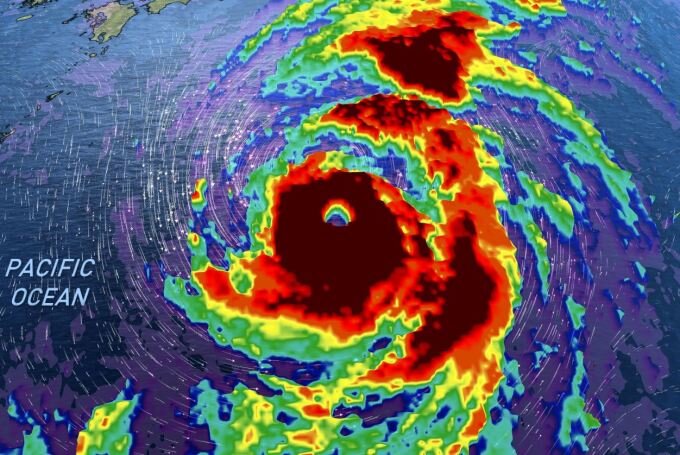
Radar showing Super Typhoon Hagibis in the Pacific Ocean. Photo Credit:  The Weather Network


Fairewinds,
12 October, 2019

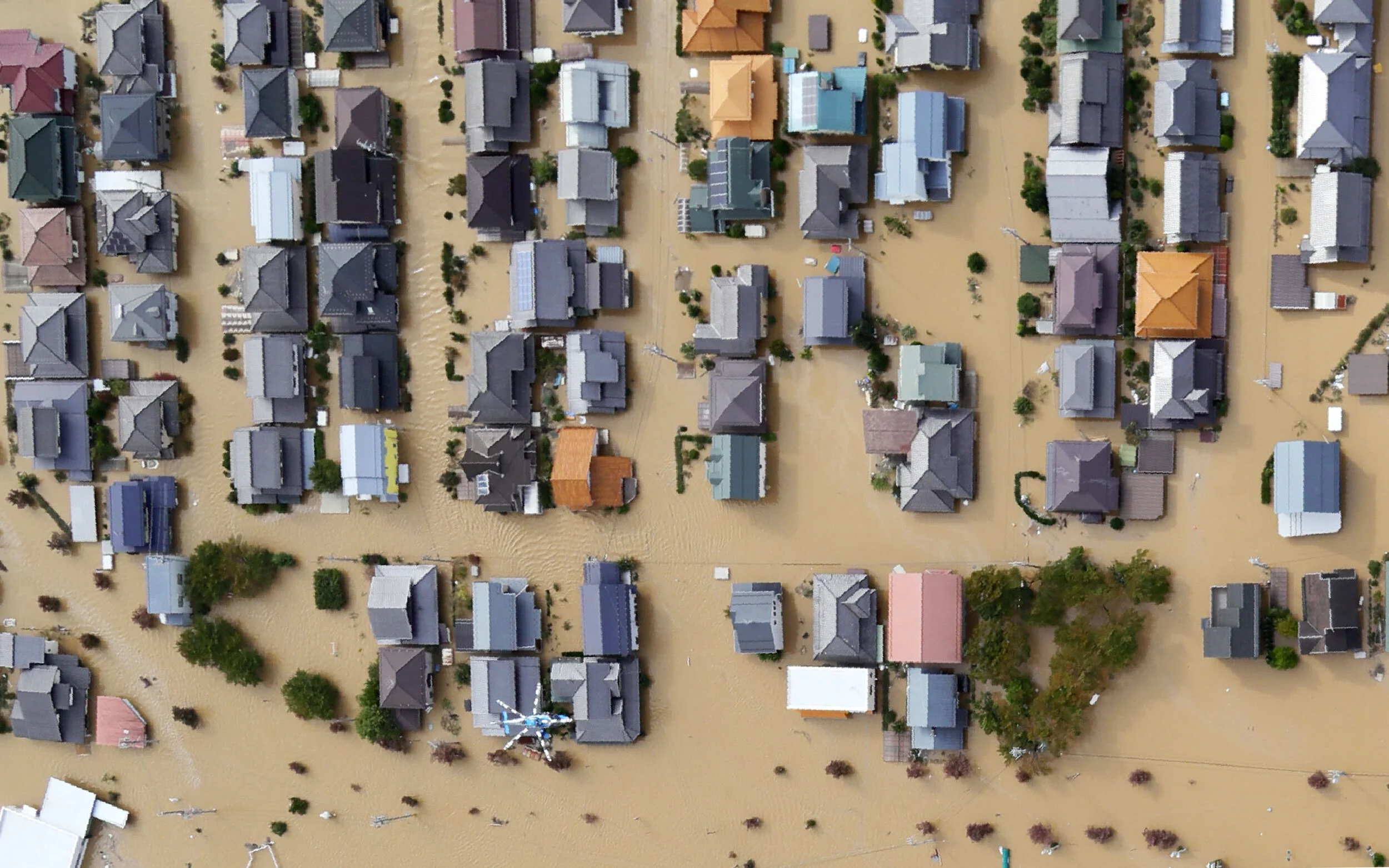
Fukushima Daiichi’s radioactive waste is on the move again as Hagibis, the worst typhoon to hit Japan since 1958, dropped 30” of rain in 24 hours and millions of people were forced to evacuate due to flooding.
From the minute we learned of this Super Typhoon threat, we were gravely concerned for the people of Japan and the tons of highly radioactive debris sitting on the edge of the volatile Pacific Ocean on the former site of the six Fukushima Daiichi atomic power reactors. Three of those nuclear power plants had meltdowns in March 2011 leaving more highly toxic radioactivity than anyone ever anticipated having in one spot. Some of that poisonous debris has been raked up and confined to thousands of giant 1-ton jumbo plastic bags that were right in the path of Hagibis.  As we watched the news of the approaching Pacific super typhoon (tropical cyclone) with its 150 mile per hour (mph) winds, we worried for the people of Japan who have already faced the worst nuclear disaster on the planet.
Since these events are just beginning to unfold, the amount of radioactive material released into the Pacific Ocean and surrounding environment is unknown as of Monday morning, October 14.
As reported by MSN news:
Contaminated waste from damaged nuclear plant in Fukushima swept away by Typhoon Hagibis
… the city of Tamura in Fukushima Prefecture said Sunday that an unknown number of bags containing contaminated waste from the plant were lost. Officials say heavy rains carried the bags to the nearby Furumichi River. That river connects to another river and flows into the Pacific Ocean. The city retrieved ten bags from the river but they haven't been able to confirm how many went missing out of the more than 2-thousand 6-hundred bags kept in a temporary storage.
Now, government authorities in Japan have begun the arduous task searching for an unknown number of bags of radioactive waste that were swept away by Super Typhoon Hagibis.  Each bag weighs more than one ton; the plastic material of which they were fabricated was anticipated to last only 5 to 7 years before the toxic debris would require a final dumping place, a temporary storage facility, or new bags to assure no leakage of the poisonous dirt and vegetation within.
Readers of the Fairewinds twitter feed will note that on Friday we expressed real concern about the status of Fukushima Daiichi and its highly radioactive dirt and debris in the face of this climate crisis weather event.
Unfortunately, our worst fears from Friday are true.  While damage reports are understandably still very incomplete, here is a video of one nuclear waste storage area that was undermined by heavy rain, spilling its radioactive contents into a river that runs into the Pacific Ocean.  

Was the nuclear reactor at Fukushima struck?
In Fukushima Prefecture, where a huge earthquake and tsunami caused the Daiichi nuclear power plant to melt down in 2011, a burst levee flooded the banks of the Abukuma River after heavy rains.
Separately, Tokyo Electric Power said it was inspecting the nuclear plant for damage from the heavy rains.
In the city of Tamura, floodwaters displaced huge bags containing contaminated waste gathered during the cleanup of areas around the Fukushima Daiichi nuclear plant, Kyodo News reported. A river washed away an unknown number of the bags, which were in a temporary storage area, it said.
The contents of the bags, which hold up to 1.3 tons, were unclear, but they are most likely filled with irradiated topsoil and other refuse from the cleanup that followed the meltdown. Ten of the bags were recovered undamaged, Kyodo News said, and the authorities are cataloging the remaining ones to see how many were still missing.”
While a first read of this story may seem to repeat the previously quoted story of bags being washed away, what we at Fairewinds find additionally disturbing is that a levee (dam) has also burst. It is well known that enormous amounts of radioactive material from the Fukushima meltdowns have settled on the bottom of stream beds and behind levees throughout Japan. As this and other levees and dams burst, they will release even more of that radiation into swollen streams and rivers where it will settle anew in crop lands and populated areas that were previously thought to be cleaned.
Our concern is magnified because people and animals cannot see, taste, or smell this migrating radioactivity. If we look at the radioactively contaminated dirt, trees, and vegetation dispersed by this super typhoon, it will not look any different from any other river mud or debris, so people and animals will not know that it is contaminated with the most toxic substances known to humans. As our tagline says “Radiation Knows No Borders,” and unlike an oil spills, plastics, and some chemical leaks, there is no color or smell for anyone to know they should watch out!
This is a developing story, and since the meltdowns in 2011, Fairewinds has kept you informed, and we and our colleagues will continue to do so.


http://www.asahi.com/ajw/articles/AJ201910140036.html?fbclid=IwAR3yyTrA0xL_AKOQq4D1FLiLNS1pM42AU7PIwmi0OWHUhXsNJ6PRTdtX0zQ

Monday, 12 August 2019

Typhoon Lekima hits China’s vegetable export hub

Typhoon hits China’s 

vegetable export hub, may 

push up global prices


11 August, 2019


The city of Shouguang in East China's Shandong Province has been left in ruins by torrential rain bought by Typhoon Lekima. Since it is an important vegetable producing and exporting hub in China, experts warned that the disaster may push up vegetable prices in the global market.

A local resident sent the Global Times a video on Sunday showing that some of the vegetable greenhouses of her family had been submerged in water. They have abandoned the greenhouses and evacuated to a safe area.

One vegetable greenhouse costs 300,000 ($42,500) to 400,000 yuan, and many of them were financed with loans, according to the resident.

Last year, Shouguang was hit by the most severe flood in over 40 years and many of the greenhouses were built on government loans after the flood.

Hong Tao, an expert on market regulation of the Ministry of Commerce, told the Global Times that the disaster in Shouguang may drive up world vegetable prices.

"Countries including Russia, Japan and South Korea are major importers of vegetables from Shouguang," Hong said, adding that China has long been a key vegetable exporter in the world with more than $7 billion in exports in 2018.

Cuiling West county in Shouguang has 1,105 mu (74 hectares) of vegetable greenhouses and exports more than 15,000 tons of vegetables to Russia valued at 100 million yuan every year, jiemian.com reported.

Wang Pan, a merchandising manager of a Qingdao-based foreign trade corporation called Lianqiao Group, told the Global Times on Sunday that showed some of their suppliers' plants in the province have been submerged and production has been suspended.

She did not disclose how much of a loss the company faces.

According to a report from the Xinhua News Agency on Sunday, direct economic losses caused by the typhoon have reached 15.75 billion yuan in East China's Zhejiang Province.

An update by the People's Daily showed that at least 32 people were dead, 16 remained missing, and more than 5 million people had been affected as of Sunday afternoon in Zhejiang Province after Typhoon Lekima made landfall in the area.

Lekima was moving north at a speed of 25 to 30 kilometers per hour, and it was forecast to hit the coast of Shandong Province by nightfall on Sunday, the National Meteorological Center warned.

Forecasters have issued 55 rainstorm red alerts in Shandong related to the typhoon.

28 dead after Typhoon Lekima lands in 

east China


Rescuers work at typhoon damaged area in Yongjia County, east China's Zhejiang Province, Aug. 10, 2019. (Xinhua)

 
Rescuers work at the typhoon damaged area in Shanzao Village of Yantan Town in Yongjia County, east China's Zhejiang Province, Aug. 10, 2019.(Photo by Zhao Yong/Xinhua)


A total of 28 people died and 20 remain missing in east China's Zhejiang Province after typhoon Lekima made landfall in the province on Saturday, local authorities said on Sunday morning.

Nearly 1.08 million people have been evacuated to safe places, and close to 5 million people in Zhejiang were affected, said the provincial flood control headquarters.
Aerial photo taken on Aug. 10, 2019 shows Shanzao Village of Yantan Town in Yongjia County, east China's Zhejiang Province. (Xinhua)


The typhoon landed around 1:45 a.m. Saturday in Zhejiang, bringing heavy rainstorms and triggering flash floods. In Yongjia County, torrential downpours caused a landslide that blocked rivers. The barrier lake bursted and flooded people away.

Lekima is expected to churn up the east coast towards Shandong Province on Sunday.