Showing posts with label toxicity. Show all posts

Friday, 6 December 2019

Is aluminium in our air and water?

I have no direct proof but with rapidly-declining health I strongly suspect that I have been affected by exposure to aluminium.

Aluminium gives rise to both Alzheimer's and Parkinson's - 'like' symptoms (and I suffer from both).

Unlike 10 years ago when I was practising it is not so easy to get heavy poisoning tests done today.

If indeed, I have elevated levels of aluminium or other heavy metals it is hard to imagine where it might have come from other from the sky.


Aluminum, is it really in our 

air, water and why?


The following article seems to be only available in .pdf. I have taken the photos of plant roots from the video

http://www.plantphysiol.org/content/107/2/315

This shows a normal root on the left and a root from a plant exposed to aluminium on the right.
Compare the normal root on the left with the one on the right.

Here is a conventional analysis of the symptoms of aluminium toxicity
This is from Dane Wigington and GeoEngineering.org


Aluminum Poisoning of 

Humanity From 

Geoengineering, The First 

Science Publication Goes Live


23 June, 2013

Now we have another weapon in our arsenal to fight back against the ongoing climate engineering insanity, acknowledgment of the atmospheric spraying in a science publication. Geoengineeringwatch.org has had extensive ongoing communication with Dr. Herndon, he attended the California Jam event in Southern California with me. My gratitude to geoscientist/physicist Marvin Herndon for his courage in directly addressing the issue of geoengineering when the vast majority of climate science community is cowering in the shadows.

Wigington and Dr. Herndon
Dane Wigington and Dr. Marvin Herndon conversing before Dane's presentation on geoengineering at the "California Jam, 2015" awareness conference

Aluminum Poisoning of Humanity and Earth's Biota by Clandestine Geoengineering

​Source: PR Newswire, article by Marvin Herndon, Ph.D.
SAN DIEGO, June 23, 2015 /PRNewswire/ — In a scientific article in Current Science (Indian Academy of Sciences), San Diego geoscientist, J. Marvin Herndon discloses: "Globally, for the past decade or  more, with dramatically increasing intensity, our planet is being deliberately and clandestinely exposed to a non-natural substance which releases toxic mobile aluminum into the environment .… But there has been no public admission, no understanding, no academic investigations, no informed consent, and no disclosure as to the nature of the toxic substances being dispersed into the air."
pic200
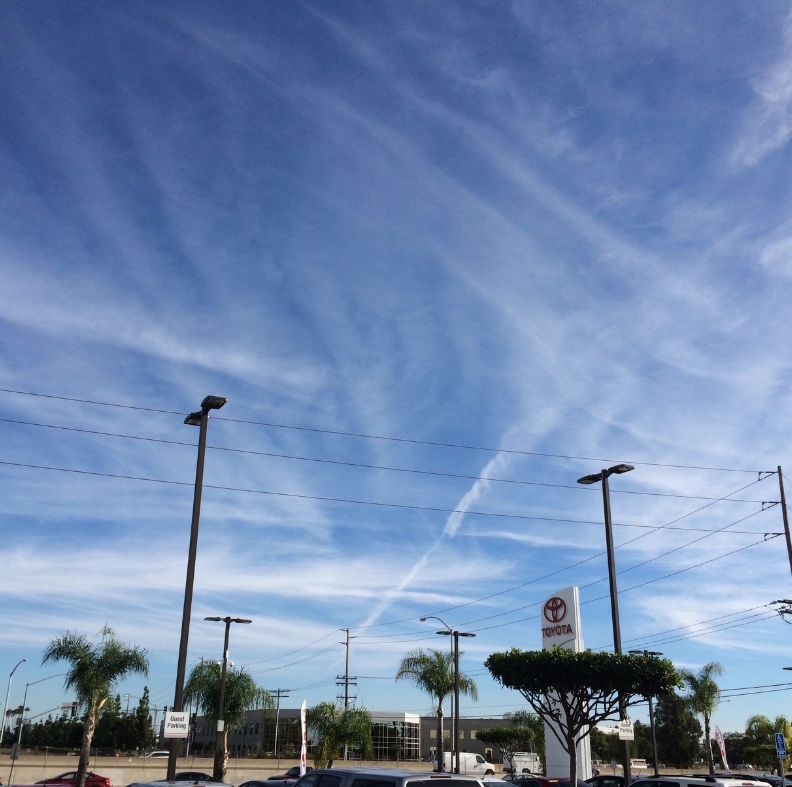
Toxic Spray Trails over San Diego
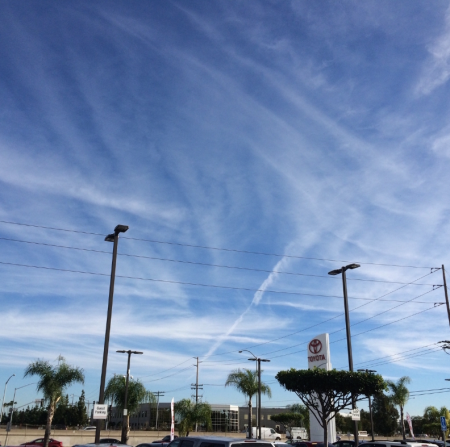
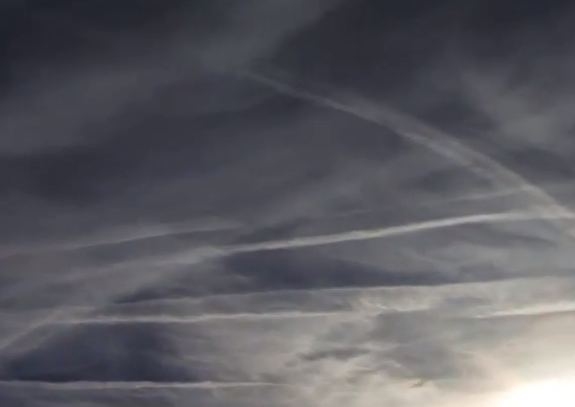
Observations described with pictures: "Since the spring of 2014, I observed the common occurrence of toxic geoengineering trails in the lower atmosphere (troposphere), which mixes with the air we breathe, was increasing in frequency. By November 2014, the spraying from tanker-jet aircraft had become a near- daily occurrence, sometimes to the extent of causing the otherwise blue sky to be completely overcast with artificial clouds. Disturbingly, San Diego's Mayor and Chief of Police issued  no  health  warnings,  even  to  the  most  at-risk  members  of  the  community:  children, pregnant women, the elderly, and those with compromised immune and respiratory systems."
Disclosed: "Coal burning by …. electric utilities, produces heavy ash that settles out, as well as fly ash that formally went up the smokestack into the atmosphere, but is now captured and stored because  of its well-known adverse human health effects and damage to the environment.… Water leaches out toxic elements." 
Scientific evidence, later confirmed and extended, reveals that coal fly ash is the toxic substance being sprayed over humanity: In "… a side-by-side comparison of aluminum to barium (Al/Ba) weight ratios of rainwater and coal fly ash leachate … the range of Al/Ba values are virtually indistinguishable…. Similarly … the range of … strontium to barium (Sr/Ba) weight ratios of rainwater and coal fly ash leachate … are virtually indistinguishable."
spray33
Blue Sky Overcast with Toxic Spray
Further: "Such clandestine geoengineering activities exposed humanity and Earth's biota to highly mobilized aluminum, a toxic substance not generally found in the natural environment and one for which no natural immunity had evolved. During the period of coal fly ash utilization for clandestine geoengineering, aluminum-implicated neurological diseases experienced explosive growth profiles, including autism, Alzheimer's, Parkinson's, ADHD, and others, as well as manifold destruction of plant and animal life. Highly mobilized aluminum from the geoengineering-dispersed coal fly ash, I posit, is the cause."
Moreover: "After U. S. President Barack Hussein Obama was sworn in for a second term in office, 20 January 2013, geoengineering activities escalated sharply, becoming a near-daily occurrence in many parts of America. If … coal fly ash geoengineering activities are the principal cause of aluminum-implicated neurological diseases, then there will be a sharp spike in their occurrences after January 20, 2013; proof, albeit horrific proof, of crimes against humanity and Earth's biota of a magnitude and severity never before experienced."
Herndon, J. M. Current Science, 25 June, 2015
​Source: PR Newswire, article by Marvin Herndon, Ph.D.

Monday, 17 August 2015

The experiment on the human population of Los Angeles

LA’s Shade Balls: The ecological costs of plastics in water

Max Liboiron

black balls hitting the water
From @rrosewarne Twitter feed.

16 August. 2015

The media has widely reported on the 20,000 black plastic balls tumbling down the slopes of Los Angeles Reservoir last week. Covering a body of water with black plastic balls (aka. “Shade Balls”) when people have been warned against throwing plastic into waterways has sparked a number of questions. Even though there are metal covers for standing water, the city opted for much cheaper plastic. What are the ramifications of this choice for ecological and human health? Luckily, we have a plastics expert at Discard Studies. Dr. Max Liboiron has been studying marine plastics and their chemicals for 8 years. Most of what we know about how plastics behave in water are from studying marine plastic pollution, but the concepts are the same regardless of the body of water and the intent behind the plastic:

1. Plastics leach chemicals into water. Plastics are polymers. Polymers have long, strong molecular bonds that keep plastics from biodegrading, and are what make plastics strong and flexible. But if you want your plastic to be UV resistant, black, extra flexible, or give it other properties, you add monomers. Monomers are made of shorter molecular chains, and they aren’t chemically bonded to the polymers. Which means they leach and offgas. You’ll see this in everyday plastics; as they get old and lose mononers, they also lose color and get brittle. While the exact composition of the HDPE used in the Shade Balls hasn’t been released, HDPE is a fairly safe plastic. 

Except we know there are chemicals in the balls that are for UV resistance. Those will leach. The black additive is carbon black, which isn’t supposed to be harmful when it leaches, which is great. Yet even with this precaution, most plastics leach endocrine disrupting chemicals that interfere with animal and human hormone systems (Yang 2011). Some endocrine disruptors, like bisphenol A (BPA), break down in water after a few weeks or months. Some don’t. We don’t know what chemicals are in the Shade Balls, but they will leach, especially because the balls are in the hot sun and are meant to be left in the water over a long period (reports say 10 years). Most water treatment systems don’t take these kinds of chemicals out of the water.

2. Plastics fragment in the environment. Most plastics found in the marine environment start out as larger objects you would easily recognize, like plastic bags and toothbrushes. Or balls. Over time, they fragment into tiny microplastics. 92% of the 5.25 trillion plastic pieces floating on the surface of oceans (Eriksen 2014) are smaller than a grain of rice because plastics don’t decay into their constituent molecules like organic substances. Instead, they fragment into smaller and smaller bits.

Plastic fragments found in the North Atlantic. Photo by Annie McBride. 2015.

3. Plastic fragments are ingested by marine life.The problem with micoplastics is that the are ingested by a wide variety of marine life. Some are so small they can be eaten by plankton or circulate in the blood of mussels (Browne 2008). Plastics can cause choking, but the bigger concern is that plastics are a way that chemicals move into animal tissues and food chains.


4. Plastics are magnets for chemicals. Plastics can absorb more than a million times more chemicals than the surrounding water, making them very toxic (Mato 2001). If you’ve ever done dishes after eating leftover spaghetti or curry, you know that orange color that’s so hard to scrub off plastic Tupperware. That is an example of how oily substances are attracted to plastics. Absorbed chemicals include DDT, flame retardants, and other persistent organic pollutants (POPs) (Rochman 2012, Teuten 2009). Scientists nickname ocean plastics “poison pills” because when an animal eats the plastic, the chemicals move into its body as well. These chemicals also become more concentrated as they move up the food chain (biomagnification).

5. Plastics provide habitat for microbes and other forms of life. Scientists have found that plastics support unique ecosystems, from microbes to fish. They call this the “plastisphere” (Zettler 2013). So while the Shade Balls might block sunlight that encourages algae growth, they are simultaneously providing habitat for other life, including but not limited to algae.

6. Plastics escape infrastructure. Scientists and governments first became concerned about marine plastics in the 1990s. At the time, they thought that people were dumping garbage straight into the ocean and on beaches. In fact, most marine plastics come from land (Browne 2011). Plastics are very light and durable and they fly, flow, and are carried into new environments all the time. Those Shade Balls will go places they aren’t meant to go, and will continue to leach chemicals, fragment, and be ingested in new environment.

7. The scale of the problem and the scale of the solution are mismatched. The 300 million gallons of water a year that the shade balls are supposed to capture that would otherwise evaporate is actually a small number when compared to the amount of water being used at industrial scales. For example, the Washington Post crunched the numbers and argues that if California agriculture increased its water efficiency by only 5%, they would save 500 billion gallons of water in a few months. Fracking uses 2.14 million gallons of fresh water every day. One of the most common problems in environmental solutionism is trying to solve massive problems with tiny solutions. This is one of those case.

8.  Technological fixes for systemic problems usually lead to more problems. To be fair, California is screwed. There is no water in a populous state. And it’s not going to get better soon. They have to come up with solutions, and fast. Will the shade balls keep 300 million gallons of water from evaporating? Yes. Is the short term gain worth the long term costs? This is the question. Grand technological gestures in the face of massive systemic problems like perpetual drought makes it feel as though action is possible. It’s doing something. But short term technological fixes for long term systemic problems usually lead to their own problematic ripple effects. These are called “wicked problems” and they account for most large scale environmental and urban planning problems. It’s like the woman who swallowed the fly. There are a lot of environmental costs to the Shade Ball fix for relatively little gain, even though little gains might matter in California right now. Yet, as suggested in the point above, there are other solutions that scale better. If we are going to deal with California’s continuing drought, with climate change, with ocean plastics, and the other types of complex, large scale problems characteristic of the 21st century, we need to step away from technical fixes and focus on larger systemic approaches that incorporate the bigger players, like industry.

This post is based on a basic literature review of the state of the art of science on marine plastics. If you’re still curious about how plastics behave in water environments, there is a great new open access book, Marine Anthropogenic Litter, that is written by scientists but readable by a public audience that covers the science in greater detail.


Cited:

Bergmann, M., Gutow, L., & Klages, M. (2015). Marine Anthropogenic Litter. Springer. This open-access text is the most comprehensive collection on marine plastics.
Browne, M. A., Dissanayake, A., Galloway, T. S., Lowe, D. M., & Thompson, R. C. (2008). Ingested microscopic plastic translocates to the circulatory system of the mussel, Mytilus edulis (L.). Environmental science & technology42(13), 5026-5031.
Browne, M., Crump, P., Niven, S., Teuten, E., Tonklin, A., Galloway, T., Thompson, R. (2011). Accumulation of Microplastic on Shorelines Worldwide: Sources and Sinks, Environ. Sci. Technol., 45 (21), pp 9175–9179
Kang, J. H., Aasi, D., & Katayama, Y. (2007). Bisphenol A in the aquatic environment and its endocrine-disruptive effects on aquatic organisms. Critical reviews in toxicology37(7), 607-625.
Mato, Y., Isobe, T., Takada, H., Kanehiro, H., Ohtake, C., Kaminuma, T., (2001).Plastic resin pellets as a transport medium for toxic chemicals in the marine environment. Environmental Science and Technology 35, 318–324.
Rochman, C. M., Hoh, E., Kurobe, T., & Teh, S. J. (2013). Ingested plastic transfers hazardous chemicals to fish and induces hepatic stressScientific reports3.
Teuten E, Saquing J, Knappe D, Barlaz M, Jonsson S, et al. (2009). Transport and release of chemicals from plastics to the environment and to wildlife. Philos Trans R Soc Lond B Biol Sci 364: 2027-2045.
Yang, C. Z., Yaniger, S. I., Jordan, V., Klein, D. J., & Bittner, G. D. (2011). Most plastic products release estrogenic chemicals: a potential health problem that can be solved. Environmental Health Perspectives119(7), 989-996.
Zettler, E., Mincer, T., Amaral-Zettler, L., (2013). Life in the “Plastisphere”: Microbial communities on plastic marine debris. Environmental Science and Technology 47, 7137-7146.
Dr. Max Liboiron is an Assistant Professor of culture and technology at the Memorial University of Newfoundland. Liboiron’s dissertation, Redefining Pollution: Plastics in the Wild looks at how the science of pollution around plastics is changing the face of science and activism. Liboiron now directs the Civic Laboratory for Environmental Action Research (CLEAR), which creates citizen science tools for environmental monitoring in extreme environments with a specialization in marine plastics.

Monday, 27 July 2015

Lake Opuha''s toxic secrets revealed by the drought

My source (and friend) told me that Lake Opuha was stocked with trout but they all did.

Residents: Buried DDT contaminating South Island lake
A bullet in the mail, an anonymous phone call and a secret map showing the dump site – it's a case full of intrigue and suspicion. But what's the truth behind claims that drums of deadly poison have been buried by a South Island dam, in a lake used for recreation and fishing?

By Jendy Harper - Reporter


TV3,
26 July, 2015


For decades they've dipped their lines, dangled their lures – simply enjoyed the river.

"If you wanted to have a drink you would drink out of the river," says Temuka's former pharmacist, Allan Campbell.

"We'd just go over to the river here, five minutes' walk, and catch 10 trout and be back in half an hour," says community man Ray Brokenshire. "We're angry ratepayers that aren't getting what's better for our rivers."

"What is going on is appalling," says environmental chemist Nick Wall.

These small-town eco-warriors, members of the Opihi Catchment and Environment Protection Society (OCEPS), won't abandon their belief that the waterway has turned toxic.

"I wouldn't drink out of this s**thole, no," says Mr Campbell.

The water comes from Lake Opuha. Manmade and farmer-owned, the irrigation storage dam is filling up now.


It ran dry for the first time this summer and its cracked and broken bed threw up some dirty secrets.

Whispers that something more serious, more sinister is buried beneath have dogged the dam for years.

In 2011, a former labourer-turned-whistleblower claimed that during construction drums of banned agrichemicals were dumped there.

The author of the affidavit is now elderly, frail and in poor health. His family was reluctant to grant access, but over the phone he said, quite firmly, that he stands by his statement. He said he was told to forget what he'd seen and the drums were buried.

Up until it was banned in 1989, DDT was a widely used insecticide. Many farmers, and others, were left with ample stocks in their possession.

Environmental chemist Grant Northcott specialises in organic contaminants.

"High residues of DDT has been linked to increased incidences of breast cancer and obesity and the incident of diabetes," says Mr Northcott.

Canterbury's regional council, Environment Canterbury (ECan), followed up on the whistleblower's claim by testing water, sediments and fish from Lake Opuha. It found nothing out of the ordinary.

But our three campaigners claim the scientists weren't testing in the right place. They say they now know exactly where the chemicals were allegedly dumped; they have the GPS coordinates.

"I receive a phone call from a withheld number, and he said to me, 'I have confirmation of where that dump site is. Have a look in your mailbox in two hours' time. There'll be GPS marking everything to get to it,'" says butcher Barry Stone. "I still don't know who he was."

So with map in hand, they met up at the dry lake with an (ECan) employee to walk through the marked locations. The decision was made to send in a ground-penetrating radar. The men say they were told they'd be involved, but it went ahead without them. Again, nothing was found.

"Sediment samples were taken in 2011, not when we were doing the underground radar, because that was when we were trying to find the location of a dump," says ECan CEO Bill Bayfield.

Frustrated that not a single sod had been turned or tested, Mr Campbell, Mr Brokenshire and Mr Stone decided to dig themselves, dig for buried traces of pesticides and insecticides.

They took their jars of mud to a South Canterbury scientist.

"We have found DDT, its metabloytes, chloro-pesticides," says Mr Wall.

Now firmly in the OCEPS camp, Mr Wall is an international environmental chemist with what he regards as a state-of-the-art testing kit – high-performance liquid chromatography with tandem mass spectrometry.

But he won't show it. Following threats, including a graffiti attack on his property, Mr Wall does not want to divulge to anyone his secret laboratory location.

"I will stand by the science and I'm quite prepared to have it peer-reviewed by anybody. They can come down and they can see the results."

Sediment samples from the lake bed were sent to laboratories here and overseas. We asked our expert to review the results.

"Certainly the highest concentrations I've seen in freshwater or marine sediment in New Zealand," says Mr Northcott.

"They're staggering," says Mr Bayfield. "They're very, very high."

So what do the figures mean? How much DDT is too much?

If you live in suburbia, proposed soil contaminant guidelines state levels can't exceed 70 parts per million. In playing fields and parks it's 400 parts per million.

But what they claim to have found at Lake Opuha far exceeds any safe limits.

The DDT concentrations across all laboratories average as high as 6000 parts per million. So if the results ring true, how safe is the vast body of water, the water that leaves it and water drawn downstream, from river aquifers to supply the people of Timaru?

"I'm very, very pleased the TDC moved very rapidly to sample their water supply," says Mr Bayfield. "I'm satisfied at this stage that for water users, which of course is potentially the people of Timaru, it has no risk at all."

"If you test water you're never going to find it," says Mr Wall. "Test the sediment and you will find it, so if you have flood events which bring sediment down the river, chances are you're bringing these fluoro chemicals down the river with you."

He claims his soil sampling downstream shows that's already happened.

"What is the long-term effect on our health, our immune systems? Nobody knows," says Mr Campbell.

"I guess now that Mr Campbell's got some results I'm confident that we're going to move really fast and really hard to work with them to find out just real this risk is," says Mr Bayfield.

Right now, neither party has faith in the other's integrity. ECan has cast doubt on the sampling process; the men are adamant they've done it all by the book, and they'd like to know why a rubbish tip was not cleaned up as ECan promised.

Then there are those directly affected by allegations of buried toxic waste, the hundreds of people who need the dam to draw a livelihood.

Tensions are spilling over.

"A couple of farmers came into the pharmacy I had in Temuka and basically told me, 'You buggers better not have found anything,'" says Mr Campbell.

"Receiving a live bullet through the post saying, 'The next one's for you,'" says Mr Wall on a threat he received.

Mr Brokenshire has been advised not to go fishing in the back country alone. Mr Stone was also warned off after he presented at a public meeting.

"I know nothing and that's very unfortunate if it's that, and I guess that just reflects the importance I guess that this is seen within the region, but any behaviour like that is totally unwarranted," says Opuha Water Ltd CEO Tony McCormack.

The dam company, the self-proclaimed river guardians, the regulatory authority – what everyone is in agreement on is that 17 years of simmering discontent over what might lie at the bottom of this lake must be put to bed once and for all.

"It's expensive, it's time-consuming, but with DDT it's necessary," says Mr Bayfield. "There's a real risk here and we accept that."

"I'm sure the problem can be solved," says Mr Campbell. "We would like it to be solved so that the health of our kids, grandkids, future generations can be assured."

To watch the TV3 report GO HERE


From earlier in the year -


Sunday, 28 December 2014

Canada: Toxic spill after derailment in Banff National Park

Crews rush to contain spill after CP derailment in Banff park sends train cars into creek

27 December, 2014

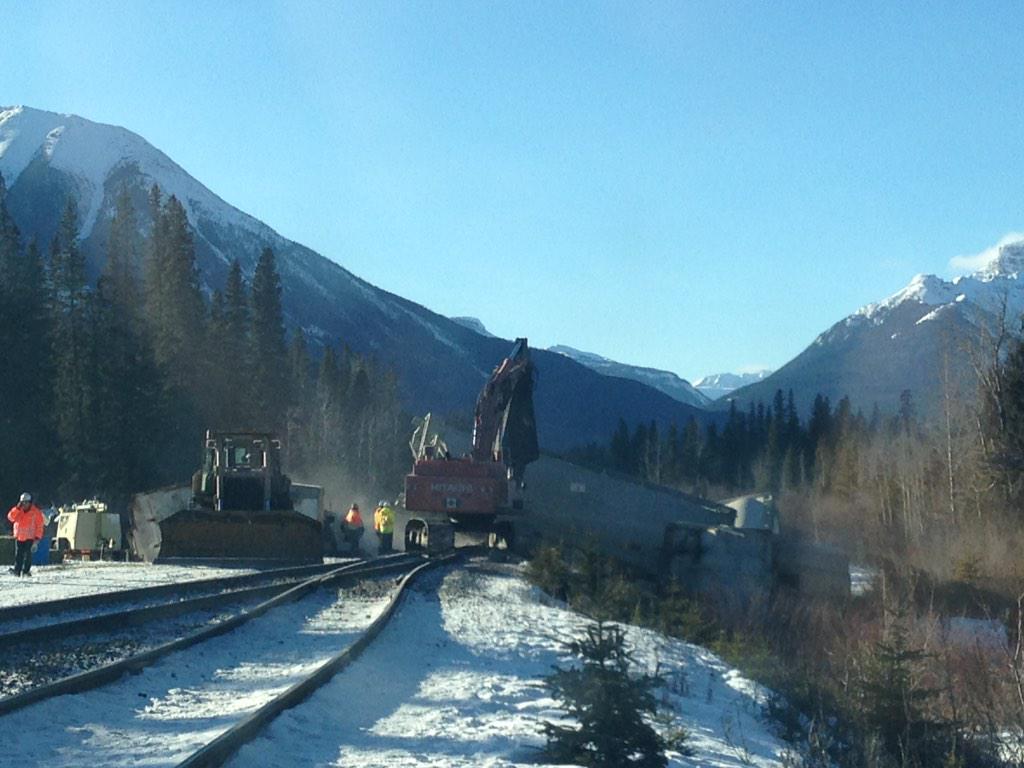
Crews were scrambling on Friday to clean up the scene of the latest train derailment that spilled ash and grain into a Banff creek and caused the water to become cloudy just upstream from the Bow River.

The derailment on Canadian Pacific’s main line through Banff National Park has reignited concerns about railway safety and the speeds at which trains travel through sensitive habitats.

The spilled ash and grain each pose their own potential problems for wildlife, one that could lower acidity levels for aquatic life, another that could attract bears to unsafe territory.

Parks Canada doesn’t expect any long-term impacts on the local environment, though its officials planned to continue monitoring water quality.

Fifteen Canadian Pacific cars loaded with lentils and fly ash — a component of cement and a byproduct of coal-fired plants — fell off the tracks on a bridge crossing over 40 Mile Creek near Banff townsite at 2 a.m. Friday.

Seven rail cars fell into the creek spilling some of their contents, which turned the water into a murky colour, though it doesn’t appear to be affecting the Bow River, which is about 200 metres downstream.

The bridge is a wreck,” said John Cottreau, a spokesman for the Transportation Safety Board, which is investigating the crash.

Alberta Environment, which has dispatched crews to the scene to help make sure the site is properly cleaned, said its greatest concern is the fly ash, which can create sedimentation problems and decrease acidity levels.

The impact that the spill will have on fish in 40 Mile Creek will depend on the amount of ash that was spilled, which has not yet been determined, 
spokeswoman Katrina Bluetchen said.

This is still an evolving situation.”

Crews planned to install a temporary dam on the creek to prevent the ash and grains from flowing into the nearby river, said Dave McDonough, of Parks Canada.

Government officials are monitoring water quality downstream of the derailment, including the Bow River, to check for changes in acidity levels, among other indicators. So far, pH levels are normal, McDonough said.

Canadian Pacific said 22 to 27 trains travel through the affected area in a 24 hour period, sometimes carrying petroleum products and other dangerous materials, but that the frequency of these shipments changes over time.

Authorities from several agencies were at the scene to aid in the cleanup and investigation into the cause, which will also uncover the speed at which the train was travelling.

Ahead of these reports, an Alberta conservationist suggested it may be time to insist that train speeds through the national park and other sensitive habitats be “seriously reduced.”

Perhaps a slower speed would not stop the derailments, but it would certainly change the nature of them,” said Colleen Campbell, of the Bow Valley Naturalists.
It’s like a slow-speed crash between cars (which) does a lot less damage to vehicles and people compared to a high-speed crash.”

Spilled grain is often a concern in forested areas because it can attract bears to areas that are not safe, but the vast majority of bears are hibernating, which means “it’s not a major concern,” McDonough said.

But Campbell, who was involved in a study on the impact of grain spillage on wildlife, said it can be difficult to remove every seed and crumb.

It’s OK now; the bears technically should all be asleep … but if it’s not all cleaned up, and it’s almost impossible, then it does ultimately become an attractant,” she said.

There is also a concern that fly ash, when airborne, can be a respiratory irritant. As cleanup at the site continues, officials are working to ensure the material is moist to prevent any hazards to crews and spectators, McDonough said.

We’re certainly on top of it (the derailment), and we’re actively working with CP and the Town of Banff to mitigate any potential impacts,” he said.

We will be monitoring it longer term as well. But we don’t anticipate any long-term effects to the environment from there.”

View image on Twitter
Passing by a casual train derailment in Banff

The Transportation Safety Board said its crews were gathering information to determine whether they need to launch an in-depth investigation.

CP Rail reported its crews had been dispatched to the scene to evaluate the incident and consult with Parks Canada “on all environmental matters.”

CP’s emergency protocols were immediately enacted and all safety precautions and measures are being taken as our crews respond to the situation with local officials,” the company said in a statement.

Work is underway to clean up the mess of rail cars and spilled materials, but there was no word on how long it would take.

The company said it had some re-routing options in place, but that it was also working to remove the rail cars and prepare the site for the installation of a temporary bridge.

We’re working with Parks Canada and people on the scene to assess the situation and get things cleaned up and operational again,” said Jeremy Berry, a spokesman for the railway.

Train derailment in @BanffNP - 15 cars carrying grain & cement. Crews on scene. No safety issues, no injuries, no dangerous goods

TSB deploys a team to the site of a derailment involving a CP freight train near Banff, AB
http://
ow.ly/GrIHR

It follows a long series of derailments, including the deadly Lac-Megantic crash, that TSB chair Wendy Tadros says have led to a “heightened fear over rail safety.”

There has been an erosion of public trust, and Canadians require reassurance that action is being taken, that risks are being properly identified and mitigated, and that future movements will be safe,” Tadros wrote in a newspaper op-ed in October.