Showing posts with label opposition. Show all posts

Sunday, 23 June 2019

Venezuelan Coup Leaders pocket $70 million


Did Venezuelan Coup Leaders Pocket $70 Million From Citgo's Stolen US Assets?

22 June, 2019

Venezuela’s government has claimed the Department of Justice will investigate Citgo’s opposition-appointed board for the theft of $70 million. But the board is itself the product of a massive theft – that of the elected government’s wealth.
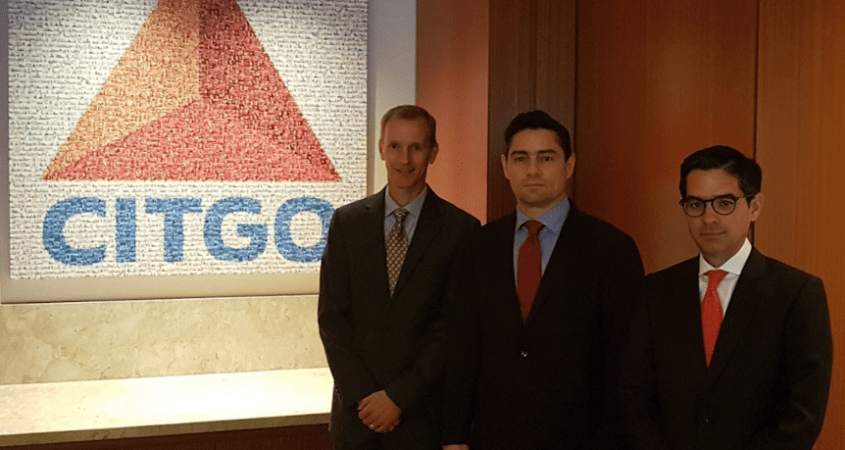
Former Exxon Lawyer and Venezuela opposition envoy to Washington, Carlos Vecchio, may have overseen a multi-million dollar fraud scheme since his political allies were handed control of his country’s US-based oil accounts.
On June 17, Venezuela’s government claimed that the US Justice Department was opening an investigation into Citgo’s opposition-appointed board of directors. Hours later, the ad-hoc council confirmed it had received a subpoena from US officials.
Citgo appeared to confirm the existence of the US government probe, stating that it “received a subpoena from the Department of Justice, which has been conducting a multi-year investigation into corruption practices in PDVSA.” Citgo is a subsidiary of Petroleum of Venezuela (PDVSA), the country’s state-owned oil company.
Citgo said it has “pledged full cooperation” with the investigation. It did not specify the nature of the subpoena or whether it concerned illegal activities alleged to have taken place before or after Guaido’s appointees took control of the company.
Citgo’s announcement followed an ominous comment by Venezuela’s Vice Minister of Communications on June 17:
“It is very likely that the United States Department of Justice will open an ad hoc investigation into the fake board of directors that Juan Guaidó appointed to the Citgo company,” Rodriguez proclaimed during a presentation from Venezuela’s presidential palace.
According to Rodriguez, the investigation was sparked by an alleged accounting fraud totaling $70 million. Rodriguez asserted the money, originally meant to cover PDVSA’s 2020 bond payment due in April, was stolen by Guaido’s representative in the US.
“It seems like the person directly involved in having pocketed those $70 million in excesses, due to cooking the books, is Mr. Carlos Vecchio,” charged Rodriguez.
The allegations of theft on a mass scale came just a day after members of Guaidó’s inner circle were exposed for embezzling $125,000 in money intended for humanitarian aid, spending it on expensive hotels and luxury items in Colombia.
Guaidó’s coup administration is not only facing a collapse of its credibility, but now the possibility of serious legal consequences for its brazen conduct.
Asked by The Grayzone about the existence of an investigation into the opposition’s Citgo accounts, the US Department of Justice stated that it “generally does not confirm, deny or otherwise comment on the existence or non-existence of an investigation.”

Stacking Citgo’s board with corporate consultants and pre-Chavez oil executives

The Trump Administration recognized Vecchio as Venezuela’s ambassador to Washington in January, after he was appointed by Guaidó.
Vecchio has since surrounded himself with an entourage of professional opposition activists in Washington DC. They include David Smolansky, a former local official from Vecchio’ Popular Will party who was appointed to PDVSA’s board of directors by the opposition-controlled National Assembly this February.
Vecchio did not reply to questions sent by The Grayzone pertaining to the management of Citgo accounts and where he finds the funding to cover his salary and those of his staff.
“Why doesn’t Guaidó have appointed ministers?” Rodriguez asked, insisting that the US-appointed leader had selected “representatives of Citgo to steal $7 billion.”
“We have information that interests which belong to Citgo are moving to personal accounts,” the government spokesman added.
$7 billion represents the entirety of PDVSA’s US-based assets seized by the US in January when it rolled out unprecedented sanctions targeting Venezuela’s oil industry. In conjunction with the Trump Administration’s announcement, Guaidó ordered Venezuela’s legally defunct National Assembly to appoint a new board of directors to PDVSA and Citgo.
Within weeks, Reuters reported the new Citgo board “was arranging its first meeting at the company’s headquarters” in Houston.
“It seems like the U.S. legal system will generally accept the legal fiction that PDVSA, Citgo’s sole shareholder, is controlled by Guaidó rather than by the people in Venezuela who actually control it,” Bloomberg opinion columnist Matt Levine wrote at the time, highlighting the bizarre character of the move.
The Guaidó-appointed board was subsequently stacked with corporate consultants and former PDVSA employees who were forced out of the company under the watch of the late Venezuelan President Hugo Chavez.
Citgo’s new chairwoman, Luisa Palacios, previously served as chief of Latin America Macro and Energy Research at Medley Global Advisors, which bills itself as “the leading macro policy intelligence service for the world’s top hedge funds, investment banks, asset managers and corporations”.
While at MGA, Palacios’ job was to “[provide] primary-sourced intelligence and analysis on economic policy and political risk”. In other words, a woman who just months ago was advising hedge funds and corporations on Latin America energy policy now heads a major Latin American-based energy company.
Palacios has also worked as a strategist for British investment bank Barclays Capital and as a consultant at the World Bank’s Latin America division.
Joining Palacios on Citgo’s opposition-appointed board is financial analyst Andres Elloy Padilla. In an instance of flagrant nepotism, Padilla’s nomination was overseen by his brother, Luis Carlos, who was the Vice President of the Energy and Petroleum Commission of the National Assembly where nominations were decided.
View image on TwitterView image on Twitter
Andrés Eloy José Padilla Villalba, designado por Guaidó y la AN en la dirección de la filial de PDVSA en EEUU, es hermano del diputado de AD por Luis Carlos Padilla Villalba, quien es el VP de la Comisión de Energía y Petróleo donde se definen las postulaciones
325 people are talking about this
Guaidó’s board also includes Luis Urdaneta, who once served as Citgo’s Chairman before becoming PDVSA’s Vice President in 1994. Urdaneta remained in that role until Hugo Chavez won power in 1998 and moved to fully socialize the company. Urdaneta’s colleague on Citgo’s new team, Angel Olmeta, similarly retired from his position on PDVSA’s board in 1998. While employed with PDVSA, Olmeta oversaw its acquisition of Citgo and went on to serve as the refinery’s Executive Vice President and Chief Operating Officer.
As former oil industry executives who saw their employment end with Chavez’s rise, Urdaneta and Olmeta have much in common with Guaidó’s US envoy, Carlos Vecchio. Vecchio enjoyed a successful career with private petrol, working as a tax lawyer for PDVSA before the rise of Chavez, then moving to ExxonMobil.
As The Grayzone reportedVecchio led Exxon’s legal fight against the Chavez government and only entered the political arena once Chavez drove his former employer from the country.
As Guaidó’s US ambassador, Vecchio now stands accused of overseeing the embezzlement of $70 million from Citgo’s accounts. He has dismissed the reports, insisting his role as ambassador limits his involvement in Citgo’s affairs.
“I am not a part of PDVSA or Citgo’s board of directors, nor am I interested in being such,” Vecchio tweeted in response to the charges.

“We need to take control of those assets. Bank accounts, we need to protect that.”

While it’s unclear who exactly controls the assets handed over to Guaido earlier this year, Foreign Agent Registration Act filings list Vecchio as the “Foreign Principal” of “the Bolivarian Republic of Venezuela under President Juan Guaidó” in the US. The DOJ deleted that filing without explanation shortly after its publication.
“We have assets that belong to the republic. I represent the republic and [am] working on that,” Vecchio told Public Radio International in February when asked whether or not it was legal for him to manage Venezuela’s accounts.
“We need to take control of those assets,” he added.
When PRI asked what could “get done without an official embassy”, Vecchio replied without hesitation: “Bank accounts, we need to protect that. Gold reserves, we need to protect that and also public companies or corporations such as Citgo… So that’s what we are doing.”
What precisely Vecchio planned to do with the money was unknown, but his comments have taken on new meaning in light of the alleged fraud inquiry.

By transferring billions in oil assets belonging to the Venezuelan government into the hands of a group of opposition activists with a track record of corruption, the Trump administration has primed the pump for major scandals. Whether the former Exxon lawyer Vecchio and his cohort pocketed the Citgo accounts or “protected” them, as he pledged to do, the pilfering of Venezuela’s wealth through a slow-motion coup has already begun.

Sunday, 25 October 2015

The Free Syrian Army's ultimatum

Video: Free Syrian Army general’s 2013 ultimatum to “international community”

FSAgeneral
24 October, 2015

Excerpt from an interview with Free Syrian Army general Abd Al-Baset Tawila on the Al-Jazeera network in June 10, 2013:
[…] I give the international community  one month to provide the rebels and the FSA with weapons and ammunition, so that we can defeat this criminal [Assad] regime. We give them one month.

If we see that the international community continues to desert our revolution, we will reveal all the evidence we have (about the use of chemical weapons). 
I think you know full well that I mean what I say. […] :


Tuesday, 17 March 2015

Russian liberal (and traitor) given airtime on RT

Here is Ilya Ponomarev, liberal opposition leader who visits 


the US embassy to receive instruction and gives powerpoint 

presentations on the violent overthrow of the Russian 

government – given full airtime on RT.


What is RT (allegedly ‘Putin’s mouthpiece’doing?! This guy is 

arguably a traitor to his country.


Putin, Ukrainians, 


Chechens? - Who killed Boris 


Nemtsov?


The murder of Russian opposition figure Boris Nemtsov set off a wave of 

speculation and finger pointing, both in the West and in Russia. While western 

media jumped the gun to blame Vladimir Putin and his government, the truth of 

the events remains murky. Who stands to gain from the politicization of the case, 

and how likely is the investigation’s outcome to be accepted in an environment of 

rampant speculation? Oksana is joined by Russian opposition MP Ilya 

Ponomarev to debate these issues.


Mr Ponomarev is amongst the group (long with Boris 

Nemtsov) who arrive at the US emabssy for 'consultations'


Did a Russian Parliamentarian Just Commit Treason?
PowerPoint given by Russian opposition leader blueprints US-backed violent overthrow of Russian government
Eric Draitser

An interesting thing happened in Washington recently, and it had nothing to do with Beltway politics, Democrats vs. Republicans, or any of the other standard fare for the middle of the week in mid-January. Rather, a relatively small, little publicized event took place at the Center for Strategic and International Studies (CSIS), a prominent liberal-leaning think tank in Washington. 

Image: Ilya Ponomarev prepared an entire PowerPoint detailing his contempt for Russia and his best advice for its ruination. The entire presentation can be viewed here


The event, “Russia’s Opposition in a Time of War and Crisis,” featured prominent Russian liberal opposition parliamentarian (member of the Russian Duma) Ilya Ponomarev, a noted critic of Russian President Putin, providing a detailed presentation regarding the current political climate in Russia, and the potential for the ousting or overthrow of the Russian government. Yes, you heard that right. A Russian elected official came to the United States to give a talk about how best to effect regime change in his own country.

At this point, the question is not so much whether what Ponomarev did was improper. The much more pressing issue is whether or not, by making this presentation in Washington precisely at the moment of heightened tensions between the US and Russia, Ponomarev has committed treason. While this may seem a rather extreme characterization, it is in fact quite appropriate. 


What Is Treason and Does It Apply?

If we define treason as “the offense of acting to overthrow one’s government or to kill or harm its sovereign,” then Ponomarev’s actions seem to tread very close to the threshold for treason. Moreover, the fact that such a presentation was delivered at CSIS – a think tank rife with “strategic planners” and proponents of the use of “soft power” to expand US hegemony – is instructive as it provides a window into both Ponomarev’s thinking and, perhaps more importantly, that of the political establishment in the US.

During his presentation, Ponomarev touched on a number of critical issues related to Russia’s domestic political situation, trying to illustrate for the attendees that the political reality in Russia, despite the simplicity of the western corporate media narrative, is rather complex. Though he described the Putin-led government as “Bonapartist,” he noted that “Putin is Russia’s only reliably working institution.” While the veracity of that statement is debatable, it does seem interesting that an elected Russian lawmaker would go to a foreign country under the auspices of wanting to help his country move forward, and then proceed to advocate the overthrow of the “only reliable institution.” Would this not be a thinly veiled attempt to advocate for destabilization, putsch, or something similar? 
  
The most significant portion of Ponomarev’s presentation centered on a slide titled “Conditions for the Change of Power in Russia,” which laid out essentially a roadmap or blueprint for regime change in Russia. Ponomarev’s slide outlined what he believes to be the essential elements for successful overthrow of the democratically elected government. These include: 

  1. Organized street protest (versus spontaneous one)
  2. Appealing vision of the future presented to the majority of Russians
  3. Leader, acceptable for all protesters and the elites
  4. Access to some financial resources
  5. Part of the elites should support the revolution
  6. Trigger even


Examining these points, it is clear that Ponomarev is not merely “informing” the assembled policymakers, journalists, and guests about what should happen, but rather is making a case for what must be made to happen. This is no educational exercise, but a thoughtfully crafted appeal to the political establishment of the US to support Ponomarev and his faction both financially and politically.


Of course the prescription above is nothing new to keen political observers who have followed the development of the crisis in Ukraine, and who have knowledge of how “soft power” works, and the concept of the “color revolution.” What Ponomarev is describing has happened more than a few times before. What is particularly troubling this time is that a sitting parliamentarian, himself a beneficiary of the democratic electoral process, is openly advocating an anti-democratic, unconstitutional overthrow of his own government. 


And Ponomarev is perfectly aware of this fact. Indeed, he included in the slide entitled “Conditions for the change of power in Russia” the following points: 


  • Unlikely – elections
  • Likely – revolution (non-violent or violent)
  • Compromise with the current elites increases probability of non-violent changes, but decreases the probability of successful reforms in the future

Here, Ponomarev is openly acknowledging a number of critical points. First, that regime change is unlikely to come through elections. This is a blatant admission that not only is Putin democratically elected and wildly popular, but that the opposition will never have anything close to enough popular support to defeat him. In other words, Ponomarev is tacitly saying that Putin must be overthrown precisely because the Russian people support him, and will likely continue to do so. Imagine: a democratically elected politician from a country supposedly run by an “authoritarian dictator” comes to the US – allegedly the world’s great champion of democracy – to advocate an anti-democratic regime change scenario. The hypocrisy is beyond words. 
Imagine: a democratically elected politician from a country supposedly run by an “authoritarian dictator” comes to the US – allegedly the world’s great champion of democracy – to advocate an anti-democratic regime change scenario. The hypocrisy is beyond words. 

Second, and this is crucial to the question of treason, is the fact that Ponomarev is advocating “non-violent or violent revolution” in collaboration with a foreign power. Here the propagandists and assorted mouthpieces for the Empire might argue that CSIS is a private institution that is not affiliated with the US Government. One would have to painfully naïve about the nature of power in the US and how it functions to believe such a line of argument.


CSIS, with its long association with individuals such as Zbigniew Brzezinski who come from the uppermost echelons of power, is one of a small number of hugely influential think tanks that directly impact US foreign policy. CSIS, along with the Rand Corporation, Council on Foreign Relations, and a handful of other groups, are a useful barometer for measuring the pulse of the US establishment, and for individuals such as Ponomarev to get close to the levers of US power.


Therefore, it could be argued that Ponomarev is openly collaborating with a foreign government – in this case through the nominal intermediary of CSIS – to bring about the overthrow of his own government. I would refer readers back to the above-referenced definition of treason.


Third, and perhaps most telling about Ponomarev, is the fact that he openly warns against any form of compromise with the government, or the elites with influence in the government. Such a preemptively hostile, and inherently adversarial, relationship with the government precludes any possibility for dialogue or even negotiation. Considering the fact that, at best, Ponomarev and the liberal opposition represent a relatively small proportion of the Russian people (primarily the western-oriented business, finance, and media community, and the young liberals they can mobilize on the streets), the net effect of what he is advocating is that a small, foreign-backed minority with deep pockets seize control of the government in a quite possibly violent putsch. Ukraine anyone? Treason anyone?


While such open treason might come as a shock to many outside Russia, those who follow the country closely are all too aware of the insidious role of the United States in fomenting unrest and bankrolling the liberal opposition. It is an open secret in Russia that many, if not most, of the opposition liberals are either directly or indirectly collaborating with the US against their own country.


Liberal Opposition or Agents of a Foreign Power?

It would be an extreme oversimplification, and not entirely honest, to characterize all Russian liberals as foreign agents. Some are simply socially liberal people who see in the West a political, economic, social and cultural template for their own society. Needless to say, such a view is a small minority in Russia where traditional values and social/cultural conservatism have been on the rise since the end of the Soviet Union, and especially since Putin came to power.

However, when one examines key figures and institutions of the liberal establishment in Russia – both in politics and civil society – it becomes clear that some of the most influential are in fact collaborating with foreign powers (especially the US) to undermine the Russian government.


Boris Nemtsov is not only one of the leading liberal opposition figures in Russia, he is also a notoriously corrupt and oligarch-friendly politician who, in recent years, has fashioned for himself the public persona of an anti-corruption, anti-oligarch crusader. Of course, he doesn’t care to mention his notorious, and politically and financially lucrative, relationship with disgraced Russian oligarch Khodorkovsky. Nor does he advertise his deep commitment to aiding the US further its own agenda, as evidenced by his appearance at the now infamous 2012 gathering at the US Embassy of liberal leaders with then newly appointed Ambassador, and self-described “expert” in regime change, Michael McFaul.


Similarly, Nemtsov’s ally Vladimir Ryzhkov, according to various 
accounts, “formed a Committee…in 2003 to ‘draw’ funds of the imprisoned Khodorkovsky along with soliciting funds from fugitive oligarchs such as Boris Berezovsky and western foundations such as the Soros Foundation. The stated aim of the effort was to rally ‘democratic’ forces against Putin.” The anti-corruption campaigner seemed to have little qualms with being financed by the most corrupt forces in the country.

Gary Kasparov, the outspoken opposition figure, former chess champion and darling of the US neocon establishment, has his own questions to answer. As F. William Engdahl has 
written


In April 2007, Kasparov admitted he was a board member of the National Security Advisory Council of [the] Center for Security Policy, a “non-profit, non-partisan national security organization that specializes in identifying policies, actions, and resource needs that are vital to American security.” Inside Russia Kasparov is more infamous for his earlier financial ties to Leonid Nevzlin, former Yukos vice-president and partner of Michael Khodorokvsky. Nevzlin fled to Israel on being charged in Russia on charges of murder and hiring contract killers to eliminate “objectionable people” while Yukos vice-president.

Can one really doubt the true intentions of a Russian “activist” and “leader” who happily sits on the board of a US think tank that focuses on “American security” (coded language for US foreign policy objectives)? Rather than being interested in progress in Russia, Kasparov is motivated only by his desire to gain power and prestige.


Beyond just the individuals, a number of influential “civil society” organizations deeply tied to the US establishment figure prominently in the liberal opposition. These organizations (
Strategy 31, the Moscow-Helsinki GroupLevada CenterGOLOS, and many others) are either directly or indirectly funded by the United States through its myriad soft power organs, the most infamous among them being the National Endowment for Democracy. That these organizations knowingly take money from the US Government, and then present themselves as objective, disinterested civil society organizations is the height of cynicism and hypocrisy. What does one call such an organization if not an “agent of a foreign power”? I would again refer readers to the above-cited definition of “treason.”


Whether or not Ponomarev’s presentation fits the legal definition of treason would be for lawyers and legal scholars to decide. What is clear however is that Ponomarev, and indeed the vast bulk of the Russian liberal establishment, is a de facto appendage of 
US soft power in Russia. They act not in the interests of the Russian people, but of themselves and their patrons in the West. As such, it is up to the people of Russia to address this sort of treacherous behavior in their elected (and unelected) officials. And it is up to those of us around the world – those who refuse to go along with western imperialism in its many forms – to expose these individuals and organizations wherever they rear their ugly heads.


Eric Draitser is an independent geopolitical analyst based in New York City, he is the founder of StopImperialism.org and OP-ed columnist for RT and frequent contributor to “New Eastern Outlook.”