Showing posts with label neoliberalism. Show all posts

Tuesday, 12 February 2019

Climate change is a direct challenge to the philosophy of neo-liberalism that has made a very small group of people exceedingly rich

"Climate change is a direct challenge to the philosophy of neo-liberalism that has made a very small group of people exceedingly rich"

While the author does not seem to grasp the seriousness of this there is enough truth to warrant a read.

We have multibillionaires lecturing the rest of us what WE should do to “save the planet”

What they really mean is,save their (neo-liberal) economy and their own billions.

Climate change denial not about the science


11 February, 2019

Climate change is a direct challenge to the philosophy of neo-liberalism that has made a very small group of people exceedingly rich, writes the University of Auckland's Dr Neal Curtis. It's never been about the science - it's the ideology.
On the 29th January, San Francisco-based political magazine Mother Jones ran an article claiming a journal funded by US billionaire Peter Thiel—a man known in New Zealand for the controversial way he received his citizenship—was publishing articles dismissing the science on climate change.
The only thing new here, though, is the addition of another name to an already long list of very wealthy businessmen who are denying the consensus on scientific facts shared, according to NASA, by 97 percent of the scientific community who are publishing on the subject in peer-reviewed journals. To call the agreement on climate change a consensus, then, seriously underestimates just how in sync so many of the world’s leading experts are on this matter. But really, climate change denial has never been about the science.
Science by definition is refutable. Karl Popper’s famous argument, that for knowledge to be regarded as scientific it needed to be falsifiable, makes the argument that the “science” or the “data” is contestable fairly meaningless. In a scientific context this is a given, and it is the methods that determine whether something is false or not that is leading the scientific community to believe man-made climate change is true, factual, and demonstrable from the evidence currently available. But as I say, refuting climate science has never been about the science. It is a matter of ideology and the maintenance of a political dogma.
Climate change and the environmental imperatives that follow from it challenge deeply-held assumptions that are central to the Western worldview. They challenge our anthropocentric belief that everything is ours to use as we see fit. It questions our dominion and the separation of ourselves from nature. We like to think we are a special kind of animal with a status that gives us an exemption from dependency on the environment so fundamental to other species; a dependency borne out by the catastrophic rate of extinctions.
But more specifically climate change challenges the fundamentals of an ideology that has become political dogma over the last 40 years, namely the doctrine known as neo-liberalism. This was presented as an economic theory, but was in reality a political ideology that privileged the individual, privatised resources and services, reduced society to exchanges in a so-called “free market”, and sought to eradicate the role of the state. It was a system that worked in the sense that it succeeded in completing one of the greatest redistributions of wealth in modern history, with Oxfam reporting that 82 percent of the wealth produced in 2017 went to the top 1 per cent of the population.
However, climate change is not only a threat to the planet and the life on it, it is also a threat to this ideology. What climate change shows us is that we need to transform the way we live, curtailing our use of disposable commodities and the fossil fuels that currently drive our economy; but more than this, climate change shows us how dependent we are on the planet. We will no doubt want to maintain human rights in the future, and the individual freedoms of speech and thought they protect, but climate change shows us that prior to this is a dependency and a responsibility that no individual can escape.
It also shows us how connected and implicated we are in the lives of others. It points to the need for mutual, collective action. At the international level it requires regulation and the imposition of certain limits. The wealthy people who oppose climate science are so privileged that they cannot imagine and will not tolerate any limit being placed on them. They will certainly not countenance any limit on their self-appointed right to accumulate infinite wealth, nor any proposal to distribute means more equitably.
Socially, climate change also shows we are all in this together and need to practise a profound solidarity to solve our problems. This is nothing like the sense of community that often comes with the exclusive knowledge of who and who isn’t a member. This is about an extended and anonymous social imagination that allows us to consider the needs of those who are radically different from us.
Finally, the solutions require the concerted effort of the state. Certainly the private sector has a role to play, but the pursuit of profit is inadequate to the task. Climate change demands carefully planned, co-ordinated and urgent action that is beyond the ad hoc, competitive logic of companies seeking to increase shareholder value. It will also, no doubt, require the use of taxation as a means to nudge behaviour in the right direction. What climate change shows us, then, is that the political priorities of the traditional left—even if we rebrand them as a Green New Deal—are much more suited to the crisis we face.
So, climate change is a direct challenge to the philosophy of neo-liberalism that has made a very small group of people exceedingly rich, and which is why they no doubt want to ignore it. But what is so maddening is that they act as if some billionaire friend, a fantasy figure like Marvel’s Tony Stark, will offer them—at the right price, of course—a personal technological solution or a place on their rocket ship to start life somewhere else. It is laughable, but true. Science is not the issue, it is ideology.
Dr Neal Curtis is Associate Professor of Media and Communication at the University of Auckland.

Friday, 8 February 2019

The Green Party: "Neoliberals on bicycles"


This is the most clear-headed and informed analyses of the current Green Party that I once loved that I have read. I have heard the current party described as “neo-liberals on bicycles”


"The party’s male co-leader, James Shaw, openly touts for the support of “green” capitalists: as if the profits to be extracted from re-branding corporate greed as an “ecologically sustainable business ethos” will somehow render its actual production less dependent on environmental despoliation and unrelenting human exploitation."


The Incredible Lightness of 

Being Green.


8 February, 2019

Putting The Blue Into Green: The party’s male co-leader, James Shaw, openly touts for the support of “green” capitalists: as if the profits to be extracted from re-branding corporate greed as an “ecologically sustainable business ethos” will somehow render its actual production less dependent on environmental despoliation and unrelenting human exploitation.

IF IT’S PERMISSABLE to talk about “Red-Greens”, then why not about “Blue-Greens”? Surely an abiding concern for the natural environment is something which transcends narrow ideological considerations? And, if that’s true, doesn’t it make perfect sense for an environmental party to position itself squarely in the middle of the political spectrum – from whence it can reach out to both the Left and the Right?

Certainly, that’s what Vernon Tava believes, and the former Green MP, Kennedy Graham, agrees with him. In fact, Graham goes further, arguing that contemporary politics is driven by the followers of three great quests. The quest for freedom; the quest for equality; and the quest for sustainability. Graham strongly implies that the greatest of these three is sustainability. Without a sustainable environment, the quests for freedom and equality cannot succeed. This was the sort of thinking that prompted the late Rod Donald to declare: “The Greens are not of the Left. The Greens are not of the Right. The Greens are out in front.”

A great soundbite – but is it true?

It all depends what you mean by “out in front”. If it is intended to describe the vanguard role played by environmental activists in the 1970s and 80s, then the quip has some merit. Up until then “development” was the dominant – and largely uncontested – paradigm, embraced alike by the Capitalist West and the Communist Bloc. The power of science and technology was being unleashed against an intransigent natural world. “Progress” was the word used by both the Left and the Right to describe humankind’s heroic mission to bend Nature to its will. Felling forests, damming rivers and levelling mountains were all achievements to celebrate. Humankind was winning!

It took the Astronaut’s photograph of “Spaceship Earth” to jolt humanity into the realisation that this bright blue planet is all we have – a dazzling repository of life and beauty in an otherwise barren universe. Not an enemy to be subdued, but our one and only home. If there was a foe to be fought, then surely it was rampant industrialism and the insatiable consumerist societies it was spawning? Whether these societies were ruled by Capitalists, or Communists, hardly seemed to matter. The damage inflicted on the planet’s fragile ecosystems by both ideologies was equally catastrophic.

So, yes. Those who grasped the full social, economic and ecological consequences of the development paradigm were, indeed, “out in front” politically.

With the benefit of hindsight, however, it is possible to view the Cold War stand-off between the United States and the Soviet Union as a conflict driven less by ideology than straightforward geopolitical rivalry. The Russians’ state-capitalist system, at enormous cost, was able to maintain a rough military parity with its corporate-capitalist competitors, but was completely outclassed in virtually all other aspects of production. The Russians never mastered the problems of distribution, and, crucially, suffered from a crippling shortage of domestically generated investment capital. The wonder is not that the Soviet Union fell, but that it remained upright for so long!

With the collapse of “actually existing socialism” in Russia and Eastern Europe, and the Chinese Communist Party’s embrace of “socialism with Chinese characteristics” (a.k.a Capitalism!) the Greens’ boast that they were “out in front” lost its sting. The imperatives of corporate capitalism were now driving economic activity across the entire planet. Industrialisation and consumerism were being supercharged – and so was their impact on global ecosystems. Those who stood for the planet were now obliged to stand against a capitalist system whose corporate masters refused to acknowledge (and were, in fact, operating beyond) the moral and political claims of the traditional nation state.

But, as more and more of Earth’s burgeoning human population were swallowed up in the capitalist machine, the amount of CO2 spewing forth from its smokestacks and exhaust pipes was increasing exponentially – soaring towards an atmospheric concentration incompatible with the long-term survival of industrial civilisation. Capitalism was facing its final and fatal contradiction: a negation which only its own negation could negate.

The colour of this capitalist death-machine is, and always has been, blue. Calling yourself a “Blue-Green” is, therefore, oxymoronic. You can no more be a “Blue-Green” than you can be a non-violent boxer or a chaste debauchee. Nor is it defensible to describe yourself as a “Green-Green” – as if rescuing the biosphere can be accomplished without confronting directly the economic system responsible for its devastation. In this regard, the subjective sincerity or insincerity of Vernon Tava and Kennedy Graham is completely irrelevant. Objectively, they are serving the interests of the planet’s enemies – not its friends.

The capitalists’ oft-repeated accusation that they are facing “Red-Greens” is, however, entirely justified. If by “red” is meant a force dedicated to overturning the prevailing capitalist system and replacing it with one in which the three great goals of freedom, equality and sustainability will each become the indispensable guarantor of the other.

From their first appearance in the 1980s, Green parties around the world have presented themselves as both the exemplars and advocates of four foundational principles: Ecological Wisdom; Social Justice; Participatory Democracy; and Nonviolence. Each of these principles is antithetical to the founding principles of Capitalism: The Subjugation of Nature; Human Exploitation; Plutocracy; and Coercive Violence. The dilemma confronting Green supporters in New Zealand in 2019 is just how far the Green Party has drifted from the global Green Movement’s original values. There is a widespread and growing feeling that the Greens’ parliamentary representatives are no longer Capitalism’s enemies, but its enablers.

The party’s male co-leader, James Shaw, openly touts for the support of “green” capitalists: as if the profits to be extracted from re-branding corporate greed as an “ecologically sustainable business ethos” will somehow render its actual production less dependent on environmental despoliation and unrelenting human exploitation.

Only if Green voters are willing to subscribe to the fiction of “weightless” capitalist enterprises that leave no “carbon footprint”, can Shaw’s pitch be rendered credible. Except that, the cellphone in his pocket, the lap-top in his shoulder-bag, both argue against his proposition. If Shaw could only see the horrors attendant upon the extraction of the minerals that make them work; the super-exploitative megafactories in which they are assembled; then he would understand just how crushing the planetary burden off-loaded by his new-found “green” capitalist friends truly is.

As for the Greens’ female co-leader, Marama Davidson. Perhaps the best that can be said of her performance is that it has been distinguished by neither wisdom, nor justice. Nor even by a conspicuous quantum to democracy – participatory or otherwise. Most notably absent has been the founding Green principle of Nonviolence. On the contrary, Davidson’s “woke” faction of the party, caught up in the ever-tightening coils of identity politics, have unleashed a level of emotional violence upon those it deems ideological heretics that must surely make the party’s founders weep.

How different is today’s Green caucus from the “magnificent seven” Green MPs who entered the House of Representatives so triumphantly in 1999. The New Zealand establishment recognised those Greens for what they were: enemies of the status-quo and certainly not the sort of people this country’s capitalists (not even those in the Labour Party!) felt the least bit comfortable about doing business with. Red-Greens they were called: a label which MPs Sue Bradford and Keith Locke wore with pride. Today, to be branded a Red is simply embarrassing: proof only of outdated thinking.

Even so, the National Party leader, Simon Bridges’, enthusiasm for Vernon Tava’s “Blue-Green” initiative is misplaced. Such an obvious example of right-wing “astroturfing” would produce little of electoral value. Besides, all of the time, effort and resources required to draw off enough votes to tip the Greens out of Parliament would, ultimately, be politically counter-productive. New Zealand Capitalism is much better served by leaving the existing Green Party exactly where it is.

Sitting comfortably in the boardroom: sporting a pale-green silk tie and wearing a dark blue suit.


Wednesday, 21 November 2018

The Brtish state turns on its people


UN warns of damage to “the fabric of British society” as the state turns on its people

16 November, 2018

Drastic cuts to social support and welfare risk damaging the very fabric of British society, a UN report has today revealed.

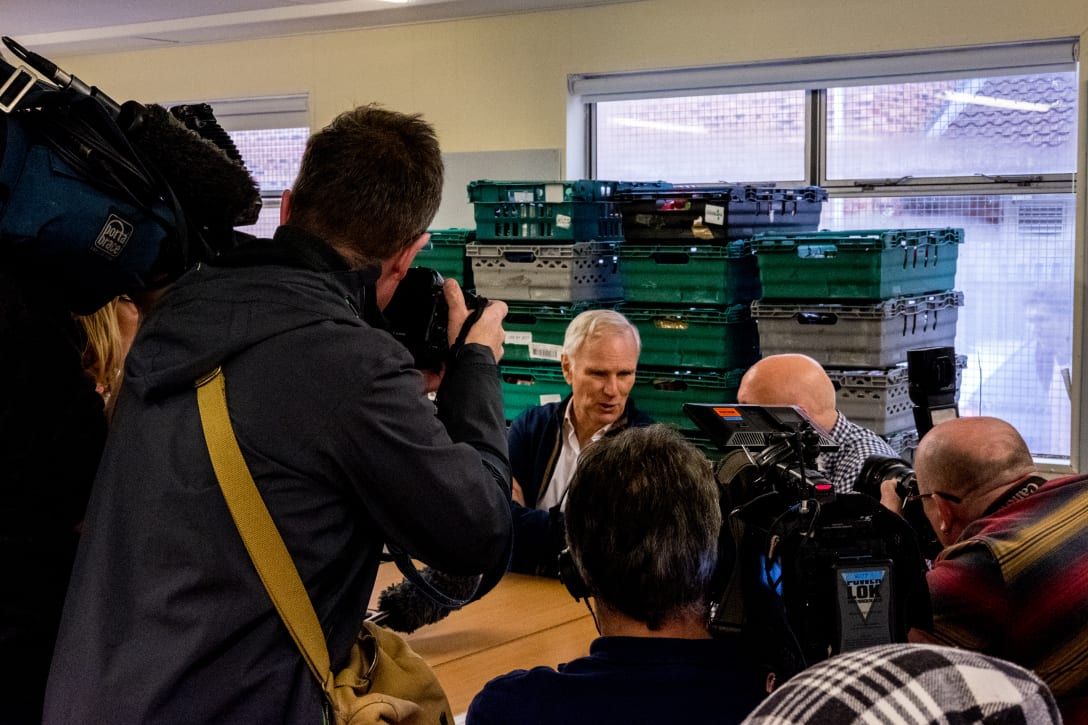
Concluding his 12-day visit to the country the UN Special Rapporteur on extreme poverty and human rights, Philip Alston, said the UK Government’s policies are entrenching high levels of poverty and inflicting unnecessary misery in one of the richest countries in the world.
Yet amid the country’s impending exit from the European Union the government appears to be treating it as an afterthought, with speculation that the callous policies could be driven by a political desire for social re-engineering aired.
Alston concluded that the benefits system, epitomised by Universal Credit, is driven by the desire to get across a simple set of messages that the state “no longer has your back” and that “you are on your own”.
He said: “What goes along with that is a sense that we should make the system as unwelcoming as possible.
That people who need benefits should be reminded constantly that they are lucky to get anything.
That nothing will be made easy” and “that sanctions should be harsh, should be immediate and should be painful”.
© Bassam Khawaja 2018

Some 14 million people, a fifth of the population, currently live in poverty in the United Kingdom. Four million of these are more than 50 percent below the poverty line, and 1.5 million are destitute, unable to afford basics essentials.
After years of progress, poverty is rising again, the UN report found, with child poverty predicted to rise 7 per cent between 2015 and 2022, homelessness is up 60 per cent since 2010, and food banks rapidly multiplying.
In the fifth richest country in the world, this is not just a disgrace, but a social calamity and an economic disaster, all rolled into one,” Alston said.
Stuck in an ideological trap

Although austerity has been used by the government to justify cuts to welfare and social services, the truth is “there haven’t been many savings”, Alston says.
Instead the motivation is very clearly an ideological one.
Universal Credit was likened to the mentality of a sergeant major in the report, taking a command and control approach to welfare that sees harsh, immediate and painful sanctions.
© Bassam Khawaja 2018

The sudden “ton of bricks approach” pours hardship on people who are already under immense pressure, and is “utterly inconsistent with the essential underpinnings of human rights and the British sense of community and the values of justice and fairness”, Alston noted.
He added that many of the “unnecessary and harsh” characteristics of the government’s flagship welfare programme could be changed quickly, such as the five week waiting period, payments to a single household, the digital by default system and the tough consequences of sanctions.
The dismantling of the broader social safety net

But Universal Credit is just the tip of the iceberg. Citing “draconian” benefit reductions across the board, Alston said while welfare is being cut on a number of levels, “one of the things I feel most strongly about is the cuts in local authority budgets”.
Britain has a culture of local concern of people been able to get some sort of assistance from their local councils when things go really wrong,” he said, but up against 49.9 per cent cuts to their budgets many councils have been reduced to just the emergency services.
© Bassam Khawaja 2018

Sports centres, recreation centres, public lands, libraries and youth centres are all being lost at the hands of government cuts, which leaves nowhere for those in the lower income groups to go.
While those at the top may celebrate tax cuts and an increase in their income, “they will find themselves living in an increasingly hostile society because the community groups are being systematically broken”, Aston notes.
If a new minister was interest, if a new government was interested, the worst aspects of a lot of these policies could be changed overnight, and for very little money”, he concluded.