Showing posts with label gloabl warming. Show all posts

Wednesday, 12 June 2019

CNN produces an article on Arctic sea ice melting from below

Arctic melt: Threat beneath the ice

We know the Arctic is experiencing a vast melting of sea ice. But deep in the ocean, something is happening that scientists are still trying to fully understand


CNN,
8 June, 2019


Fram Strait, Arctic Circle (CNN)It's spring in the Arctic, and nature in the far north is just waking up, warmed by 24 daily hours of sunlight.

Here, in the waters of the Fram Strait, between Svaalbard and Greenland, is where ice comes to die.


Fram Strait, Arctic Circle (CNN)It's spring in the Arctic, and nature in the far north is just waking up, warmed by 24 daily hours of sunlight.


The Arctic is heating up twice as fast as the global average, causing massive melting of sea ice. But while we know climate change is warming the Arctic air, there is a lot more happening under the ice that we don't fully understand.


A team of interdisciplinary scientists is here on a study facilitated by Greenpeace, at the start of the environmental group's nearly year-long pole-to-pole expedition. The scientists want to learn more about this threat beneath the ice, which could potentially destroy the cycle of life that starts here, and threaten the lives of people all over the planet.


A mosaic of fractured ice

The inflatable boats carrying the scientists maneuver slowly through a sea of fractured ice, a mosaic of pieces that once were part of the Arctic ice sheet, pushed south by winds and currents into the Fram Strait.


Here, the scientists spend days working on top of the precarious ice floes, keeping a watchful eye out for polar bears while drilling into the ice to measure its thickness

"It has definitely thinned in this area, it has thinned everywhere" says team leader, polar physicist Till Wagner, of the University of North Carolina Wilmington.

Since 1990 the thickness of sea ice here has decreased by a third, from about 3 meters to 2 meters, according to the Fram Strait Arctic Observatory.

The Fram Strait is where warm waters originating in Mexico are brought up by the Gulf Stream, flowing thousands of miles through the Atlantic to meet the Arctic ice edge. 80% of the ice movement in and out of the Arctic Ocean happens through here.

"For the longest time the story of sea ice loss has been one of the higher air temperatures melting the ice from above," Wagner explains.

But that story may be changing.

"This warm water is at the surface as it comes up [from the south] and then it drops under the ice as it goes into the Arctic Ocean," says Wagner. "The layer that is under the ice has been coming up closer to the surface and melting the ice from underneath."

The researchers are trying to better understand exactly why this is happening.


A forest of microscopic life


What the sea ice melt does to the ecosystem, and to us, is at the heart of this study.

Measuring the thickness and density of a recently extracted ice core.
.

The scientists extract ice cores from the floes, which hold clues that are invisible to the naked eye.

Read: Arctic's 'last bastion' of sea ice is breaking up for the first time
"Oh wow, that's beautiful," exclaims biological oceanographer Mattias Cape, examining a meter-long cylinder of ice. "Inside this piece of ice is this microscopic forest; all these little bubbles, these little channels are home for these microscopic organisms."


Greenpeace's Arctic Sunrise has been converted into a floating lab and on board, ice core samples are distilled and examined. Under the microscope the frozen clues within come to life -- a kaleidoscope of sea ice algae and phytoplankton, microscopic organisms that use sunlight for energy.


Cape explains that these organisms play a vital role in reducing climate change by pulling planet-warming carbon dioxide from the atmosphere and storing it as a long-term "carbon sink."


"They photosynthesize and take in CO2 and expel oxygen as part of the process -- which is the oxygen we breathe," he says.


They will be further tested later on land, helping us understand how sea ice loss is potentially impacting their ability to take in and sequester CO2.


Web of life

These waters might look barren, but they are hugely productive when it comes to the building blocks of ocean life.


The underbelly of the ice teems with zooplankton -- tiny crustaceans that feed on the phytoplankton. In turn krill and smaller fish feed on the zooplankton, big fish feed on the smaller fish and so it goes on up a food chain that includes whales, seals, sea birds, and even polar bears.


As the sea ice melts, ice algae and phytoplankton are released into the sea. In the short term, this creates something of a nutrient injection that jump starts the cycle of life in the ocean.


But this April saw a record loss of sea ice across the Arctic. Less ice ultimately puts that entire cycle at risk, with a smaller nutrient injection meaning less food further up the chain.


The team's study confirmed their expectation.


"In the top layer [of the ocean] you see there is a ton of biomass between 10 meters and 30 meters" Wagner says.


"And then right below there is this warm water, that is almost 3.5 degrees and this is the warm Atlantic water" Cape adds.


In this warmer water, away from the ice, they found significantly less phytoplankton.


Freshly melted ice not only injects life into the water -- it creates a layer of cold water that protects sea ice above from more melting.


"It isolates the ice from the hot devil water sitting at the bottom waiting to come up" Wagner explains.


Less sea ice means there will be less of that protective cold layer, leading to even more melting.


Friday, 8 March 2019

The BBC on ice melt Greenland


Ice Sheet Melt (Greenland/(Global)) - BBC News - 7th March 2019


Global Warming, now have researchers worried about glaciers, because of rain. It is melting the ice, not just in summer but in winter as well, and if these ice sheets melt enough, the sea levels all around planet Earth will rise several metres. That will swallow many islands, and even other places will will have more erosion with sea levels in places it has never reached before

Wednesday, 6 March 2019

Is ice nucleation being used to mask melting of the sea ice in the Arctic?

The following is a video I have made on the subject

Geoengineering The Polar Regions: The Chemical Ice Nucleation Factor

Dane Wigington


12 July, 2017

It's official, one of the largest icebergs ever recorded just broke off from Antarctica. This extraordinary ice calving event happened in spite of it being the middle of winter at the South Pole. It happened in spite of the all out climate engineering chemical ice nucleation assault being carried out on both polar regions.

Due to extreme intimidation by the current administration and its fossil fuel industry / military industrial complex appointees (previous administrations as well), the science community is generally afraid and thus unwilling to speak candidly about the Larsen C collapse (or climate engineering), its causes, and its ramifications.

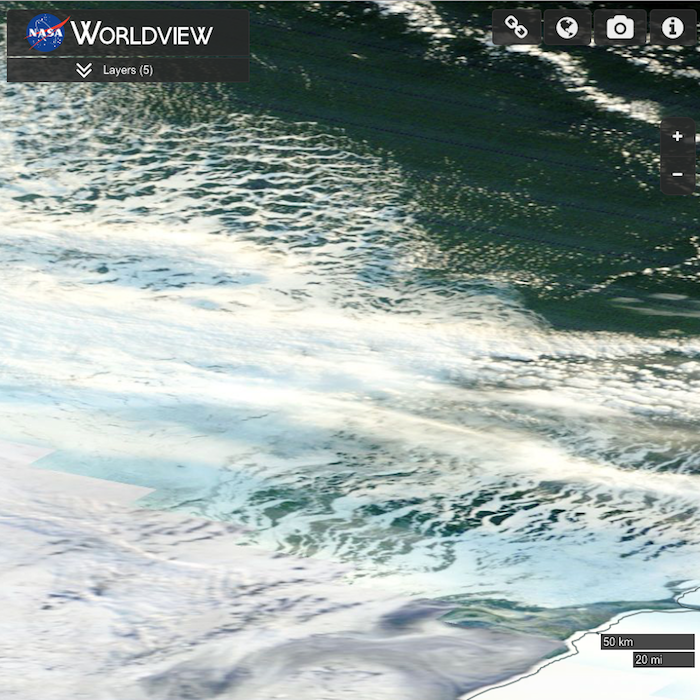
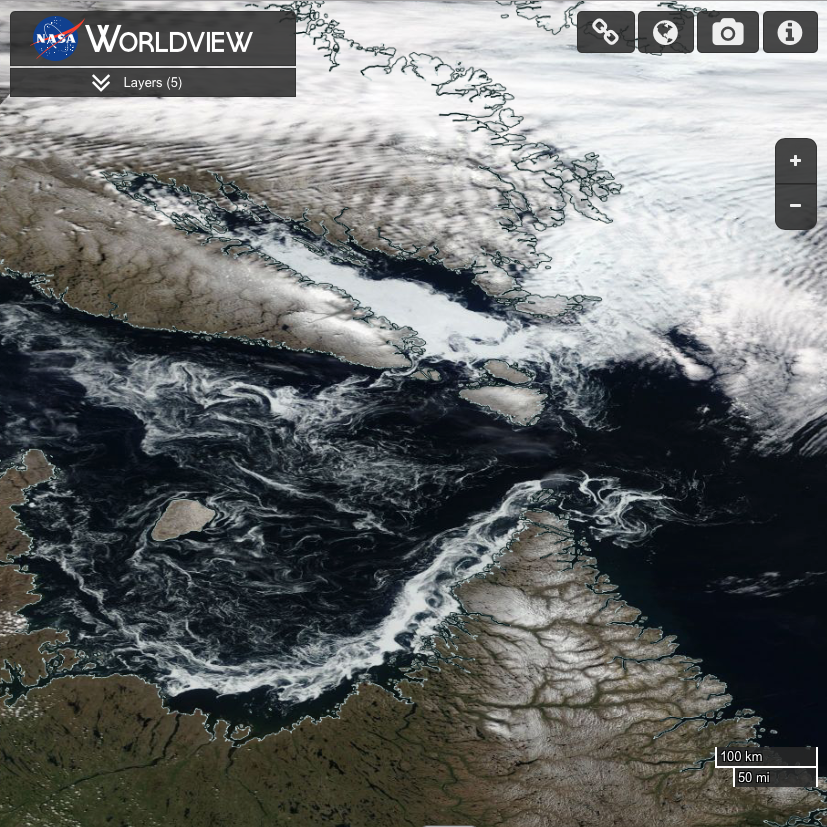
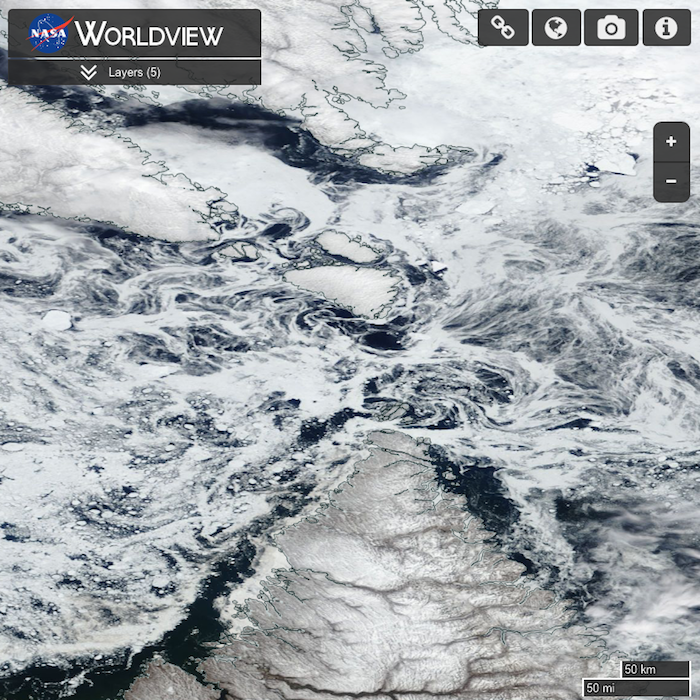
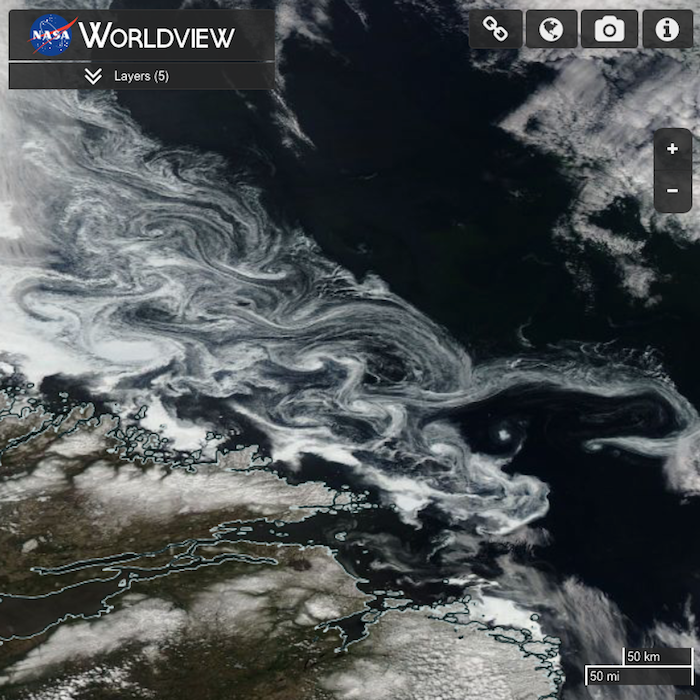
Chemical ice nucleation processes must be seen to be believed. The vast majority have no idea how powerful chemical ice nucleating / endothermic reacting materials are. The vast majority have no idea that such chemicals are being utilized by the global climate engineering cabal on a massive scale. The use of such patented processes is not just for engineering winter storms on a rapidly warming world, but the same chemical elements are being used to artificially / chemically nucleate ice on sea surfaces. Power structure funded disinformation individuals and sources, of course, never mention chemical ice nucleation (and its use by the geoengineers) while putting out completely false information about "global cooling" or "global warming is a hoax".  Such false narratives are extremely harmful to the critical cause of exposing and halting climate engineering. Such false narratives are also exactly what the power structure and the climate engineers want. The climate science community also toes the line for the power structure and the geoengineers by never mentioning the ongoing climate engineering insanity in any way. To do otherwise is a very bad career decision, or worse. The illegal federal gag order on all National Weather Service (NWS) and all all National Oceanic and Atmospheric Administration (NOAA) employees (courtesy of the Obama administration) is further proof of this fact. Sea surface chemical ice nucleation creates extremely anomalous patterns that resemble a chemical spill dispersion (because that is exactly what these patterns are). The recent NASA satellite images below (taken in the polar regions) provide shocking proof of these sea surface patterns.
55f4
Northern Antarctica sea surface, 2017
644t
South of Greenland, 2017
55tf
South of Greenland, 2017
556t
South of Greenland, 2017
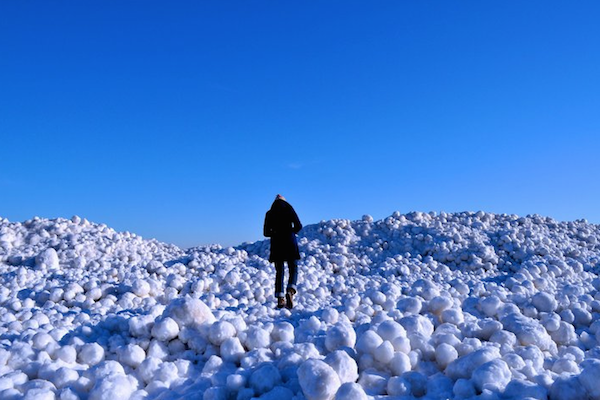
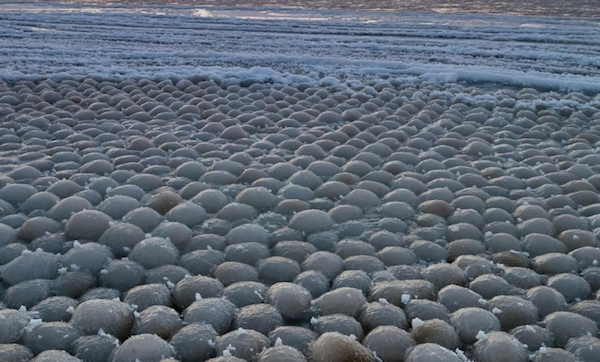
Historically unprecedented completely uniform "ice balls" are now often showing up along the shores of water bodies where ice nucleating materials are being dispersed.
1002
"Ice balls" on the Baltic Coast in Northern Poland. "Official" sources say this recent unprecedented phenomenon is just "natural", are we to believe them?
1001
"Ice balls" have formed and accumulated on Lake Michigan in the last few years, why? Such "ice balls" have even formed on lake water that was 40 degrees, how is this possible at temperatures far above the normal freezing point? Without chemical ice nucleation, it isn't possible.
1003
Ice balls on the coast of Finland. The "official" explanation for this recent mysterious anomaly? Again, we are told this historically unprecedented phenomenon is just a "natural" occurrence.

For decades, the climate engineers have been able to mask the true degree of planetary meltdown with various processes like chemical ice nucleation (the Chinese government openly admitted their use of chemical ice nucleation for weather modification). But we must consider at what cost has this grand deception come? Geoengineering has created short term toxic cool-downs at the cost of an even worse overall long term planetary warming. Not only are all climate engineering elements highly toxic, but by chemically nucleating sea surfaces in the polar regions the climate engineers are actually preventing rapidly warming seas from releasing their heat. This in turn is further fueling the thawing of formerly frozen methane seabed deposits. The releasing methane then greatly contributes to feedback loops which, in turn, radically worsen the overall warming of the planet. Over a 10 year time horizon, methane is over 100 times more potent as a greenhouse gas than C02.
66tdd
Global sea ice extent (surface area) has continued to decline rapidly in spite of (and in many ways because of) the decades long global climate engineering / chemical ice nucleation programs. "Official sources" have also long since resorted to manipulating data in order to help hide the implosion of Earth's ice deposits (the cryosphere). For example, any sea surface area in the polar regions that has 15% or more of surface slush is "officially" considered to be part of the ice pack. Isn't such an area of sea surface still 85% open ocean? Of course.


ggt3
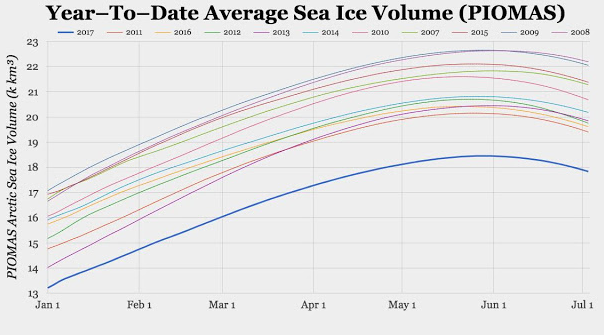
The volume, or mass of the sea ice, is the real bottom line.  Even with the unimaginably extensive sea surface chemical ice nucleation onslaught by the geoengineers, the Arctic sea ice volumes have continued to plummet as shown in the graph above.
hhg4
The color-coded ice mass / thickness graphs above are a further illustration of the rapid ice thinning in the Arctic.
ggf2
Temperatures in the far north are rising rapidly as is reflected by the increasingly sharp decline of freezing degree days, as shown in the above graph. 
7782yh2
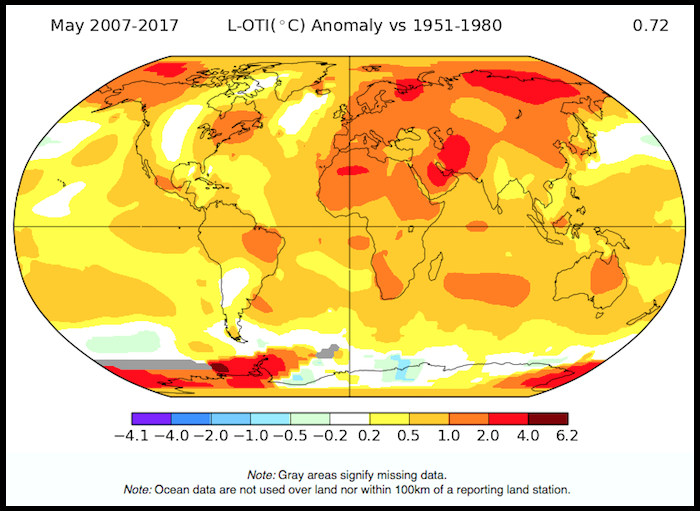
The GISS temperature anomaly map above reflects the changes that are rapidly occurring on our planet.
727yu1
A recent GISS high temperature anomaly map reflects even more accelerated warming, especially in the Arctic.
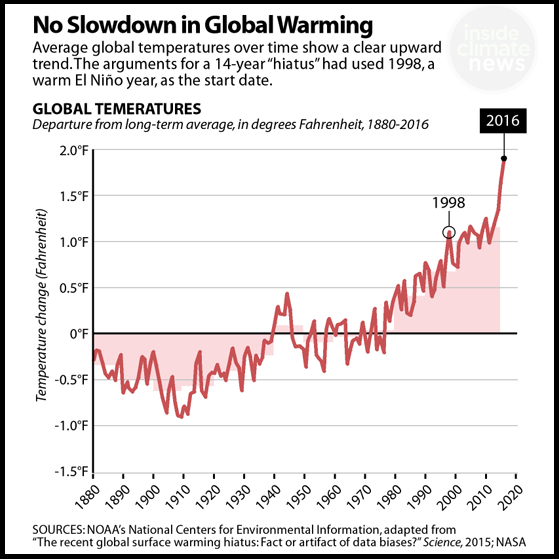
In addition to utilizing climate engineering / solar radiation management, and chemical ice nucleation, to cover up the true extent of planetary warmimg (while actually worsening the overall warming scenario in the process), various data sources have also been manipulated in the past in order to further mask the unfolding climate meltdown. Recent assessments of all data sources has now made clear that not only was there never any "hiatus" in the rising temperatures, the planetary warming is actually accelerating rapidly.​
rrfd

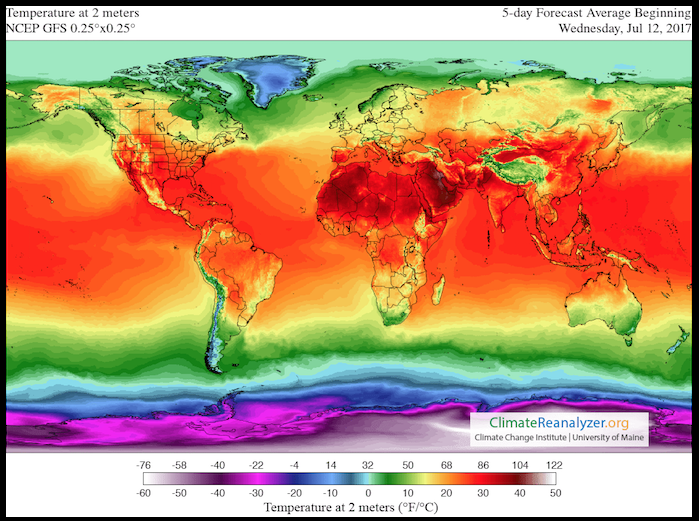
All available data indicates that the overall global climate engineering assault has been further ramped up under the Trump administration, especially over the polar regions shown in the surface temperature map below.
88ju

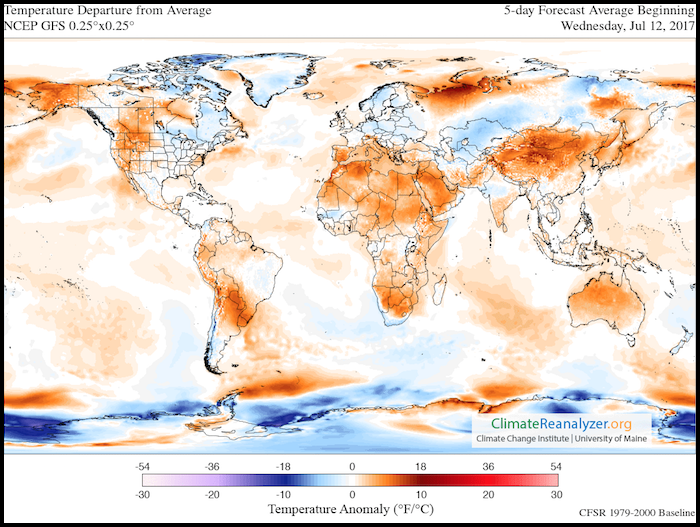
The "Temperature Departure From Average" map below further reveals the areas of concentration for climate engineering orchestrated chemical cool-downs and sea surface chemical ice nucleation (also fueling extreme hail events). The extremely varied temperature extremes are indicative of the "weather whiplash" effect being created by global geoengineering programs. Greenland, Siberia, and Antarctica, should be noted as climate engineering concentration areas due to the grave ramifications posed by the melting ice and / or frozen methane deposits in these regions. But, again, this must be remembered and considered, the climate engineers are further worsening the overall long term warming of the planet in their attempt to mask the warming over the short term. This is in addition to geoengineering programs shredding the ozone layer, totally disrupting the hydrological cycle, and completely contaminating the biosphere.
rr4e
As the state of the climate and biosphere rapidly worsens, the more aggressive disinformation sites and sources will become in the attempt to cover up the threat. Sites and sources that do not post credible and verifiable front line data. Sites and sources that are proficient at putting out pacifying lies that the majority of the population chooses to believe because the unvarnished truth is very difficult (but necessary) to face. Disinformation sites and sources try to claim that there is nothing wrong with the climate (while completely omitting any mention of climate engineering), that the oceans are fine, the environment is fine, and that anyone who says otherwise is just an "alarmist". The disinformation sites often simply cite past predictions from various individuals and sources (that have not yet come to pass) as proof that everything is fine because Wal-Mart is still open and McDonalds is still selling Big Macs. Anyone that chooses to believe such a baseless argument for "everything is fine", is a part of the problem. Denial won't save us, denial won't save the planet on which our lives and our collective reality depends. A truly healthy mind does not run from the truth, rather, it is willing to face it head on, no matter how dire the truth is. On the current course (short of a complete change of direction by our species), our days are numbered. The greatest and most immediate threat we face, short of nuclear cataclysm, is climate engineering (which also must be considered weather and biological warfare). The greatest leap we could collectively make in the right direction at this late hour is to fully expose and halt the ongoing climate engineering insanity. Geoengineeringwatch.org continues to do our best to provide the tools and information necessary to assist activists in their efforts to wake those around them to the geoengineering assault, please, help us to sound he alarm.


The 5 shocking satellite photographs below were taken in the Arctic Ocean on September 15th, 2015. 


What these images show is extremely anomalous ice formation in open water, far from any existing remaining ice. 


They also show extensive geoengineering aerosol cloud cover with very clear radio frequency signature patterns


https://www.geoengineeringwatch.org/what-are-the-climate-engineers-doing-in-the-arctic-astounding-images-and-dead-scientists/ - courtesy - Cori Gunnels


This is the patent involved - 

The engineered cool-downs and artificial snow storms are already in full swing in parts of the US even as the sweltering triple digit heat in the Western US continues to break high temperature records. Most of the population as of yet has no idea that the record cool-downs in a record warm world are anything but natural. Even many anti-geoengineering activists still seem unwilling to connect this important part of the puzzle. The patent below is for the purpose of artificial ice nucleation for weather modification. The climate engineers have been at this for a very long time. This patent is from 1966 but similar patents go all the way back to 1950. The more relevant parts of this patent are highlighted in yellow for easier review. This patent should give pause to those that still doubt the magnitude of what is happening in our skies. The "weather makers" do in fact "own the weather", but their ongoing experiments will decimate Earth's life support systems beyond repair if they are allowed to continue.

Dane Wigington

This is a discussion from a few weeks ago


Patented processes for artificially ice nucleating winter storms are owned by our government and have existed for many decades (the Chinese have openly stated they are "engineering snowstorms"). Below are excerpts from only one example of a US government patent that is designed to give those in power the ability to engineer winter weather on a rapidly warming planet. 

A demonstration of an endothermic reaction


A good explanation of ice nucleation and a general discussion of global warming


Thursday, 24 March 2016

"Faster than expected"- AGAIN

The Arctic is thawing much faster than expected, scientists warn


NEWTOK, AK – JULY 06: The marshy, tundra landscape surrounding Newtok is seen from a plane on July 6, 2015 outside Newtok, Alaska. (Photo by Andrew Burton/Getty Images)

WashingtonPost,

23 March, 2016


This story has been updated.
Amid blowout warm temperatures in the Arctic this year, two new studies have amplified concerns about one of the wild cards of a warming planet — how quickly warming Arctic soils could become major contributors of greenhouse gases to the atmosphere, causing still greater warming.
In a major international study published last week in Nature Geoscience, a team of researchers from regions ranging from Alaska to Russia report that permafrost is thawing faster than expected — even in some of the very coldest areas.
In these regions, winter freezing cracks open the ground, which then fills with water in the summer from melting snow. When refreezing occurs in the winter, that causes large wedges of ice to form amid the icy ground. These ice wedges can extend ten or fifteen meters deep, and can in some cases be thousands of years old.
But the study, sampling high Arctic sites in Russia, Alaska, and Canada based on both field studies and satellite observations, found that across the Arctic, the tops of these wedges are melting, as the top layer of permafrost soil — which itself lies beneath a so-called “active layer” of soil that freezes and thaws regularly — also begins to thaw. “Landscape-wide ice-wedge degradation was observed at ten out of eleven sites,” the paper reported.
“At the places where we have sufficient amounts of data we are seeing this process happen in less than a decade and even after one warm summer,” says Anna Liljedahl, the lead author of the study and a researcher at the University of Alaska in Fairbanks.
“The scientific community has had the assumption that this cold permafrost would be protected from climate warming, but we’re showing here that the top of the permafrost, even if it’s very cold, is very sensitive to these warming events,” Liljedahl continues.
The new study focuses specifically on the consequences of this ice wedge degradation for the region’s hydrology. The melting of ice wedges redistributes water on a massive scale. It can flow out of the landscape and into rivers and the Arctic Ocean, says Liledahl. Or it pools in lakes.
However, the real implication is far broader, says Liledahl’s co-author Ken Tape, also a professor at the University of Alaska-Fairbanks. “It’s the first study where these features and changes have been documented across the Arctic,” Tape says. “We’ve had occasional studies where they look at one place. That’s a lot different than saying it’s happening across the Arctic.”
“It’s a region that we thought up until recently would hold together a little bit better because there’s so much cold permafrost, and so much cold down deep,” Tape continues. “I think the idea was that it will be more stable than this.”
The degrading of permafrost in this way won’t just affect water, but also the planet’s atmosphere, says another of Liljedahl’s co-authors, the permafrost expert Vladimir Romanovsky, also of the University of Alaska-Fairbanks. “The degradation of ice wedges shows that upper part of permafrost is thawing, and thawing of the upper part of permafrost definitely is producing additional greenhouse gases,” he says.
The problem is that as these frozen soils thaw, even for part of the year, microorganisms living within them can begin to break down dead but preserved plant life from eons past, and release their carbon in the form of carbon dioxide or methane. Romanovsky says he thinks that the Earth’s atmosphere already contains more greenhouse gases than it might otherwise due to this thawing.
It has been estimated that Arctic permafrost contains roughly twice as much total carbon in its frozen depths as the entire planetary atmosphere does, because these landscapes have slowly stored it up over vast time periods.
And it’s not just carbon dioxide in the atmosphere that results — the melting of ice wedges leads to sinking ground and a bumpy, denatured landscape that impairs Arctic transportation and infrastructure. “Instead of having a relatively smooth landscape, which is really easy to drive a snowmachine on, you create this bumpy landscape, with bumps that could become a meter or two high,” says Liljedahl.
There have been at least some arguments that there may be other factors that offset permafrost carbon emissions. Some have suggested, for instance, that more plants will grow in the warmer Arctic, sequestering more carbon, and that this will help offset permafrost losses.
But in the second study, just published in Environmental Research Letters, an expert assessment of nearly 100 Arctic scientists found little reason to believe there will be any factor that offsets permafrost emissions enough to reduce the level of worry.
The expert assessment led to the conclusion that, as the paper puts it, “Arctic and boreal biomass should not be counted on to offset permafrost carbon release and suggests that the permafrost region will become a carbon source to the atmosphere by 2100 regardless of warming scenario.”
These studies of permafrost are critical because of the underlying math of the climate change problem. There is a hard limit to how many greenhouse gases can be emitted if we want to avoid a given level of warming — say, 1.5 degrees Celsius or 2 degrees Celsius above pre-industrial levels.
Researchers have even quantified the latter limit, suggesting we can’t emit more than 1,000 billion tons, or gigatons, of carbon dioxide from 2011 and on if we want a two thirds or better chance of staying below 2 degrees C. The inevitable result is an extremely tight planetary carbon budget for the coming years.
Permafrost has the potential to upend all of that. The last thing the world needs, as it creaks into action to reduce emissions, is the emergence of a major new source of them, brought on by warming itself. Yet that’s exactly what we’re talking about here.
Granted, precisely how much carbon permafrost can emit and how fast that can happen remain big uncertainties. But given current scientific understanding, it could easily be well over 100 gigatons of carbon dioxide by the end of the century, or one tenth of the remaining carbon budget. In fact, it could be more than that.
“Ten percent is really something that you have to be aware and include it in any kind of projections of changes in greenhouse gases,” said Romanovsky. “And I would say at this point it is still slow, but with further warming, probably by mid-century, these emissions will be much more.”