Showing posts with label derivatiives. Show all posts

Tuesday, 16 May 2017

The derivatives bubble revisited

Financial Weapons Of Mass Destruction: The Top 25 U.S. Banks Have 222 Trillion Dollars Of Exposure To Derivatives

By Michael Snyder


15 May, 2017


The recklessness of the “too big to fail” banks almost doomed them the last time around, but apparently they still haven’t learned from their past mistakes.  Today, the top 25 U.S. banks have 222 trillion dollars of exposure to derivatives.  In other words, the exposure that these banks have to derivatives contracts is approximately equivalent to the gross domestic product of the United States times twelve.  As long as stock prices continue to rise and the U.S. economy stays fairly stable, these extremely risky financial weapons of mass destruction will probably not take down our entire financial system.  But someday another major crisis will inevitably happen, and when that day arrives the devastation that these financial instruments will cause will be absolutely unprecedented.

During the great financial crisis of 2008, derivatives played a starring role, and U.S. taxpayers were forced to step in and bail out companies such as AIG that were on the verge of collapse because the risks that they took were just too great.

But now it is happening again, and nobody is really talking very much about it.  In a desperate search for higher profits, all of the “too big to fail” banks are gambling like crazy, and at some point a lot of these bets are going to go really bad.  The following numbers regarding exposure to derivatives contracts come directly from the OCC’s most recent quarterly report (see Table 2), and as you can see the level of recklessness that we are currently witnessing is more than just a little bit alarming…

Citigroup
Total Assets: $1,792,077,000,000 (slightly less than 1.8 trillion dollars)

Total Exposure To Derivatives: $47,092,584,000,000 (more than 47 trillion dollars)

JPMorgan Chase
Total Assets: $2,490,972,000,000 (just under 2.5 trillion dollars)

Total Exposure To Derivatives: $46,992,293,000,000 (nearly 47 trillion dollars)

Goldman Sachs
Total Assets: $860,185,000,000 (less than a trillion dollars)
Total Exposure To Derivatives: $41,227,878,000,000 (more than 41 trillion dollars)

Bank Of America
Total Assets: $2,189,266,000,000 (a little bit more than 2.1 trillion dollars)
Total Exposure To Derivatives: $33,132,582,000,000 (more than 33 trillion dollars)

Morgan Stanley
Total Assets: $814,949,000,000 (less than a trillion dollars)
Total Exposure To Derivatives: $28,569,553,000,000 (more than 28 trillion dollars)

Wells Fargo
Total Assets: $1,930,115,000,000 (more than 1.9 trillion dollars)

Total Exposure To Derivatives: $7,098,952,000,000 (more than 7 trillion dollars)

Collectively, the top 25 banks have a total of 222 trillion dollars of exposure to derivatives.

If you are new to all of this, you might be wondering what a “derivative” actually is.
When you buy a stock you are purchasing an ownership interest in a company, and when you buy a bond you are purchasing the debt of a company.  But when you buy a derivative, you are not actually getting anything tangible.  Instead, you are simply making a side bet about whether something will or will not happen in the future.  These side bets can be extraordinarily complex, but at their core they are basically just wagers.  The following is a pretty good definition of derivatives that comes from Investopedia…
A derivative is a security with a price that is dependent upon or derived from one or more underlying assets. The derivative itself is a contract between two or more parties based upon the asset or assets. Its value is determined by fluctuations in the underlying asset. The most common underlying assets include stocks, bonds,commodities, currencies, interest rates and market indexes.
Those that trade derivatives are essentially engaged in a form of legalized gambling, and some of the brightest names in the financial world have been warning about the potentially destructive nature of these financial instruments for a very long time.

In a letter that he wrote to shareholders of Berkshire Hathaway in 2003, Warren Buffett actually referred to derivatives as “financial weapons of mass destruction”…
The derivatives genie is now well out of the bottle, and these instruments will almost certainly multiply in variety and number until some event makes their toxicity clear. Central banks and governments have so far found no effective way to control, or even monitor, the risks posed by these contracts. In my view, derivatives are financial weapons of mass destruction, carrying dangers that, while now latent, are potentially lethal.
Warren Buffett was right on the money when he made that statement, and of course the derivatives bubble is far larger today than it was back then.
In fact, the total notional value of derivatives contracts globally is in excess of 500 trillion dollars.

This is a disaster that is just waiting to happen, and investors such as Buffett are quietly positioning themselves to take advantage of the giant crash that is inevitably coming.

According to financial expert Jim Rickards, Buffett’s Berkshire Hathaway Inc. is hoarding 86 billion dollars in cash because he is likely anticipating a major stock market downturn…
Far from a bullish sign, Buffett’s cash hoard could mean he’s preparing for a market crash. When the crash comes, Buffett can walk through the wreckage with his checkbook open and buy great companies for a fraction of their current value.
That’s the real Buffett style, but you won’t hear that from your broker or wealth manager. If Buffett has a huge cash allocation, shouldn’t you?
He knows what’s coming. Now you do too.
Warren Buffett didn’t become one of the wealthiest men in the entire world by being stupid.  He knows that stocks are ridiculously overvalued at this point, and he is poised to make his move after the pendulum swings in the other direction.

And he might not have too long to wait.  In recent weeks I have been writing about many of the signs that the U.S. economy is slowing down substantially, and today we received even more bad news…
Despite high levels of economic confidence expressed by business owners and consumers, one key indicator shows that it has not translated into much action yet.
Loan issuance declined in the first quarter from the previous three-month period, the first time that has happened in four years, according to an SNL Financial analysis of bank earnings reports filed for the period. The total of recorded loans and leases fell to $9.297 trillion from $9.305 trillion in the fourth quarter of 2016.
This is precisely what we would expect to see if a new economic downturn was beginning.  Our economy is very highly dependent on the flow of credit, and when that flow begins to diminish that is a very bad sign.

For the moment, financial markets continue to remain completely disconnected from the hard economic data, but as we saw in 2008 the markets can plunge very rapidly once they start catching up with the real economy.

Warren Buffett is clearly getting prepared for the crisis that is head.


Friday, 26 December 2014

Taxpayer liablity for derivatives bubble

New Law Would Make Taxpayers Potentially Liable For TRILLIONS In Derivatives Losses
Michael Snyder


7 December, 2014


If the quadrillion dollar derivatives bubble implodes, who should be stuck with the bill?  Well, if the “too big to fail” banks have their way it will be you and I.  Right now, lobbyists for the big Wall Street banks are pushing really hard to include an extremely insidious provision in a bill that would keep the federal government funded past the upcoming December 11th deadline.  This provision would allow these big banks to trade derivatives through subsidiaries that are federally insured by the FDIC.  What this would mean is that the big banks would be able to continue their incredibly reckless derivatives trading without having to worry about the downside.  If they win on their bets, the big banks would keep all of the profits.  If they lose on their bets, the federal government would come in and bail them out using taxpayer money.  In other words, it would essentially be a “heads I win, tails you lose” proposition.

Just imagine the following scenario.  I go to Las Vegas and I place a million dollar bet on who will win the Super Bowl this year.  If I am correct, I keep all of the winnings.  If I lose, federal law requires you to bail me out and give me the million dollars that I just lost.

Does that sound air?

Of course not!  In fact, it is utter insanity.  But through their influence in Congress, this is exactly what the big Wall Street banks are attempting to pull off.  And according to the Huffington Post, there is a very good chance that this provision will be in the final bill that will soon be voted on…
According to multiple Democratic sources, banks are pushing hard to include the controversial provision in funding legislation that would keep the government operating after Dec. 11. Top negotiators in the House are taking the derivatives provision seriously, and may include it in the final bill, the sources said.
Sadly, most Americans don’t understand how derivatives work and so there is very little public outrage.

But the truth is that people should be marching in the streets over this.  If this provision becomes law, the American people could potentially be on the hook for absolutely massive losses…
The bank perks are not a traditional budget item. They would allow financial institutions to trade certain financial derivatives from subsidiaries that are insured by the Federal Deposit Insurance Corp. —potentially putting taxpayers on the hook for losses caused by the risky contracts.
This is not the first time these banks have tried to pull off such a coup.  As Michael Krieger of Liberty Blitzkrieg has detailed, bank lobbyists tried to do a similar thing last year…
Five years after the Wall Street coup of 2008, it appears the U.S. House of Representatives is as bought and paid for as ever. We heard about the Citigroup crafted legislation currently being pushed through Congress back in May when Mother Jones reported on it. Fortunately, they included the following image in their article:
Derivatives Bill From Liberty Blitzkrieg
Unsurprisingly, the main backer of the bill is notorious Wall Street lackey Jim Himes (D-Conn.), a former Goldman Sachs employee who has discovered lobbyist payoffs can be just as lucrative as a career in financial services. The last time Mr. Himes made an appearance on these pages was in March 2013 in my piece: Congress Moves to DEREGULATE Wall Street.
Fortunately, it was stopped in the Senate at that time.

But that is the thing with bank lobbyists.  They are like Terminators – they never, ever, ever give up.

And they now have more of a sense of urgency then ever, because we are moving into a period of time when the big banks may begin losing tremendous amounts of money on derivatives contracts.

For example, the rapidly plunging price of oil could potentially mean gigantic losses for the big banks.  Many large shale oil producers locked in their profits for 2015 and 2016 through derivatives contracts when the price of oil was above $100 a barrel.  As I write this, the price of oil is down to $65 a barrel, and many analysts expect it to go much lower.

So guess who is on the other end of many of those trades?
The big banks.

Their computer models never anticipated that the price of oil would fall by more than 40 dollars in less than six months.  A loss of 40, 50 or even 60 dollars per barrel would be catastrophic.

No wonder they want legislation that will protect them.

And commodity derivatives are just part of the story.  Over the past couple of decades, Wall Street has been transformed into the largest casino in the history of the world.  At this point, the amounts of money that these “too big to fail” banks are potentially on the hook for are absolutely mind blowing.

As you read this, there are five Wall Street banks that each have more than 40 trillion dollars in exposure to derivatives.  The following numbers come from the OCC’s most recent quarterly report (see Table 2)…

JPMorgan Chase

Total Assets: $2,520,336,000,000 (about 2.5 trillion dollars)

Total Exposure To Derivatives: $68,326,075,000,000 (more than 68 trillion dollars)
Citibank
Total Assets: $1,909,715,000,000 (slightly more than 1.9 trillion dollars)
Total Exposure To Derivatives: $61,753,462,000,000 (more than 61 trillion dollars)

Goldman Sachs

Total Assets: $860,008,000,000 (less than a trillion dollars)
Total Exposure To Derivatives: $57,695,156,000,000 (more than 57 trillion dollars)

Bank Of America

Total Assets: $2,172,001,000,000 (a bit more than 2.1 trillion dollars)
Total Exposure To Derivatives: $55,472,434,000,000 (more than 55 trillion dollars)

Morgan Stanley
Total Assets: $826,568,000,000 (less than a trillion dollars)
Total Exposure To Derivatives: $44,134,518,000,000 (more than 44 trillion dollars)

Those that follow my website regularly will note that the derivatives exposure for the top four banks has gone up significantly since I last wrote about this just a few months ago.

Do you want to be on the hook for all of that?

Keep in mind that the U.S. national debt is only about 18 trillion dollars at this point.

So why in the world would we want to guarantee losses that could potentially be far greater than our entire national debt?

Only a complete and utter fool would financially guarantee these incredibly reckless best.

Please contact your representatives in Congress and tell them that you do not want to be on the hook for the derivatives losses of the big Wall Street banks.

When this derivatives bubble finally implodes and these big banks go down (and they inevitably will), we do not want them to take down the rest of us with them.


Wednesday, 24 December 2014

Oil Peak Demand

Ruble, Oil, Shale Gas, Derivatives and American Hegemony

by Federico Pieraccini


the Vineyard of the Saker,
23 December, 2014


There are two central issues related to the devaluation of the ruble and the dollar depreciation to keep in mind: the preservation of American hegemony and the speculative bubble of derivatives linked to industry of Shale Gas. Without these elements, it is impossible to understand what are the reasons and the consequences of these artificial economic actions.

This case must therefore necessarily be addressed from different perspectives, a geopolitical one and a purely economic one. 

The collapse of oil.


The depreciation of oil seems to be a 
strategy implemented by mutual agreements between the US State Department and the Royal House of Saudi. As you can read in the article, the meetings in September 2014, between Kerry and Prince Abdullah laid the foundations for a decline in crude oil prices (compared to the market value) and at the same time a denial in the reduction of daily production. An artificial manipulation of oil prices in all means. This seems to be the central reason why, despite a collapse inside the stock market in the UAE (losses between 8% and 20% in a single day on the 16th of December), there aren’t any short-term intentions to decrease the daily output of oil production.

The immediate effects of this situation are tangible in countries where the break-even point ("The break-even point is a value that indicates the amount, expressed in volume production and sales, product sales required to cover the costs previously incurred, in order to close the reference period without profits or losses.") for extraction of crude oil varies over 90$ a barrel. From Iran to Venezuela, passing through Russia, all these countries are affected by the collapse in the value of crude oil. Riyadh is less effected, since it’s break-even point is around 65$.

It's a situation that for some countries is not sustainable for much longer, of course we are not speaking about Russia that has a good economic base (low debt, high gold reserves, much foreign currency liquidity), but rather about countries like Venezuela ( break even in a range 140-160$) which receive much of their income from gains on oil export. Combining this situation with the sanctions imposed on Caracas and we could be facing an economic collapse in Venezuela (Zero 
Hedge has placed at 93% the chance of a default ). Not to mention that even the Iranian oil is affected by these declines (break-even between 120- 140$), with great satisfaction of Riyadh, the regional competitor.

Flood the market with something that has a very low demand ( 
are we at the peak for demand of oil ?) and what you get is deflation and this is tangible even to the less attentive observers. If the world economy slows, thus also the need of energy will fall contextually. If this decline is not matched by a decrease in production (as required at OPEC two weeks ago), then the price will collapse to the current value. In a sense, the ordinary citizen could argue that the price per barrel today is much more in line with market values ​​at this stage of the global economy .Unfortunately, it is only one of many points of view from which to observe this scenario and certainly does not offer a complete explanation. 

The depreciation of the ruble


Undoubtedly there is a strong correlation between the fall in crude oil prices and the collapse in the value of the ruble. But this theory does not offer a sufficient explanation. There are other factors that cannot be ignored.

The economic sanctions imposed by the United States and the European Union prevent lending to Russian companies, with payment terms beyond 30 days. Given that Russian companies get cheap money from the West banks since the end of the Cold War, the sanctions currently prevent a restructuring of previous loans and refinancing more of the same. The consequences are that these companies must now buy Euros and Dollars to take care of their loans, thus creating more demand for foreign currency in the Russian market and thus weakening the ruble. From a purely business point of view, the Russian companies would like to see a different behavior of the Russian central bank, as explained by Alexander Mercourius:

"What I suspect, about what is happening, is that major speculators against the ruble are just the banks and Russian companies that have a large amount of dollar loans to be repaid before the end of the year. Instead of paying these debts with their reserves, they are putting pressure on the government and the central bank converting rubles into dollars and speculating against the ruble. And this aspect is much more important than any other factor that caused the recent defeat of the ruble. Judging from what Ulyukaev says, the government and the Central Bank have essentially capitulated and decided to help banks by giving them some of the reserves of the Central Bank. This may explain why the rate increase on the 15th of December was so ineffective and why in the last days the ruble has strengthened."

Indeed analyzing the side effects of the 
Bond issued by Rosfnet on December 12th, 2014 (625 billion rubles - amounting to 11 billion dollars to 15/12), it seems that in the end the Russian central bank bought this bond, letting Rosfnet refinance loans, with Western banks. One could argue that the United States applies the same tactics using the Fed to simply print money and give them out to American business in trouble, in change of bond emissions. The behavior of the Russian central bank, similar to the Fed’s, has been an obligated one. The problem is that the global system is calibrated on the Dollar, not on the ruble. Russia used a Western method to create money and pays the consequences. These same consequences are the mother of all frightens for Americans with the process of De-Dollarization and the Dollar losing credщbility. 

The geo-political factor of this crisis


"We could of never imagineed what is happening, it is the materialization of our worst nightmares. And in the next few days I think the situation could be comparable to the most difficult period of 2008 " - Sergei Shvetsov, First Deputy Governor of the Central Bank of Russia.

The most interesting question to ask is: could of the Russian authorities predict this combined attack oil-ruble-sanctions? The answer is yes and they did. Too bad no one could of imagined a so immediate acceleration of this strategy. Not even in the deepest nightmares of the Russians, in 6 months, the oil would be reduced to half of its value and the ruble of more than 50% in 12 months. This American tactic requires an extremely high risk factor and that endangers the 'entire global economy, as we shall see .

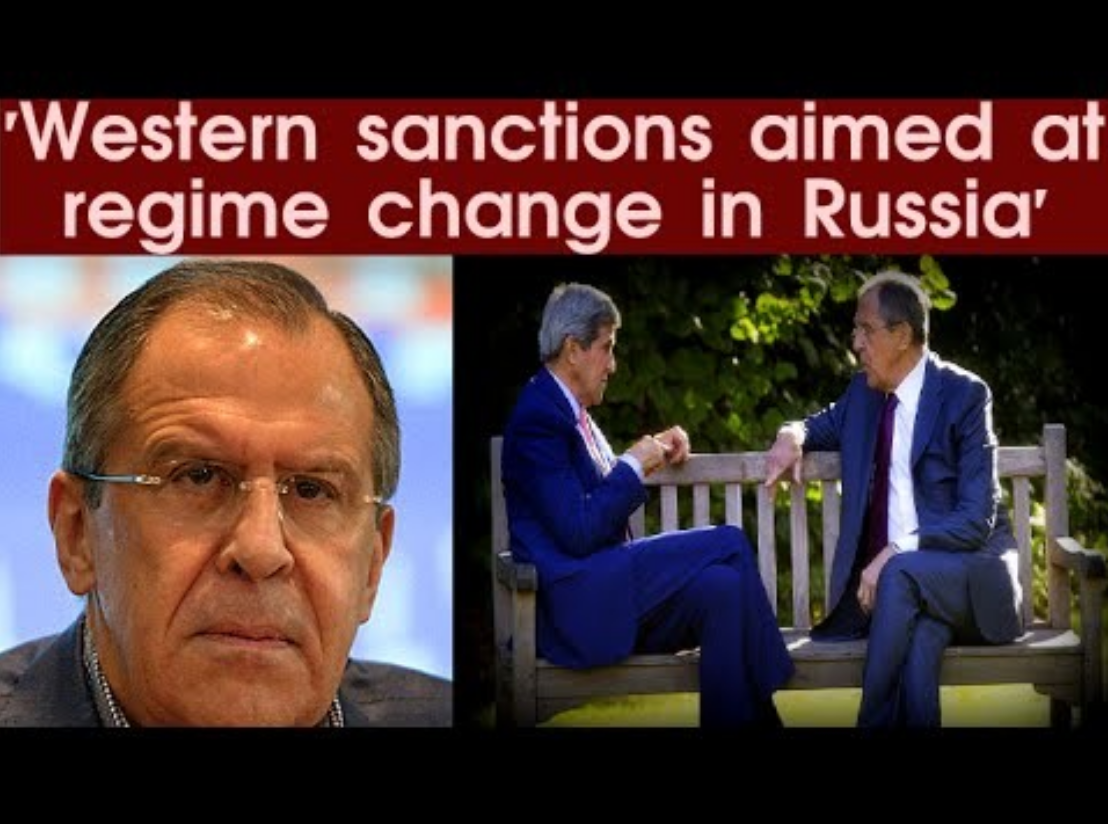
Why then have the United States and its partners come to take this path so full of unknowns? Even in this case there are multiple answers. Certainly the main thrust concerns the geopolitical strategy of 'regime-change' in countries such as Venezuela, Iran and Russia ( in fact the most affected by the collapse of the price of oil). If using normal methods of softpower obtained not very significant results (Iran is heading to the agreement 5 + 1, Assad is increasingly solid in Syria, Putin is becoming increasingly popular at home and Maduro was able to regain the reins of the country after a period of instability following the death of Chavez and the artificial protests in the summer), in this way the key is an economic leverage. Never the less, there are many risks in this strategy. The collapse of the currency, the decrease in revenues from crude oil, rising prices, rising inflation, declining purchasing power and so on are the weapon with which America is convinced that it can continue its role as a hegemon in the world. The order is to lead to a collapse of domestic rival nations thanks to a combination of factors: sanctions, oil and currency. 

What are the risks of this strategy?


After analyzing the motives and methods used to pursue this Kamikaze strategy, we can analyze certainly a more interesting but also more disturbing issue: the risks that these methods implemented by the west could trigger. The crisis in Ukraine, the Eurasian Union, the de-dollarization and the mega agreements between BRICS countries led to a backlash in Washington, with a game of risking everything.

The factor that carries the major unknowns but also the major concern is the market of the Shale Gas in America. Raised as a banner of American energy independence, coveted as a weapon to transit from the Middle East towards Asia (part of the strategy of "Asian Pivot"), it has undeniably played (and still plays) a primary role in the plans of policy makers in Washington.

Yet what is cleverly concealed by the mainstream media are the side effects that the market of shale gas suffers at the current low oil prices. The break-even point for these new methods of extraction is between a range of 60-80$ per barrel. Given this, it is easy to understand that with a prolonged period of low prices, the effects will be devastating for the whole market of Shale gas in the US (the first case of this kind has already happened, the 
Red Fork Energy Australia yesterday went into controlled administration ). If these were the only consequences, we could simply consider them irrelevant. The problem comes when we focus on the lending process to these companies that fail to return the credits to banks if they go bankrupt. A default in this industry sector could trigger a cascade mechanism which would ultimately affect the mother of all bubbles: the derivatives well hidden in Western banks.

The big global risk that the United States are taking to maintain their global hegemony is not much different from a preemptive nuclear attack (seems a doctrine of first strike in an economic sense). If the price of oil (artificially manipulated) drags into the abyss the Shale Gas Industry of America, all loans that should be repaid to the US banks would go in smoke. With them, potentially, all the derivatives:

Let’s give some the numbers to these words and see how many of these crazy financial instruments, the US banks have:
JPMorgan Chase 
  • Total Assets: $ 2,520,336,000,000 (about 2.5 trillion dollars)
  • The total exposure to derivatives: $ 68,326,075,000,000 (more than 68 trillion dollars)
Citibank 
  • Total Assets: $ 1,909,715,000,000 (just over 1.9 trillion dollars)
  • The total exposure to derivatives: $ 61,753,462,000,000 (more than 61 trillion dollars)
Goldman Sachs 
  • Total Assets: $ 860,008,000 (less than a trillion dollars)
  • The total exposure to derivatives: $ 57,695,156,000,000 (more than 57 trillion dollars)
Bank Of America 
  • Total Assets: $ 2,172,001,000,000 (a little 'more than 2.1 trillion dollars)
  • The total exposure to derivatives: $ 55,472,434,000,000 (more than 55 trillion dollars)
Morgan Stanley 
  • Total Assets: $ 826.568 billion (less than a trillion dollars)
  • The total exposure to derivatives: $ 44,134,518,000,000 (more than 44 trillion dollars)
A useful comparison to fully realize what numbers we're talking about: the US public debt amounts to 18 trillion dollars. The derivatives markets, only of the six largest banks in America, amounts to almost 16 times the US debt!

We are faced with yet the same dilemma already of the 2008 financial crisis: let banks fail or save them? Can the banks fail or are they “to big to fail”? In this case there are two possible ways: Print money (the Feds way of solving every problem) without worry of the increasing public debt (the example used so sustain this theory is Japan with 300% of debt) or let banks fail.

Taking for granted that the manipulation of the oil market and consequently the ruble affair are geopolitical moves, then what is the winning strategy that Washington hopes to obtain, without causing a collapse of the global economy? Foster a regime change in Venezuela, Iran and Russia in a short time or compel these nations to come to terms with the dictates of the West. It's important to note that the time is NOT on the side of the West. The reason is related to the arguments set out above: an oil price so low would send down the drain the market of Shale gas, causing a chain reaction that would destroy the major US banks and could trigger the biggest speculative bubble in human history, the derivatives, which would cause an economic crisis in the face of which what happened in 2008 would be remembered as something easy.

There is one factor that matters more than any other and is considered by the US as the real key to this strategy. If the market of the Shale came to collapse and US banks have to be saved again ( 
as they are asking the government since December 11th ), the solution would be to simply print more money from the Fed and increase the US public debt. One might object that this would decrease significantly the credibility of the dollar itself. It's a matter of debate and no one has a definite answer. Surely in the US, they are convinced that if this tactic would be successful and lead to a regime change and economic collapse of Russia, China would be forced to "return to the fold" (having lost here number 1 ally), thus ensuring the good solidity of US Treasury (the credibility of the dollar is very dependent on China because of the amount of American Treasury Bonds detained by the Chinese) and confirming the credibility of the dollar itself (even in a situation where the public debt were to move from 16 to 36 trillion dollars).

The basic problem remains geopolitical. The hegemonic view that the US need and want to keep . They currently have no other means to fight a global change that is transiting humanity in a stage no longer unipolar (in which the Americans is the only super-power) but multipolar (more actors on the world stage). We are reckoning and current drift presents an incalculable risk for the entire global economy ... it really worth it?