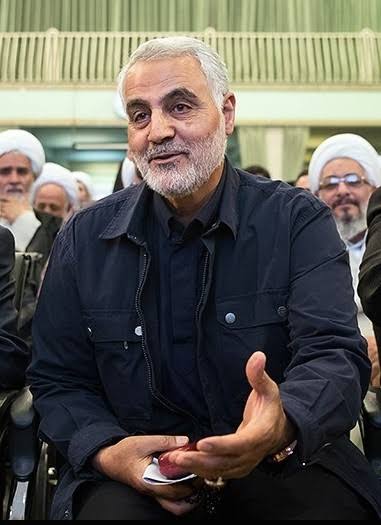
It looks as if the Establishment has found a way to assassinate Trump!
Why didn’t Trump call in Dr. Vladimir Zelenko from New York or Dr. Didier Raoult from France?!
Why is Trump being given experimental drugs and not the known safe HCQ cure?
To Scott Atlas, White House coronavirus advisor
from Jon Rappoport
October 3, 2020
Scott:
If media reports are correct, the president is receiving 2 experimental drugs: the
antibody cocktail, Regeneron, and the antiviral, Remdesivir.
Aside from their individual adverse effects…
THESE DRUGS HAVE NEVER BEEN STUDIED FOR THEIR COMBINED
EFFECTS ON A PATIENT. AND NOW THAT PATIENT…THE FIRST PATIENT
RECEIVING THEM…IS THE PRESIDENT OF THE UNITED STATES.
You know the adverse effects of Remdesivir, Scott. They’re more than worrisome. Acute kidney injury, for example. And this drug has only emergency authorization, and it’s explicitly for patients who are SEVERE COVID cases. Trump is not a
severe case. What’s going on? Why are the Walter Reed doctors piling on?
The other drug, Regeneron, the antibody cocktail, synthesized versions of mouse and human antibodies, is still in clinical trials. There is NO authorization for its
use.
In past trials of antibody drugs, highly increased infection has occurred. Very
dangerous.
And pray these doctors don’t suddenly opt for a ventilator. They could do that, if
Trump’s condition worsens, because of the effects of the DRUGS. They will call
those effects “serious COVID decline.”
In a large New York study of COVID patients in Trump’s age group, 97 percent of the patients receiving ventilator treatment died. Ventilator treatment, as you know, involves heavy and prolonged sedation.
The president is in a very dangerous situation.
Every damn doctor who has any ethics at all should be screaming bloody murder right now. This is not supposition. Would you prescribe a patient not one, but two highly experimental drugs, each of which has very damaging effects? Would you prescribe them TOGETHER? EVER? Especially when the patient is not close to being seriously ill? Especially when the drugs’ combined effects have never been studied?
WHY ARE THE WALTER REED DOCTORS TREATING TRUMP AS IF HE WERE IN DESPERATE STRAITS?
They’re going after the president as if he’s hanging on to life by a thread and they have to throw everything they’ve got at him.
Who is watching over the president’s life? Are these doctors trying to kill him?
US President Donald Trump has claimed he wanted to “take out” Syrian President Bashar Assad in 2017 but was deterred by then-Defense Secretary James Mattis – after previously denying an assassination was even discussed.
“I would have rather taken [Assad] out,” Trump told Fox & Friends on Tuesday, insisting “I had him all set,” but “Mattis didn’t want to do it.”
The admission flies in the face of Trump’s 2018 claim during a White House briefing that the suggestion of killing Assad was “never even discussed.” Journalist Bob Woodward reported in his 2018 book Fear that Trump was itching to have the Syrian leader assassinated after an alleged chemical weapons attack in 2017 – a claim Trump denounced as “total fiction.”
During the Fox & Friends interview, however, Trump said it was Mattis who stayed his hand, calling the ‘Mad Dog’ general “highly overrated” even as he claimed he didn’t regret not having Assad killed.
I could’ve lived either way with [the proposed assassination]. But I had a shot to take him out if I wanted, and Mattis was against it.
“Mattis was against most of that stuff,” Trump told the channel.
The president went on to blame Mattis for “not doing the job in Syria or Iraq with respect to ISIS [Islamic State / ISIL],” claiming the US “took out 100 percent of ISIS” as well as the terrorist group’s leader Abu Bakr al-Baghdadi, but only after Trump “fired” the general.
He also appeared to lump in Iranian Major General Qassem Soleimani with the terrorist group, calling him “ the biggest of them all” and bragging about his assassination by airstrike. While the Baghdadi killing was widely praised, the murder of Soleimani – the leader of Iran’s elite Quds Force – was internationally condemned for its potential to further destabilize the Middle East.
US President Donald Trump has claimed he wanted to “take out” Syrian President Bashar Assad in 2017 but was deterred by then-Defense Secretary James Mattis – after previously denying an assassination was even discussed.
“I would have rather taken [Assad] out,” Trump told Fox & Friends on Tuesday, insisting “I had him all set,” but “Mattis didn’t want to do it.”
The admission flies in the face of Trump’s 2018 claim during a White House briefing that the suggestion of killing Assad was “never even discussed.” Journalist Bob Woodward reported in his 2018 book Fear that Trump was itching to have the Syrian leader assassinated after an alleged chemical weapons attack in 2017 – a claim Trump denounced as “total fiction.”
During the Fox & Friends interview, however, Trump said it was Mattis who stayed his hand, calling the ‘Mad Dog’ general “highly overrated” even as he claimed he didn’t regret not having Assad killed.
I could’ve lived either way with [the proposed assassination]. But I had a shot to take him out if I wanted, and Mattis was against it.
“Mattis was against most of that stuff,” Trump told the channel.
The president went on to blame Mattis for “not doing the job in Syria or Iraq with respect to ISIS [Islamic State / ISIL],” claiming the US “took out 100 percent of ISIS” as well as the terrorist group’s leader Abu Bakr al-Baghdadi, but only after Trump “fired” the general.
He also appeared to lump in Iranian Major General Qassem Soleimani with the terrorist group, calling him “the biggest of them all” and bragging about his assassination by airstrike. While the Baghdadi killing was widely praised, the murder of Soleimani – the leader of Iran’s elite Quds Force – was internationally condemned for its potential to further destabilize the Middle East.
Days
after the assassination of General
Qasem Soleimani,
new and important information is coming to light from a speech given
by the Iraqi prime minister. The story behind Soleimani’s
assassination seems to go much deeper than what has thus far been
reported, involving Saudi Arabia and China as well the U.S. dollar’s
role as the global reserve currency.
The
Iraqi prime minister, Adil Abdul-Mahdi, has revealed details of his
interactions with Trump in the weeks leading up to Soleimani’s
assassination in a speech to the Iraqi parliament. He tried to
explain several times on live television how Washington had been
browbeating him and other Iraqi members of parliament to toe the
American line, even threatening to engage in false-flag sniper
shootings of both protesters and security personnel in order to
inflame the situation, recalling similar modi operandi seen in Cairo
in 2009, Libya in 2011, and Maidan in 2014. The purpose of such
cynicism was to throw Iraq into chaos.
Here
is the reconstruction of the story:
[Speaker
of the Council of Representatives of Iraq] Halbousi attended the
parliamentary session while almost none of the Sunni members did.
This was because the Americans had learned that Abdul-Mehdi was
planning to reveal sensitive secrets in the session and sent Halbousi
to prevent this. Halbousi cut Abdul-Mehdi off at the commencement of
his speech and then asked for the live airing of the session to be
stopped. After this, Halbousi together with other members, sat next
to Abdul-Mehdi, speaking openly with him but without it being
recorded. This is what was discussed in that session that was not
broadcast:
Abdul-Mehdi
spoke angrily about how the Americans had ruined the country and now
refused to complete infrastructure and electricity grid projects
unless they were promised 50% of oil revenues, which Abdul-Mehdi
refused.
The complete (translated)
words of Abdul-Mahdi’s speech to parliament:
This
is why I visited China and signed an important agreement with them to
undertake the construction instead. Upon my return, Trump called me
to ask me to reject this agreement. When I refused, he threatened to
unleash huge demonstrations against me that would end my premiership.
Huge
demonstrations against me duly materialized and Trump called again to
threaten that if I did not comply with his demands, then he would
have Marine snipers on tall buildings target protesters and security
personnel alike in order to pressure me.
I
refused again and handed in my resignation. To this day the Americans
insist on us rescinding our deal with the Chinese.
After
this, when our Minister of Defense publicly stated that a third party
was targeting both protestors and security personnel alike (just as
Trump had threatened he would do), I received a new call from Trump
threatening to kill both me and the Minister of Defense if we kept on
talking about this “third party”.
Nobody
imagined that the threat was to be applied to General Soleimani, but
it was difficult for Prime Minister Adil Abdul-Mahdi to reveal the
weekslong backstory behind the terrorist attack.
I
was supposed to meet him [Soleimani] later in the morning when he was
killed. He came to deliver a message from Iran in response to the
message we had delivered to the Iranians from the Saudis.
We
can surmise, judging by Saudi Arabia’s reaction,
that some kind of negotiation was going on between Tehran and Riyadh:
The
Kingdom’s statement regarding the events in Iraq stresses the
Kingdom’s view of the importance of de-escalation to save the
countries of the region and their people from the risks of any
escalation.
Above
all, the Saudi
Royal family wanted
to let people know immediately that they had not been informed of the
U.S. operation:
The
kingdom of Saudi Arabia was not consulted regarding the U.S. strike.
In light of the rapid developments, the Kingdom stresses the
importance of exercising restraint to guard against all acts that may
lead to escalation, with severe consequences.
And
to emphasize his reluctance for war, Mohammad bin Salman sent a
delegation to the United States. Liz
Sly,
the Washington Post Beirut bureau chief, tweated:
Saudi
Arabia is sending a delegation to Washington to urge restraint with
Iran on behalf of [Persian] Gulf states. The message will be: ‘Please
spare us the pain of going through another war’.
What
clearly emerges is that the success of the operation against
Soleimani had nothing to do with the intelligence gathering of the
U.S. or Israel. It was known to all and sundry that Soleimani was
heading to Baghdad in a diplomatic capacity that acknowledged Iraq’s
efforts to mediate a solution to the regional crisis with Saudi
Arabia.
It
would seem that the Saudis, Iranians and Iraqis were well on the way
towards averting a regional conflict involving Syria, Iraq and Yemen.
Riyadh’s reaction to the American strike evinced no public joy or
celebration. Qatar, while not seeing eye to eye with Riyadh on many
issues, also immediately expressed solidarity with Tehran, hosting a
meeting at a senior government level with Mohammad Zarif Jarif, the
Iranian foreign minister. Even Turkey and Egypt,
when commenting on the asassination, employed moderating language.
This
could reflect a fear of being on the receiving end of Iran’s
retaliation. Qatar, the country from which the drone that killed
Soleimani took off, is only a stone’s throw away from Iran,
situated on the other side of the Strait of Hormuz. Riyadh and Tel
Aviv, Tehran’s regional enemies, both know that a military conflict
with Iran would mean the end of the Saudi royal family.
When
the words of the Iraqi prime minister are linked back to the
geopolitical and energy agreements in the region, then the worrying
picture starts to emerge of a desperate U.S. lashing out at a world
turning its back on a unipolar world order in favor of the emerging
multipolar about which I
have long written.
The
US, now considering itself a net energy exporter as a result of the
shale-oil revolution (on which the jury is still out), no longer
needs to import oil from the Middle East. However, this does not mean
that oil can now be traded in any other currency other than the U.S.
dollar.
The
petrodollar is what ensures that the U.S. dollar retains its status
as the global reserve currency, granting the U.S. a monopolistic
position from which it derives enormous benefits from playing the
role of regional hegemon.
This
privileged position of holding the global reserve currency also
ensures that the U.S. can easily fund its war machine by virtue of
the fact that much of the world is obliged to buy its treasury bonds
that it is simply able to conjure out of thin air. To threaten this
comfortable arrangement is to threaten Washington’s global power.
Even
so, the geopolitical and economic trend is inexorably towards a
multipolar world order, with China increasingly playing a leading
role, especially in the Middle East and South America.
Venezuela,
Russia, Iran, Iraq, Qatar and Saudi Arabia together make up the
overwhelming majority of oil and gas reserves in the world. The first
three have an elevated relationship with Beijing and are very much in
the multipolar camp, something that China and Russia are keen to
further consolidate in order to ensure the future growth for the
Eurasian supercontinent without war and conflict.
Saudi
Arabia, on the other hand, is pro-US but could gravitate towards the
Sino-Russian camp both militarily and in terms of energy. The same
process is going on with Iraq and Qatar thanks to Washington’s
numerous strategic errors in the region starting from Iraq in 2003,
Libya in 2011 and Syria and Yemen in recent years.
The
agreement between Iraq and China is a prime example of how Beijing
intends to use the Iraq-Iran-Syria troika to revive the Middle East
and and link it to the Chinese Belt and Road Initiative.
While
Doha and Riyadh would be the first to suffer economically from such
an agreement, Beijing’s economic power is such that, with its
win-win approach, there is room for everyone.
Saudi
Arabia provides China with most of its oil and Qatar, together with
the Russian Federation, supply China with most of its LNG needs,
which lines up with Xi Jinping’s 2030 vision that aims to greatly
reduce polluting emissions.
The
U.S. is absent in this picture, with little ability to influence
events or offer any appealing economic alternatives.
Washington
would like to prevent any Eurasian integration by unleashing chaos
and destruction in the region, and killing Soleimani served this
purpose. The U.S. cannot contemplate the idea of the dollar
losing its status as the global reserve currency. Trump is engaging
in a desperate gamble that could have disastrous consequences.
The
region, in a worst-case scenario, could be engulfed in a devastating
war involving multiple countries. Oil refineries could be destroyed
all across the region, a quarter of the world’s oil transit could
be blocked, oil prices would skyrocket ($200-$300 a barrel) and
dozens of countries would be plunged into a global financial crisis.
The blame would be laid squarely at Trump’s feet, ending his
chances for re-election.
To
try and keep everyone in line, Washington is left to resort to
terrorism, lies and unspecified threats of visiting destruction on
friends and enemies alike.
Trump
has evidently been convinced by someone that the U.S. can do without
the Middle East, that it can do without allies in the region, and
that nobody would ever dare to sell oil in any other currency than
the U.S. dollar.
Soleimani’s
death is the result of a convergence of U.S. and Israeli interests.
With no other way of halting Eurasian integration, Washington can
only throw the region into chaos by targeting countries like Iran,
Iraq and Syria that are central to the Eurasian project. While Israel
has never had the ability or audacity to carry out such an
assassination itself, the importance of the Israel Lobby to Trump’s
electoral success would have influenced his decision, all the more so
in an election year .
Trump
believed his drone attack could solve all his problems by frightening
his opponents, winning the support of his voters (by equating
Soleimani’s assassination to Osama bin Laden’s), and sending a
warning to Arab countries of the dangers of deepening their ties with
China.
The
assassination of Soleimani is the U.S. lashing out at its steady loss
of influence in the region. The Iraqi attempt to mediate a lasting
peace between Iran and Saudi Arabia has been scuppered by the U.S.
and Israel’s determination to prevent peace in the region and
instead increase chaos and instability.
Washington
has not achieved its hegemonic status through a preference for
diplomacy and calm dialogue, and Trump has no intention of departing
from this approach.
Washington’s
friends and enemies alike must acknowledge this reality and implement
the countermeasures necessary to contain the madness.
My suspicion is that this will get almost no coverage from media - either Russian or western. Was
there an attempted coup in Moscow during Putin's press conference?
At the time this was unfolding I paid very little attention - just another shooting. However, there seems to be MUCH more than meets the eye as early reports told of multiple shooters, something that is confirmed by the following reporting. Also, this appeared to be timed to coincide with Putin's 4 hour press conference.
Was this an attempted coup or an attempt to assassinate Vladimir Putin.
The following is the audio of a discussion on TruNews. There is video footage which I have been unable to pin. I suggest looking at the original video footage (TruNews are currently banned from Facebook for telling the truth).
Watch the original TruNews Godcast HERE This is the coverage that is referred to from the Latvian-based Russian news outlet, Meduza. I have given the LINKS to the video footage.
Multiple
people killed in shooting at Russia’s Federal Security Service
headquarters
20 December, 2019 A shooting has taken place in central Moscow at the Federal Security Service (FSB) building on Lubyanka Square. RBC reported that an unknown individual opened fire there using a Kalashnikov automatic rifle. Preliminary eyewitness reports indicated that one individual began shooting in the FSB’s reception area, after which he ran out into the street and continued shooting there. RT reported that the shooter barricaded himself inside a nearby building while exchanging fire with officers.
As of 7:13 PM local time, the shooter had been killed, according to the FSB press service. Officers are currently working to establish his identity. Multiple journalists reported hearing what sounded like gunshots even after the shooter was dead, including a Meduza correspondent.
The Telegram channel112 initially claimed that three people were involved in the shooting, and two were killed immediately, but this report appears to be false. While the Moskva news agency reported that the FSB ultimately confirmed this version of events, Interfax has written that the FSB said only a single shooter was involved. Moskva later deleted its story.
“The first frames of the shooting captured by a Lubyanka surveillance camera. Pedestrians panic, drivers abandon their cars and run. Police officers hide behind the cars while moving toward the site of the shooting.
“‘Stop! Stop, I said!’ A very frightening video of the moment the shooting began in central Moscow.”
There have been multiple fatalities among security employees. 112wrote that three Federal Protective Service (FSO) employees were killed, though no official reports of those deaths have been released. Mash, which is also based on Telegram, reported the death of one traffic safety employee standing guard outside the building, which the FSB later confirmed. According to the Moskva News Agency, two people were injured in a shootout, and one later died of his injuries. The agency did not specify whether those two individuals were affiliated with a government agency. An FSB representative subsequently told RIA Novostithat an FSB agent had been killed, and the Health Ministry reported five total injuries.
The “Siren” alert was activated throughout the capital, according to the Telegram channel Baza. The alert signals a search for an active shooter; it was canceled at 7:30 PM local time. In all FSB buildings, the “Fortress” plan was also activated, meaning the buildings are on total lockdown and no one may enter or exit. On-call officers from the Alpha special ops force as well as immediate response special ops troops were called to the scene, according to REN TV. Baza also claimed that emergency services have been asked to assist in putting out a fire at the site of the shooting, though that report has not been confirmed. By 7:39 PM, a criminal case had been opened to investigate the shooting.
We
analyzed videos from Moscow’s FSB headquarters shooting. One of the
injuries was likely caused by security agents after the shooter was
dead.
Maxim Grigoryev / TASS / Scanpix / LETA
Meduza, 21 December, 2019 Meduza has analyzed eyewitness videos from the December 19 shooting at Moscow’s Lubyanka Square. In the attack, 39-year-old Yevgeny Manyurov targeted the headquarters of Moscow’s Federal Security Service (FSB), and two FSB employees died. Their names are not yet known. Manyurov himself was shot by special forces. However, combining several videos of the shooting demonstrates that shots likely continued to be fired even after Manyurov was killed. This means at least one of the victims may have been shot by security officials because the various agencies on site did not coordinate their actions, multiple sources told Meduza.
On the evening of December 19 near Moscow’s Lubyanka Square, shots rang out: 39-year-old Yevgeny Manyurov had opened fire near the FSB’s reception area on Kuznetsky Bridge Street. He then kept shooting, moving toward the square, until he himself was shot by special forces. One FSB officer was killed at the scene, and another died from his wounds on the evening of December 20. Five more people were wounded, meaning that the attack had seven total victims, as Russia’s Investigative Committee noted (the Health Ministry had counted six victims the previous evening). By analyzing multiple eyewitness videos, Meduza has discovered that one of those injured may have been shot by security officials themselves after Manyurov had already been killed.
Warning! This video includes profanity and violence. Viewer discretion is advised.
Eyewitness videos from the Lubyanka Square shooting as analyzed by Meduza. Two of the videos were taken from the Telegram-based news outlet Baza, and the third is from the YouTube channel Linia Oborony (Line of Defense).
Eyewitness videos from the Lubyanka Square shooting as analyzed by Meduza. Two of the videos were taken from the Telegram-based news outlet Baza, and the third is from the YouTube channel Linia Oborony (Line of Defense).
Meduza Project
The moment the shooter was killed is visible and audible in multiple eyewitness videos published online, including some that were taken from inside the FSB building with individuals who presumably work for the agency commenting behind the camera. However, even after the moment Manyurov was shot, machine gun fire can be heard, and the presumed FSB agents ask, “Who else are they shooting? Is he not alone?” On the day of the incident, the FSB announced that the attacker had been killed around 7:08 PM, but Meduza’s correspondent on the scene said shots could still be heard as late as 7:15.
In a different video recorded from another angle, someone can be seen running past the parking lot outside the FSB building where the shooter was hiding. The running figure is then shot down. Meduza compiled the videos and synchronized them using the sounds of the gunshots in each. The resulting analysis indicated that security officials did not know exactly how many shooters they were facing and that there was a lack of coordination among different agencies and divisions. That caused some groups to continue shooting even after the only attacker had been killed.
Sources told Meduza and Open Media that disagreements plagued the response from different law-enforcement agencies. The Telegram channel VChK-OPGU (“Cheka-Joint State Political Directorate”), whose reporting specializes in high-profile criminal cases, described the situation in the following words: “When the special forces arrived, FSB HQ officers refused to let them into the building, where they could have taken up an optimal position. Afterward, [special-forces snipers] waited 15 minutes for an order from the FSB command to eliminate [the shooter].”
A source who learned about the course of events on Thursday from a senior FSB officer told Meduza that some people were injured after the shooter was already dead: “He ran out [from the FSB entrance], shot at the police officer who was between the ‘Detsky Mir’ building and [guarding] headquarters. Then he tried to hide behind the columns, which is where they got him. He was firing, maybe even aiming okay, but he didn’t understand a thing. In combat operations, you’ve got to run from position to position. Everything that happened next was all an interdepartmental mess because nobody knew who they were, how many there were, or where they were. There was shooting everywhere and it kept going, even after they’d already shot [the attacker]. There was a police detachment a hundred meters off. They jumped out from below, from Lybyanka Square, and also started firing. Of course, nobody understood anything and there was zero coordination.”
Another source who “participated in the shootout” told the website Open Media that a special-forces detachment advanced around 6:50 p.m. from Myasnitskaya Street toward Furkasovsky Lane, as there was an exchange of gunfire outside the number four entrance to the FSB building. The detachment’s officers were informed that at least one of the attackers had been killed and another dressed all in black was still returning fire.
The newspaper Moskovsky Komsomolets published the names of the two victims killed: 32-year-old traffic police officer Ilya Fisenko and 35-year-old FSB agent Konstantin Odnolepkov. The two men were the first to be shot when the attack started at 6:10 p.m. Both were hospitalized in critical condition at Moscow’s Sklifosovsky Hospital. Another victim, 35-year-old civilian Pavel Anisimov, was sent to the Botkin Hospital around 6:45 p.m., reported Moskovsky Komsomolets.
The newspaper says 29-year-old Alexander Zamchalin was taken to Inozemtsev Hospital, but it’s unknown if or when the officer was examined by doctors. On December 19, Russia’s Health Ministry reported one fatality and five individuals wounded; a day later, federal investigators said two victims were killed in the shootout and five were wounded, though officials named only four injured persons. This is a brief report from Reuters
A
shooting incident in central Moscow on Thursday evening may have been
planned to coincide with a speech President Vladimir Putin was making
to commemorate Russia’s day of the security services (FSB), a
source close to the FSB told Reuters.
Russian
investigators opened criminal proceedings into the attempted murder
of law enforcement officers after the incident, which left two FSB
personnel seriously wounded, the Interfax news agency cited the
health ministry as saying.

 Posts
Posts