Showing posts with label Suzy Austen. Show all posts

Tuesday, 3 November 2020

Discussing New Zealand's euthanasia referendum

 New Zealand has had two referenda - one on voluntary euthansia, the other on marijuana ( the first passed the second did not).

I have had ongoing concerns about the State interfering in something that should be a personal decision (when it relates to marijuana I mean the medical variety).  They do not need to pass legislation; they just need to stop police repression.

Now they have their OK for legislation my concern that the vast majority of people who do not fit into the tiny minority who meet the criteria will once again be subject to police repression on both accounts.

When it comes to euthanasia, now that they have excluded the vast majority of people who might have made a decision for themselves my concern is about the State and how they might use this in the future.

It is a bit like with abortion - where a piece of progressive legislation was passed to allow for abortion - that has now been  extended to allow for the abortion of foetuses at 9 months, something that in my mind is nothing less than murder.

This is from Philip Nitschke of Exit International.

New Zealand Votes Yes to Voluntary Euthanasia, but …

Philip Nitschke


the Peaceful Pill Handbook,

November 1, 2020


On Saturday 17 October 2020, New Zealand held its most recent federal election.

Coupled with the election were 2 referenda.

One on euthanasia, the other on cannabis.

In counting to date, around 65% of voters voted in favour of legalising assisted suicide/ assisted dying for the terminally ill. The final result will not be known until 6 November.

This is perhaps, in part, the legacy of NZ lawyer, Lucretia Seales, who died of a brain tumour in 2015.

The new law will not take effect until 12 months after the result is know (so that is 6 November 20201 – if they world does not end first).

This is a bit of a major step for a country whose Chief Censor (yes such a post exists in New Zealand), 12 years ago, banned and then approved (with heavy redactions) an early edition of The Peaceful Pill Handbook. Censorship is alive and well in this country.
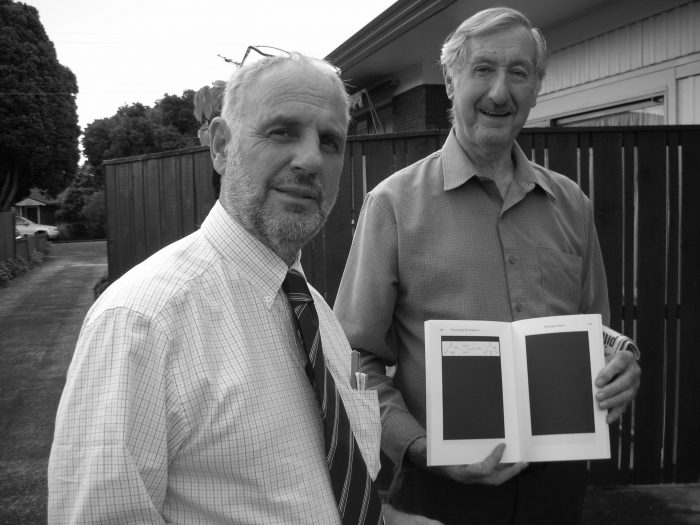
Philip Nitschke & Former VE Society of NZ President Jack Jones (dec) with a redacted Peaceful Pill Handbook in Auckland, 2008.

Voting ‘yes’ is also a major step for a country that continues to harbor such conservative anti-choice groups such as the Society for the Protection of Community Standards.

It is a major leap forward for a country who, in the 1950s, eagerly classified one of its most famous writers, Janet Frame, as an antipodean madwoman with schizophrenia, while her diagnostic conclusion in the UK was that she was ‘just different’; a shy woman who preferred to be alone.

And in case readers were at risk of forgetting, this is the country where in 2016 Police set up an unlawful roadblock, known as Operation Painter, not far from Suzy Austen’s potluck Sunday lunch to trick the Exit Members who attended into handing over their name and addresses; so as they could be put under police surveillance and later visited and compelled to hand over any end of life drugs they may have illegally acquired.
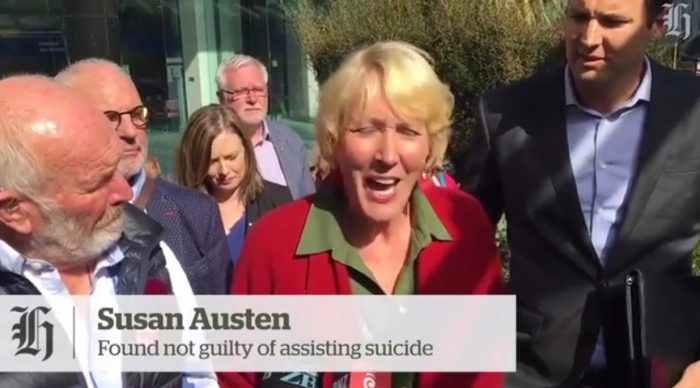
Suzy Austen defeats Operation Painter

Suzy Austen outside the Wellington High Court, 23 February 2018


(SMR - I was caught up in this - I attended the pot-luck lunch he talks about)

WHAT IS IT THAT NEW ZEALANDERS HAVE VOTED FOR?

As with the Australian state of Victoria, when voluntary euthanasia/ assisted suicide/ assisted dying becomes the law in NZ, it will be situated within the medical model.

Those assisting must be medical professionals.

Those receiving the assistance must be terminally ill with < 6 months to live.

People of advanced old age are excluded from eligibility as are those with a disability (eg. quadriplegia) or a mental illness, such as dementia.

THE END OF LIFE CHOICE ACT

  • be aged 18 years or over
  • be a citizen or permanent resident of New Zealand
  • suffer from a terminal illness that is likely to end their life within 6 months
  • have significant and ongoing decline in physical capability
  • experience unbearable suffering that cannot be eased
  • be able to make an informed decision about assisted dying.

A treating doctor may also NOT suggest voluntary euthanasia as an option.

A request for voluntary euthanasia may NOT be included in an advance directive.

Interestingly, the Act DOES provide for the administration of a lethal injection, instigated by either the person or the medical professional.

MEDICAL PROFESSION OVERSIGHT

As with all medical model end of life laws, doctors will play a central role in the End of Life Choice Act.

In this regard, if a  doctor decides that the person requesting assisted dying is eligible, they must seek a second opinion from an independent doctor.

The independent doctor must also agree that the person meets all the criteria, which includes being competent to make an informed decision about assisted dying.

If either doctor is unsure of the person’s ability to make an informed decision, a third opinion from a psychiatrist is required.

AVAILABLE METHODS

1. Ingestion, triggered by the person.

2. Intravenous delivery, triggered by the person.

3. Ingestion through a tube, triggered by the doctor or a nurse practitioner.

4. Injection, administered by the doctor or a nurse practitioner.

Oversight will be via the ‘Support and Consultation for End of Life in New Zealand (SCENZ) Group’ and an End of Life Review Committee.

This SCENZ Group will ‘make and maintain a list of doctors who are willing to act as replacement and/or independent doctors’.

A Summary of the End of Life Choice Act

As with all medical model legislation, there are considerable hurdles that must be completed before one is able to use the law.

This type of regime of so-called safeguards makes the society that has voted in the law feel much more comfortable with their decision.

However, it harks back to the question raised by Bob Dent in Darwin in 1996 when he became the first person in the world to receive a legal, lethal voluntary injection under the Rights of the Terminally Ill Act (NT).

Bob questioned the fact that as a dying man he was forced to undergo so much final testing, just to be able to die in peace. He always maintained that had he had the drugs at home in the cupboard he would have simply gone quietly to the cupboard and taken them. He did think it fair or reasonable to have been seemingly persecuted by the burden of proof.

AND THEN THERE ARE THE ISSUES OF OLD AGE & AWFUL DISEASES THAT KILL SLOWLY

A law that expressly excludes people of advanced age, people like 104-year old Australian ecologist Professor David Goodall, who was not sick but was old (enough), are not laws for everyone.

And a law that mandates certain death within 6 months is simply cruel. Such a law would never have served Melbourne firefighter Troy Thornton who had multiple system atrophy (and was becoming slowly but surely completely paralysed, and who chose to die in Switzerland) or New Zealanders like Rachel Rypma who has Huntington’s Disease, one of the most cruel and degrading genetic conditions ever invented.

Indeed, with this exclusion they make themselves laws for the very few.

For Exit this remains a needless restriction. Perhaps the most meaningless restriction; especially given the fact that we are likely to live longer in poorer health than any generation preceding us.

WHAT ABOUT THE COLONISATION OF DYING AND DEATH BY THE MEDICAL PROFESSION?

The one aspect of New Zealand’s End of Life Choice Act must be the central role of the medical profession in the operation of the Act.

Unlike in Switzerland where a person does NOT need to be terminally ill (or even sick), but only needs to have the capacity to understand and initiate the act themselves and the person providing assistance only does so for altruistic reasons, like so many other countries New Zealand has created a framework that inserts a medical professional into an area of human existence which is not intrinsically medical in nature.

As British public health specialist, Dr Lucy Thomas, wrote recently (30 September) in the British Medical Journal:

… giving people access to the means to end their life is not, in itself, a medical procedure, and there is no practical need to involve a medical professional. More fundamentally, it becomes difficult to reduce something as profoundly complex as the desire to end life to a medical problem.

All of us experience suffering in our lives, and at times we all ponder the meaning of our existence in the context of our personal histories, social relationships, and wider circumstances. Many of us have occasions when we question whether our lives are worth living, and some go as far as to consider ending life, either in a moment of desperation or after lengthy, considered deliberation. The underlying existential struggle is not fundamentally different in the presence or absence of illness or disability; nor is it determined by how long or short a remaining life is predicted to be.
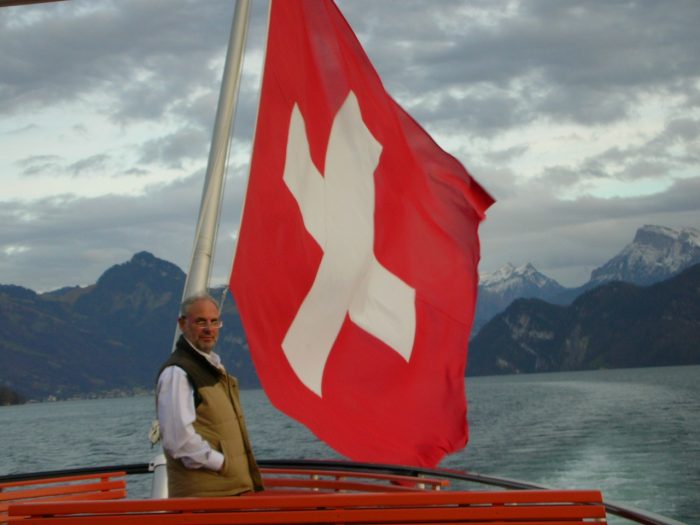
Philip Nitschke in Zurich

In doing so, medical professionals become the gate-keepers of this most private and intimate of all life’s decisions.

And, in being the gate-keepers, they are the wielders and arbiters of power over the lives (and deaths) of others.

Exit congratulates New Zealand on their great leap forward but with these reservations in mind, we wonder how great a leap it truly is, and the perspective of forward and backward can surely only be understood from one’s unique standpoint?


Monday, 14 May 2018

When compassion becomes a crime


"Good people, driven by compassion, are compelled to break the law when that law is inadequate. This is Suzy's story.

"She is deeply compassionate and unusually brave and has been convicted on two charges of importing a lethal drug. How is it that someone who has demonstrably been a pillar of our society can be, on the surface, a convicted drug importer?"

---Maryan Street, ex- Labour MP

Upstanding 67-year-old turned into a criminal for upholding moral values
Seemorerocks


Now that an 18 month saga is behind us I would like to talk about something that has been sitting on my shoulders.

Euthanasia advocate fined for importing suicide drug


Suzy Austen, who was arrested by police for "aiding and abetting" a suicide, was found not guilty of the main charge by a jury of her peers but guilty of two counts of importing a class-C drug, pentobarbitone.

Despite the fact that this was a slap-over-the-wrist misdemeanour for which only about five people have received a warning.

However, it seems obvious to me that the State, having failed to get their conviction despite the wasting of police time and the huge cost of an investigation and court case to the taxpayer, was going to get its punishment and make an example of someone who is leading a campaign for freedom-of-choice when it comes to End of Life.

In short, the sentencing was a political act.

One would think the Law is there to provide protection to those who need it. In fact, we know this is not the case (rather the opposite; try to get the police interested in investigating the burglary of your house) and that the law is there to protect the property interests of the privileged.

Politically, I am not a libertarian. In fact, I am a great fan of the Law protecting those who need protecting - the weak, the vulnerable and the exploited. However, in my mind there is no crime where there is no victim.  Is the law, in this case, there to protect the moral sensibilities of a vociferous minority in a country where a sense of morality has been all but flushed down the toilet?

When it comes to two issues dear to my heart I am definitely a libertarian - the right to decide when and how we are going to die and the right to use medical marijuana to counter pain and disease.

You would be hard-pressed to convince me that there is a victim in these "crimes".

All of us will be aware how the police are short of resources when it comes to investigating real crimes with real victims, such as burglary or assault. And yet we see how the Police appears to have unlimited resources to go after people with a high level of moral integrity and those who are elderly, sick and vulnerable.

And I wouldn't mind wagering that instructions for this came from on-high. I doubt that the police would have decided to waste their limited resources were there not the political resolve to do so.

In 2016 I was at a meeting of Exit International which, it turned out, was being bugged by the police. On the way home many of the attendees (not me – I took another route home) were stopped by an illegal police road block, designed to get the identities of those attending.

I myself got a visit from the police at 9 am on a Saturday morning. Amidst the questions they asked was the quip from one of the young policemen that I can remember as if it were yesterday: “we are going to put Suzy (they used a different surname) out of action”.

I have heard since of others' experiences. 

One friend had her home searched and material confiscated. Another was told by the police, in a manner that could only be described as intimidation: “we know everything about you. There is nothing we don’t know”.

Imagine the effect of this on a senior citizen who has never put a foot wrong in her life suddenly being treated like a criminal.

This same friend had the presence of mind to say: “the law’s an ass”. Came the reply: “I’m here to uphold the law”. “Well I’m here to change it”, she replied.

Pretty gutsy, but our friend was shaking after the police left and suffered what she described as post-traumatic stress symptoms.

All of this happened towards the end of the last government which used similarly repressive methods against journalists and whistleblowers (out of spite and vengeance by the prime minister).

It seemed pretty symbolic to me that the power of the State should be used against older, upstanding citizens for exercising their rights and advocating for a change in the law (which is indeed an ass) as regards End of Life choices, which the media calls euthanasia, to create the most negative possible impression.

As for Suzy Austen, I can do no better than the following, put together by the author of the article below. 


The Susan Austen interview - from teacher to campaigner to unlikely criminal
TOM HUNT


Austen says Harris has been by her side through every step of the trial.

14 May, 2018

Suzy Austen's mother was an active, vibrant woman who, in the end, was barely a person. She had dementia for thirteen years and finally closed her eyes for the last two and a half.


Sitting in Suzy​ Austen's house high in Lower Hutt's hills on a drizzly Sunday, it's hard to believe you are in the presence of a criminal.

A 67-year-old criminal – a drug importer, no less – tried, convicted, and sentenced in the High Court in Wellington. The drug was pentobarbitone, commonly used for euthanasia.

Her sentence, handed down on Friday, was a $7500 fine. More than the discharge without conviction sought, but less than what could have been.

Euthanasia campaigner Suzy Austen, with her motorcycle enthusiast husband Mike Harris.
Euthanasia campaigner Suzy Austen, with her motorcycle enthusiast husband Mike Harris. - ROSS GIBLIN/STUFF

Euthanasia campaigner Suzy Austen, with her motorcycle enthusiast husband Mike Harris.

It is two days later and Austen is preparing for a Sunday afternoon thank you party to all those who have supported her since October, 2016.

That was when police caught the retired school teacher in a car in a Lower Hutt car park – with a friend in her 80s – wearing rubber gloves and repackaging pentobarbitone.

The past 18 months have been hard. She lost weight and her sleep patterns changed. Sunday morning, when she woke up at 7.15am, was a sleep-in, thanks to the fact the ordeal is finally over.

Austen says Harris has been by her side through every step of the trial.

"In many ways I feel stronger because I know this is something I can campaign for all my life."

Her husband, Mike Harris, "Jolly Mike" to his friends, has been beside her through every court appearance. He sits with her through Sunday's interview.

As the chicken drumsticks heat in the oven, he heads off to the supermarket to get supplies.

He nods, smiles, rarely-interjects as Austen tells her life story – a story that begins as an adopted baby and has now seen her become one of New Zealand's most high-profile campaigners for a change to euthanasia laws.

She moved from Dunedin to Wellington when she was 13 and grew up in Hutt Valley, where she now lives. She became a teacher, initially at Parkway Primary in Wainuiomata then Martinborough in Wairarapa.

Suzy Austen with a photo of her with her mother.
Suzy Austen with a photo of her with her mother. - ROSS GIBLIN/STUFF


Austen was 35, the mother of two young boys, when she began the search for her birth parents.

She eventually tracked down her birth mother, Iona Potter. They reconnected but Potter died six months later and the clues to her father were vague. He was Welsh, tall, and from a visiting sports team.

That sports team was the British Lions and that sportsman was Don Hayward. Hayward had since moved to New Zealand and was running a butcher's shop in Wainuiomata that Austen, unknowingly, bussed past each day for a good portion of her life.

"I think you are my father," she said when they finally met in ÅŒtaki. It was then she saw where she got her height, her looks, her big hands.
Suzy Austen with a photo of her with her mother.
ROSS GIBLIN/STUFF
Austen was 35, the mother of two young boys, when she began the search for her birth parents.

She eventually tracked down her birth mother, Iona Potter. They reconnected but Potter died six months later and the clues to her father were vague. He was Welsh, tall, and from a visiting sports team.

That sports team was the British Lions and that sportsman was Don Hayward. Hayward had since moved to New Zealand and was running a butcher's shop in Wainuiomata that Austen, unknowingly, bussed past each day for a good portion of her life.

"I think you are my father," she said when they finally met in ÅŒtaki. It was then she saw where she got her height, her looks, her big hands.
Supporters of Susan Austen outside Wellington District Court ahead of her sentencing.
Supporters of Susan Austen outside Wellington District Court ahead of her sentencing. - TOM HUNT/STUFF


"He said, 'I have always wanted a daughter', which was just magical and it was just open arms. It was such a wonderful experience of so much joy to everybody. Mum and Dad supported me..."

Austen got to know her biological father – a generous man who talked a lot and was kind to everyone. Austen reckons her enjoyment of getting to know people, of wanting to know more about them, comes from him.

She is equally kind of her adopted parents.

It was her father who gave her the book Jean's Way by Derek Humphry, the tale of a terminally-ill woman suffering from incurable cancer who ends her life with drugs supplied by her husband.

For many involved in the euthanasia cause, the catalyst is the prolonged, painful death of a loved one. For Austen, it was a book.


Suzy Austen at her home in Lower Hutt, the same one police used to bug an Exit International meeting. - ROSS GIBLIN/STUFF


"Dad firmly believed in end-of-life choice ... I always knew that this was what he would choose – to end his own life if he found it was unbearable. But, dare I say it, fortunately and gracefully, he faded away very quickly."

By the time her mother took years to die, Austen was already involved in the euthanasia movement.

She gave up her teaching job, "which I absolutely loved," and had time to study more and joined the Wellington branch of the Voluntary Euthanasia Society.


Susan Austen leaves Wellington High Court with her husband Mike Harris after being sentenced for importing euthanasia drugs. - KEVIN STENT/STUFF


She watched the slow withering of her mother – her eating stopped, interests vanished, eyes closed and foot stopped tapping to music.

There was an advance-directive not to give life-prolonging medication but her heart was strong and went on for 13 more years.

"I don't believe she suffered .... but it was cruel for her because she was an active vibrant, generous woman."

Austen's own death would appear to be a long way off. She still rides side-car in her 87-year-old husband's motorbike and has the energy of a young woman. But we all die. Have her own adult sons, who recently gave her a grandson and granddaughter, been given instructions?

"Not specifically. I know they know what I believe. I know they would do whatever they could do legally."

But for now death is far from anyone's mind.

The guests on this wet Sunday include her legal team and supporters who turned out court date after court date. Austen is now famous but insists she is still the same person.

"I just feel so grateful," she says.

In this house – the same one police bugged to record an Exit International meeting then set up a road block nearby to get names and addresses – the chicken drumsticks need cooking and Jolly Mike is off to the shops.

FROM HER SUPPORTERS:


World Federation of right-to-die societies President Sean Davison.

"Suzy's fine of $7500 is peanuts compared to the huge cost of the police investigation and High Court trial to the New Zealand taxpayer.

"If a real crime had been committed I believe the police should leave no stone unturned in bringing the perpetrators to justice, but on this occasion I feel the investigation was misdirected and their resources could be better utilised."

Exit International director Philip Nitschke:


Head of Exit International Philip Nitschke. - DAVID MARIUZ
.

"[Austen's sentence] could have been worse, but she will be disappointed ...

"It was also of interest how the New Zealand politicians (like the Australian ones) have been quick to distance themselves from any legislative solution."

Voluntary Euthanasia Society president Maryan Street​:


Maryan Street, assisted-dying campaigner and former Labour MP. - ROSS GIBLIN/STUFF

"Good people, driven by compassion, are compelled to break the law when that law is inadequate. This is Suzy's story.

"She is deeply compassionate and unusually brave and has been convicted on two charges of importing a lethal drug. How is it that someone who has demonstrably been a pillar of our society can be, on the surface, a convicted drug importer?"


Wednesday, 26 October 2016

The police state is preying on the sick and the elderly

The State, which is cutting back on police so that if your home is broken into if you want police assistance forget about it - now has time and resources to prey on elderly and sick people who choose to exercise their personal sovereignty.


But then again in today’s fascist world sovereignty is a dirty word

Breath-testing checkpoint used to target euthanasia advocates


Police have confirmed they used a breath-testing checkpoint to target people who attended a euthanasia meeting.

A police officer directing traffic at an alcohol check point.


27 October, 2016


Police have defended using a breath-testing checkpoint, similar to this one, to identify meeting attendees. Photo: RNZ / Alexander Robertson

The Exit International meeting was held in Lower Hutt earlier this month.

In a statement, the Wellington Police Area Commander confirmed a police operation was conducted to identify the people attending that meeting, and police used a breath-testing checkpoint near the meeting as part of the operation.

Inspector Chris Bensemann said the police were responsible for enforcing the country's laws and helping someone to commit suicide was illegal in New Zealand.

Police had a duty to investigate any situation where they had reasonable grounds to suspect that people were being assisted to commit suicide, he said.

At least six euthanasia supporters were visited by police following the meeting. Wellington woman Wilhelmina Irving told RNZ she was visited by a plain clothes officer, and considered it a "frightening tactic".

Police said later this evening that they had referred the use of the checkpoint to the Independent Police Conduct Authority.

They were aware of "concerns around the legal basis for that checkpoint" and, while the operation was carried out in "good faith and for good reasons", it was appropriate to have it looked at.

Police visits a 'frightening tactic' - euthanasia supporter


An elderly Wellington woman - believed to be one of at least six euthanasia supporters visited by police - says an officer's door-knock was an attempt to intimidate her.

Police admit using checkpoint to target euthanasia meeting attendees


26 October, 2016


Police have admitted conducting breath-testing in Maungaraki, Lower Hutt, as a ploy to gather information about elderly ...
FAIRFAX NZ

Police have admitted conducting breath-testing in Maungaraki, Lower Hutt, as a ploy to gather information about elderly women attending a nearby euthanasia meeting.
Police have admitted they used a breath-testing checkpoint to target people who had attended an Exit International euthanasia meeting.
The move has been criticised as an "unlawful checkpoint to interrogate pensioners" by one lawyer, while another said it was probably a breach of police powers. 
A complaint has already been laid with the Independent Police Conduct Authority about the officers' actions in Lower Hutt earlier this month, and it is understood at least one other will be laid in coming days.
Longtime Voluntary Euthanasia Society member Wilhelmina Irving got a visit from police after attending the Exit ...
ROSS GIBLIN/FAIRFAX NZ

Longtime Voluntary Euthanasia Society member Wilhelmina Irving got a visit from police after attending the Exit International meeting in Lower Hutt early in October.
Police said on Wednesday evening that they had also notified the IPCA themselves.

READ MORE:

The police targets, mostly elderly women, had been attending the meeting on a Sunday afternoon early this month in Maungaraki.
Inspector Chris Bensemann has confirmed the checkpoint ploy, saying police had a duty of care and a "responsibility to ...
FAIRFAX NZ
Inspector Chris Bensemann has confirmed the checkpoint ploy, saying police had a duty of care and a "responsibility to the community to investigate any situation where we have reasonable grounds to suspect that persons are being assisted in the commission of suicide".
As they left, about 4pm, all were pulled over at the checkpoint and – before being asked to blow into the machine – were made to give their names and addresses, and show their driver's licences.
In the days that followed, at least 10 of them received visits from police officers, asking questions about their association with Exit, a pro-euthanasia group. 
Questions put to police late last week and over Labour Weekend went unanswered. But on Wednesday, Inspector Chris Bensemann supplied a written statement confirming the checkpoint was to "identify people attending an Exit International meeting in Lower Hutt", and was carried out "in good faith and for good reasons".
Voluntary Euthanasia Society president Maryan Street said police were incompetent and confused about their powers in ...
FAIRFAX NZ
Voluntary Euthanasia Society president Maryan Street said police were incompetent and confused about their powers in dealing with the issue of euthanasia. Street plans to file an Independent Police Conduct Authority over the breath-testing checkpoint being used to target people attending euthanasia meeting.
He said police had a duty of care and a "responsibility to the community to investigate any situation where we have reasonable grounds to suspect that persons are being assisted in the commission of suicide".
"Police are responsible for enforcing New Zealand's laws, and currently suicide or encouraging/helping someone to commit suicide is illegal in New Zealand."
He confirmed the operation was conducted via a breath-testing checkpoint near the location of the meeting.
Human rights lawyer Michael Bott says police "misused their powers".
CAMERON BURNELL/FAIRFAX NZ
Human rights lawyer Michael Bott says police "misused their powers".

"We acknowledge that this is a very sensitive issue, and that there is a high level of public interest in the matter.
"Information gathered through the checkpoint has enabled police to provide support and information to those people who we had reason to believe may be contemplating suicide."
Roger Brooking, the Wellington man who has already laid an IPCA complaint, said the operation appeared to be an abuse of police power.
"I think it is a complete and utter waste of police and court resources, and police shouldn't abuse their power to target a group of elderly women who may at some point in the future want to consider suicide."
Former Labour MP Maryan Street, who is president of the Voluntary Euthanasia Society, said Bensemann was "100 per cent wrong" about the law around suicide.
There was no law against suicide in New Zealand, but it was a crime to help others commit suicide, she said.
She was "deeply angry" to hear that police had confirmed using an alcohol checkpoint to target elderly women, and she planned to file a complaint to the IPCA.
Gathering the information under the pretext of road safety was unlawful, she said. "Breath-testing checkpoints are about road safety, not a covert means of conducting surveillance on political or moral grounds."
ACT leader David Seymour said people had the right to meet and discuss issues without "fear of police harassment".
"The admission that the police used a drink-driving checkpoint to obtain the identities of people attending a meeting is deeply un-Kiwi," he said.
"The police minister needs to explain why peaceful New Zealanders are being interrogated under false pretences."
The "dodgy" operation raised questions about why the checkpoint was organised, he said.
"Who was pushing for this surveillance? What was their motivation? And why were the police minister and solicitor-general not aware of such a politically sensitive operation?
"Somebody has to be accountable."
Human rights lawyer Michael Bott said the police belief that they were acting in good faith did not mean the checkpoint was legal.
It appeared police had set up an "unlawful checkpoint to interrogate pensioners", he said.
"Police, in this, think they are above the law and are quite prepared to break it when they want to."
Police did not have the right to conduct roadside breath tests with an "ulterior motive" that was outside the Land Transport Act, he said. "They have misused their powers."

CORONIAL INQUIRIES

It is understood police in the Exit International case were originally asked to investigate on behalf of a coroner looking into a death that was suspected to be self-inflicted.
Those inquiries later turned into a criminal investigation, codenamed Operation Painter, under which checkpoint was conducted.
The Department of Justice said on Wednesday that, under the Coroners Act 2006, police investigated sudden deaths on behalf of the coroner.
During the course of a coronial investigation, police sometimes found information that required a separate investigation. In those cases, coroners usually adjourned their inquiries while police investigations were completed. 
The department said that, in a recent case, toxicology results from a death referred to the coroner revealed the presence of a particular drug. Police informed the coroner that a criminal investigation would commence.
"This matter is currently subject to a police investigation."