Showing posts with label PetroYuan. Show all posts

Tuesday, 3 April 2018

James Corbett on the petroyuan

The Petroyuan Was Born This Week. Here's What It Means

31 March, 2018


It has been promised for 25 years. Its coming has been heralded as a world-changing event. It has launched a thousand headlines in the last few months. And it happened this week. But if you blinked you would have missed it.

What am I talking about? Why, the launch of a Chinese yuan-denominated oil futures contracts on the Shanghai International Energy Exchange, of course! Or, in more headline-appropriate terms: The Birth of the Petroyuan!

Considering this event has been in the works for literally a quarter of a century (since the Chinese tried and failed to launch such a contract in 1993), the event came and went with remarkably little fanfare, even from the ChiCom mouthpiece press. Take Xinhua's decidedly low-key announcement: "China launches crude oil futures trading." No celebration of the glorious arrival of the dawn of a new monetary order. No bold proclamations about the impending dominance of the Chinese benchmark in global oil sales. Not even a screed about how the fearless leader, President For Life Xi, is bravely steering the country toward a petroyuan utopia. Just:
China on Monday launched trading of the yuan-denominated crude oil futures contracts at the Shanghai International Energy Exchange, which is the first futures listed on China's mainland to overseas investors.
The listed futures for trading are contracts to be delivered from September this year to March 2019. The benchmark prices of 15 contracts were set at 416 yuan (65.8 U.S. dollars), 388 yuan and 375 yuan per barrel, varied by delivery dates.
Li Qiang, Shanghai's Party chief, and Liu Shiyu, chairman of China Securities Regulatory Commission, together rang the gong to open the trading session.

Oh, and the name of this earth-shaking, world-changing futures contract? "SC1809." It's like they're going out of their way to make this as unremarkable as possible.

But still, here it is. The event that everyone's been waiting for. A first, tentative step toward the petroyuan and one potential way for the international community to step away from the petrodollar. So what does it mean?

Well, that really depends whether you're talking short-term or long-term.

I've discussed the long-term ramifications of this move before, most notably in "China’s New World Order: Gold-backed oil benchmark on the way." Quick recap: The Shanghai Energy Exchange's yuan-denominated oil contracts, combined with the Shanghai Gold Exchange's yuan-denominated gold fix means that it may one day be possible for a country (like, oh, say, Russia) to sell oil to China in yuan and exchange that yuan for gold, thus completely bypassing the dollar.
Cue the "end of the dollar paradigm" theme here.

But hold on just a minute. That certainly is the long-term vision that is being pursued here, and there's no doubt that China, Russia, Iran and many other countries around the world would jump at the chance to create a viable alternative to the petrodollar...but are we really that close? Short answer: No. No, we aren't.

Longer answer: Remember when China promised to build an alternative to the SWIFT Network that the banks use to transmit transaction data between countries? You know, the one that's "totally not political" even though the EU strong-armed it into de-listing Iranian banks for political reasons in 2012? And then remember how it emerged that China's so-called SWIFT "alternative" was actually going to be run on the SWIFT Network itself?

Do you think there might be some similar shenanigans going on with this petrodollar "alternative?" If so, then might I just say you are an extremely jaded and skeptical person. You are also correct, so give yourself a cookie.
Just read the fine print on the SC1809 contracts, as related by Xinhua: "At the beginning, US dollars can be used as deposit and for settlement. In the future, more currencies will be used as deposit." So (for the moment, at least) this isn't a golden ticket for bypassing the dollar. Overseas traders will still be putting dollars in and getting dollars out. The yuan will just be the denomination of the contract.

Also, the prospect of SC1809 challenging Brent Crude or WTI for the title of "global oil benchmark" is still a long ways off. China's capital controls and pegging of the yuan mean that it is still useless as a world reserve currency or an international settlement currency. Until Beijing releases its death grip on the yuan, it's not going to be embraced by China's foreign trading partners, let alone non-Chinese trading partners elsewhere in the world.

Another factor: China's commodities markets are no stranger to the same speculative frenzy that have led to the highly-risky, highly-leveraged “umbrella trusts” and “Wealth Management Products” and stock-collateralized loans of the Chinese stock bubble and bust. When nickel debuted on the Shanghai exchange in 2015, trading volume surpassed that of the benchmark future on the London Metal Exchange within six weeks. But that volume was part of a general speculative madness. Most Chinese trading steel rebar futures, for example, had no idea what they were trading; they just saw it as another investment opportunity.
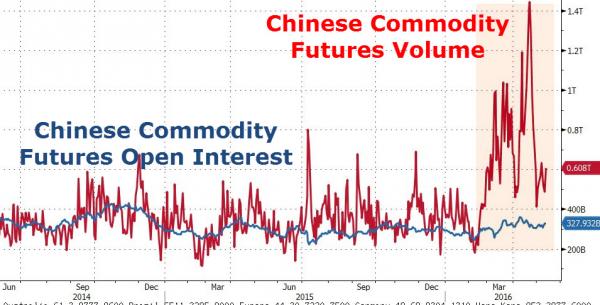

So it is not difficult to imagine a similar frenzy happening with yuan-denominated oil futures. It's just another chance for the big returns that Chinese investors have come to expect from the rigged-i-est of the world's rigged markets (to coin a phrase). If such a frenzy does eventuate, though, those investors may want to take note of what happened in China's commodities futures market in 2016. When things got too hot, the Chinese government stepped in to tighten regulations, restrict trading hours and boost fees. In the oil futures space, too, the government can and will intervene whenever they don't like the direction of the market.

Having said all of that, make no mistake: the long-term trend, should it be allowed to continue, is toward the rise of the petroyuan. Consider:
All of these developments point the way toward a future where China and its trading relationships tip the scale away from the petrodollar and toward the petroyuan. Assuming Beijing does loosen the reins and allow liberalization of the yuan, it will eventually make more sense for nations to settle their bilateral trade with China in yuan directly rather than going through the dollar.

Of course, this all depends on these trends being allowed to continue, which is still an open question. After all, we know what happens to nations that try to step out from under the petrodollar umbrella.

At any rate, don't look for the world to change overnight. But historians of a future era may just be recording March 26, 2018 as the day the change started.

UPDATE - China to start paying yuan for oil


No sooner had I penned my editorial on how "The Petroyuan Was Born This Week" then the next piece of the puzzle arrived: China is set to start buying oil directly with yuan this year. You may not know it, but this could be one of the most important stories of the decade.

Monday, 2 April 2018

Trade wars and China' move away from the dollar

China Slaps Tariffs On US Imports Including Pork, Nuts And Wine


1 April, 2018


As previewed one week ago, on Sunday China unveiled new retaliatory duties on US food imports including pork, nuts, wine and fruits of between 15% and 25% in response to Trump administration’s Section 232 tariffs (not to be confused with the $60BN in Section 301 tariffs unveiled subsequently) on steel and aluminum imports.

In a statement posted on China's Ministry of Finance website, China’s Customs Tariffs Commission confirmed reports from March 23, stating that additional duties on 128 kinds of products of US origin would be introduced from Monday "in order to safeguard China’s interests and balance the losses caused by the United States additional tariffs."

As was already known, the highest tariffs of 25% will be imposed on top of existing duties on imports of US scrap aluminium and various kinds of frozen pork. A lower, 15% tariff, will be slapped on dozens of US foods including wine, fresh and dried fruits such as cherries, nuts such as almonds and pistachios, and various kinds of rolled steel bars

As the FT notes, the list was consistent with measures proposed by Beijing last month when it said it was planning tariffs on $3BN of US imports. The response was seen as relatively measured since it left out key US exports to China such as soyabeans, of which the US exported some $14bn last year. Since Beijing has yet to retaliate to the 25% duty on up to $60bn of annual imports from China that Trump promised later last month, it is almost guaranteed that Beijing will make a tougher response in the future.

While most analysts say Beijing is reluctant to escalate trade disputes with Washington, as its mercantilist economy  would have more to lose in any trade war, some influential commentators in China have called for a more robust response to the US’s next set of tariffs, the details of which are yet to be announced but which are expected to be aimed at strategic sectors such as robotics, which Beijing is promoting as part of its industrial policy.

Additionally, as the FT notes, retaliating against soyabean shipments could have a big impact on US farmers, many from states that voted for Mr Trump in the 2016 presidential election. But it would also involve significant pain for China. The country relies heavily on the US for the product, which is used as an animal feed.

For now, however, and as laid out below, items on Beijing’s original hit-list, issued on March 23, includes 128 products split into seven groups and including U.S. pork, recycled aluminum, steel pipes, fruit and wine. The Chinese ministry will implement measures in two stages: first, a 15% tariff on 120 products including steel pipes, dried fruit and wine, and later, a 25% tariff on pork and recycled aluminum.

he full list of US imports targeted by China is below


In Unprecedented Move, China Plans To Pay For Oil Imports With Yuan Instead Of Dollars


Zero Hedge,
1 April, 2018


Just days after Beijing officially launched  Yuan-denominated crude oil futures (with a bang, as shown in the chart below, surpassing Brent trading volume) which are expected to quickly become the third global price benchmark along Brent and WTI, China took the next major step in the challenging the Dollar's supremacy as global reserve currency (and internationalizing the Yuan) when on Thursday Reuters reported that China took the first steps to paying for crude oil imports in its own currency instead of the US Dollars.

A pilot program for yuan payment could be launched as soon as the second half of the year and regulators have already asked some financial institutions to "prepare for pricing crude imports in the yuan", Reuters sources reveal.


According to the proposed plan, Beijing would start with purchases from Russia and Angola, two nations which, like China, are keen to break the dollar’s global dominance. They are also two of the top suppliers of crude oil to China, along with Saudi Arabia.

A change in the default crude oil transactional currency - which for decades has been the "Petrodollar", blessing the US with global reserve currency status - would have monumental consequences for capital allocations and trade flows, not to mention geopolitics: as Reuters notes, a shift in just a small part of global oil trade into the yuan is potentially huge. "Oil is the world’s most traded commodity, with an annual trade value of around $14 trillion, roughly equivalent to China’s gross domestic product last year." Currently, virtually all global crude oil trading is in dollars, barring an estimated 1 per cent in other currencies. This is the basis of US dominance in the world economy.

However, as shown in the chart below which follows the first few days of Chinese oil futures trading, this status quo may be changing fast.


Superficially, for China it would be a matter of nationalistic pride to see oil trade transact in Yuan: "Being the biggest buyer of oil, it’s only natural for China to push for the usage of yuan for payment settlement. This will also improve the yuan liquidity in the global market,” said one of the people briefed on the matter by Chinese authorities.

There are other considerations behind the launch of the Yuan-denominated oil contract as Goldman explains:
  • A commercial benchmark and hedging tool. Until now, Chinese oil imports were based on FOB benchmarks, with long-term procurement contracts settling off Platts Oman/Dubai or Dated Brent. The INE contract has therefore the potential to become the pricing reference for CIF China crude oil, enabling corporate financial hedging. Its warehouse structure is however likely to limit its use for physical crude delivery and may in fact at times reduce its hedge efficiency.

  • A new investment vehicle for onshore investors. The majority of China commodity futures trading volumes are from retail investors, yet these had until now little ability to trade oil futures. China’s capital control was the main bottleneck  to trading contracts like Brent as authorities only allow $50,000 outflow a year per person. While several petrochemical and bitumen contracts already trade in China, INE will be the first contract for crude oil, likely drawing significant interest.

  • Direct access to China’s commodity markets for offshore investors. China offers deep and liquid commodity markets to its onshore investors. Due to China’s tight capital controls, however, foreign investors have so far only been able to trade these through qualified onshore subsidiaries. The INE contract opens up the first channel for offshore investors to trade in its onshore commodity market, with both the USD deposit and capital gains transferable back to offshore accounts. The government further announced last week that it would waive income taxes for foreign investors trading these new contracts for the first three years. The obligation to trade in Yuan will also add a currency risk exposure to offshore investors. We illustrate in Exhibit 6 a likely template (amongst others) of how overseas investors will be able to access INE liquidity.

The danger, of course, is that such a shift would also boost the value of the Yuan, hardly what China needs considering it was just two a half years ago that Beijing launched a controversial Yuan devaluation to boost its exports and economy.
Still, in light of the relative global economic stability, Beijing may be willing to take the gamble on a stronger Yuan if it means greater geopolitical clout and further acceptance of the renminbi.

Which is why restructuring oil fund flows may be the best first step: as of this moment, China is the world’s second-largest oil consumer and in 2017 overtook the United States as the biggest importer of crude oil; its demand is a key determinant of global oil prices.


If China's plan to push the Petroyuan's acceptance proves successful, it will result in greater momentum across all commodities, and could trigger the shift of other product payments to the yuan, including metals and mining raw materials.
Besides the potential of giving China more power over global oil prices, "this will help the Chinese government in its efforts to internationalize yuan," said Sushant Gupta, research director at energy consultancy Wood Mackenzie. In a Wednesday note, Goldman Sachs said that the success of Shanghai’s crude futures was “indirectly promoting the use of the Chinese currency (which, however as noted above, has negative trade offs as it would also result in a stronger Yuan, something the PBOC may not be too excited about).

Meanwhile, China is wasting no time, and Unipec, the trading arm of Asia’s largest refiner Sinopec already signed a deal to import Middle East crude priced against the newly-launched Shanghai crude futures contractwhich incidentally is traded in Yuan.

The bottom line here is whether Beijing is indeed prepared and ready to challenge the US Dollar for the title of global currency hegemon. As Rueters notes, China’s plan to use yuan to pay for oil comes amid a more than year-long gradual strengthening of the currency, which looks set to post a fifth straight quarterly gain, its longest winning streak since 2013.

In a sign that China's recent Draconian capital control crackdowns have sapped market confidence in a freely-traded Yuan, the currency retained its No.5 ranking as a domestic and global payment currency in January this year, unmoved from a year ago, but its share among other currencies fell to 1.7 percent from 2.5 percent, according to industry tracker SWIFT.
A slew of measures put in place in the last 1-1/2 years to rein in capital flowing out of the country amid a slide in yuan value has taken off some its shine as a global payment currency.
But the yuan has now appreciated 3.4 percent against the dollar so far this year, with solid gains in recent sessions.
For PBOC and other regulators, internationalization of the yuan is clearly one of the priorities now, and if this plan goes off smoothly then they can start thinking about replicating this model for other commodities purchases,” said a Reuters source.

Still, it will be a long and difficult climb before the Yuan can challenge the dollar and for Beijing to shift the bulk of its commodity purchases to the yuan because of the currency’s illiquidity in forex markets. According to the latest BIS Triennial Survey, nearly 90% of all transactions in the $5 trillion-a-day FX markets involved the dollar on one side of a trade, while only 4% use the yuan.

* * *
Still, not everyone is convinced that the new Yuan-denominated contract will create a "petro-yuan" as the following take from Goldman highlights:
The launch of the INE contract is not just about oil, as it will also be the first Yuan denominated commodity contract tradable by offshore investors. Such a set-up meets the PBOC’s monetary policy committee goal to raise the profile of its currency in the pricing of commodities. It has raised however the question of whether the INE contract is an incremental step in achieving the currency reserve status for the Yuan. We do not believe so.
While the INE launch does represent an additional step in the CNY internationalization, the CNY denomination of the INE contract does not in itself imply CNY investments. The INE contract does not represent an opening of China’s capital accounts since foreign deposits operate in a closed circuit, deposited in designated accounts and not to be used to purchase other domestic assets. In practice, the collateral deposit and any capital gains can be transferred back to offshore accounts. The potential for greater foreign ownership of Chinese assets is therefore not impacted by CNY oil invoicing and would require instead oil exporters to recycle their proceeds in local assets, for example. The incentive to do this has not changed with the introduction of the INE contracts. In particular, most Middle East oil producers still have currencies pegged to the dollar and limited ability to hedge CNY exposure.

Whether or not Goldman is right remains to be seen, however it is undeniable that a monumental change is afoot in global capital flows, where the US - whether Beijing wants to or not - will soon be forced to defend its currency status as oil exporters (and investors in this highly financialized market) will now have a choice: go with US hegemony, or start accepting Yuan in exchange for the world's most important commodity.

Sunday, 1 April 2018

China Plans To Pay For Oil Imports With Yuan Instead Of Dollars

In Unprecedented Move, China Plans To Pay For Oil Imports With Yuan Instead Of Dollars

31 March, 2018

Just days after Beijing officially launched  Yuan-denominated crude oil futures (with a bang, as shown in the chart below, surpassing Brent trading volume) which are expected to quickly become the third global price benchmark along Brent and WTI, China took the next major step in the challenging the Dollar's supremacy as global reserve currency (and internationalizing the Yuan) when on Thursday Reuters reported that China took the first steps to paying for crude oil imports in its own currency instead of the US Dollars.

A pilot program for yuan payment could be launched as soon as the second half of the year and regulators have already asked some financial institutions to "prepare for pricing crude imports in the yuan", Reuters sources reveal.

According to the proposed plan, Beijing would start with purchases from Russia and Angola, two nations which, like China, are keen to break the dollar’s global dominance. They are also two of the top suppliers of crude oil to China, along with Saudi Arabia.

A change in the default crude oil transactional currency - which for decades has been the "Petrodollar", blessing the US with global reserve currency status - would have monumental consequences for capital allocations and trade flows, not to mention geopolitics: as Reuters notes, a shift in just a small part of global oil trade into the yuan is potentially huge. "Oil is the world’s most traded commodity, with an annual trade value of around $14 trillion, roughly equivalent to China’s gross domestic product last year." Currently, virtually all global crude oil trading is in dollars, barring an estimated 1 per cent in other currencies. This is the basis of US dominance in the world economy.

However, as shown in the chart below which follows the first few days of Chinese oil futures trading, this status quo may be changing fast.


Superficially, for China it would be a matter of nationalistic pride to see oil trade transact in Yuan: "Being the biggest buyer of oil, it’s only natural for China to push for the usage of yuan for payment settlement. This will also improve the yuan liquidity in the global market,” said one of the people briefed on the matter by Chinese authorities.

There are other considerations behind the launch of the Yuan-denominated oil contract as Goldman explains:
  • A commercial benchmark and hedging tool. Until now, Chinese oil imports were based on FOB benchmarks, with long-term procurement contracts settling off Platts Oman/Dubai or Dated Brent. The INE contract has therefore the potential to become the pricing reference for CIF China crude oil, enabling corporate financial hedging. Its warehouse structure is however likely to limit its use for physical crude delivery and may in fact at times reduce its hedge efficiency.

  • A new investment vehicle for onshore investors. The majority of China commodity futures trading volumes are from retail investors, yet these had until now little ability to trade oil futures. China’s capital control was the main bottleneck  to trading contracts like Brent as authorities only allow $50,000 outflow a year per person. While several petrochemical and bitumen contracts already trade in China, INE will be the first contract for crude oil, likely drawing significant interest.

  • Direct access to China’s commodity markets for offshore investors. China offers deep and liquid commodity markets to its onshore investors. Due to China’s tight capital controls, however, foreign investors have so far only been able to trade these through qualified onshore subsidiaries. The INE contract opens up the first channel for offshore investors to trade in its onshore commodity market, with both the USD deposit and capital gains transferable back to offshore accounts. The government further announced last week that it would waive income taxes for foreign investors trading these new contracts for the first three years. The obligation to trade in Yuan will also add a currency risk exposure to offshore investors. We illustrate in Exhibit 6 a likely template (amongst others) of how overseas investors will be able to access INE liquidity.

The danger, of course, is that such a shift would also boost the value of the Yuan, hardly what China needs considering it was just two a half years ago that Beijing launched a controversial Yuan devaluation to boost its exports and economy.
Still, in light of the relative global economic stability, Beijing may be willing to take the gamble on a stronger Yuan if it means greater geopolitical clout and further acceptance of the renminbi.
Which is why restructuring oil fund flows may be the best first step: as of this moment, China is the world’s second-largest oil consumer and in 2017 overtook the United States as the biggest importer of crude oil; its demand is a key determinant of global oil prices.
If China's plan to push the Petroyuan's acceptance proves successful, it will result in greater momentum across all commodities, and could trigger the shift of other product payments to the yuan, including metals and mining raw materials.
Besides the potential of giving China more power over global oil prices, "this will help the Chinese government in its efforts to internationalize yuan," said Sushant Gupta, research director at energy consultancy Wood Mackenzie. In a Wednesday note, Goldman Sachs said that the success of Shanghai’s crude futures was “indirectly promoting the use of the Chinese currency (which, however as noted above, has negative trade offs as it would also result in a stronger Yuan, something the PBOC may not be too excited about).
Meanwhile, China is wasting no time, and Unipec, the trading arm of Asia’s largest refiner Sinopec already signed a deal to import Middle East crude priced against the newly-launched Shanghai crude futures contractwhich incidentally is traded in Yuan.

The bottom line here is whether Beijing is indeed prepared and ready to challenge the US Dollar for the title of global currency hegemon. As Rueters notes, China’s plan to use yuan to pay for oil comes amid a more than year-long gradual strengthening of the currency, which looks set to post a fifth straight quarterly gain, its longest winning streak since 2013.

In a sign that China's recent Draconian capital control crackdowns have sapped market confidence in a freely-traded Yuan, the currency retained its No.5 ranking as a domestic and global payment currency in January this year, unmoved from a year ago, but its share among other currencies fell to 1.7 percent from 2.5 percent, according to industry tracker SWIFT.
A slew of measures put in place in the last 1-1/2 years to rein in capital flowing out of the country amid a slide in yuan value has taken off some its shine as a global payment currency.
But the yuan has now appreciated 3.4 percent against the dollar so far this year, with solid gains in recent sessions.
For PBOC and other regulators, internationalization of the yuan is clearly one of the priorities now, and if this plan goes off smoothly then they can start thinking about replicating this model for other commodities purchases,” said a Reuters source.

Still, it will be a long and difficult climb before the Yuan can challenge the dollar and for Beijing to shift the bulk of its commodity purchases to the yuan because of the currency’s illiquidity in forex markets. According to the latest BIS Triennial Survey, nearly 90% of all transactions in the $5 trillion-a-day FX markets involved the dollar on one side of a trade, while only 4% use the yuan.

* * *
Still, not everyone is convinced that the new Yuan-denominated contract will create a "petro-yuan" as the following take from Goldman highlights:
The launch of the INE contract is not just about oil, as it will also be the first Yuan denominated commodity contract tradable by offshore investors. Such a set-up meets the PBOC’s monetary policy committee goal to raise the profile of its currency in the pricing of commodities. It has raised however the question of whether the INE contract is an incremental step in achieving the currency reserve status for the Yuan. We do not believe so.
While the INE launch does represent an additional step in the CNY internationalization, the CNY denomination of the INE contract does not in itself imply CNY investments. The INE contract does not represent an opening of China’s capital accounts since foreign deposits operate in a closed circuit, deposited in designated accounts and not to be used to purchase other domestic assets. In practice, the collateral deposit and any capital gains can be transferred back to offshore accounts. The potential for greater foreign ownership of Chinese assets is therefore not impacted by CNY oil invoicing and would require instead oil exporters to recycle their proceeds in local assets, for example. The incentive to do this has not changed with the introduction of the INE contracts. In particular, most Middle East oil producers still have currencies pegged to the dollar and limited ability to hedge CNY exposure.
Whether or not Goldman is right remains to be seen, however it is undeniable that a monumental change is afoot in global capital flows, where the US - whether Beijing wants to or not - will soon be forced to defend its currency status as oil exporters (and investors in this highly financialized market) will now have a choice: go with US hegemony, or start accepting Yuan in exchange for the world's most important commodity