Showing posts with label Peak Oil. Show all posts

Monday, 16 September 2019

Australia (and New Zealand's energy nightmare

The problem is the same in New Zealand. The sole difference is that no one here will acknowledge it, still less write about it.

***

A comment from Godlike Productions
“To all the stupid people that think the US is a net exporter of oil please read

The US is the largest producer, but your reserves are not really that impressive. The US still Imports over 7 million barrels a day. You are not a net exporter and you only export your shale oil because you do not have one processing facility that can frack light crude. Do you have any idea what will happen to your economy in 5 days if Iran point half their missiles at Qutar, Saudi Arabia and UAE oil facilities?

Iran has the ability to destroy your way of life for a long time, so before you beat your war drums once again, you better understand the pain you will feel because this time it will be very different. If you really understand prophecy Babylon (they will get drunk on her wine) is in actual fact Saudi Arabia and not the USA. Oils the wine you are drinking, so stop puffing up your chests.


Great pain and suffering is coming your way.”

Attack on Saudi oil facility could cause nightmare situation for Australia

For decades federal politicians have ignored appeals to preserve Australia’s strategic oil reserve. Now we have just three weeks of fuel in the tank.

16 September, 2019

Australia’s worst nightmare is unfolding in the Middle East. Decades of neglect have left us with just three weeks of fuel in the tank. Now, with attacks on Saudi oil production, rationing is a genuine threat.

Last month, the International Crisis Group issued a stark warning: “A single attack by rocket, drone or limpet mine could set off a military escalation between the US and Iran … that could prove impossible to contain.”

This weekend, just such an attack took place.

Both the White House and Riyadh are refusing to rule out retaliation.
It’s a scenario that leaves Australia out on a limb.


Despite repeated warnings, successive governments have ignored international commitments to maintain a strategic stockpile of oil. Such reserves were designed to help see the country through an economic hiccup, an international incident or severe natural disaster.
Now, we’re facing just such a crisis.

Just one missile attack has choked up to 7 per cent of the world’s oil production. And analysts are already talking of price-spikes of up to $US10 per barrel.

While Saudi Arabia believes it can get one-third of lost production back online this week, the threat to supplies seems suddenly very real.
What if an all-out shooting war erupts?
NED-190-Dire Straits Australia sends warships to Straits of Hormuz - 0


ENERGY SECURITY
Australia’s federal politicians are quick to cry “energy security” when it comes to base-load electricity and coal-fired power plants. But in regards to maintaining a sensible strategic fuel-oil reserve, not so much.

In recent decades, the nation’s neglected oil refineries have been closed and tank farms sold off. In their place rise real estate developments and light industrial parks.

Everything seems fine, so long as the stream of supertankers keeps flowing into our ports.

But a flaring of tensions between the US and Iran earlier this year put that into doubt.

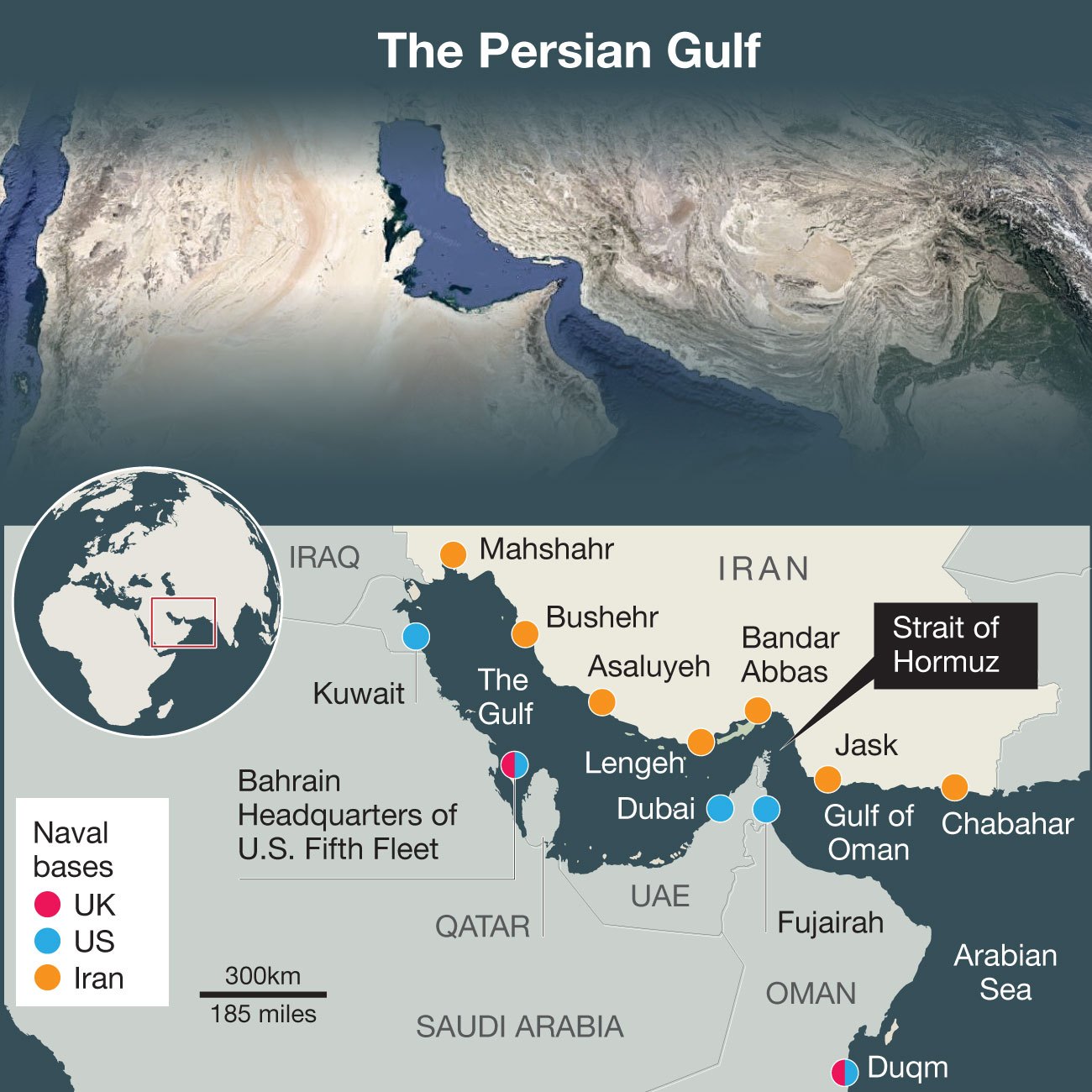
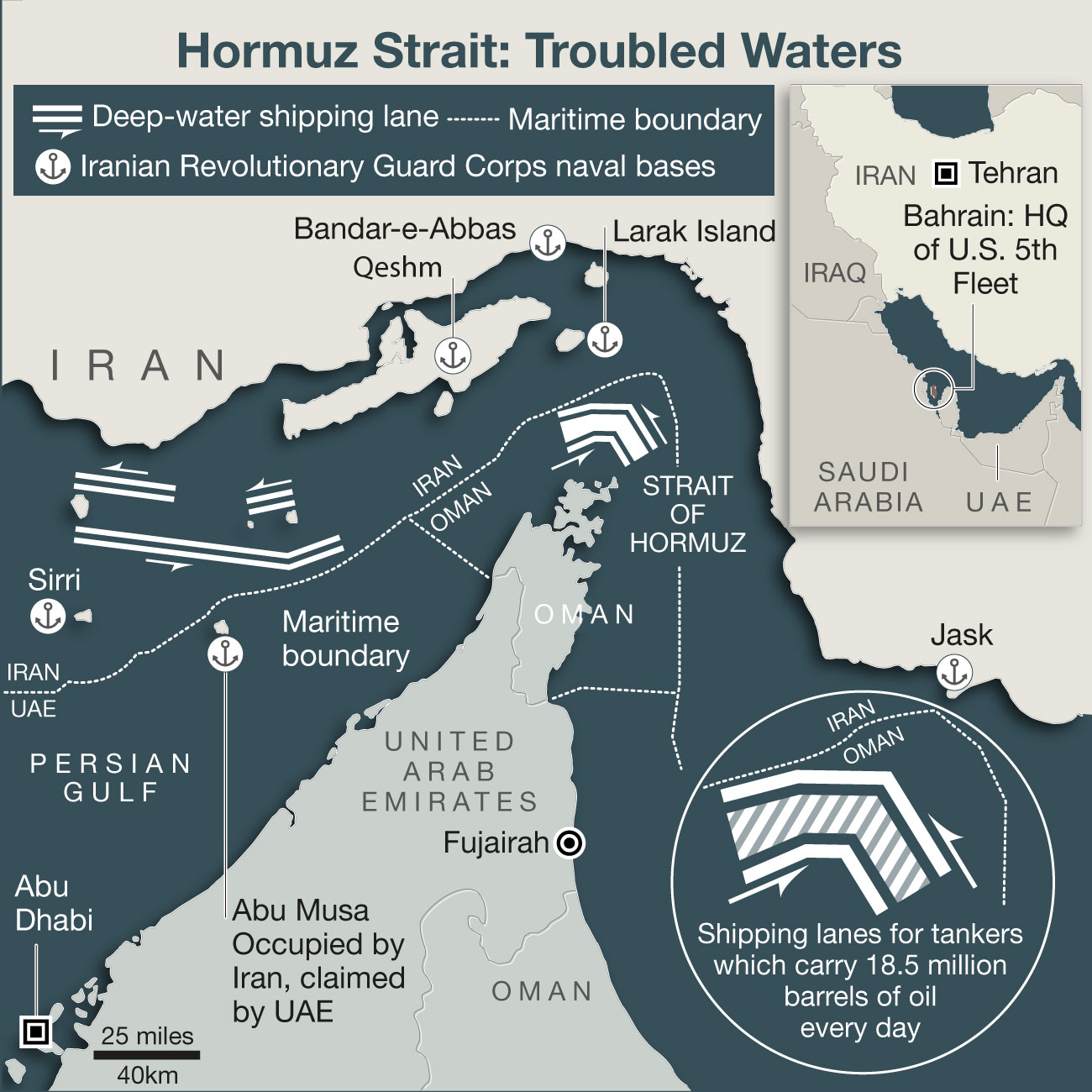
“Fifteen to 16 per cent of crude oil and 25 to 30 per cent of refined oil destined for Australia transits through the Strait of Hormuz. So it’s a potential threat to our economy,” Prime Minister Scott Morrison admitted last month.


Defence Minister Reynolds followed up by declaring: “So we’re doing everything that we can to be a good government and to be prudent, to make sure that we get a continuity of supply.”
And that meant approaching the United States, cap in hand.

“We’ve decided to begin negotiations with the United States to ensure that we have a strategic reserve in place for circumstances that could emerge, for scenarios that are unfavourable to Australia. This is a sensible, low-cost way of going about this,” Mr Taylor said.

So, in return for promises for a share of the US strategic crude hoard, if the need arises, Australia committed a naval frigate and a surveillance aircraft to the Persian Gulf.

That crude will not be kept on Australian soil. Its supply relies on the availability of commercial tankers to ship it here, as Australia has long since sold off all of its own. And it is dependent upon the world of US President Donald Trump.


And his mood towards nations relying on the US for oil security has been … testy.
Australia’s supply of oil relies heavily on its relationship with the US. Picture: Mick Tsikas/AAP
Australia’s supply of oil relies heavily on its relationship with the US. Picture: Mick Tsikas/AAPSource:AAP
“So why are we protecting the shipping lanes for other countries (many years) for zero compensation,” Mr Trump tweeted in June. “All of these countries should be protecting their own ships on what has always been … a dangerous journey. We don’t even need to be there in that the US has just become (by far) the largest producer of Energy anywhere in the world!”

Now, Australia is facing the most significant disruption in oil flows since the invasion of Kuwait by Iraq in 1990. Then, like now, some four to five million barrels of oil per day was taken out of the system.

Australian Strategic Policy Institute analyst Dr Malcolm Davis warns: “The reality is that we’re woefully underprepared for a disruption to fuel supplies.”

CONFIDENCE CRISIS

The attack on Saudi Arabia’s vital oil infrastructure has turned off the taps for about 5.7 million barrels worth of daily production.

That’s about half the nation’s total production, or between 5 and 7 per cent of worldwide output.


Saudi officials insist they can restore the flow of crude in coming days: but not through the damaged oil facilities. Instead, they’ll open up their inventories and ramp-up production elsewhere.
Satellite image shows thick black smoke rising from Saudi Aramco's Abqaiq oil processing facility in Buqyaq, Saudi Arabia. Picture: Planet Labs Inc via AP
Satellite image shows thick black smoke rising from Saudi Aramco's Abqaiq oil processing facility in Buqyaq, Saudi Arabia. Picture: Planet Labs Inc via APSource:AP
But Saudi Oil production company Aramco now says cruise missiles — not drones — hit 15 structures at its Abqaiq and Khurais facilities.

Abqaiq is the world’s biggest crude-stabilisation facility, refining some seven million barrels a day. Khurais produces about 1.5 million barrels of crude a day.

“It is definitely worse than what we expected in the early hours after the attack, but we are making sure that the market won’t experience any shortages until we’re fully back online,” one Saudi official told media.


But the unspoken fear remains: what of its other facilities, also likely well within reach of a missile attack?
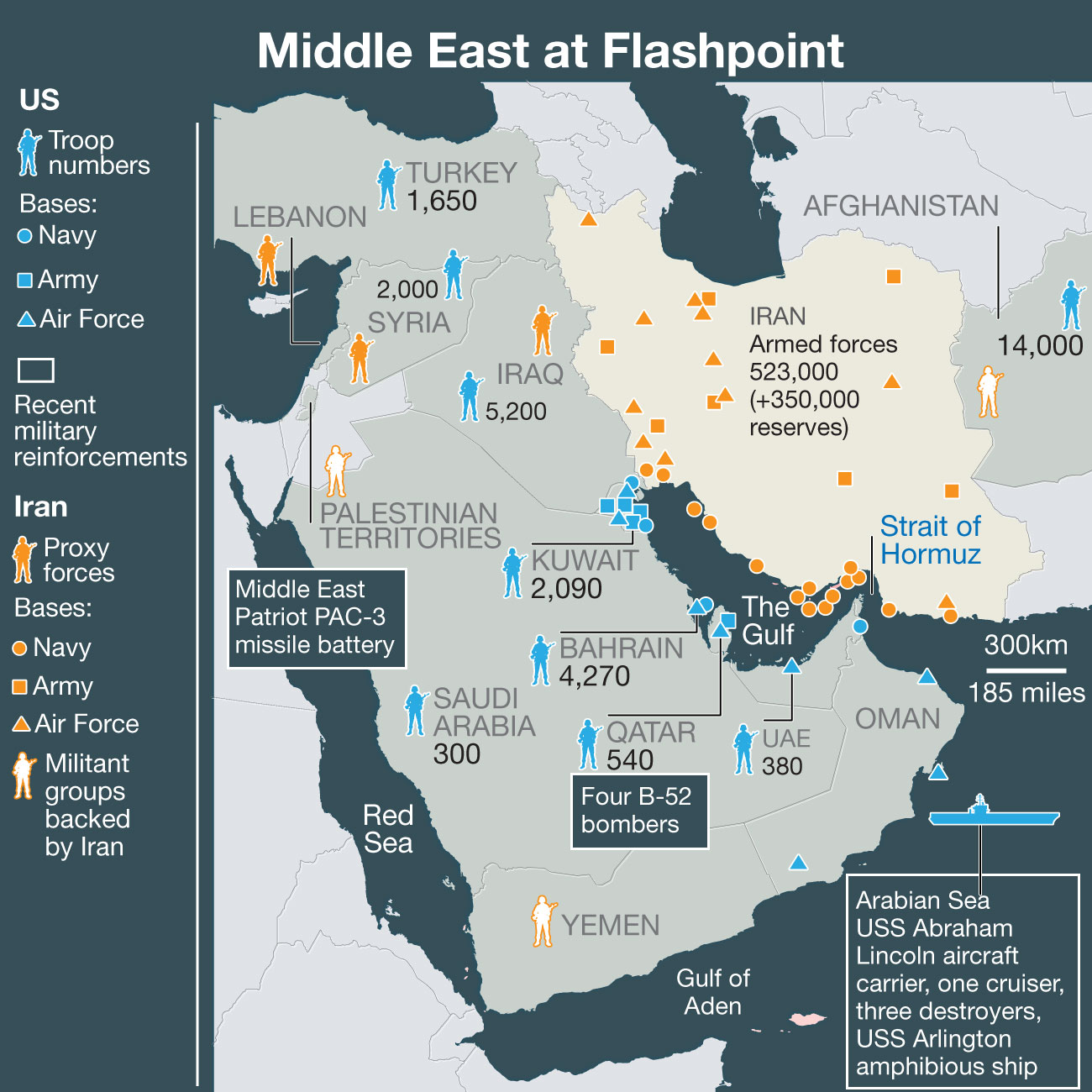
The use of cruise missiles represents a significant escalation of tensions in the Middle East, which has been seen a “proxy war” between Iran, the US and Saudi Arabia being fought out in Syria, Iraq and Yemen.

While the antagonists have been reluctant to square-off face-to-face, that may all be about to change.

The International Energy Agency has issued a statement saying it was in contact with Saudi authorities, primary producers and consumer nations. 

“For now, markets are well supplied with ample commercial stocks,” the statement reads. “The IEA is monitoring the situation in Saudi Arabia closely.”

RATIONING GETS REAL

It’s something not seen since the 1970s. But soon the prospect of Australia’s petrol stations being locked up increases with every new incident in the Persian Gulf.

Most of Australia’s fuel comes from refineries in Japan and South Korea.

Both those countries get most of their raw crude oil from the Middle East. And analysts are saying Asian suppliers are likely to be the most disrupted by the weekend attacks.

But any pain Australia’s economy suffers — at least in the short term — is of its own doing.

After the establishment of the International Energy Agency following the mid-1970s oil crisis, Australia signed a commitment to establish an oil buffer. The goal was for member nations to have a reserve to buy themselves time in the event of a crisis.

But Australia has failed to meet that obligation for over a decade.

The head of the Australian Strategic Policy Institute Peter Jennings told ABC radio that the only way to provide a real buffer was to restore our own onshore strategic oil reserves.

That means more than just oil tanks. It also means rebuilding the nation’s ability to refine that oil into usable products.

That would cost billions.

“The government doesn’t want to spend the money,” Mr Jennings says. “But it’s now looking at a strategic situation where fuel shortages could happen very quickly. And we’ve really got to find a way to figure out a plan.”

And he warns against relying upon the US being there for us in our hour of need: “Look, it may help to mitigate the problem to some extent. But, you know, in a crisis situation the Americans will — without doubt — put their own priorities first.”

US RELIANCE

The United States is insulated from the international fallout of the Saudi attacks through its own oil production industry and vast strategic reserves.

Government officials have already indicated they may release some of their emergency stockpiles to prevent an economically damaging price spike.

It all depends upon US President Donald Trump.

He has the power to authorise an emergency release from its 650 million barrels of stockpiled crude. These are held in heavily guarded underground storage caverns in Texas and Louisiana.

It represents about one month worth of US consumption.


But Energy Secretary Rick Perry “stands ready to deploy resources from the Strategic Petroleum Oil Reserves if necessary to offset any disruptions to oil markets as a result of this act of aggression,” a department statement reads.

Sunday, 12 May 2019

Trump's byline was "You're Fired"


Dmitry Orlov is as incisive as usual. Hew manages to get to the essence of things.

America, You Are Fired!

Dmitry Orlov


7 May, 2019


Some ironies are just too precious to pass by. The 2016 US presidential elections gave us Donald Trump, a reality TV star whose famous tag line from his show “The Apprentice” was “You are fired!” Focus on this tag line; it is all that is important to this story. Some Trump Derangement Disorder sufferers might disagree. This is because they are laboring under certain misapprehensions: that the US is a democracy; or that it matters who is president. It isn’t and it doesn’t. By this point, the choice of president matters as much as the choice of conductor for the band that plays aboard a ship as it vanishes beneath the waves.


I have made these points continuously since before Trump got into office. Whether or not you think that Trump was actually elected, he did get in somehow, and there are reasons to believe that this had something to do with his wonderfully refreshing “You are fired!” tag line. It’s a fair guess that what motivated people to vote for him was their ardent wish that somebody would come along and fire all of the miscreants that infest Washington, DC and surrounding areas. Alas, that he couldn’t do. Figurehead leaders are never granted the authority to dismantle the political establishments that install them. But that is not to say that it can’t be done at all.


What happened instead was that the political establishment spent two years thrashing about in search of a reason to say “You are fired!” to Trump but has been unable to find one, and so Trump remains in office, although to say that he “remains in power” would be to invite sardonic laughter from anyone who knows what real political power smells like. Trump is but a prisoner in the White House, just like his predecessor was. Ironically, the quest for Trump’s impeachment has been fruitless as far as firing him, but most fruitful in terms of enhancing his ability to not only fire lots of establishment figures but perhaps even send them to jail—with the help of the Justice Department—and his character traits of extreme rancor, spitefulness and vindictiveness should be most conducive toward that end, making for a fun spectacle. His numerous enemies and detractors may yet look back wistfully on the halcyon days when they could lambaste him with impunity.


The quest to stop Trump started well before the election, with Obama and the Clintons collaborating on misusing federal resources to dig up dirt on Trump; specifically, evidence of “Russian collusion”… and they couldn’t find any. They did manage to find some “Russian meddling” (in the form of Facebook clickbait ads) but the evidence they dug up was too ridiculous to show in court. Too bad they didn’t look for Ukrainian collusion and meddling, or Israeli collusion and meddling, or Saudi collusion and meddling, because then they would have found plenty—enough to not only knock Hillary Clinton out of the running but also to lock her up. It would have been a constructive, useful exercise for them to go look for Ukrainian political meddling, but as I’ve explained before the American modus operandi is quite the opposite, and it compelled them to go after Russia instead.


In any case, the complete failure of Mueller’s team to find anything actionable against Trump has left him grasping at straws, and the one straw he seized upon was the vague possibility of accusing Trump of obstructing justice, based on 18 U.S.C. § 1512(c)(2), which specifies that someone is guilty of obstruction as follows: “…obstructs, influences or impedes any official proceeding, or attempts to do so.” Apparently, a neuron snapped inside poor Mueller’s head making him think that his own investigation was an “official proceeding,” although if you look up this term you’ll find that it relates to things happening inside courtrooms, with one or more judges presiding, and to launch such a proceeding requires evidence that a crime has been committed. If there is no crime, then there is no proceeding, and nothing to obstruct, influence or impede.


There ensued a sort of bureaucratic danse macabre. Normally, the Attorney General has the authority to provide guidance on such questions, and AG Jeff Sessions could have told Mueller that 18 U.S.C. § 1512(c)(2) is only relevant to court proceedings and that would have been it. But Sessions had the unfortunate luck of having had a casual chat with the amiable and roly-poly Russian ambassador Sergey Kislyak. By virtue of this little chat Sessions contaminated his precious bodily fluids (just breathing the same air as a Russian can be politically fatal, you know) and was forced to recuse himself from Mueller’s investigation. Trump’s legal team then reached out to William Barr, a former AG, and asked him to chime in. Barr wrote a memo clarifying the issue and sent it to deputy AG Rod Rosenstein, who remained as second-in-command at the Justice Department after Sessions’ recusal, and who should have read it, understood it and acted on it, terminating Mueller’s investigation, but somehow he didn’t.


The denouement of this bureaucratic danse macabre played out as follows. After the midterm elections Trump said “You’re fired!” to Jeff Sessions and William Barr was confirmed as AG. Barr then said “You’re fired!” to both Rod Rosenstein and Robert Mueller for being unpardonably dense. Barr also made it clear that he plans to leave no stone unturned in investigating this fantastic instance of misuse of official resources and prosecutorial misconduct. This will be fun to watch, if you have nothing more important to pay attention to, but I suspect that the phrase “You’re fired!” will continue to bounce around the halls of Washington like a rubber grenade for a good long time. There are, however, things to pay attention to that are far more important.


There is a lot happening in the world all at once right now. The entire planet is rapidly reconfiguring itself. The world is begging for a new, post-capitalist, post-industrial order to be born, but the overabundance of natural resources that have made previous such revolutions possible (coal for the age of steam, oil for the current oil age) simply no longer exist. All that remains is optimizations, enhancements and reconfigurations of the existing order of things, cutting out that which is most harmful and most dysfunctional. To this end, Western European nations are attempting to reclaim the sovereignty they ceded to the United States and the European Union while Eurasia is coming together to form a massive economic and security conglomerate centered on China and Russia. Both are playing for time, because redirecting trade and financial flows away from the US is quite a process.


The world’s central banks are doing their best to get rid of their US dollar reserves and to buy gold, which, as of this April, they are allowed to consider a risk-free financial asset. Many people now expect gold to go up as a result, but that expectation is based on an illusion. Think of gold as a lighthouse and of fiat currencies as sinking ships: those aboard them may look around and decide that the lighthouse is going up, but that’s just an optical illusion. The purchasing power of fiat currencies is sure to fall (some more than others). The purchasing power of gold will seem to increase, but that will also be an illusion: it will appear to rise against the backdrop of crashing markets, in real estate and physical plant especially. But overall the purchasing power of gold will drop too, because the future purchasing power of any financial asset is determined by just one thing: energy, fossil fuel energy in particular, and energy from crude oil above all. Without energy, nothing within an economy moves, unless it is an agrarian economy based on fodder and animal muscle power.


A particularly interesting piece to the gold story is that it may turn out that much of the gold supposedly stored in the US may in fact be missing. Since Nixon closed the “gold window” in 1971, ending the convertibility of US dollar for gold bullion, and until recently the US dollar has been able to retain its position as a global reserve currency by an act of sheer financial levitation, but that bit of magic may have actually been sleight of hand: behind-the-scenes gold sales to the largest US creditors. When various countries, Germany in particular, have attempted to repatriate their gold, which they had entrusted to the US, they were rebuffed, and when they did succeed, the gold that was returned wasn’t the same gold, and it took a long time. The US hunger for gold has forced it to conduct rather unseemly heists, stealing the gold reserves of Iraq, Libya and the Ukraine. Thus, when the time comes for the US to defend its currency by employing its hoard of gold, it may turn out that the cupboard is bare.


Gold is becoming increasingly important, but energy is more important still, and always will be. After being pushed into the background for a few years, questions of energy supply and energy security are once again becoming front and center. Peak Oil turns out to not be dead after all; it was just postponed by a few years by virtue of the US burning through a huge pile of retirement savings while exploiting shale oil. But now most of the sweet spots have been tapped already and diminishing returns on continued frantic drilling are being added to the fracking industry’s permanently dismal financial returns. In the meantime, Russia has built several natural gas liquefaction plants, a new oil pipeline to China and two new gas pipelines to Turkey and Germany, and to Western Europe beyond, which will circumvent the Ukraine, reducing its value as a geopolitical asset to zero.


A desperate ploy by the US to seize control of Venezuela’s oil fields has backfired in a most embarrassing fashion; there, recent developments have brought up an important question: What if the US threw a color revolution but nobody came? As I had predicted would happen six years ago in my book The Five Stages of Collapse the Color Revolution Syndicate has steadily lost its mojo. In spite of all the bluster by various Washington foreign policy has-beens, a US military intervention in Venezuela is unthinkable: Venezuela’s Russian S-300 air defense systems effectively make it a no-fly zone for US planes. Meanwhile, the US, having cut itself off from Venezuela’s oil using its own sanctions, has been forced to resort to importing Russian oil. (For now, but not for much longer, the US has a glut of low-quality light crude from fracking, but it’s useless for making diesel and other distillates unless it is blended with heavier grades of crude, which have to be imported.)


Meanwhile, Russia and Belarus have been staging a noisy lover’s quarrel over Russian oil exports to Europe, much of which go through a Belarussian pipeline. Russia and Belarus—or Byelorussia, or White Russia—are not exactly distinct entities in most ways, and when they fight the bystanders should discount the foul language and instead look out for flying pots and cutlery. The result of this family spat is that White Russia will no longer supply the Ukraine with products distilled from Russian oil. Another odd development is that the Russian oil being piped to White Russia, and from thence to the EU, has become mysteriously contaminated and the flow has been stopped until the situation is resolved, causing a bit of a panic in Europe. The US volunteered to unseal its Strategic Petroleum Reserve to compensate, but then, in another bizarre twist, some of that oil too has turned out to have gone foul. More foul yet, the US has imposed unilateral sanctions on Iran, threatening anyone who imports Iranian oil, bringing up another important question: What is the US imposes unilateral sanctions on the whole world, and everybody just yawns?


Financially ruinous and generally nonsensical schemes such as tar sands, shale oil and industrial-scale photovoltaics, wind generation and electric cars will only accelerate the process of sorting nations into energy haves and energy have-nots, with the have-nots wiping themselves out sooner rather than later. Leaving aside various fictional and notional schemes (nuclear fusion, space mirrors, etc.) and focusing just on the technologies that already exist, there is only one way to maintain industrial civilization, and that is nuclear, based on Uranium 235 (which is scarce) and Plutonium 239 produced from Uranium 238 (of which there is enough to last for thousands of years) using fast neutron reactors. If you don’t like this choice, then your other choice is to go completely agrarian, with significantly reduced population densities and no urban centers of any size.


And if you do like this choice, then you have few alternatives other than to go with the world’s main purveyor of nuclear technology (VVER-series light water reactors, BN-series fast neutron breeder reactors and closed nuclear fuel cycle technology) which happens to be Russia’s state-owned conglomerate Rosatom. It owns over a third of the world nuclear energy market and has a portfolio of international projects stretching far into the future that includes as much as 80% of the reactors that are going to be built. The US hasn’t been able to complete a nuclear reactor in decades, the Europeans managed to get just one new reactor on line (in China) while Japan’s nuclear program has been in disarray ever since Fukushima and Toshiba’s financially disastrous acquisition of Westinghouse. The only other contenders are South Korea and China. Again, if you don’t like nuclear—for whatever reason—then you can always just buy yourself some pasture and some hayfields and start breeding donkeys.


This may seem like shocking news to someone who’s been exposed solely to mass media in the US and other Anglophone countries or in the EU. Well, it may be shocking, but it’s definitely not news: none of these developments is particularly new, and none of them is unforeseen. The high level of denial of all of the above issues in Washington, which has been ground zero in a powerful explosion of unreality, and in Western media generally, is also unsurprising; nor is it helpful. Upon finding these things out for yourself, you may be tempted to shout about them from rooftops. This, I dare say, would be inadvisable. The proper thing to do with people who insist on remaining in denial is to humor them, to run out the clock on any games they try to play with you, and then to politely bid them adieu. Indeed, this is what we are seeing: nobody particularly wants to negotiate with US officials but they do so anyway because, as every crisis negotiator knows, it is essential to keep talking, even if simply to stall for time. While they are talking the hostages—to Wall Street, to the Pentagon, to US Treasury and Federal Reserve—are quietly being evacuated. Time is running out for the US, and once it has run out, what we will hear, in a supreme twist of irony, is the whole world telling the US: “You’re fired!”