Showing posts with label Magnitsky. Show all posts

Monday, 3 September 2018

REPOSTED: The much-censored Browder film


I am reposting this as the film, posted on Vimeo, has been removed,presumably through the actions of William Browder


I have found a new version.

Bill Browder came to our attention at a press conference given by Trump and Putin where Putin stated that he wanted Browder interrogated for the embezzlement of large amounts of money from the Russian Federation.

I have finally tracked down a full English version of the documentary made by filmmaker Andrei Nekrasov that has been banned and practically impossible to find on the  internet.

It is a compelling documentary as the filmmaker, Mr Nekrasov, a stron opponent of Vladimir Putin started off as a believer of the Browder narrative but as he started to dig deeper he found discrepancies between the story and the actual documentary evidence.

BANNED DOCUMENTARY - The Magnitsky Act: Behind The Scenes (FULL / In English)


This is a must watch documentary that has been banned in the western world.
Despite all the threats of lawsuits and physical intimidation which hedge fund executive William Browder brought to bear over the past couple of months to ensure that a remarkable investigative film about the so-called Magnitsky case would not be screened anywhere, it was shown privately in a museum of journalism in Washington, D.C. but has otherwise been banned.


How Congress ‘Learns’ About Russia
Phillip Giraldi

9 August, 2017

Hedge-fund operator William Browder helped plunder Russia’s riches – and renounced his U.S. citizenship – but is still treated as a great truth-teller by a credulous Congress, notes ex-CIA officer Philip Giraldi at The American Conservative.


A congressman once admitted to me that he and his colleagues know a lot of things, generally speaking, but their knowledge only “extends about one inch deep.” In other words, the briefings provided by staffers and in committees is intended to touch only on what is important to know to look well informed in front of the C-SPAN cameras without any unnecessary depth that would only create confusion.
Hedge-fund executive William Browder in a 2015 deposition.

And the information provided must generally conform to what the congressmen already believe to be true and want to hear so no one will be embarrassed.
That such ignorance would be particularly notable in the realm of foreign policy should surprise no one because congressmen as a group are no longer very well educated. Few speak foreign languages and no one any longer studies the history or culture of any country but the United States, and sometimes not even that.

Some Congressmen nevertheless boast about all the countries they have visited to “fact find.” They fail to recognize how they travel in a bubble, whisked to foreign lands via military aircraft on the virtually worthless congressional delegations known as CODELS. On these trips, spouses go shopping while American legislators are briefed by the ambassador’s staff and the CIA station, both of which, for budget reasons, are more interested in demonstrating what a wonderful job they are doing rather than explaining the complexity of the local situation.
And that is followed by the obligatory visit to listen to the local head of state lie about how everything is going just fine in his country. Given the reality of garbage in, garbage out, it is no wonder that buffoons like Senators John McCain and Lindsey Graham are lauded as foreign-policy experts in the Republican Party. It’s called setting the bar really low.

For a Congress intent on appearing to be doing something while doing nothing, one of the worst time wasters is the committee hearing, where the senators and congressmen call in “experts” to explain to them why a certain policy is either worthwhile or useless. Of course, it usually doesn’t exactly play out that way, as the committee generally wants to hear testimony that supports its preconceptions about whatever is being discussed, so it only invites those to the party who will say what it wants to hear.

One-sided Hearings

To cite only one of many examples of Congress’s unwillingness to listen to any opinion that might challenge the establishment view, a February 16 hearing by the House Foreign Affairs Committee entitled “Iran on Notice” featured four “experts,” all of whom were hostile to Iran and advocates of “solutions” ranging from actively encouraging regime change to using military force. No one knowledgeable enough to explain Iran’s behavior and/or offer non-confrontational approaches was invited or asked to participate.
Film director Andrei Nekrasov, who produced “The Magnitsky Act: Behind the Scenes.”

I have been closely following some recent hearings that relate to Russia, most particularly the Senate Judiciary session that was supposed to look into the issue of registry under the Foreign Agents Registration Act of 1938 for Russian agents. The hearing, which started on July 26, and was extended to the following day, was entitled “Oversight of the Foreign Agents Registration Act and Attempts to Influence U.S. Elections: Lessons Learned from Current and Prior Administrations.”

The first day’s session included statements by three Justice Department and FBI officials regarding how the FARA legislation is enforced and how presumed violations of it are investigated. There were some specific comments and questions from individual senators regarding Russian and Saudi government attempts to influence opinion in the United States, but little in the way of drama.

The second day was for additional “expert testimony.” It consisted of billionaire hedge-fund director William Browder, who read a prepared statement and then responded to questions. (Video of the statement and the following discussion are available here, with Browder beginning at minute 24.) Browder, who clearly has his own agenda to debunk a film made last year attacking him and a narrative about a former employee Sergei Magnitsky that he has been promoting, was embraced by the senators, who should have known better.

Veteran award-winning journalist Robert Parry describes what took place: “…last week, Senate Judiciary Committee members sat in rapt attention as hedge-fund operator William Browder wowed them with a reprise of his Magnitsky tale and suggested that people who have challenged the narrative and those who dared air the documentary one time at Washington’s Newseum last year should be prosecuted for violating the Foreign Agent Registration Act (FARA).”
Browder’s Tall Tales
Not even one senator challenged William Browder’s sometimes extraordinary claims about Russia’s government in general and its President Vladimir Putin in particular, including that Putin is the richest man in the world due to all the money that he has stolen.
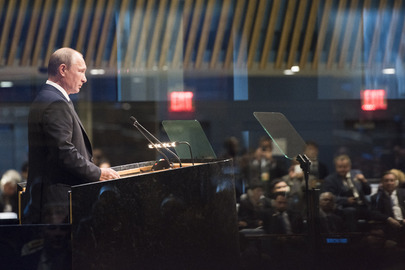
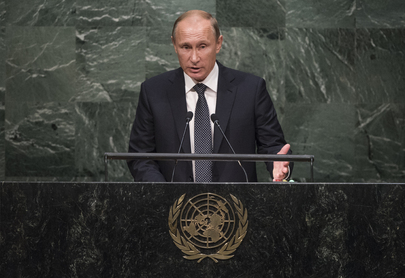
Russian President Vladimir Putin addresses UN General Assembly on Sept. 28, 2015. (UN Photo)

As Browder appears to be seeking to use FARA to punish those who have criticized him or even watched a movie about him based on the assumption that they must be Russian agents, he might well be regarded as not exactly a disinterested source providing objective information about Russia and its government.

American-born British citizen Browder has been the principal promoter of a narrative about Russian government malfeasance relating to his former employee Sergei Magnitsky, who, Browder claims, was a courageous whistleblower who was falsely arrested after exposing corruption and eventually died in a Moscow prison after being tortured.

Browder’s energetic promotion of the Magnitsky story has poisoned relations with Moscow and led to the passage of the Magnitsky Act by Congress in 2012. Russia rightly has seen the legislation, which includes sanctions on some officials, as unwarranted interference in the operation of its judicial system.

Browder astutely portrays himself as a human-rights campaigner dedicated to promoting the legacy of Magnitsky, but his own biography is inevitably much more complicated than that. The grandson of Earl Browder, the former general secretary of the American Communist Party, William Browder studied economics at the University of Chicago, and obtained an MBA from Stanford.

From the beginning, Browder concentrated on Eastern Europe, which was beginning to open up to the west. In 1989 he took a position at highly respected Boston Consulting Group dealing with reviving failing Polish socialist enterprises. He then worked as an Eastern Europe analyst for Robert Maxwell, the unsavory British press magnate and Mossad spy, before joining the Russia team at Wall Street’s Salomon Brothers in 1992.

He left Salomon in 1996 and partnered with Edmond Safra, the controversial Lebanese-Brazilian-Jewish banker who died under mysterious circumstances in a fire in 1999, to set up Hermitage Capital Management Fund. Hermitage is registered in tax havens Guernsey and the Cayman Islands.

It is a hedge fund that was focused on “investing” in Russia, taking advantage initially of the loans-for-shares scheme under Boris Yeltsin, and then continuing to profit greatly during the early years of Vladimir Putin’s ascendancy. By 2005 Hermitage was the largest foreign investor in Russia.

Browder had renounced his U.S. citizenship in 1997 and became a British citizen apparently to avoid American taxes, which are levied on worldwide income.
In his bookRed Notice: A True Story of High Finance, Murder and One Man’s Fight for Justice, he depicts himself as an honest and honorable Western businessman attempting to function in a corrupt Russian business world. That may or may not be true, but the loans-for-shares scheme that made him his initial fortune has been correctly characterized as the epitome of corruption, an arrangement whereby foreign “investors” worked with local oligarchs to strip the former Soviet economy of its assets paying pennies on each dollar of value. 


Along the way, Browder was reportedly involved in making false representations on official documents and bribery.
 
As a consequence of what came to be known as the Magnitsky scandal, Browder was eventually charged by the Russian authorities for fraud and tax evasion. He was banned from reentering Russia in 2005, even before Magnitsky died, and began to withdraw his assets from the country. Three companies controlled by Hermitage were eventually seized by the authorities, though it is not clear if any of their assets remained in Russia. Browder himself was convicted of tax evasion in absentia in 2013 and sentenced to nine years in prison.


Browder has assiduously, and mostly successfully, made his case that he and Magnitsky have been the victims of Russian corruption both during and since that time, though there have been credible skeptics, including Israel Shamir, who have dissected the sordid side to his rise to power and wealth.
Wielding Influence

Browder has reportedly used political contributions and threats of lawsuits filed by his battery of lawyers to popularize and sell his tale to leading American politicians like Senators John McCain and Ben Cardin, ex-Senator Joe Lieberman, as well as to a number of European parliamentarians and media outlets.
Sen. John McCain, R-Arizona, and then-Sen. Joe Lieberman, I-Connecticut, at a Capitol Hill news conference.
But there is, inevitably, another side to the story, something quite different, which documentary filmmaker Andrei Nekrasov, an outspoken critic of Russian President Vladimir Putin, presented to the viewer in his film The Magnitsky Act: Behind the Scenes.

The film has only been shown publicly once, at the Newseum in Washington on June 13, 2016 — a viewing that I attended, and that proceeded in spite of threats from Browder and attempted disruption by his supporters. Browder has characteristically used lawsuits and threats of still more legal action to intimidate numerous television stations in Europe and prevent additional showings.


Nekrasov discovered what he believed to be holes in the narrative about Magnitsky that had been carefully constructed and nurtured by Browder. He provides documents and also an interview with Magnitsky’s mother maintaining that there is no clear evidence that he was beaten or tortured and that he died instead due to the failure to provide him with medicine while in prison or treatment shortly after he had a heart attack.


subsequent investigation ordered by then Russian President Dimitri Medvedev in 2011 confirmed that Magnitsky had not received medical treatment, contributing to this death, but could not demonstrate that he had been beaten even though there was suspicion that that might have been the case.


Nekrasov also claimed that much of the case against the Russian authorities is derived from English language translations of relevant documents provided by Browder himself. The actual documents sometimes say something quite different, including that Magnitsky is consistently referred to as an accountant, which he was, not as a lawyer, which he wasn’t. Browder calls him a lawyer because it better fits into his preferred narrative.
No Whistleblower
 
Magnitsky the accountant appears in the document of his deposition which was apparently part of a criminal investigation of possible tax fraud, meaning that he was no whistleblower and was instead a suspected criminal.
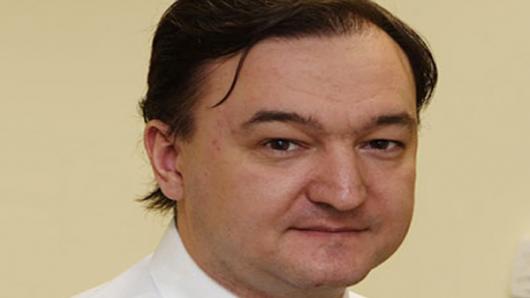
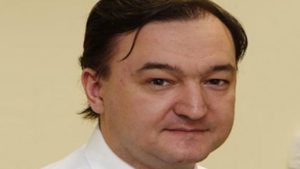
Sergei Magnitsky
Other discrepancies are cited by Nekrasov, who concludes that there was indeed a huge fraud related to Russian taxes but that it was not carried out by corrupt officials. Instead, it was deliberately ordered and engineered by Browder with Magnitsky, the accountant, personally developing and implementing the scheme used to carry out the deception.


To be sure, Browder and his international legal team have presented documents in the case that contradict much of what Nekrasov has presented in his film. It might be that Browder and Magnitsky have been the victims of a corrupt and venal state, but it just might be the other way around.


Having a highly politicized Congress and a vengeful Browder lining up against a conveniently unpopular Russian government just might suggest that one is hearing a narrative that peddles lies as much as it tells the truth.


The Senate just might consider looking more deeply into Browder’s business activities while in Russia before jumping to conclusions and bringing him in as an “expert” on anything.  He should not be given a free pass because he is saying things about Russia and Putin that fit neatly into a Washington establishment profile and make Senators smile and nod their heads.


As soon as folks named McCain, Cardin and Lieberman jump on a cause, it should be time to step back a bit and reflect on what the consequences of proposed action might be.


One might also ask why anyone who has a great deal to gain by having a certain narrative accepted should be completely and unquestionably trusted, the venerable Cui bono? standard. And then there is a certain evasiveness on the part of Browder, who notably makes outrageous claims about the Russians but does not do so under oath, where he might be subject to legal consequences for perjury.


The film shows him huffing and puffing to explain himself at times and he has avoided being served with subpoenas on allegations connected to the Magnitsky fraud that are making their way through American courts. In one case, he can be seen on YouTube running away from a server, somewhat unusual behavior if he has nothing to hide. 


So, if you wonder why the United States Congress makes such bad decisions, it just might be due to the kind of information that it gets when it travels the world and holds hearings. Inviting a man who has renounced his U.S. citizenship to avoid paying taxes, who likely engaged in questionable business practices, and who very definitely has his own agenda, which includes vilifying the Kremlin, is hardly the way to go if one truly wants to understand Russia, particularly as no one participated in the hearing to rebut his claims.

 
And if fining American citizens or forcing them to register as enemy agents because they may have supported or gone to see a movie is reflective of that gentleman’s mindset, there is even more good reason to reject the snake oil that he might be selling.

Philip Giraldi, a former CIA officer, is executive director of the Council for the National Interest. [This article previously appeared at The American Conservative at http://www.theamericanconservative.com/articles/the-new-know-nothings-in-congress/ .]

Tuesday, 17 July 2018

Who is William Browder?


Putin dropped a bombshell about corrupt magnate, Bill Browder giving $400 million to the Clinton campaign.

Here is background on who Browder is.

He is the darling of the russophobic western media and has even been interviewed on Radio NZ (see below).

Read the very good article by the late Robert Parry

The following documentary that was aired on Russian TV has been practically disappeared from the internet and is difficult to find.


PUTIN DROPS BOMB AT HELSINKI PRESSER - Says US Intelligence Helped Move $400,000,000 to HILLARY Campaign!!

Bill Browder is THE central figure behind Russophobia
Russian TV: Bill Browder is CIA agent, recruited Navalny. Browder furious! Navalny sues!


Russia Insider

This documentary caused an uproar in Russia when it appeared in April of 2016.

This film was made by the main Russian government news broadcasting company, Rossiya 1.

It alleges that Bill Browder, the legendary American hedge fund manager who from 1995 - 2005 was the largest foreign investor in Russia, controlling billions of $ and a significant share of Russia’s leading companies, was in fact a CIA front.

At one point his funds owned 7% of Gazprom, using what the film argues were illegal schemes to acquire shares

The film argues that Browder’s whole involvement with Russia was a CIA operation to disrupt Russia politically and economically
It alleges that in 2006, Browder was instructed by the CIA to provide financial support to the rising opposition politician, Alexei Navalny, and that the two then closely cooperated for the next 5 years.

As evidence, the film cites hacked CIA email and skype correspondence which it claims fell into Russian hands during the government upheaval in Kiev in 2014.

When the film appeared, Browder and Navalny charged that the evidence was faked, and Navalny sued Rossiya 1 for libel. As of the translation of this video, (July 2016), the suit has not been concluded.

Browder was expelled from Russia in 2006, after which he led a highly successful public campaign criticizing Russia and Putin. The film argues that the campaign was financed by the CIA.

The campaign demanded sanctions against Russia for what Browder alleged was the murder of one of his employees, Sergei Magnitsky, and theft from his companies, by corrupt Russian officials.

His campaign resulted in the famous “Magnitsky Act” sanctions against Russia, passed by Congress in 2012.

The film alleges that this cynically misrepresents the facts. It alleges that Magnitsky ended up in jail for carrying out major fraud for Browder, and that he was on the verge of testifying against Browder when he died. It cites the hacked CIA mail as evidence that the CIA managed to orchestrate Magnitsky’s death in prison.

The film argues that the only people with a motive for Magnitsky’s death were Browder and the CIA, because his testimony about the tax fraud would have been devastating.

The film includes embarrassing details of tax avoidance schemes used by Browder and Magnitsky, including hiring barely literate invalids in remote corners of Russia as fake executives in order to receive tax breaks amounting to 100s of millions of $.

The film then alleges, again citing the hacked CIA correspondence, that in 2010 Browder paid Navalny $300,000 to conduct a PR campaign in Russia in support of the Magnitsky Act.

This documentary was never aired separately, rather appeared as a segment within the April 13, 2016 episode of the popular Russian political talk show “Spetsialnii Korrespondent” youtube.com/channel/UCAkt...

The episode consisted of an emotional 1.5 hour discussion of the film, with several people who appeared in the film present youtube.com/watch?v=37GZ3... (only in Russian)

Of the 10-plus guests, all but one, an American journalist, argued heatedly that Browder had clearly committed gross financial crimes and agreed with the film.

The comment leading into the beginning of the film is typical of the tone of the talk show, where the Deputy Chairman of Russia’s parliament compares Browder to an “intestinal tapeworm”.

At the conclusion of the film, the talk show guests discussed the film for a further 1.5 hours. About half of the guests were also featured in the film, and they were able to go into much more detail about their knowledge of the Browder case.

The discussion became very emotional, with some guests shouting about what they alleged are Browder’s crimes.

Robert Parry goes into the story of the Magnitsky Act and how the authorities in the West do not want the truth to be known

This is an example of MAJOR censorship in the West. I have looked for this film on-line


It has been truly DISAPPEARED for all intents and purposes.


A Blacklisted Film and the New Cold War
Special Report: As Congress still swoons over the anti-Kremlin Magnitsky narrative, Western political and media leaders refuse to let their people view a documentary that debunks the fable, reports Robert Parry

Robert Parry

2 August, 2017

Why is the U.S. mainstream media so frightened of a documentary that debunks the beloved story of how “lawyer” Sergei Magnitsky uncovered massive Russian government corruption and died as a result? If the documentary is as flawed as its critics claim, why won’t they let it be shown to the American public, then lay out its supposed errors, and use it as a case study of how such fakery works?

Film director Andrei Nekrasov, who produced “The Magnitsky Act: Behind the Scenes.”

Instead we – in the land of the free, home of the brave – are protected from seeing this documentary produced by filmmaker Andrei Nekrasov who was known as a fierce critic of Russian President Vladimir Putin but who in this instance found the West’s widely accepted Magnitsky storyline to be a fraud.

Instead, last week, Senate Judiciary Committee members sat in rapt attention as hedge-fund operator William Browder wowed them with a reprise of his Magnitsky tale and suggested that people who have challenged the narrative and those who dared air the documentary one time at Washington’s Newseum last year should be prosecuted for violating the Foreign Agent Registration Act (FARA).

It appears that Official Washington’s anti-Russia hysteria has reached such proportions that old-time notions about hearing both sides of a story or testing out truth in the marketplace of ideas must be cast aside. The new political/media paradigm is to shield the American people from information that contradicts the prevailing narratives, all the better to get them to line up behind Those Who Know Best.

Nekrasov’s powerful deconstruction of the Magnitsky myth – and the film’s subsequent blacklisting throughout the “free world” – recall other instances in which the West’s propaganda lines don’t stand up to scrutiny, so censorship and ad hominem attacks become the weapons of choice to defend “perception management” narratives in geopolitical hot spots such as Iraq (2002-03), Libya (2011), Syria (2011 to the present), and Ukraine (2013 to the present).

But the Magnitsky myth has a special place as the seminal fabrication of the dangerous New Cold War between the nuclear-armed West and nuclear-armed Russia.

In the United States, Russia-bashing in The New York Times and other “liberal media” also has merged with the visceral hatred of President Trump, causing all normal journalistic standards to be jettisoned.

A Call for Prosecutions

Browder, the American-born co-founder of Hermitage Capital Management who is now a British citizen, raised the stakes even more when he testified that the people involved in arranging a one-time showing of Nekrasov’s documentary, “The Magnitsky Act: Behind the Scenes,” at the Newseum should be held accountable under FARA, which has penalties ranging up to five years in prison.
Hedge-fund executive William Browder in a 2015 deposition.

Browder testified: “As part of [Russian lawyer Natalie] Veselnitskaya’s lobbying, a former Wall Street Journal reporter, Chris Cooper of the Potomac Group, was hired to organize the Washington, D.C.-based premiere of a fake documentary about Sergei Magnitsky and myself. This was one the best examples of Putin’s propaganda.

They hired Howard Schweitzer of Cozzen O’Connor Public Strategies and former Congressman Ronald Dellums to lobby members of Congress on Capitol Hill to repeal the Magnitsky Act and to remove Sergei’s name from the Global Magnitsky bill. On June 13, 2016, they funded a major event at the Newseum to show their fake documentary, inviting representatives of Congress and the State Department to attend.

While they were conducting these operations in Washington, D.C., at no time did they indicate that they were acting on behalf of Russian government interests, nor did they file disclosures under the Foreign Agent Registration Act. United States law is very explicit that those acting on behalf of foreign governments and their interests must register under FARA so that there is transparency about their interests and their motives.

Since none of these people registered, my firm wrote to the Department of Justice in July 2016 and presented the facts. I hope that my story will help you understand the methods of Russian operatives in Washington and how they use U.S. enablers to achieve major foreign policy goals without disclosing those interests.”

Browder’s Version

While he loosely accused a number of Americans of felonies, Browder continued to claim that Magnitsky was a crusading “lawyer” who uncovered a $230 million tax-fraud scheme carried out ostensibly by Browder’s companies but, which, according to Browder’s account, was really engineered by corrupt Russian police officers who then arrested Magnitsky and later were responsible for his death in a Russian jail.
Sergei Magnitsky

Browder’s narrative has received a credulous hearing by Western politicians and media already inclined to think the worst of Putin’s Russia and willing to treat Browder’s claims as true without serious examination. However, beyond the self-serving nature of Browder’s tale, there are many holes in the story, including whether Magnitsky was really a principled lawyer or instead a complicit accountant.

According to Browder’s own biographical description of Magnitsky, he received his education at the Plekhanov Institute in Moscow, a reference to Plekhanov Russian University of Economics, a school for finance and business, not a law school.

Nevertheless, the West’s mainstream media – relying on the word of Browder – has accepted Magnitsky’s standing as a “lawyer,” which apparently fits better in the narrative of Magnitsky as a crusading corruption fighter rather than a potential co-conspirator with Browder in a complex fraud, as the Russian government has alleged.

Magnitsky’s mother also has described her son as an accountant, although telling Nekrasov in the documentary “he wasn’t just an accountant; he was interested in lots of things.” In the film, the “lawyer” claim is also disputed by a female co-worker who knew Magnitsky well. “He wasn’t a lawyer,” she said.

In other words, on this high-profile claim repeated by Browder again and again, it appears that presenting Magnitsky as a “lawyer” is a convenient falsehood that buttresses the Magnitsky myth, which Browder constructed after Magnitsky’s death from heart failure while in pre-trial detention.

But the Magnitsky myth took off in 2012 when Browder sold his tale to neocon Senators Ben Cardin, D-Maryland, and John McCain, R-Arizona, who threw their political weight behind a bipartisan drive in Congress leading to the passage of the Magnitsky sanctions act, the opening shot in the New Cold War.

A Planned Docudrama

Browder’s dramatic story also attracted the attention of Russian filmmaker Andrei Nekrasov, a well-known critic of Putin from previous films. Nekrasov set out to produce a docudrama that would share Browder’s good-vs.-evil narrative to a wider public.
Russian President Vladimir Putin addresses UN General Assembly on Sept. 28, 2015. (UN Photo)

Nekrasov devotes the first half hour of the film to allowing Browder to give his Magnitsky account illustrated by scenes from Nekrasov’s planned docudrama. In other words, the viewer gets to see a highly sympathetic portrayal of Browder and Magnitsky as supposedly corrupt Russian authorities bring charges of tax fraud against them.

However, Nekrasov’s documentary project takes an unexpected turn when his research turns up numerous contradictions to Browder’s storyline, which begins to look more and more like a corporate cover story. For instance, Magnitsky’s mother blames the negligence of prison doctors for her son’s death rather than a beating by prison guards as Browder had pitched to Western audiences.

Nekrasov also discovered that a woman who had worked in Browder’s company blew the whistle before Magnitsky talked to police and that Magnitsky’s original interview with authorities was as a suspect, not a whistleblower. Also contradicting Browder’s claims, Nekrasov notes that Magnitsky doesn’t even mention the names of the police officers in a key statement to authorities.

When one of the Browder-accused police officers, Pavel Karpov, filed a libel suit against Browder in London, the case was dismissed on technical grounds because Karpov had no reputation in Great Britain to slander. But the judge seemed sympathetic to the substance of Karpov’s complaint.

Browder claimed vindication before adding an ironic protest given his successful campaign to prevent Americans and Europeans from seeing Nekrasov’s documentary
.
These people tried to shut us up; they tried to stifle our freedom of expression,” Browder complained. “[Karpov] had the audacity to come here and sue us, paying high-priced libel lawyers to come and terrorize us in the U.K.”

The ‘Kremlin Stooge’ Slur

A pro-Browder account published at the Daily Beast on July 25 – attacking Nekrasov and his documentary – is entitled “How an Anti-Putin Filmmaker Became a Kremlin Stooge,” a common slur used in the West to discredit and silence anyone who dares question today’s Russia-hating groupthink.

Russian police officer Pavel Karpov (right) meets the actor who portrays him in the docudrama portions of “The Magnitsky Act: Behind the Scenes.

The article by Katie Zavadski accuses Nekrasov of being in the tank for the Kremlin and declares that “The movie is so flattering to the Russian narrative that Pavel Karpov — one of the police officers accused of being responsible for Magnitsky’s death — plays himself.”

But that’s not true. In fact, there is a scene in the documentary in which Nekrasov invites the actor who plays Karpov in the docudrama segment to sit in on an interview with the real Karpov. There’s even a clumsy moment when the actor and police officer bump into a microphone as they shake hands, but Zavadski’s falsehood would not be apparent unless you had somehow gotten access to the documentary, which has been effectively banned in the West.

In the documentary, Karpov, the police officer, accuses Browder of lying about him and specifically contests the claim that he (Karpov) used his supposedly ill-gotten gains to buy an expensive apartment in Moscow. Karpov came to the interview with documents showing that the flat was pre-paid in 2004-05, well before the alleged hijacking of Browder’s firms.

Karpov added wistfully that he had to sell the apartment to pay for his failed legal challenge in London, which he said he undertook in an effort to clear his name. “Honor costs a lot sometimes,” the police officer said.

Karpov also explained that the investigations of Browder’s tax fraud started well before the Magnitsky controversy, with an examination of a Browder company in 2004.

Once we opened the investigation, a campaign in defense of an investor started,” Karpov said. “Having made billions here, Browder forgot to tell how he did it. So it suits him to pose as a victim. … Browder and company are lying blatantly and constantly.”

However, since virtually no one in the West has seen this interview, you can’t make your own judgment as to whether Karpov is credible or not.

A Painful Recognition

Yet, in reviewing the case documents and noting Browder’s inaccurate claims about the chronology, Nekrasov finds his own doubts growing. He discovers that European officials simply accepted Browder’s translations of Russian documents, rather than checking them independently. A similar lack of skepticism prevailed in the United States.
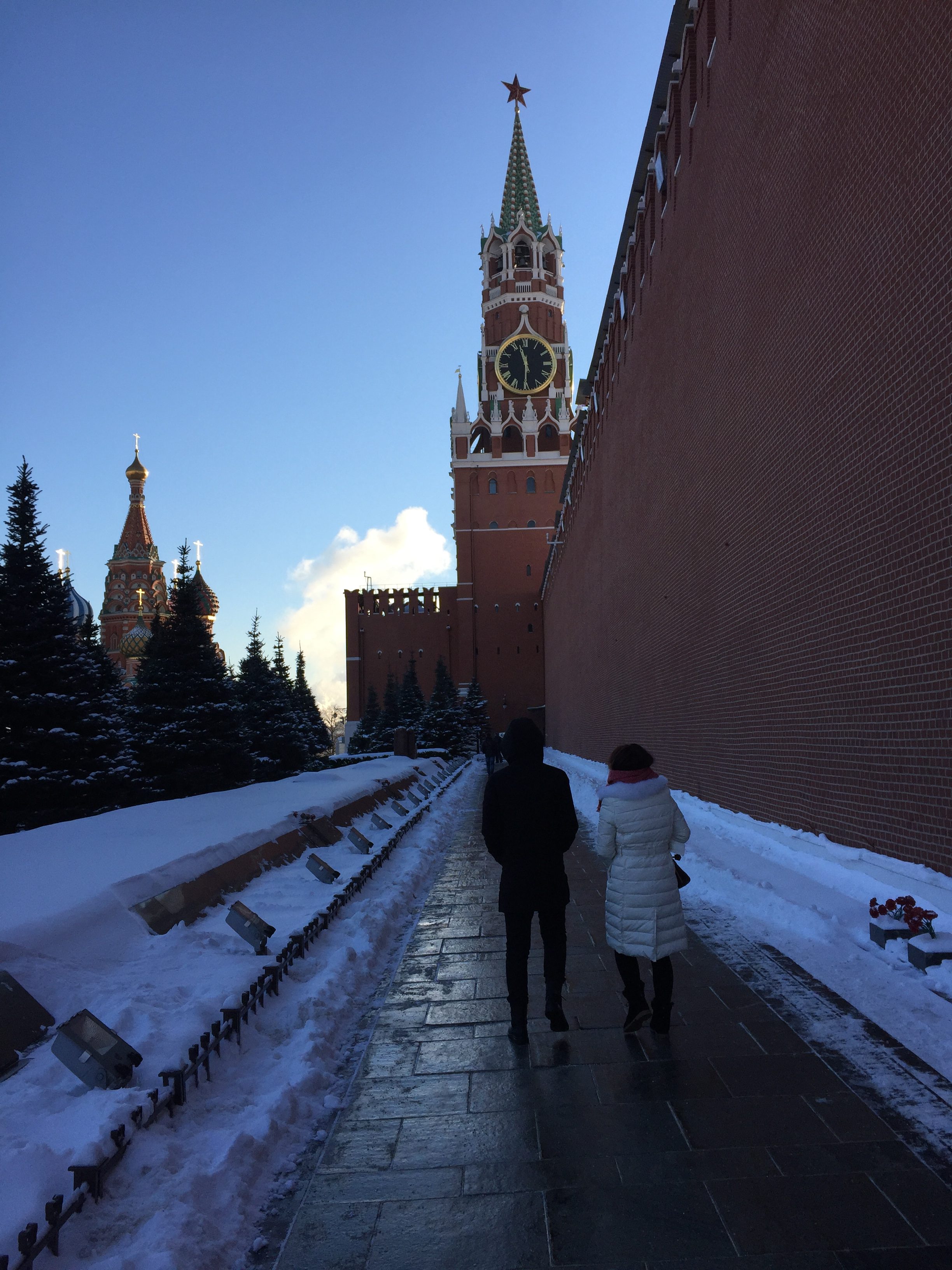
Couple walking along the Kremlin, Dec. 7, 2016. (Photo by Robert Parry)

In other words, a kind of trans-Atlantic groupthink took hold with clear political benefits for those who went along and almost no one willing to risk the accusation of being a “Kremlin stooge” by showing doubt.

As the documentary proceeds, Browder starts avoiding Nekrasov and his more pointed questions. Finally, Nekrasov hesitantly confronts the hedge-fund executive at a party for Browder’s book, Red Notice, about the Magnitsky case.

The easygoing Browder of the early part of the documentary — as he lays out his seamless narrative without challenge — is gone; instead, a defensive and angry Browder appears.

It’s bullshit,” Browder says when told that his presentations of the documents are false.

But Nekrasov continues to find more contradictions and discrepancies. He discovers evidence that Browder’s web site eliminated an earlier chronology that showed that in April 2008, a 70-year-old woman named Rimma Starova, who had served as a figurehead executive for Browder’s companies, reported the theft of state funds.

Nekrasov then shows how Browder’s narrative was changed to introduce Magnitsky as the whistleblower months later, although he was then described as an “analyst,” not yet a “lawyer.”

As Browder’s story continues to unravel, the evidence suggests that Magnitsky was an accountant implicated in manipulating the books, not a crusading lawyer risking everything for the truth.

A Heated Confrontation

In the documentary, Nekrasov struggles with what to do next, given Browder’s financial and political clout. Finally securing another interview, Nekrasov confronts Browder with the core contradictions of his story. Incensed, the hedge-fund executive rises up and threatens the filmmaker.

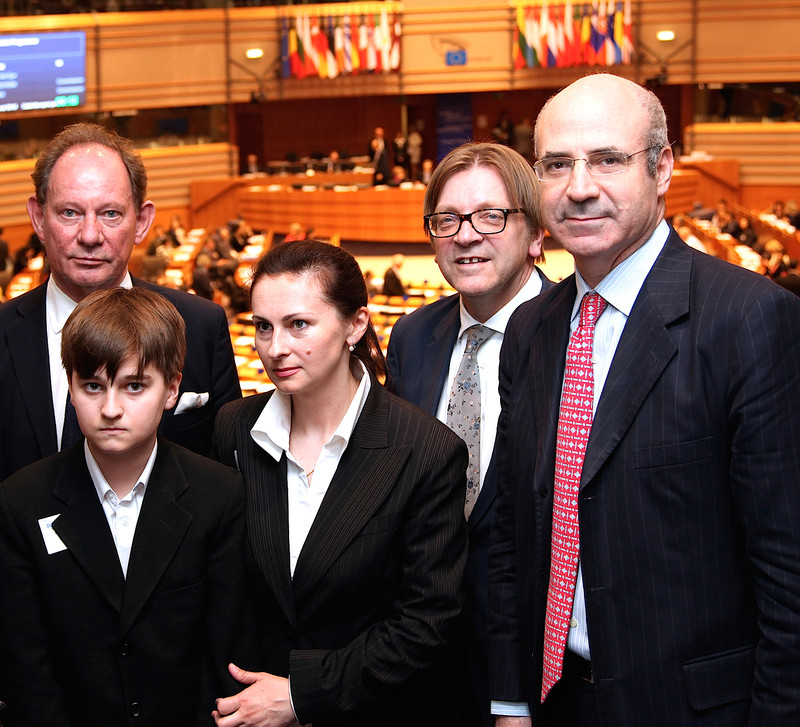
Financier William Browder (right) with Magnitsky’s widow and son, along with European parliamentarians.

I’d be very careful going out and trying to do a whole sort of thing about Sergei [Magnitsky] not being the whistleblower, it won’t do well for your credibility on this show,” Browder said. “This is sort of the subtle FSB version,” suggesting that Nekrasov was just fronting for the Russian intelligence service.

In the pro-Browder account published at the Daily Beast on July 25, Browder described how he put down Nekrasov by telling him, “it sounds like you’re part of the FSB. … Those are FSB questions.”

But that phrasing is not what he actually says in the documentary, raising further questions about whether the Daily Beast reporter actually watched the film or simply accepted Browder’s account of it. (I posed that question to the Daily Beast’s Katie Zavadski by email, but have not gotten a reply.)

The documentary also includes devastating scenes from depositions of a sullen and uncooperative Browder and a U.S. government investigator, who acknowledges relying on Browder’s narrative and documents in a related case against Russian businesses.

In an April 15, 2015 deposition of Browder, he, in turn, describes relying on reports from journalists to “connect the dots,” including the Organized Crime and Corruption Reporting Project (OCCRP), which is funded by the U.S. government and financial speculator George Soros. Browder said the reporters “worked with our team.”

While taking money from the U.S. Agency for International Development and Soros, the OCCRP also targeted Ukraine’s elected President Viktor Yanukovych with accusations of corruption prior to the Feb. 22, 2014 coup that ousted Yanukovych, an overthrow that was supported by the U.S. State Department and escalated the New Cold War with Russia.

OCCRP played a key role, too, in the so-called Panama Papers, purloined documents from a Panamanian law firm that were used to develop attack lines against Russian President Vladimir Putin although his name never appeared in the documents.

After examining the money-movement charts published by OCCRP about the Magnitsky case, Nekrasov notes that the figures don’t add up and wonders how journalists could “peddle these wooly maths.” He also observed that OCCRP’s Panama Papers linkage of Magnitsky’s $230 million fraud and payments to an ally of Putin made no sense because the dates of the Panama Papers transactions preceded the dates of the alleged Magnitsky fraud.

The Power of Myth

Nekrasov suggests that the power of Browder’s convoluted story rested, in part, on a Hollywood perception of Moscow as a place where evil Russians lurk around every corner and any allegation against “corrupt” officials is believed. The Magnitsky tale “was like a film script about Russia written for the Western audience,” Nekrasov says.
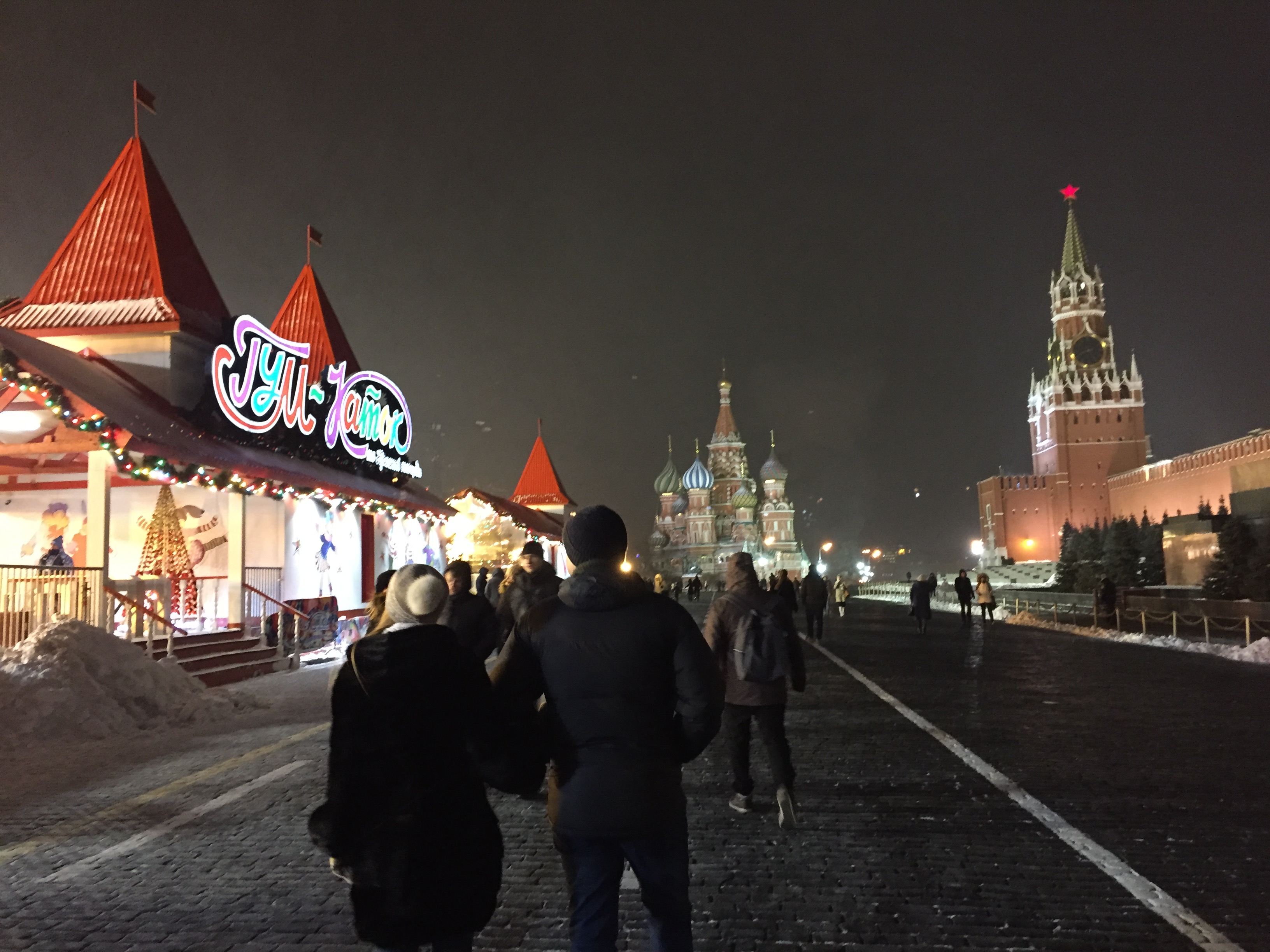
Red Square in Moscow with a winter festival to the left and the Kremlin to the right. (Photo by Robert Parry)

But the Browder’s narrative also served a strong geopolitical interest to demonize Russia at the dawn of the New Cold War.

In the documentary’s conclusion, Nekrasov sums up what he had discovered: “A murdered hero as an alibi for living suspects.” He then ponders the danger to democracy: “So do we allow graft and greed to hide behind a political sermon? Will democracy survive if human rights — its moral high ground — is used to protect selfish interests?”

But Americans and Europeans are being spared the discomfort of having to answer that question or to question their representatives about the failure to skeptically examine this case that has pushed the planet on a course toward a possible nuclear war.

Instead, the mainstream Western media has hurled insults at Nekrasov even as his documentary is blocked from any significant public viewing.

Despite Browder’s professed concern about the London libel case that he claimed was an attempt “to stifle our freedom of expression,” he has sicced his lawyers on anyone who might be thinking about showing Nekrasov’s documentary to the public.

The documentary was set for a premiere at the European Parliament in Brussels in April 2016, but at the last moment – faced with Browder’s legal threats – the parliamentarians pulled the plug. Nekrasov encountered similar resistance in the United States. There were hopes to show the documentary to members of Congress but the offer was rebuffed. Instead a room was rented at the Newseum near Capitol Hill.

Browder’s lawyers then tried to strong arm the Newseum, but its officials responded that they were only renting out a room and that they had allowed other controversial presentations in the past.

We’re not going to allow them not to show the film,” said Scott Williams, the Newseum’s chief operating officer. “We often have people renting for events that other people would love not to have happen.”

In an article about the controversy in June 2016, The New York Times added that “A screening at the Newseum is especially controversial because it could attract lawmakers or their aides.”

One-Time Showing

So, Nekrasov’s documentary got a one-time showing with a follow-up discussion moderated by journalist Seymour Hersh. However, except for that audience, the public of the United States and Europe has been essentially shielded from the documentary’s discoveries, all the better for the Magnitsky myth to retain its power as a seminal propaganda moment of the New Cold War.
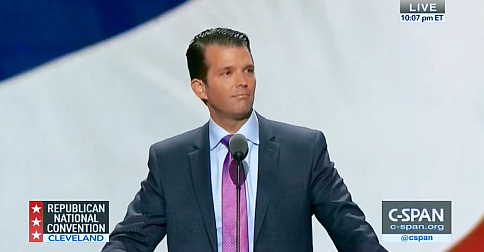
Donald Trump Jr., speaking at the 2016 Republican National Convention.

After the Newseum presentation, a Washington Post editorial branded Nekrasov’s documentary Russian “agit-prop” and sought to discredit Nekrasov without addressing his many documented examples of Browder’s misrepresenting both big and small facts in the case.

Instead, the Post accused Nekrasov of using “facts highly selectively” and insinuated that he was merely a pawn in the Kremlin’s “campaign to discredit Mr. Browder and the Magnitsky Act.”

Like the recent Daily Beast story, which falsely claimed that Nekrasov let the Russian police officer Karpov play himself, the Post misrepresented the structure of the film by noting that it mixed fictional scenes with real-life interviews and action, a point that was technically true but willfully misleading because the fictional scenes were from Nekrasov’s original idea for a docudrama that he shows as part of explaining his evolution from a believer in Browder’s self-exculpatory story to a skeptic.

But the Post’s deception – like the Daily Beast’s falsehood – is something that almost no American would realize because almost no one has gotten to see the ilm.

The Post’s editorial gloated: “The film won’t grab a wide audience, but it offers yet another example of the Kremlin’s increasingly sophisticated efforts to spread its illiberal values and mind-set abroad. In the European Parliament and on French and German television networks, showings were put off recently after questions were raised about the accuracy of the film, including by Magnitsky’s family.

We don’t worry that Mr. Nekrasov’s film was screened here, in an open society. But it is important that such slick spin be fully exposed for its twisted story and sly deceptions.”

The Post’s arrogant editorial had the feel of something you might read in a totalitarian society where the public only hears about dissent when the Official Organs of the State denounce some almost unknown person for saying something that almost no one heard.

It is also unlikely that Americans and Europeans will get a chance to view this blacklisted documentary in the future. In an email exchange, the film’s Norwegian producer Torstein Grude told me that “We have been unsuccessful in releasing the film to TV so far. ZDF/Arte [a major European network] pulled it from transmission a few days before it was supposed to be aired and the other broadcasters seem scared as a result. Netflix has declined to take it. …

The film has no other release at the moment. Distributors are scared by Browder’s legal threats. All involved financiers, distributors, producers received thick stacks of legal documents (300+ pages) threatening lawsuits should the film be released.” [Grude sent me a special password so I could view the documentary on Vimeo.]

The blackout continues even though the Magnitsky issue and Nekrasov’s documentary have become elements in the recent controversy over a meeting between a Russian lawyer and Donald Trump Jr. [See Consortiumnews.com’s “How Russia-gate Met the Magnitsky Myth.”]

So much for the West’s vaunted belief in freedom of expression and the democratic goal of encouraging freewheeling debates about issues of great public importance. And, so much for the Post’s empty rhetoric about our “open society.”

Investigative reporter Robert Parry broke many of the Iran-Contra stories for The Associated Press and Newsweek in the 1980s. You can buy his latest book, America’s Stolen Narrative, either in print here or as an e-book (from Amazon andbarnesandnoble.com).

Russian Film Director censored by EU: Western media are misrepresenting Magnitsky - Browder case


Radio NZ joins the worst of the agents of disinformation with this interview with Bill Browder who, they fail to mention, is wanted in Russia for the embezzlement of billions of rouble: he is simply portrateyd as an “enemy of Putin”.

Putin's enemy says Skripal attack an act of terrorism


9 March, 2018

Bill Browder, who has been described as Vladimir Putin's number one enemy, says the poisoning of Sergei Skripal in England was an act of terrorism by Russia.


Mr Browder was an American-born finance executive in Russia who was refused entry to the country in 2005 as a threat to national security.

He claimed it was because he and his lawyer Sergei Magnitsky had exposed corruption in the country.

Mr Magnitsky died while being held in prison in Russia. In a posthumous case against the lawyer, Mr Browder was indicted and tried in absentia. He was convicted and sentenced to nine years in prison.

Mr Browder told Morning Report Mr Skripal's poisoning fitted the Russian government's modus operandi, with strong similarities to the 2006 death of Alexander Litvinenko, a defector and former officer of the Russian FSB secret service who died from radiation poisoning in London.

Mr Skripal and his daughter are both in critical condition after a chemical attack on them in England. Mr Skripal had been a Russian spy before defecting to England and working with MI6.

"This is a man considered to be a traitor to security services in Russia; nerve agent can only be produced by a government; what else could it be but a Russian hit in the UK?" Mr Browder told Morning Report.

Mr Browder said the killing of Mr Litvinenko and lack of serious repercussions had created an environment where Mr Putin and the Russian government felt they could get away with these kinds of attacks.

"I don't think Putin really cared one way or another about this individual, but he cares very profoundly about all the other people around him who are less and less loyal to him because the money is drying up in Russia," he said.
"I've been doing this for a long time now" - Bill Browder duration 7′ :30″ from Morning Report

"I've been doing this for a long time now" - Bill Browder

"People are starting to privately grumble and Putin's way of dealing with that is to terrorise them.

"He's sent the most powerful message to everybody around him that if you even think about doing something which is disloyal, terrible things will not just happen to you, they will happen to your family."

Mr Browder said Russia wanted legal deniability but was winking and nudging about the attack.

"They got caught last time when they did the same type of thing with nuclear materials with Litvinenko. They were very happy because there were no consequences."

As an enemy of the Russian government, Mr Browder said he was at risk of a similar attack and had already faced death threats, kidnapping threats and extradition threats.

However, he says he was not living in fear.

"I continue to live with a clean, balanced psychology because if I lived in fear they would have already achieved their objective and I'm not going to let them do that."

Mr Browder said he could not describe the types of precautions he takes in his own life as it would provide the Russian government with too much information.