Police
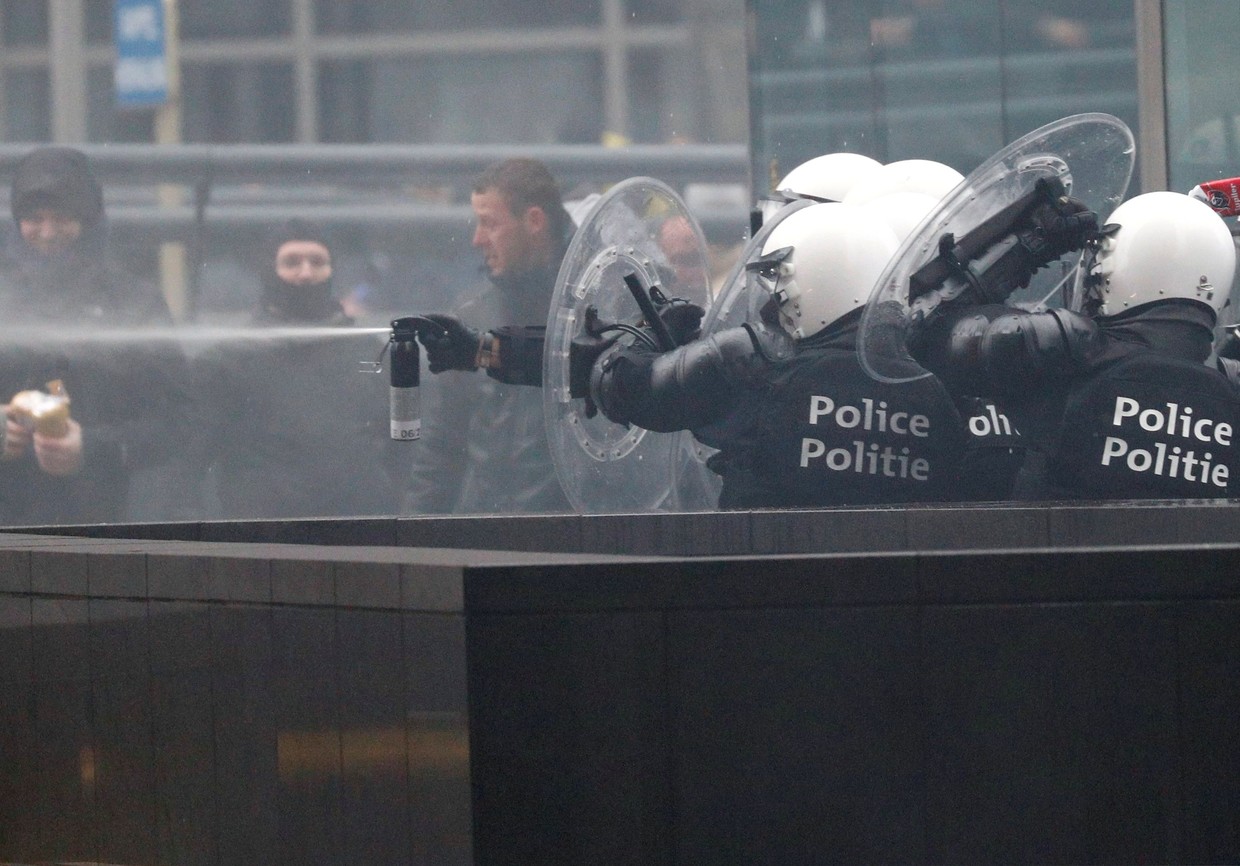
have deployed water cannon during a rally against the controversial
UN migration pact in Brussels. Officers were seen scuffling with
protesters, who threw firecrackers before facing off with
law-enforcement.
The
rally was dubbed the ‘March against Marrakech’ in reference to
the city where the pact was signed earlier in December. It was
organized by the right-wing Vlaams Belang party which has long been a
vocal opponent of the agreement.
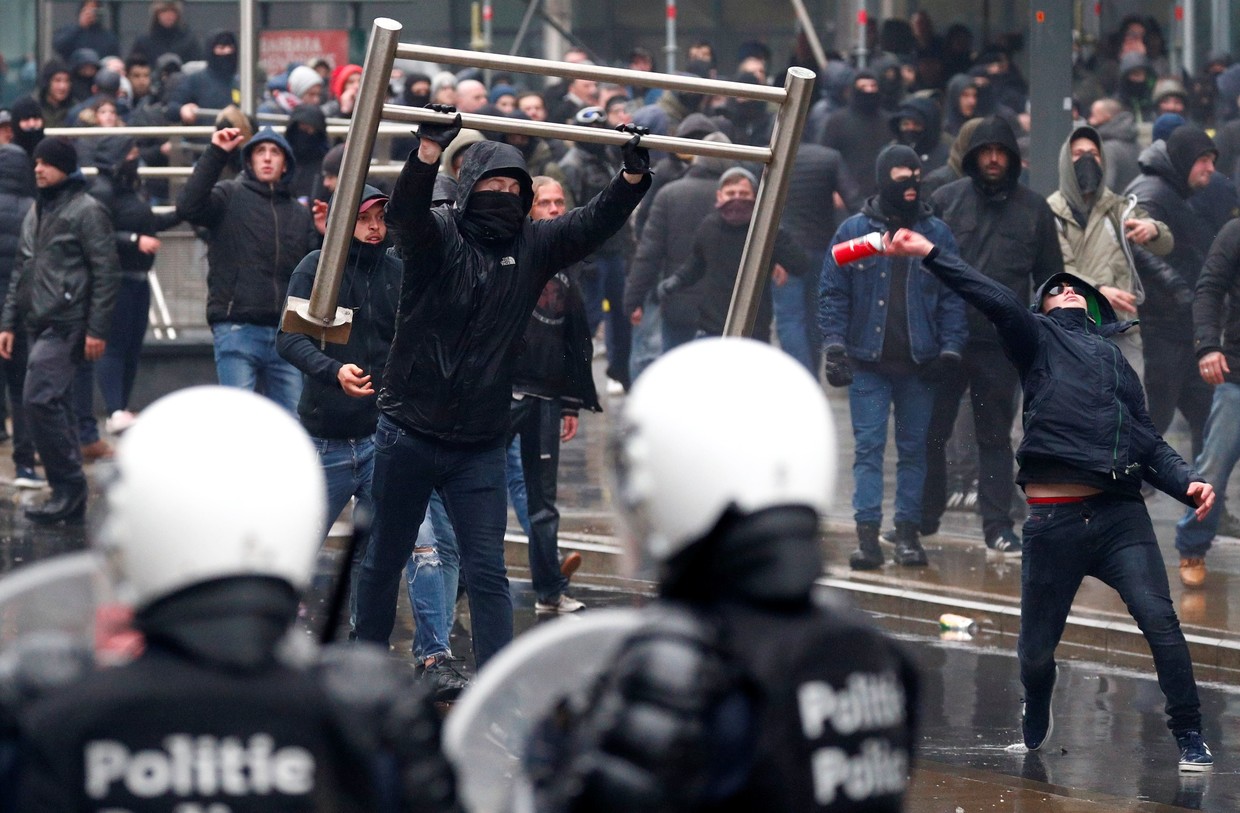
While
having initially kicked off peacefully, the demonstration started to
heat up with some of the participants burning firecrackers and
hurling bottles as they marched down the street.
Part
of the crowd who rallied on Sunday, also vented their anger by
rooting out and throwing around traffic signs and what appeared to be
parts of some fences.
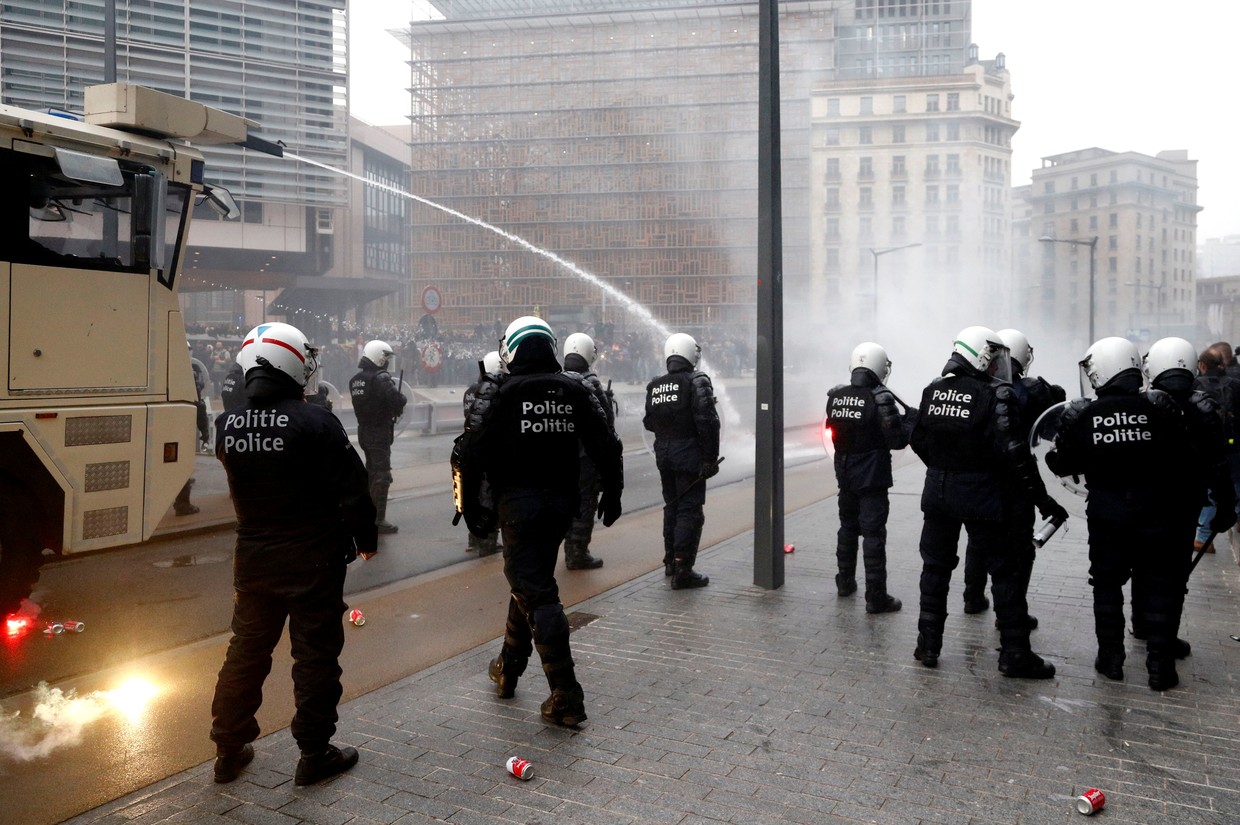
Riot
police marched out in full riot gear to quell the unease. They later
moved in with water cannon against some of the protesters.
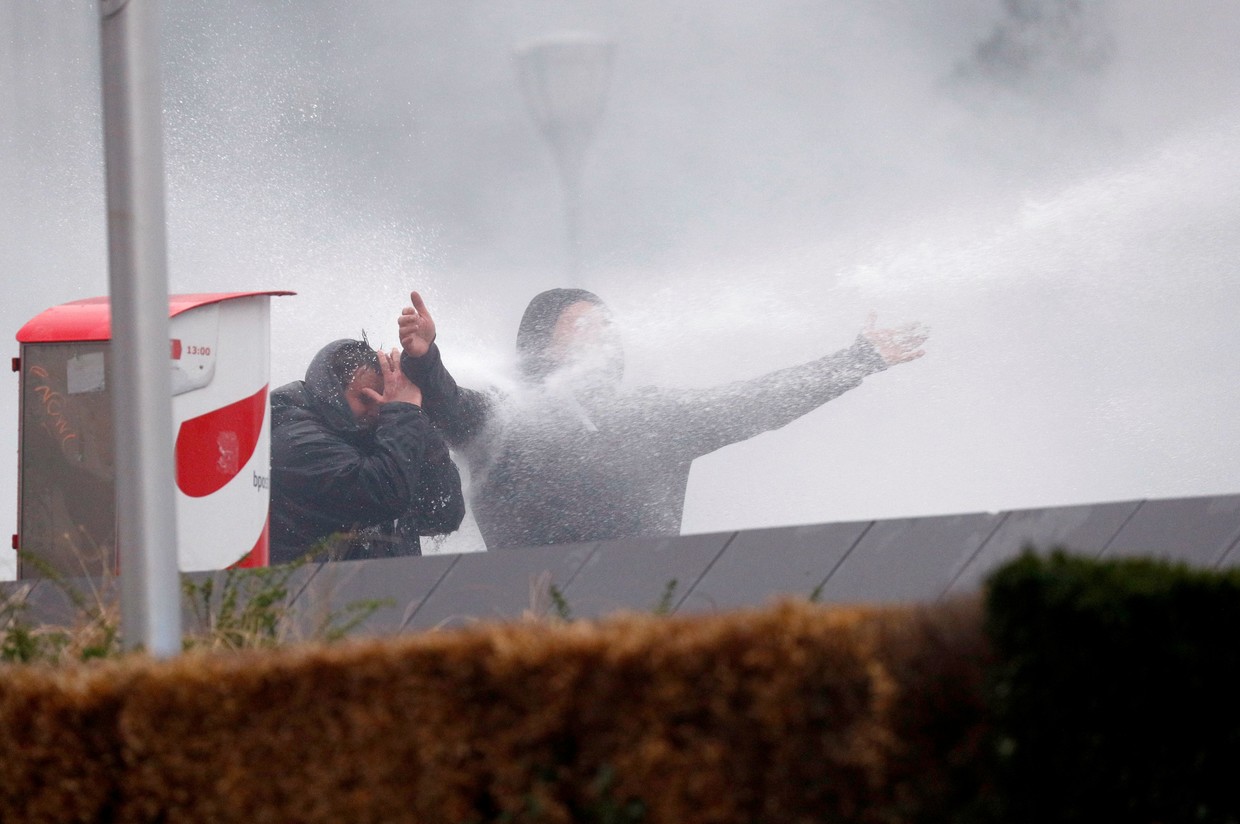
At
least two of them were seen being sprayed with water cannon right in
their faces. It is not known whether any serious injuries have been
caused by the hit.
One
of the videos from the unrest shows how a chain of riot police sprint
towards a small group of people (presumably demonstrators). Just
moments later at least two of them are being encircled by the riot
officers and beaten with batons. A male also gets a direct pepper
spray hit in the face from the closest range. After walking just a
few meters – apparently completely disoriented – he then
collapses on the pavement, with police running past him.
Police said that
at least 5,000 have gathered in the Belgian capital. "What
you see is people are indeed afraid, but who have been told that
their loss of social security, of jobs, is to be blamed on migrants
and not on the big financial companies," Lode
Vanoost, former deputy speaker of the Belgian parliament, told
RT. "The
problem is there. Nobody is going to deny that the problem exists but
among other problems, it is not even the biggest problem that the
people are faced with at the moment."
A
separate counter-demonstration of around 1,000 people, organised by
left-wing groups and non-governmental organisations, also took place
in the city centre.
The
UN-backed pact promoting an international approach to safe and
orderly migration was formally approved in Marrakech, Morocco earlier
in December. The accord split global powers, with Austria, Hungary,
the US, Israel and several other countries rejecting the pact. Its
critics claim that the deal is inadequate for managing global
migration flows.
The
Belgian government suffered a blow after the center-right New Flemish
Alliance (N-VA) quit the ruling coalition because of its disapproval
of the accord. Prime Minister Charles Michel announced that his
government was set to continue as a minority.
Editor’s
Note:When
I watch the Yellow Vest protests in France, and now in other parts of
Europe, I can’t help but wonder if this is where we, too, are
headed here in the United States. Between widespread political
divisiveness and an economy that is truly suffering – despite what
you see on the news – people here are also fed up. Is it only a
matter of time before people in the US take to the streets by the
hundreds of thousands and say, “Enough?” It’s truly essential
to watch what’s going on in Europe to get a glimpse at our
potential future – and to prepare for it. ~ Daisy
As
protests continue to rage in France, discontent is festering
elsewhere in Europe at the same time. What began as a routine protest
deep in Paris has swelled to over a hundred thousand people and
approximately five locations throughout the country. Anger over yet
another eco-fascist “gas tax” seems to have been the straw that
finally broke the camel’s back.
This,
of course, was
combined with other problems too:
constant foreign military adventures, falling wages, rising costs of
living, rising costs of healthcare, privatization of essential
services, cultural disruption as a result of heavy migration, and
growing unemployment as a result of Free Trade globalist policies.
France
is now facing the possibility of martial law or greater unrest and
violence.
It’s
not just France dealing with Yellow Vest protests.
And
the discontent being seen in France is also being felt elsewhere in
Europe – most notably Belgium and the Netherlands. Although
receiving much less media attention, the “yellow vests” have
taken to the street in Belgium over many of the same concerns as
their counterparts in France.
But
while the French version of the protests was set off by the proposed
increase of fuel taxes and ballooned into a movement addressing
greater issues, there was no straw to place on the camel’s back in
Belgium. There were no new fuel taxes announced or any other new
policy that was receiving coverage in the media or causing discontent
with Belgians at the time. The Belgian government is increasing the
cost of fuel but the policy is not a new one. Belgians already pay
the highest state taxes for fuel in Europe.
Interestingly
enough, it seems that the “final straw” for Belgian was imported
from France.
For
all intents and purposes, it appears that the Belgian and Dutch
protests are the reverberating waves of discontent that comes with
such an “integrated” society in Europe whereas the indignities
suffered by the populations in one Sovietized EU “democracy” are
grievously felt in another Sovietized EU “democracy.”
It
is also reminiscent of the French Revolution when British oligarchs
were constantly on guard for signs of discontent with the dreadful
conditions in that country, lest the same thing should take place in
England.
So
Why Are The Protests Taking Place In Belgium?
For
the most part, the protests in Belgium are inspired by the same
situation in France, i.e.; falling wages, rising costs of living,
rising costs of healthcare, privatization of essential services,
cultural disruption as a result of heavy migration, and growing
unemployment as a result of Free Trade globalist policies.
The
demonstrations in both countries come from the same sense of
struggling to make ends meet every month.
It
began, in both countries, with the government increasing the cost of
fuel. Belgians,
for instance, pay the highest state taxes on diesel in Europe.
The French government backed down on the proposed fuel tax increase,
and Belgian ministers did the same, announcing the fuel prices would
not be index-linked from 2019. But in both countries, the protests
have continued.
...
According
to Eurostat, the European Union’s statistical body, tax-to-GDP
ratio rose across Europe in 2017.
France tops the list, with tax revenue accounting for 48.4% of GDP,
and Belgium follows close behind with a tax-to-GDP ratio of 47.3%.
...
Economist
Philippe Defeyt told
Belgian media RTBF that
while the cost of living has increased in Belgium, so too has the
average income – apart from the lowest-earners, who have been
squeezed even tighter.
A retired
man told RTBF that
he receives a pension of €1,350 a month. “I get it on the 23rd of
the month. It’s now the 8th and after I’ve paid insurance,
rent, energy bills – which cost €150 – I only have €200 left
for living expenses,” he said.
A
Facebook group for Yellow Vests in Belgium lays out some of their
demands to the government: lowering the retirement age, decreasing
fuel excise duties, decreasing the cost of electricity and water, the
choice of referendums at all levels of legislative decision-making,
increasing pensions, improving public services and increasing
purchasing power. The average
price of electricity has risen €10
in the past year. Protesters describe a general “ras-le-bol
fiscal”, or financial despair.
...
It’s
a similar story in Belgium: in Brussels, salaries are €300 higher
than the average salary in the rest of the country. With a capital
that also doubles as the capital of Europe, Belgian citizens are
frustrated by what they see as their lawmakers’ inability to solve
problems closer to home.
One
protester gestured to the European institutional buildings behind him
while talking to a NBC Euronews reporter. “There, in ‘Europe’,
they’re having fun, they’re laughing,” he said. “The people
who make the laws are the ones driving us further into the ground. We
have empty pockets. We shouldn’t be called the ‘yellow vests’,
but the ‘empty pockets’.”
The
protests in Belgium have been largely peaceful, but there have been
some violent clashes as well. On December 8, police in Brussels
blockaded a zone which houses the European Commission and European
Council which essentially blocked in the protesters. When a group of
protesters attempted to break through the barricade, there were
clashes between them and the police. Around 400 people were arrested
at the protest with three police being injured.
Police
fired tear gas and water cannons at the protesters calling for Prime
Minister Charles Michel’s resignation. Some protesters threw paving
stones, fireworks, flares, road signs, and other objects at police.
There
seems to be people deliberately escalating the violence.
As
was the case in France, there seemed to be the presence of anarchist
wreckers whose only purpose was to fight with the police. Many of the
Yellow Vest protesters denounced the “casseurs,” (translated
“breakers”) and dissociated themselves from the violence.
It
should be noted that while anarchists typically disrupt and discredit
any protest they involve themselves in, it has been demonstrated in
the United States that intelligence agencies and police will send in
agents disguised as anarchists to do just that. One such instance was
seen during the infamous WTO protests in Seattle in 1999.
It
should also be mentioned that Belgium has been undergoing a quiet
debate as to its future. As Wouter Verschelden writes
for Politico,
Belgium is debating which “club” it wants to belong to – Macron
or Orban.
The
latter refers to Viktor Orban, the Prime Minister of Hungary. Orban
is bucking the Soviet-style EU system, George Soros’ influence over
media, society, and academia, unfettered immigration, and radical
leftist manipulation of culture. While Orban has made many moves that
are concerning in terms of the rights of individuals, he has also
kept his country free of the social upheaval and violence accompanied
by hordes of immigrants and has done what he can to prevent
Soros-funded organizations from disrupting the country and the
culture any further than they already have.
When
compared to a country like France that also violates human rights on
an hourly basis while also suffering under terrorist attacks, racial
and religious violence against native French people, and a stagnant
economy, many Europeans are wishing their country had taken the
nationalist track, not the internationalist one.
Protests
in The Netherlands
There
have been Yellow Vest protests
in the Netherlands as
well though the protests have drawn much smaller crowds and there
have been no reports of violence.
In stark
contrast to
French President Macron, Dutch Prime Minister Mark Rutte has
expressed sympathy for the protests, indicating that there will be
“more money to spend” for the Dutch people and acknowledging the
problems they are facing. Notably,
however, there hasn’t been any explanation of how they will have
more money to spend or what the Dutch government is going to do in
order to ensure it.
At
this point, the Netherlands protests seem to be more of
acknowledgment of the Dutch crisis moreso than a mass movement
against it.
Where
are the European protests headed?
While
no one knows just where the French and now, apparently, European
protests are heading, there is clearly the sense on the part of the
protesters and ordinary Europeans that they are losing their
countries. They’re losing it to a globalist agenda whether it be
Free Trade, immigration, eco-fascism, high taxation, low wages, or a
confluence of all and more of those issues.
Only
time will tell whether or not these protests will fizzle out, be
co-opted, or succeed.
It’s
surprising how easily the fuel tax protests from France could spread
to Belgium and the Netherlands. The demonstrations of people in
yellow vests signal a large dissatisfaction of the people over their
governments.
France’s
fuel protests have partly turned into anti-Macron protests as well.
Under his leadership taxes are increased, but he forgets to protect
the French people and their culture.
It’s
the same for Belgium and the Netherlands. Their leaders lead their
country like modern companies, making a profit is seen by them as a
success.
But
in the meantime some much more important issues are being ignored. An
increasing number of people are worried about immigration, about
poverty and about the future of their children.
Many
of these people can’t be classified according to a political
direction. They can be left or right, but most share at least one
characteristic: They are hard working middle class people.
These
people are barely represented in Western Europe. The media calls them
xenophobes, the right and far-left anarchists and politicians don’t
seem to listen to them as some of their parties are banned from
government coalitions.
This
democratic deficit leads to a tension that especially globalist
politicians don’t see as they are focused on trade, the UN and
international relations.
The
story is completely different for Eastern or Central Europe. While
being called authoritarian regimes by mainstream media and the EU,
Hungary and Poland do seem to listen to their people.
A
referendum in Hungary showed that 98 per cent of people don’t want
migrants and refugees and the government accepted that.
Hungarian
Prime Minister Orban said he would go to Brussels with that
democratic result “to ensure that we should not be forced to accept
in Hungary people we don’t want to live with”.
But
in Western European countries dissatisfaction increases by the day.
There were never referendums on accepting hundreds of thousand of
refugees and it seems like a silent majority is done with having to
deal with the horrible side effects.
Just
like they are done with higher taxes and with globalist leaders who
don’t put their countries’, but the EU’s, interests first.
As
long as democracy fails its people the chances for a non-violent
revolution are increasing as momentum is building up. It has been a
long time since something as promising as the yellow vests protests
showed up in Europe.
If
Germany and the UK join France, Belgium and the Netherlands, the
start of a working class revolution could be there.
Paris
is a mess: Up to 400,000 illegal immigrants live in just one suburb
Voice
of Europe,
5
July , 2018
A
new parliamentary report shows that the number of migrants living in
a Paris suburb may be nearing 400,000, according to Paris
Vox.
The
report of the deputies François Cornut-Gentille and Rodrigue
Kokouendo says that the French Republic is failing in the
Seine-Saint-Denis suburb, which is north east of Paris.
Between
150,000 and 400,000 illegal immigrants live in the Paris suburb under
bad conditions. The poverty rate is 28% while the unemployment rate
stands at 12.7%, well above national averages.
French
newspaper Le Figaro says the report describes the situation as: “the
incredible deterioration of social, economic and security conditions”
in the area.
Migrant
camp in Northern Paris – Image: Harriet Hadfield /
shutterstock.com
The
very high numbers of poor and unemployed illegals also causes
problematic behaviour, such as trafficking and forms of delinquency.
The
illegals now make up a fifth of the population of the
Seine-Saint-Denis and are severely straining public services and
creating social tensions, according to the parliamentary report.
After
the clearance of the jungle camp in Calais, several migrants moved to
Paris and near 550 migrants a day are still arriving in the city.
Many of them come from Italy, as there are no structural border
checks between the countries.
This
time it was Brussels. Europe has become a battlefield in which
terrorists can roam free and undetected. Of course we mourn the
victims. But it is way past the time to talk honestly – Europe’s
experiment with limited sovereignty is negligent and endangers
citizens. And NATO’s conflicts of choice in the Middle East
generate war refugees, migrants, but also terrorists of all kinds. It
is time for action.
CrossTalking
with Pepe Escobar, Gilbert Doctorow, and John Laughland.
The
murder of a security guard at a nuclear research center located near
the Belgian city of Charleroi two days after Brussels attack is not
linked to any terrorist activity, prosecutor says dispelling earlier
media reports.
The
Charleroi prosecutor's office in charge of the case "formally
denied" any
link between the murder of Didier Prospero, a security guard from the
G4S international security firm, who worked at the National Institute
of radioelements (IRE ELiT) in the town of Fleurus not far from
Charleroi, and any planned terror attack, the Belga news agency
reported, citing the Charleroi prosecutor.
The
prosecutor also denied earlier media reports that Prospero’s access
badge was stolen, Belga reports.
Prospero
was found dead in the bathroom at his home in Froidchapelle by his
three children as they returned from school on Thursday. He was shot
four times and his dog was also killed. He was in charge of security
at the IRE ELiT that specializes in production of radiochemical and
radiopharmaceutical products as well as in radioactivity analysis.
The
case is being handled by criminal investigators while anti-terror
specialists are not involved, Belga reports. According to the local
Derniere Heure newspaper, the investigation is working on two tracks:
a burglary gone wrong and a crime related to the personal affairs of
the victim.
In
the meantime, officials from the Belgian Electrabel energy company
that runs the neighboring Charleroi nuclear power plant stated that
its personnel is not affected by the incident.
"No
personnel of Electrabel or one of its sub-contractors working on
sites was murdered this week," a
company official said as quoted by the Derniere Heure. The company
representative also stressed that authorization needed to get access
to the nuclear site is issued by the National Security Authority and,
in case of death, all clearances are immediately removed.
Earlier
on Thursday, Derniere Heure reported that Prospero was a member of a
nuclear power plant staff and that his security pass was stolen.
The
paper also recently reported that Brussels suicide bombers Khalid and
Ibrahim El Bakraoui were planning attacks on Belgian nuclear power
stations and that the arrest of Paris attacker Salah Abdeslam had
accelerated the plans of the terrorists.
The
brothers reportedly planted a hidden camera in front of the home of
the director of the Belgian nuclear research program. The footage
with “dozens
of hours” of
the movements of Belgium's nuclear boss was seized during an
anti-terrorist raid in the apartment of another suspect belonging to
the same terror cell, Mohammed Bakkali.
Similar
information, but without the names of Brussels suicide bombers was
published in DH in February.
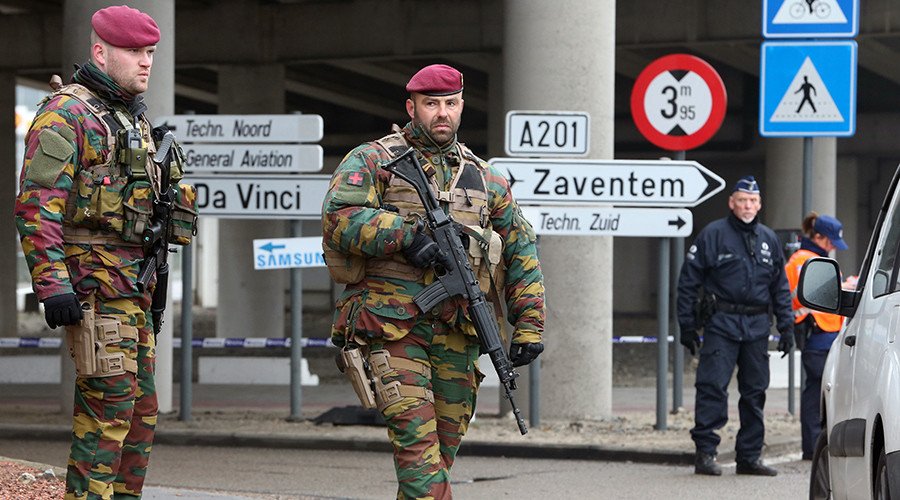
Belgium
is on high alert following the deadly Brussels attacks. On Tuesday,
Brussels was rocked by twin blasts at the city’s Zaventem Airport
and an explosion at the Maalbeek Metro station, just meters away from
key EU buildings, less than an hour later.
Shortly
after the deadly Brussels attacks, personnel from Belgium’s two
nuclear power stations in Doel and in Tihange were promptly
evacuated. DH also reported that soldiers have been seen at both
sites in recent weeks.
Update:
Electrabel says none of its staff or subcontractors were killed, but
did say Belgian nuclear sites are under "special protection."
“Electrabel
deplores that its sites are being used regularly this week to
illustrate articles without any link to the company or its 5,000
workers," a statement reads.
*
* *
Hours
after brothers Khalid and Ibrahim El-Bakraoui and two other men (one
of whom may or may not have been bombmaker Najim Laachraoui)
detonated explosives-laden vests and luggage at the Brussels airport
and metro murdering nearly two dozen people and wounding scores more,
we were alarmed but not entirely surprised to seeBelgium
evacuate the Tihange nuclear power plant.
We
say we weren’t entirely surprised because way back on November 30,
a raid on an Auvelais home rented by Mohamed Bakkali - who was
arrested four days earlier and may have used the residence to shelter
the Paris attackers including the supposed leader of the Brussels
cell Abdelhamid Abaaoud - turned up an hours-long (some reports had
suggested it was a mere 10 minutes long, an apparently incorrect
assessment) s
urveillance tape that appeared to show a top Belgian
nuclear official (see here).
“A
small video camera stashed in a row of bushes silently recorded
the comings and goings of the family of a Brussels-area man with an
important scientific pedigree last
year, producing a detailed chronology of the family’s
movements,” Foreign
Policy wrote,
late last month. “At one point, two
men came under cover of darkness to retrieve the camera,
before driving away with their headlamps off, a separate surveillance
camera in the area revealed later.”
If,
as some suspect, those two men were the Bakraoui brothers, it would
suggest that the Brussels cell which is now well on its way to going
down in jihadist lore as the most “successful” sleeper cell in
the history of radical Islam, was in
the advanced stages of trying to procure the materials needed to
build a dirty bomb.
Belgian
lawmakers were beside themselves when they learned of the video, as
it was apparently kept secret for months. “Your services possessed
this videotape since Nov. 30, and the nuclear control agency was
informed immediately,” said Jean-Marc Nollet, a Parliament member
from Ecolo, told interior minister, Jan Jambon. “So I don’t
understand how you could have been in possession of this video since
Nov. 30, but on Jan. 13, when I questioned you on this, you answered,
‘There is no specific threat to the nuclear facilities.’”
We
don’t really understand that either, but we imagine Belgian
authorities will be discussing the issue quite a bit in the weeks and
months ahead because it’s now emerged that on Thursday, Didier
Prospero was shot and killed while walking his dog in Charleroi
(about an hour drive from Brussels). Why should you care about
Didier? Well,because
he is (or “was”) a security guard at Tihange. His security pass
was stolen as he lay dying.
“The
murder was completely ignored and was committed on Thursday night in
the judicial district of Charleroi,” Derniere Heure reported. “A
security guard, accompanied by his dog, was shot in the early
evening. His badge was stolen.” Electrabel
has since denied that any of its staff were killed and is urging the
media to avoid "creating confusion" with what it says are
"false reports."
The
badge itself was immediately deactivated. It’s as yet unclear
whether this is connected to Belgian jihadists, but it would
certainly be difficult to write it off as a coincidence. Well, it
would be difficult to write it off as a coincidence unless you are a
Belgian prosecutor. In that case it would be easy. ""A
terrorist track is not considered in the case," the Charleroi
prosecutor's office told
TASS on
Saturday.
Meanwhile,
the mainstream media is beginning to sound the alarm bells on the
threat to Belgium’s nuclear infrastructure. Here, for instance,
is The
New York Times:
The
investigation into this week’s deadly attacks in Brussels has
prompted worries that the Islamic State is seeking to attack,
infiltrate or sabotage nuclear installations or obtain nuclear or
radioactive material. This
is especially worrying in a country with a history of security lapses
at its nuclear facilities, a weak intelligence apparatus and a deeply
rooted terrorist network.
On
Friday, the authorities stripped security badges from several workers
at one of two plants where all nonessential employees had been sent
home hours after the attacks at the Brussels airport and one of the
city’s busiest subway stations three days earlier. Video footage of
a top official at another Belgian nuclear facility was discovered
last year in the apartment of a suspected militant linked to the
extremists who unleashed the horror in Paris in November.
Asked
on Thursday at a London think tank whether there was a danger of the
Islamic State’s obtaining a nuclear weapon, the British defense
secretary, Michael Fallon, said that “was
a new and emerging threat.”
While
the prospect that terrorists can obtain enough highly enriched
uranium and then turn it into a nuclear fission bomb seems
far-fetched to many experts, they
say the fabrication of some kind of dirty bomb from radioactive waste
or byproducts is more conceivable.
There are a variety of other risks involving Belgium’s facilities,
including that terrorists somehow shut down the privately operated
plants, which provide nearly half of Belgium’s power.
The
fears at the nuclear power plants are of “an accident in which
someone explodes a bomb inside the plant,” said Sébastien Berg,
the spokesman for Belgium’s federal agency for nuclear control.
“The other danger is that they fly something into the plant from
outside.” That
could stop the cooling process of the used fuel, Mr. Berg explained,
and in turn shut down the plant.
The
revelation of the video surveillance footage was the first evidence
that the Islamic State has a focused interest in nuclear material.
But Belgium’s nuclear facilities have long had a worrying track
record of breaches, prompting warnings from Washington and other
foreign capitals.
Some
of these are relatively minor: The Belgian nuclear agency’s
computer system was hacked this year and shut down briefly. In 2013,
two individuals managed to scale the fence at Belgium’s research
reactor in the city of Mol, break into a laboratory and steal
equipment.
Others
are far more disconcerting. In
2012, two employees at the nuclear plant in Doel quit to join
jihadists in Syria, and eventually transferred their allegiances to
the Islamic State. Both
men fought in a brigade that included dozens of Belgians, including
Abdelhamid Abaaoud, considered the on-the-ground leader of the Paris
attacks.
One
of these men is believed to have died fighting in Syria,
but the other was convicted of terror-related offenses in Belgium in
2014, and released from prison last year, according to Pieter Van
Oestaeyen, a researcher who tracks Belgium’s jihadist networks. It
is not known whether they communicated information about their former
workplace to their Islamic State comrades.
The
reference there is to Ilyass Boughalab, a 26-year old Moroccan man
who worked at Doel before travelling to Syria. After passing a
background check in 2009 he was given a job inspecting welds. He had
access to highly secure areas of the reactor. He was, according to
employer AIB-Vincotte, an efficient employee whose work was
“flawless.”
One
can only assume that Boughalab discussed his time workinig at Doel
with other members of Islamic State and it seems entirely likely that
someone in the organization would have conveyed his specialized
experience up the chain of command. It's easy to imagine that he may
very well have met with more senitor members of the group if they
indeed learned about his employment history.
Whatever
the case, it's fairly clear that there are any number of ways for
jihadists to exploit Belgium's notoriously lax nuclear security
apparatus and although one would think that the more straightforward
approach would be to simply bomb the facilities or have an insider
sabotage something, the threat of a dirty bomb is quite real. We'll
close with a short quote from Laura Holgate, the National
Security Council’s senior director for weapons of mass destruction:
"I'm
surprised it hasn't happened yet."
*
* *
As
an aside, Belgian authorities have identified the third suspect in
the airport bombings. The man is one Faycal Cheffou, a freelance
journalist. He was reportedly detained outside the prosecutor's
office with two other men on Thursday in the sweeping raids that led
to 6 arrests.
The latest report from Britain's channel four
Belgian
prosecutor files terror charges against 3 men
Three
men have been charged with terrorist activities, the Belgian
prosecutor said, adding that one of them identified only as Faycal C,
was seen in security footage in Brussels’ Zaventem Airport, along
with Brussels attackers shortly before the blasts.
Faycal
C was charged with participation in terrorist groups, terrorist
killings and attempted terrorist killings, the prosecutor said.
Two
other men, identified as Aboubakar A and Rabah N, were also charged
with terrorist activities and membership of a terrorist group. Rabah
N was also wanted in connection with a recent Paris raid when police
said they foiled a terrorist attack.
A
man identified as Abderamane A., who was arrested on Friday after
being shot in the leg at a tram stop in Brussels’ Schaerbeek
district, will be detained for an additional 24 hours, the prosecutor
said.
The
man was arrested Thursday, the prosecutor said, adding that police
searched the suspect’s house but didn’t find any explosives or
weapons.
RTL
cited police sources who said that the man fled Brussels’ Zaventem
Airport shortly after the attacks and he was seen in the Schaerbeek
area of Brussels nearly two hours after the bombings.
Faycal
C was seen standing next to Khalid El Bakraoui, one of the suicide
bombers in security footage in Brussels’ Zaventem Airport prior to
the attacks.
According
to Le Soir newspaper, his name was Faycal Cheffou. Brussels mayor
Yvan Mayeur told Le Soir that Cheffou was a journalist and called him
“dangerous,” adding that the suspect had been previously detained
at a park, where he had been trying to convince asylum seekers to
become radical extremists.
Cheffou
was identified by a taxi driver who drove the suspect Tuesday
morning, Le Soir reported.
Belgian
authorities urged that a march to show solidarity in the wake of the
Brussels attacks, which was scheduled for Sunday, be postponed due to
security reasons, RTBF reported, citing Brussels’ mayor and
Belgium’s interior minister. Organizers of the “March Against
Fear” later called off the event.
“We
totally agree with the authorities’ request to delay this plan for
a later date. We in turn ask citizens not to come to Brussels this
Sunday,” said march organizer Emmanuel Foulon, as quoted by
Reuters.
On
Tuesday, the Belgian capital was rocked by twin blasts at the city’s
Zaventem Airport and an explosion at the Maalbeek Metro station, just
meters away from key EU buildings, less than an hour later.
Belgian
prosecutor identified two suicide bombers as brothers Khalid and
Ibrahim El Bakraoui. According to Belgium’s RTBF public
broadcaster, both brothers, residents of the capital, were known to
police for links to organized crime, but not for terrorism.
The
third suspect in the Brussels airport attack was reported by Belgian
media as Najim Laachraoui. Born on May 18, 1991, he is a native of
Schaerbeek, a municipality located in the Brussels-Capital Region of
Belgium.

 Posts
Posts




 RT
RT