Showing posts with label Barents Sea. Show all posts

Monday, 7 September 2020

250-million-year-old cracks in the seafloor feed greenhouse gas methane into giant craters in the Barents Sea

This article may explain the following


 New study reveals cracks beneath giant, methane gushing craters


CAGE,

3 June, 2020


250-million-year-old cracks in the seafloor feed greenhouse gas methane into giant craters in the Barents Sea.  More than 100 craters, presently expelling enormous amounts of the greenhouse gas into the ocean, are found in the area.

Text: Maja Sojtaric

A CAGE-paper published in Science in 2017 described hundreds of massive, kilometer –wide, craters on the ocean floor in the Barents Sea. Today more than 600 gas flares are identified in and around these craters, releasing the greenhouse gas steadily into the water column. Another CAGE study, published in PNAS, mapped several methane mounds, some 500m wide, in the Barents Sea. The mounds were considered to be signs of soon-to-happen methane expulsions that have created the said craters.


The most recent study in Scientific Reports looks into the depths far beneath the sediment in the ocean floor and reveals the geological structures that have made the area prone to crater formation and subsequent methane expulsions.


“It turns out that this area has a very old fault system – essentially cracks in bedrock that likely formed 250 million years ago. Craters and mounds appear along different fault structures in this system. These structures control the size, placement, and shape of the craters. The methane that is leaking through the seafloor originates from these deep structures and is coming up through these cracks.”  according to Malin Waage, a postdoc at CAGE and the first author of the study.


Cutting edge 3D seismic technology

The deep origin of craters and mounds was discovered using cutting edge 3D seismic technology which can penetrate deep into the ocean floor, and help scientists visualize the structures in the hard bedrock underneath.
“Our previous studies in the area hypothesized that climate warming and the retreat of the ice sheet some 20.000 years ago, caused the gas hydrates beneath the ice to melt leading to abrupt methane release and creating craters.”

Gas hydrates are a solid form of methane, among others, that is stable in cold temperatures and under pressure, which an enormous ice sheet provides. As the ocean warmed up, and the pressure of the ice sheet lifted, the methane ice in the seafloor melted and thus the craters were formed.


“This study, however, ads several layers to that picture, as we now see that there has been a structural weakness beneath these giant craters, for much longer than the last 20.000 years. Deep below the seafloor, the expansion of gas and release of water build up a muddy slurry which eventually erupted through the fractures and caused seafloor collapses and craters in the hard bedrock. Think of it as a building: A roof of a building can cave in if the ground structure is weak. We believe that this is what happened in the crater area after the last glaciation.” says Waage.


The Barents Sea is poorly understood

The exploration of petroleum resources in the Barents Sea is a hot topic in Norway and beyond as the area is a part of a vulnerable Arctic ecosystem. But the area’s geological system is poorly understood.


“Our 3D survey covered approximately 20 percent of the entire crater area. We believe that it is important to understand if similar fault systems exist in the larger context of the Barents Sea because they potentially could pose a threat to marine operations.”


Some of the questions that scientists, society and the industry does not know the answer to are: Will these weak structures lead to unpredictable and explosive methane release? Can such release and related geohazards be triggered by drilling? And can the gas reach the atmosphere in case of abrupt blow-outs, adding to the greenhouse gas budget?


“There is still very much that we don’t know about this system. But we are currently collecting and analyzing new data in the Barents Sea, dominated by similar crater structures. This can help us map in bigger detail the fault systems and associated weakness. ” says Waage.

Read more: Domes of frozen methane may be warning signs for new blow-outs
Massive craters formed by methane blow-outs from the Arctic seafloor

Reference: Waage, M. et.al. Geological controls of giant crater development on the Arctic seafloor. Scientific Reports, May 2020. https://doi.org/10.1038/s41598-020-65018-9


Wednesday, 12 June 2019

The beginning of the Arctic sea ice melt season - 11 June, 2019


I had a message from a friend saying that her friends holidaying in Svalbard from the UK were getting around in shorts and T-shirts!
An early- season assessment 
of Arctic sea ice – 11 June, 
2019

It is very difficult to truly assess the ice and compare it to previous years. I have made an attempt to paint a picture from all the clues available - air temperatures, sea temperatures and data relating to temperatures in the Central Arctic Basin.

The picture is not very pretty as if seems to me that the ice is not only melting earlier, is thinner and in much worse shape than in previous years.

Whether we set a "Blue Sea Event" (technically, the disappearance of at least 80% of sea ice extent is anyone's guess and may largely depend on weather conditions as the melt season progresses.

In the meantime, the Arctic sea ice is being eroded from below as is clear from the CNN video below.

This time last year I was not yet following the melt season (I started in July when I started working with Margo). I shall provide comparisons with last year in due course.

Here is my video report:


***

This GIF shows the thinning ice.


And the present sea ice concentration


I neglected to show these pictures from NASA 
Worldview.

First a general view of the Arctic basin with melting 
around the edges in progress.


This shows the situation in the Barents Sea, from 
Svalbard up to Western Siberia -  Novaya Zemlya and 
the Yamal peninsula


The Beaufort Sea between the Canadian Arctic archipelago and Alaska.


The Bering Sea, between Alaska and Siberia


LINKS:

Arctic melt: Threat beneath the ice

We know the Arctic is experiencing a vast melting of sea ice. But deep in the ocean, something is happening that scientists are still trying to fully understand


https://edition.cnn.com/2019/06/08/world/arctic-beneath-ice-intl/index.html?fbclid=IwAR31yrTg6ZH5Xuz8Z2Y5BcXFn24rYBdaUUQ1hKZxs3Krj1B4yhMZpJtXVIQ

This is the video from the above article.

Arctic ice has very big problem because climate change | ice faces trouble from above and below


https://www.youtube.com/watch?v=fSOHlw9KF3U&feature=share


The latest from Sam Carana and the Arctic Blog

When Will We Die?


The outlook for people living now is that they will die before the end of the century. After all, even in more developed regions, people statistically die at an age below 75 years, as the image on the right illustrates.


The image calls up questions regarding possible shortening of life expectancy due to global heating.


http://arctic-news.blogspot.com/2019/06/when-will-we-die.html


Arctic ice has very big problem because climate change | ice faces 

trouble from above and below


For the longest time the story of ice melt has been about rising air temperatures. But what is happening under the sea ice? CNN's Arwa Damon heads out with a team of scientists to the far corners of the Arctic Circle to find out.
Source: CNN


Sunday, 27 January 2019

The northern Barents Sea has warmed 1.5 degrees Celsius in just 18 years

“What we show is the sea ice will probably move out of the Barents Sea completely and not come back," says Ms Lind.

That's exactly what seems to have happened.


Huge part of Arctic ocean is shifting to an Atlantic climate, study finds

The northern Barents Sea has warmed 1.5 degrees Celsius in just 18 years


27 June, 2018


Scientists studying one of the fastest-warming regions of the global ocean say changes in this region are so sudden and vast that in effect, it will soon be another limb of the Atlantic, rather than a characteristically icy Arctic sea.

The northern Barents Sea, to the north of Scandinavia and east of the remote archipelago of Svalbard, has warmed extremely rapidly – by 2.7 degrees Fahrenheit (1.5 degrees Celsius) just since the year 2000 – standing out even in the fastest warming part of the globe, the Arctic.

“We call it the Arctic warming hotspot,” says Sigrid Lind, a researcher with the Institute of Marine Research in Tromso, Norway.

This situation, which obtains in much of the Arctic, was reinforced by the fact that freshwater is less dense than salt water, preserving stratification.  
But that’s changing. Less sea ice is floating down through the northern Barents Sea from higher Arctic latitudes, the research shows.
Indeed, the lack of sea ice in the northern Barents Sea has been a regular feature of charts lately – at this very moment, an enormous stretch of ocean in this area that has traditionally been ice covered is currently open.
As the ice recedes, the ocean surface in turn receives less fresh water from its melting.
And as that happens, the deeper Atlantic waters mix higher and higher towards the surface, not only warming the seas but also making them more salty. The result, the study says, has been a “dramatic shift in the water column structure in recent years.” Arctic surface waters, with a temperature below freezing, are “now almost entirely gone.”
“This region is shifting to the Atlantic climate, and it’s going fast,” says Ms Lind.
The precipitating event for these changes, the new study finds, is that floating ice is no longer being supplied as regularly to the Barents Sea region from higher Arctic climes.
Arctic sea ice breaks up and becomes more mobile in the warmer months of the year, but less has been flowing into the Barents Sea and melting, and that in turn has begun to break the hold of stratification on the ocean, as the Barents no longer contains enough freshwater to sustain it.
“Unless the freshwater input should recover, the entire region could soon have a warm and well-mixed water column structure and be part of the Atlantic domain, a historically rare moment where we would witness a large body of water being completely transformed from Arctic to Atlantic type,” the study concludes.
The change could lead to an expansion of the very productive Barents Sea cod fishery northward – but at the same time, that would come at the expense of an Arctic marine ecosystem that would probably have to retreat towards the pole.
It could also have major weather consequences, some scientists believe. Indeed, those may already be occurring.
Jennifer Francis, an Arctic expert at Rutgers University, said that ice loss over the Barents Sea and the nearby Kara Sea can disrupt the atmospheric jet stream, in turn leading to extreme weather over Eurasia, especially in winter.
Here’s how it works, according to Ms Francis: The warmer atmosphere above the ice free ocean can strengthen a region of atmospheric high pressure that tends to form around the Ural Mountains, to the south of these bodies of water. That then leads to an elongation of the stratospheric jet stream, which dips farther southward as it gets past the high pressure region and forms a low pressure area.
The result of this elongated jet, Ms Francis writes, is “persistent cold spells over East Asia and a disrupted stratospheric polar vortex, which effectively prolongs the original influence of the ice loss into late winter. We saw this happen in spades this past winter.”
There could be more of this in the future, because researchers say changes in the northern Barents Sea may have already gone too far to reverse.
“What we show is the sea ice will probably move out of the Barents Sea completely and not come back," says Ms Lind.
The Washington Post

The mixing of fresh and saline water - a major positive feedback loop in the Arctic

Some things are worth repeating until people get this important message.In fact, I can't think of anything MORE important than this part from , perhaps, the methane rising to the surface above Siberia.

See from the map just how close Novaya Zemlya, where this is happening, is.

'Tipping point' risk for Arctic hotspot


I am reading this article from the BBC because it is so important as it confirms the conclusions Margo and I have reached by looking at solid data on the Arctic.


A rapid climate shift under way in the Barents Sea could spread to other Arctic regions, scientists warn.

The Barents Sea is said to be at a tipping point, changing from an Arctic climate to an Atlantic climate as the water gets warmer.

In what may be a first the BBC I acknowledging a positive feedback loop

In what’s known as a feedback loop - the more the layers mix, the warmer the surface gets. And the warmer the surface gets, the more the waters mix.

However, they place the problem a whole decade away

So it’s now only a matter of time, the researchers say, before this section of the Arctic effectively becomes part of the Atlantic. It could happen in as little as a decade, they warn

Here is the Barents Sea. I got it mixed up with the Barents Strait near Alaska


We are in high-winter in the Arctic and you can see that the Barents Sea is ice-free - not in a decade but right now.


Sea temperatures NOW - not in a decade are up to 0 deg C with a couple of warm areas that are up to 16 deg C.

Compare that with 17 deg. C in Cook Strait, New Zealand in SUMMER, in the context of a marine heatwave!


The following shows the high degree of mixing of salt and fresh water in the Arctic - about 35% for the Barents Sea.


Friday, 25 January 2019

A important story of the Arctic well--hidden

Sometimes you find the most signifiant stories quite by accident.

You could be forgiven for missing it but a friend picked up on a short sound clip on Radio NZ. I had to ring RNZ to get a reference to the most important story on the planet for there is none in either their website or the podcasts


"Climate change is redrawing the map. The Northern Barents Sea has been part of the arctic for 12,000 years since the last ice age, but in perhaps as little as a decade it'll be part of the Atlantic: ice free all year round.

"Scientists say the change in character of the Northern Barents sea is the first major climatic shift due to human induced global warming." 

Roger Harrabin reporting.


Here is an audio of the report

The original video from the BBC can be viewed HERE

Here are a few screenshots from the video...
 

For some reason they seem to have made SQUIDS the centre of the story. Is that REALLY the only consequences??


Just imagine the impact if they mentioned the elephant in the room - the release of methane from the sea bottom in WINTER!!!

'Tipping point' risk for Arctic hotspot

BBC,
23 January, 2019

A rapid climate shift under way in the Barents Sea could spread to other Arctic regions, scientists warn.

The Barents Sea is said to be at a tipping point, changing from an Arctic climate to an Atlantic climate as the water gets warmer.

A conference in Norway heard that the Kara Sea and the Laptev Sea – both further to the east - are likely to become the new Arctic frontier.

The scientists warn that it will affect ecosystems.


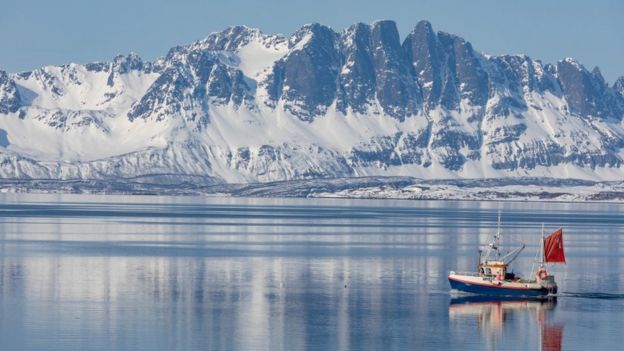
NordkappImage copyrightGETTY IMAGES

It may also impact on global weather patterns, although there's no agreement on that.
They’re concerned because the north Barents Sea has been governed by an Arctic climate since the end of the last Ice Age, 12,000 years ago.
The Arctic Ocean has a cold, fresh surface layer which acts as a cap on a layer of warm, saltier Atlantic water beneath.

But now in the Barents Sea there’s not enough freshwater-rich sea-ice flowing from the high Arctic to maintain the freshwater cap.

And that’s allowing warm, salty Atlantic water to rise to the surface.

In what’s known as a feedback loop - the more the layers mix, the warmer the surface gets. And the warmer the surface gets, the more the waters mix.

So it’s now only a matter of time, the researchers say, before this section of the Arctic effectively becomes part of the Atlantic. It could happen in as little as a decade, they warn.


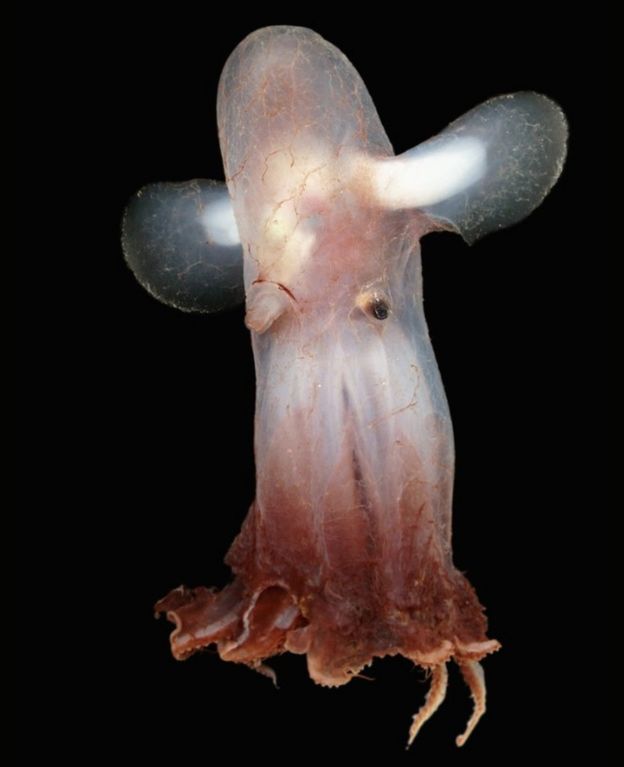
Cirroteuthis moelleriImage copyrightVITALIY SYOMIN/INSTITUTE OF MARINE RESEARCH
Image captionSpecies such as this Arctic squid are vulnerable to the warming of waters

Dr Sigrid Lind, from the Institute of Marine Research and Bjerknes Centre for Climate Research in Norway, told the conference that if the sea stratification broke down completely, the change might be irreversible.
“Large sea ice inflows of several consecutive years would probably be needed to rebuild the freshwater reservoir once its gone- and that's not likely given global warming and strong Arctic sea-ice loss,” she told BBC News.

She said the shift was so rapid that the whole Barents Sea could be completely sea ice-free within a few decades - possibly even a decade. Then a new polar frontier region would probably develop further east, in the Kara Sea or Laptev Sea.

Dr Lind explained: “This is probably the first modern example of a rapid climate shift event - a part of the Arctic domain is shifting over to the Atlantic climate regime.

"This sort of shift happened in the Nordic Seas during the last Ice Age – and when it happened it changed very fast.

“This shows that the Arctic is responding to the one-degree of global warming that we have today by shrinking and losing its outer part to the Atlantic domain. That's alarming."

Dr Jeremy Wilkinson from the British Antarctic Survey (BAS) told BBC News that the new findings on stratification and freshwater were vital for understanding the future of the Arctic.

Other scientists said different factors might be significant too, like a change in wind patterns that appears to be pushing sea-ice away from the Barents region.

The changes could affect weather patterns as far away as East Asia, and may have an effect on the jet stream, which influences so much of the UK's weather patterns. Scientists haven’t reached agreement on this yet.

And in another puzzle, freshwater in the western Arctic seems to be increasing as it diminishes in the eastern Arctic. Scientists are still struggling to fathom the complexities of human impact on the planet.