Showing posts with label Auckland. Show all posts

Wednesday, 3 March 2021

The left hand does not not what the right hand is doing in Auckland, NZ lockdown

 Coronavirus: Unite against COVID-19 Facebook post contradicts PM's claim infected KFC worker was told to isolate


Newshub,

4 March, 2021


The Government is under fire for providing contradicting information regarding Case L, a KFC employee who tested positive for the virus four days after working a shift at the Botany Downs' fast-food restaurant.

More information has come to light that appears to corroborate Case L's claims that she and her sibling, Case J - a Kmart Botany employee who worked two shifts before testing positive - were not asked to self-isolate by health officials.

Case L is a household contact of Case I, a Papatoetoe High School student and a casual-plus contact of the first student to test positive, Case A. Case I was the first in the family to contract the virus, testing positive on February 23.

Case L is also a household contact of Case J, the teenager who worked two shifts at Kmart Botany before her diagnosis, and Case K, an infant. 

Case L tested positive for the virus on February 26 after being shifted to quarantine with her family. It was revealed she had worked a shift at KFC on February 22 while she was potentially infectious.

As Case I is a casual-plus contact of the initial Papatoetoe High School case and a member of the school community, health officials have claimed the whole household should have been isolating - indicating Case J and Case L breached the rules by going to work.

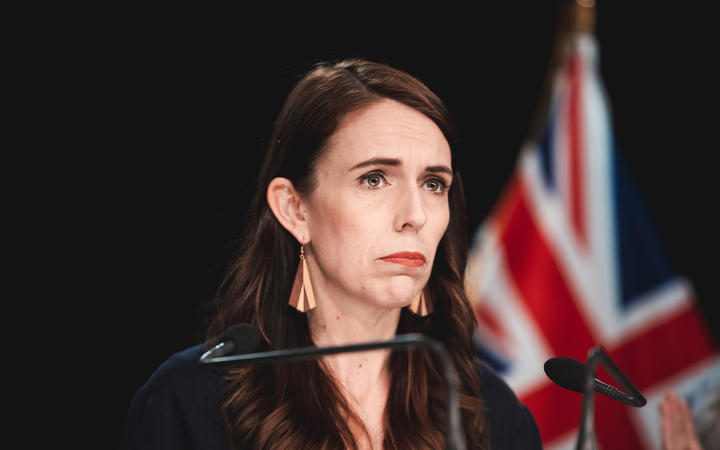
At a news briefing, Prime Minister Jacinda Ardern said Case L "should have" isolated instead of working her shift at KFC, expressing "frustration" at the new case.

Both Case J and Case L have since faced public backlash for appearing to flout the official instructions and putting the safety of the public at risk. 

But the KFC employee said to Newshub that she was not told to self-isolate - and asked for an apology from the Prime Minister following her "upsetting" comments. 

"It's not fair on our end that we're getting all this backlash for something that we haven't actually done," Case L told Newshub.

Case L told Newshub her sister, Case I, received a text message on February 14 - the day the first three cases in the cluster were announced - saying casual contacts needed to self-isolate, but their families did not need to. 

Health officials pushed back against the claims, arguing there were multiple attempts to contact the family and the advice had been clear and consistent.

But a comment, posted by the Unite against COVID-19 Facebook page four days ago, clearly states that "Case J (Kmart worker) and Case L (KFC worker) were not required to isolate at the time".

In a response to a member of the public, the Unite against COVID-19 team said Case J and Case L had completed their shifts before the new rules were introduced - which required them to self-isolate.

"The advice for all staff and students of Papatoetoe High School was updated on 23 February, after the two had attended their shifts at their workplaces," the comment said.

It also gave weight to Case L's claims by confirming that casual-plus contacts such as Case I were required to get a test and self-isolate, but their household members were not required to do so.

"The family complied with the advice they were given at the time."

Records also show that at the time, the Ministry of Health's advice for 'casual-plus' contacts was: "While you are staying at home, members of your household can come and go from the house as normal."

The information contradicts Ardern, who pushed back against Case L's claims on Tuesday. She said the messaging was "very, very, very clear", and that if Case L had gotten a test earlier, "then ultimately we wouldn't be in a debate over whether or not family members should be isolating". 

The Facebook comment has also come to the attention of ACT leader David Seymour, an outspoken critic of the Government's COVID-19 response. He said the Prime Minister "has some serious explaining to do".

"The Prime Minister has some serious explaining to do after her Government's Official COVID-19 Facebook Page contradicted her claim that Case J (Kmart worker) and Case L (KFC worker) were told to isolate," Seymour said in a statement on Tuesday night.

"Either the Government is spreading misinformation on Facebook, or the Prime Minister is spreading it through the media. Either case is totally unacceptable.

"The Prime Minister has not only misled the whole country but subsequently doubled down on her claims that the workers were instructed to isolate, which cannot be true because the isolation orders were issued after the workers had completed their shifts."

National leader Judith Collins also says the Prime Minister owes the KFC worker an apology.

"The Prime Minister needs to explain whether the COVID-19 Facebook post is accurate. If it is then she should apologise to the KFC employee," Collins said on Wednesday.

"The communications coming from the Government has left a lot to be desired of late. The invention of new terms on the fly like 'casual plus' and 'close plus' contacts is confusing too many people.

"The Government needs to get its public messaging right. Communication breakdowns like this can be the difference between Kiwis living COVID-free and a lockdown that costs the New Zealand economy $500 million a week."

Speaking to The AM Show on Wednesday, COVID-19 Response Minister Chris Hipkins argued that the official advice can change - and people need to "keep plugged in" to ensure they're not missing any messages. 

He also denied the Government was at fault, echoing Ardern and Dr Ashley Bloomfield's stance that the messaging was "quite clear".

"It's important to remember that sometimes, the messages for some people will change… if the risk-profile changes, the advice might change. We do need to say to everybody - keep plugged in, because sometimes the advice will change," he said.

"I think it was very clear to the school community what we were asking them to do."

When pressed by host Duncan Garner regarding the response from Unite against COVID-19, Hipkins said he couldn't make "an educated comment" without seeing the correspondence with the household.

"I think it highlights one of the problems with looking backwards, and even apportioning blame to people," he said. "There will always be different sides to a story. The key thing here is looking forward and stamping out the risk of it spreading any further. That's got to be where our energies are focused.

"My energy is focused on identifying what the risk is here and making sure we're isolating the people we need to isolate… looking backwards isn't going to help with that effort. At some point, when we've contained the cluster, we'll look back… and [identify] things that didn't go according to plan and could be improved."

The Ministry of Health has been contacted for comment.

More to come on this, I think


https://www.stuff.co.nz/national/politics/123665615/new-zealand-was-reluctant-to-talk-about-domestic-terrorism-a-new-national-security-agency-may-change-this

From March 2

Monday, 1 March 2021

Auckland under lockdown - 1 March,2021

COVID-19: 'Thousands' of cars

backed up in 4-hour wait at 

Auckland border in 'scorching' 

heat

Newshub,

28 February, 2021


Motorists trying to get home to a locked-down Auckland are facing wait times of up to four hours as "thousands" of cars bank up at the southern border checkpoint.

Auckland was moved to alert level 3 at 6am on Sunday while the rest of the country moved to level 2 following two new community cases of COVID-19 on Saturday night.

Rania Alani was in Tauranga for work over the weekend and hit the road early to avoid the rush, only to spend almost three hours moving a kilometre distance at the Auckland-Waikato checkpoint.

"I didn't think it was going to be that bad, to be honest," she says. "Leaving Auckland makes sense but coming back was a nightmare."

Tristan Dean got stuck waiting four hours at the same checkpoint as he headed home to Auckland from Ohakune.

He says there were "thousands and thousands" of cars "backed up for miles".

"We've just seen the queue for leaving Auckland and it's backed up for miles as well, just at a standstill."

Dean says cattle trucks were having to be escorted through the traffic as livestock were overheating, as well as people taking their horses out of floats and walking them alongside the road.

Without realising how long it would take to get through Alani and Dean both had no food in the car.

"I feel sorry for the people that had kids," says Alani.

"You'd think that it could take like an extra half-hour or an hour. I was completely unprepared. I had no water, no food in the car, it was scorching hot even with the AC."

Dean says the line was made up of two lanes before merging into one a kilometre out from the checkpoint.

"They pretty much closed SH2 where SH2 and SH1 pretty much come together and they made us go off that ramp so it was literally one long line," Alani says.

She says police were checking cars in one single file line when there was space for two.

"There were four policemen standing in a line instead of creating two lines for people to maybe go a little bit faster.

"They were in the scorching heat with masks and jackets. I felt sorry for everyone in the situation."

Police have now asked the public to delay their travel if possible due to the "significant delays".

"Police report the public has been cooperative and understanding, we thank motorists for their patience," a spokesperson says in a statement.

"We are actively trying to ease the congestion as quickly as possible. Those who are stopped will be asked about their reason for travel."

Dean felt like the checking wasn't thorough enough to warrant such a long line.

"It was sorta 'where are you heading' and they let you through, it all seemed a bit pointless."

Alani says she understands having a strict checkpoint for people trying to leave the city but she felt as if having her license checked to ensure she was an Auckland resident was excessive.

"I feel like this was a little intense especially because who would want to come back to a lockdown?"


This is the latest from this morning

Aucklanders should get vaccine before rest of NZ - Goff


Auckland Mayor Phil Goff says the whole city should be prioritised for the Covid-19 vaccine rollout, over other parts of the country that are at less risk.

Goff welcomes the government's indication that South Auckland will be prioritised, but he says the rest of the city should follow.

"Auckland's fourth level 3 lockdown highlights the fact that the city is at greater risk of community transmission than any other city or region in the country," he said.

Earlier this morning, Prime Minister Jacinda Ardern revealed the new community cases in Auckland had contact with another family during the level 3 lockdown earlier in February.

"We have now confirmed how our latest case M and N came to be infected with Covid-19. That is because they had contact with another family that we had identified as part of the Papatoetoe cluster during level 3." 

https://www.rnz.co.nz/news/national/437373/live-covid-19-updates-for-monday-1-march


https://www.rnz.co.nz/news/political/437377/jacinda-ardern-on-latest-covid-19-cases-everyone-is-angry-i-get-that


You don't need a university degree to work this out


The head of the Auckland Business Chamber says the level 3 restrictions will be a devastating blow to businesses....

Chamber chief executive Michael Barnett said there will be many businesses in Auckland looking at their relationships with their landlords, their supply chains and their banks because of the uncertainty.

"I've got a number of concerns but I think the first one would have to be about the uncertainty that this is creating for businesses, the short timeframe for the lockdown and the wellbeing of business owners, employers, chief executives as they look to rearrange yet another week of uncertainty for them."

Barnett said the lockdown will be "absolutely devastating" for businesses that rely on tourism such as accommodation, food, hospitality and events.

https://www.newshub.co.nz/home/new-zealand/2021/02/level-3-a-devastating-blow-to-auckland-business-michael-barnett.html

Sunday, 28 February 2021

Auckland heads back into lockdown over two cases

Covid-19: Auckland back in alert level 3, the rest of New Zealand alert level 2

Auckland is back at alert level 3 this morning, while the rest of the country has moved to alert level 2 following two new Covid-19 community cases that could not be directly linked to earlier cases.


The usually bustling Queen Street in Auckland during alert level 3 in December last year. Photo: RNZ / Amy Williams

Radio NZ,

27 February, 2021


Prime Minister Jacinda Ardern made the announcement at a briefing at 9pm last night saying that the alert level changes would come in from 6am today and would be in place for seven days.

She said Cabinet would assess the alert levels but it was likely that Auckland would remain in alert level 3 for the full seven days.

Ardern said the announcement comes after two new Covid-19 community cases that could not be directly linked to earlier cases.

One is the 21-year-old sibling of a student from Papatoetoe High School, despite the secondary school student showing no symptoms and testing negative three times.

The siblings' mother has also tested positive.

The 21-year-old was potentially infectious before testing positive and has not been self-isolating.

Genome sequencing is underway and Director General of Health Ashley Bloomfield, who also spoke at last night's briefing, said it was likely the transmission route was via Papatoetoe High School.

The 21-year-old has done airport work but is not believed to have any interactions with the airside or contact with potentially infected people, Bloomfield said.

Watch the PM's latest briefing here (from another source):

The conditions of alert level 3 remain the same as last time.

Aucklanders are asked to stay at home in their bubbles other than for essential travel. If they do venture out, such as to essential retail stores, Aucklanders must maintain a 2m distance.

Children are asked to stay home from school in Auckland, although for essential worker parents who need to be at work, they will be open.

Supermarkets, pharmacies, petrol stations, and primary produce stories can remain open. Ardern urged people not to rush to supermarkets.

Businesses that normally operate on face-to-face basis are now asked to move to non-contact methods like click and collect or online ordering, she said.

Public venues will be closed, including playgrounds, libraries, cinemas, gyms, pools and markets.

Gatherings outside people's bubbles is prohibited with the exception of groups of 10 for wedding services, funerals and tangihanga. Public health measures will still need to be maintained in these events.

All sports games will need to be cancelled, including today's planned Auckland Round the Bays.

Travel into, out of or through the Auckland region is restricted while the region is at level 3. People who lived in Auckland but are currently away could return, and anyone who was in Auckland but did not live there could leave, Ardern said.

Those who are vulnerable with pre-existing conditions and older people are encouraged to stay at home where possible and take extra precautions where possible.

Aucklanders are asked to wear masks when they leave their house.

Level 2 for the rest of the country means business and schools remain open, but with social distancing.

People are asked to maintain a distance of 2m from others in public spaces and retail stores and in other places to stay 1m apart in places like workplaces, cafes, restaurants and gyms.

Masks are mandatory on public transport and encouraged where physical distancing is not possible.

Gatherings, including weddings and funerals, are limited to 100 people.


Travel in and out of Auckland is restricted, though people can return home if they can prove their address at the checkpoints.

Eight checkpoints on the outskirts of Auckland will stop vehicles and question drivers, ensuring there is no non-essential movement through the region.

Last night Prime Minister Jacinda Ardern said people who lived in Auckland but are currently away could return, and anyone who was in Auckland but did not live there could leave.

People transiting through the region would be allowed to do so, and those who live just outside Auckland but need to enter for legitimate reasons will also get through the border checkpoints.

Police say they will be highly visible across the region to ensure people are aware of the alert level 3 restrictions.

Earlier this month when Auckland was in alert level 3, Ardern said that police checkpoints would be stationed at the legal boundary of Auckland.

That came after some confusion over the location of some of the police checkpoints.

Ardern announced the lockdown to control spread of Covid-19, after two new community cases were found in Auckland.

One of the patients could have been infectious since last Sunday.

Under alert level 3 Aucklanders can travel within their local area for essential work, groceries, and to exercise, but schools and public spaces are closed.

Schools are open for children whose caregivers or parents

The rest of the country is now at alert level 2.

https://www.rnz.co.nz/news/national/437336/checkpoints-at-auckland-s-borders-with-city-in-alert-level-3


What Jacinda thinks you ought to know:


What you need to know:
  • As of 6am Auckland entered Covid-19 alert level 3 and the rest of New Zealand went into level 2
  • It remains unclear how the latest community cases became infected
  • Road checkpoints at the Auckland's borders have been re-established by police
  • The Government's Covid-19 wage subsidy scheme has been triggered nationwide
  • There are several new locations of interest, which you can find here
  • Find out more about what alert levels 3 and 2 mean for you here.

Radio New Zealand has live wall-to-wall coverage HERE

Thursday, 18 February 2021

Auckland moves down to Level 2

 Restrictions eased in Auckland following mystery COVID cases

Sky News

Auckland has moved to an alert level 2 lockdown, while the rest of New Zealand is under an alert level 1 lockdown, with restrictions having eased overnight. New Zealand authorities had implemented a 72-hour lockdown on Auckland after three mystery coronavirus cases were detected in the city. Under the lockdown, residents in the city were only allowed to leave home for shopping and essential work purposes. Prime Minister Jacinda Ardern has defended the harsh measures - as the origin of the cases remain unknown.

Monday, 15 February 2021

Chaos north of Auckland after lockdown declared

Auckland to move to Level 3, 

rest of NZ to level 2 | Feb 14, 

2021


Covid-19: Auckland cases are UK variant, Jacinda Ardern says

Genomic sequencing of the latest Covid-19 community cases in Auckland show they are the UK variant of the virus.

No caption

Prime Minister Jacinda Ardern Photo: RNZ / Samuel Rillstone

https://www.rnz.co.nz/news/national/436426/covid-19-auckland-cases-are-uk-variant-jacinda-ardern-says

Auckland was put into alert level 3 at midnight, while the rest of the country moved into level 2 after thethree community cases were revealed yesterday.

Prime Minister Jacinda Ardern told Morning Report this confirms they were right in taking a precautionary approach in moving alert levels, considering this variant is more infectious.

"However, we also know that based on that sequencing we haven't been able to link it to any other cases that we've had come through our managed isolation facilities and that tells us it's unlikely, therefore, to have been some form of issue with our managed isolation."

She said a couple of scenarios would be investigated today: One possibility is that the virus came from a transit passenger, another one was that it came from international aircrew. In some cases, those crew have their uniforms cleaned at the place where one of the people who tested positive works.

Experts say there doesn't appear to be cases reported in the world where transmission has occurred from laundry, she said.

"The most likely scenario is always human-to-human [transmission] ... but even with those lesser likely possibilities we don't rule them out, we try and explore every possible option."

Ardern said they would be contacting airlines to see if there was a genome match with the latest cases. The third but less likely possibility was that it was a result from someone in MIQ whose case did not have genome sequencing done, she said.

"When we struggle to sequence it's usually because they're an older infection or historic infection, which with what we're dealing with at the moment wouldn't suggest that would be the case.

"There may be a scenario where we may not be able to answer what happened here."

    The case of the LSG Skychefs worker was possibly tested at the discretion of the employer rather than being covered under the health order of surveillance testing issued by the government, she said.

    "The individual in question worked in a smaller team, my recollection is nine people, but in a worksite that has many more than that.

    "The order as I understand .. applied to some of the staff working on site because they were airside and more frequently in contact with at-risk people, and some were being tested at the discretion of the employer.

    "So we're just working through that now, but as always, with these things we always look to tighten up where we can based on what we learn."

    It may be possible that worker became infected through another a staff member who worked on the airside, she said.

    "One of the reasons we're at the worksite is to check whether or not someone else is the index case, that's always been on the cards."

    Wastewater testing for traces of the virus in South Auckland on 10 February did not pick up anything, she said.

    "That's something that gives us a bit more reassurance," she said, adding that the same testing would be done in Taranaki soon.

    Ardern said New Zealand had taken measures against the more infectious variants, with requirements for predeparture testing, day zero testing, and keeping returnees in rooms after their final test in MIQ.

    She said there would need to be "signs that we don't have anything wider" in order to move down alert levels.

    About the impending vaccine arrival, which is due to be issued to border workers first, she said: "We've put in place the scenario where we may be needing to vaccinate for alternate reasons."

    However, she said at the moment there was nothing to suggest that priority for border workers to be vaccinated needed to be changed.

    72 hours for businesses with restriction

    The announcement of a return to levels 2 and 3 was another blow for an industry already struggling for survival, Restaurant Association chief executive Marisa Bidois said.

    "Obviously this is a major blow for our industry who are already struggling to recover from the compounded impact of changes to alert levels and border closures. With borders closed, our revenues continue to suffer and these changes of alert levels are incredibly difficult to manage.

    "Many businesses will have stocked up on food for the days ahead and will now incur wastage costs on top of significantly reduced revenues."

    However, Bidois said the industry would far prefer a short time at level 3 than extended lockdowns seen overseas.

    Ardern said support for businesses kicks in when restrictions last for seven days or more.

    "After 72 hours, we give an indication of whether or not we're going to hit that threshold, but then we pay retrospectively."

    She said there would also be extended support for businesses who experience similar decline in revenue while outside of level 3.

    "We've created a regime now for businesses who aren't at level 3 but at lower levels to be able to access support, that's an adjustment we made since the last time we had a lockdown."


    The mayor Jason Smith says while communities like Mangawhai, Kaiwaka and Oneriri are outside the Auckland supercity boundaries, they are south of the police checkpoint located at Brynderwyn on State Highway 1.

    Smith said he's been trying to clarify the situation with central government since last night's alert level change announcement, but he hasn't yet received a response.

    He said they are taking a commonsense approach by assuming those communities are at Alert Level 3, until they hear otherwise.

    Lockdown restrictions in Auckland started at midnight and will last three days, although the government will revise the status daily. The rest of the country is under alert level 2.

    Police say Auckland boundaries will be set mostly in the same locations as the last time the city was in alert level 3 in August, to ensure there is no non-essential movement through the region. Auckland mayor Phil Goff said travel exemptions would be made for those needing to get home.

    Under the restrictions, Aucklanders need to stay home, and should also work from home if possible.

    Non-essential shops will close, and schools and early childhood centres will only be open to children whose parents cannot work from home.

    https://www.rnz.co.nz/news/national/436426/covid-19-auckland-cases-are-uk-variant-jacinda-ardern-says